How to Use Social Media for Brand Awareness: 9 Strategies That Work
Table des matières
If you want to boost your brand awareness through social media – stop posting random stuff and limit selling. No one cares. Really. They’re scrolling past you while eating a sandwich – if they even know you even exist. Brutal? Yes. True? Absolutely. So… what should you do instead?
Let me show you what really works. No abracadabra formulas like “post at 7:14 PM on Thursdays”.
Just strategy, clarity, and content that’s worth someone’s thumb stop scrolling.
How to use social media for brand awareness?
Define your target audience, choose and understand the right platforms, focus on creating meaningful content in a predictable way rather than just selling, boost your brand recognition with growth strategies like influencer marketing, ads, and UGC.
Research strategies:
01 Définir votre public cible
A precise definition of your target audience is necessary to optimize your brand awareness-building strategy on social media.
To put it simply: targeting the right people – so the people that are more likely to get into a deeper relationship with your brand, share similar values, and are likely to purchase – makes your efforts cheaper and far more effective.
When you know exactly to whom you’re speaking, you can choose the right platform, tailor your messaging, and create content that resonates with them.
Discover:
- Tranche d'âge
- Gender (if relevant)
- Localisation
- Job/industry
- Income level (in B2C – approximate, in B2B – company size)
In practice, use:
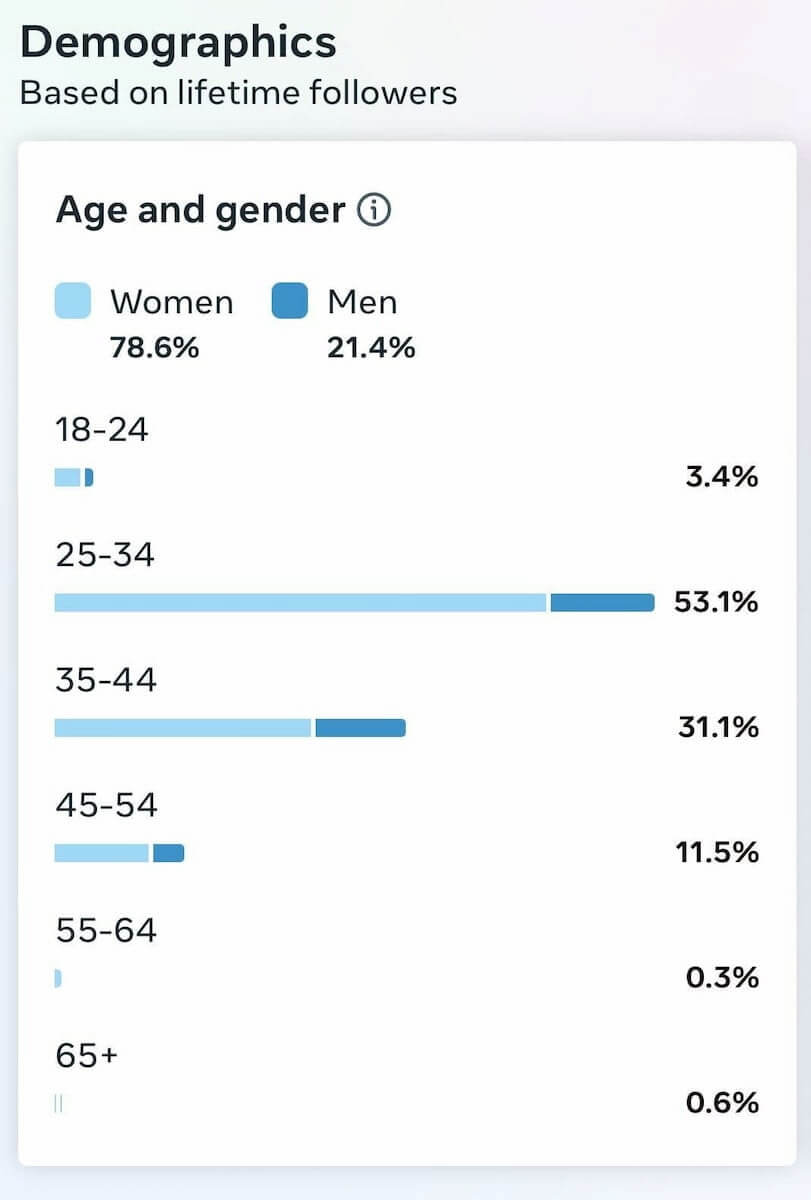
- Your existing followers and customers – through social media native analytics tools like Meta Business Suite, YouTube Studio, etc.
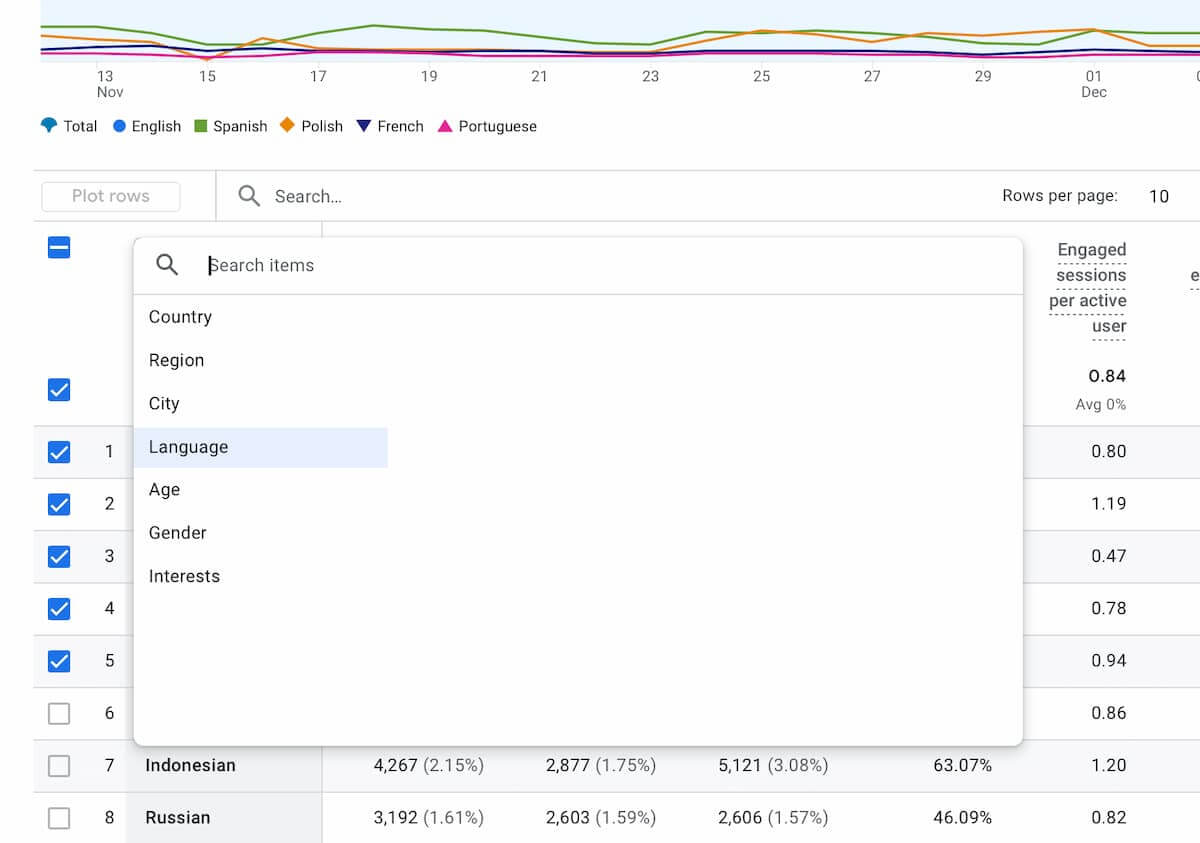
- Google Analytics – the “User demographic details” report allows you to analyze your website visitors’ countries, regions, cities, languages, age, genders, and interests
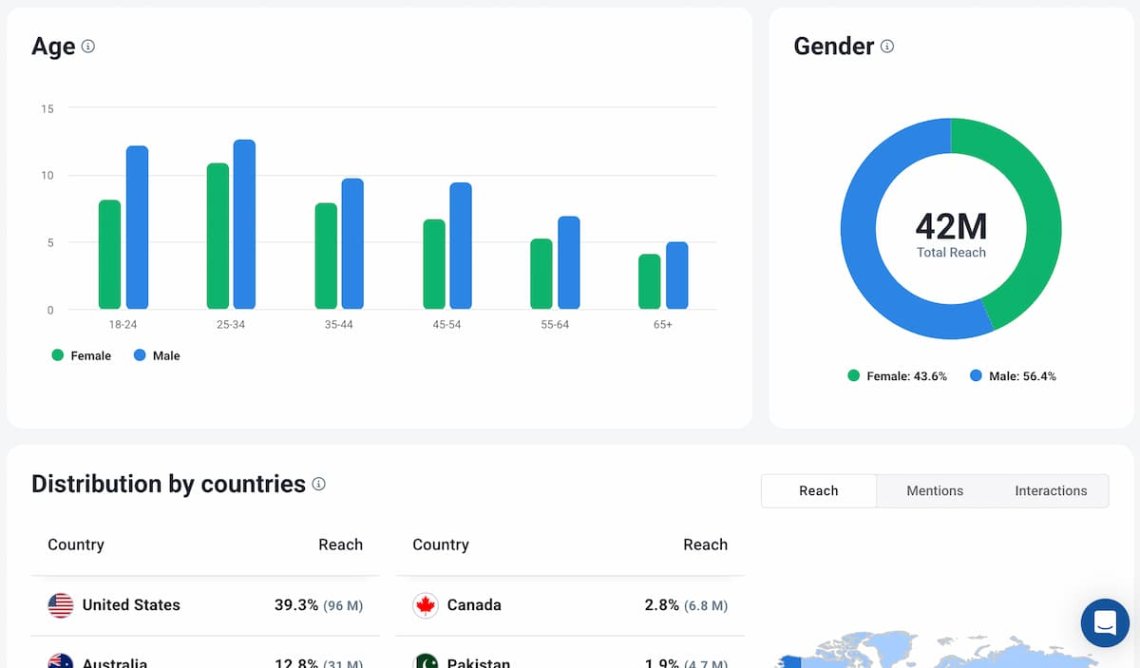
- Social listening software – some outils d'écoute sociale (like Brand24) offer a demographic feature. It allows you to discover details about people who already talk about your brand, such as age, gender, location, occupation, income level, etc.
02 Choose relevant platforms to spread your message
Not every platform will be the right place for your brand – and that’s a good thing.
Choosing the channels where your audience is already active helps you maximize reach without wasting time or money.
To define which platforms best fit your target audience and needs, check:
- Rapports sur les médias sociaux – if you have no idea where to start, inspire yourself with online reports and stats showing which platforms are generally preferred by different audience segments.
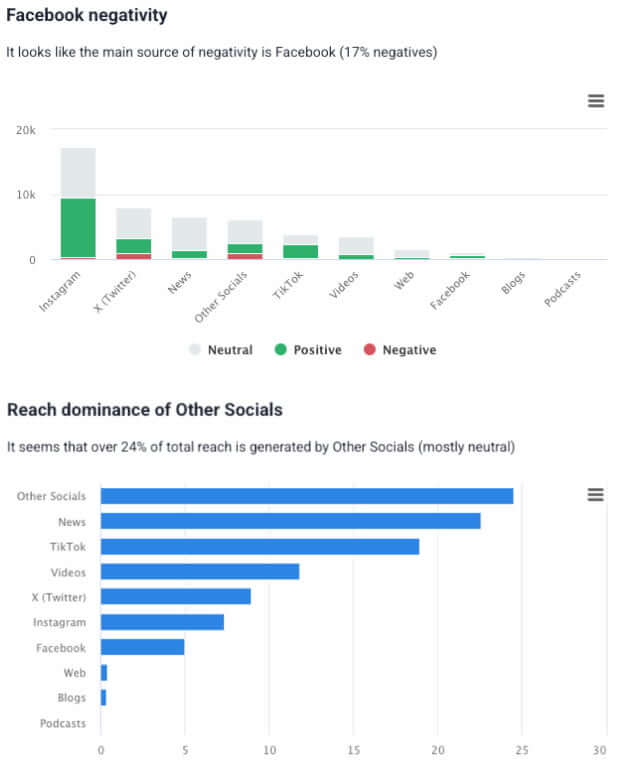
For example, you can check the frequently updated Global Social Media Statistics report by DataReportal and dig deeper into their more granular reports. - Outils de surveillance des médias sociaux – specialized tools can unveil which social media platforms bring your brand the most reach and positive (or negative) sentiment.
These insights help you decide where your presence is worth expanding — and where it’s better to reduce your efforts.
- Practice and evaluation – tools and reports are helpful, but they’re not enough on their own. You’ll learn the most by actually showing up on a platform, posting consistently, and observing how your audience responds in real time.
03 Understand platforms and their content formats
Every social media platform works differently. What performs well on one channel can completely fall on another.
If your goal is to build strong notoriété de la marque, you need to understand not only où your audience spends time but also comment they consume content on each platform. And how these platforms work.
| YouTube | X (Twitter) | TikTok | ||
| Enrouleurs work well for reaching out to people outside your follower base | Short, skimmable posts often get the most reach | Long-form videos (8–20 minutes) are great for tutorials, reviews, storytelling, and evergreen content that builds search-based awareness | Short posts (1–2 sentences) tend to perform best in terms of visibility and engagement | 5–15 second videoswork best for reach, and 20–60 seconds are ideal for storytelling & education |
| Postes uniques work well for nurturing your existing followers | Carrousels perform well for educational content | Courts métrages sur YouTube help you reach new audiences quickly and are great for brand discovery | Fils help you share deeper insights and position yourself as an expert | Trends, sounds, and on-screen text significantly increase visibility |
| Carousel posts are exceptional for providing more in-depth stories, education, and storytelling | Vidéo is less dominant here, but short expert insights can still work | Vignettes & titles matter – they influence both visibility and click-through rate | Native images and short clips can boost reach, but text remains the core format | Raw formats outperform highly edited content |
| Histoires are great for personal, behind-the-scenes updates, quick interactions (polls, questions), and building a sense of closeness | Long-form articles help build authority, but don’t generate as much immediate reach | The platform’s real-time nature rewards frequent posting | Series-style videoshelp users remember your brand and follow your narrative. |
Content strategies:
04 Quality, quality, quality!
Prioritizing content quality is definitely the most important thing not only for building awareness, but for social media marketing in general.
It is so frequently repeated that it seems a no-brainer. But still, many creators believe that if they want to boost brand awareness, they should post 3 times a day, share 1242 stories, and publish short videos morning and evening.
So much has been said about it that I would just share my personal story.
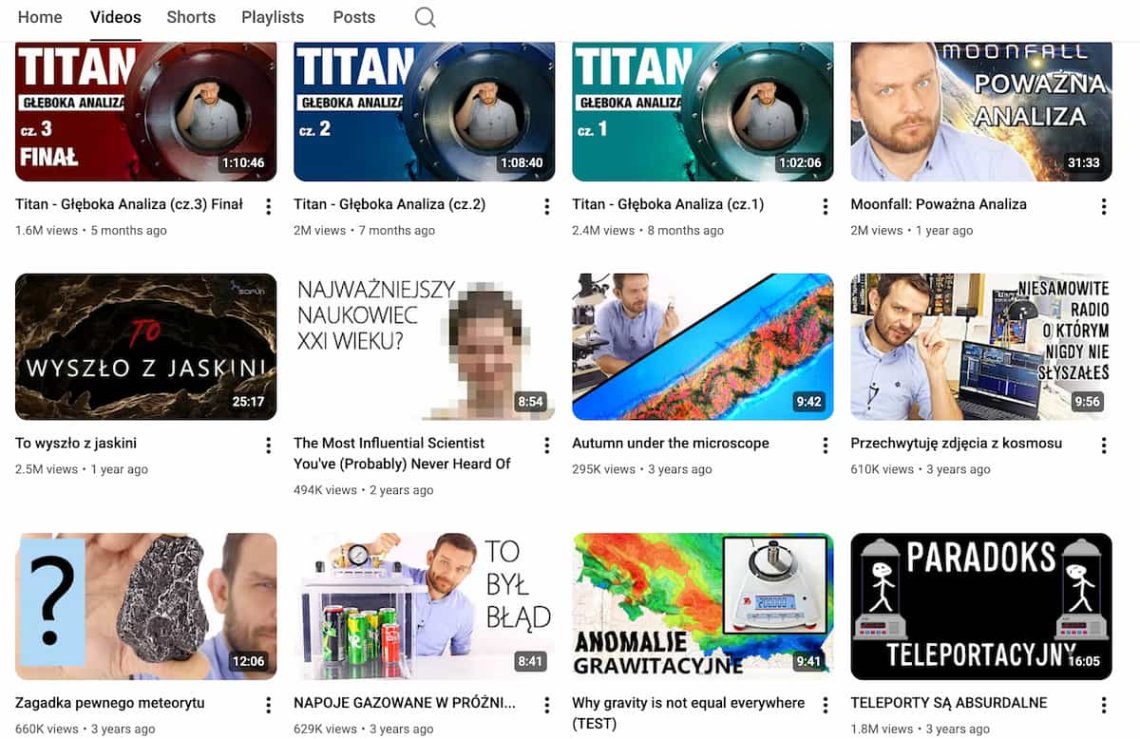
I have my absolute top 2 YouTube creators. But I have a problem with them – they publish new videos once per couple of months. Sometimes, even once a year!
But do you know what?
When they finally publish something new… It’s like Christmas gift. I simply drop everything and watch. Not only me – thousands of other people!
Pourquoi ?
Because their content is always excellent. It’s thoughtful, insightful, well-produced, and absolutely worth my time. They earned my attention through quality – not quantity.
And that’s the point.
When it comes to building brand awareness on social media, quality beats frequency every single time.
High-quality content:
- Gets commented, saved, shared, and recommended
- Attracts the algorithm
- Builds trust faster than constant noise
- Positions your brand as credible and worth following
- Stands out in a sea of repetitive and usually boring posts
05 Earn recognition before selling
No matter which platforms will be your core ones, if you want to succeed on social media and build your brand awareness, you should not treat your social profiles as billboards.
Au lieu de cela, give people a reason to follow you, engage with your content, and – ultimately – augmenter votre visibilité de la marque.
Before you ever try to sell, focus on building familiarity and trust. These are the foundations of long-term brand awareness.
Share content that:
- Educates – tips, how-tos, industry insights, case studies, and practical explanations that help your audience solve real problems or understand your niche better. Educational content positions your brand as a trustworthy, knowledgeable resource.
- Entertains – memes, jokes that only your audience will understand, and playful content that reflects your brand’s tone. Such communication boosts engagement and helps your brand feel more human, relatable, and memorable
- Inspires – motivational posts, success stories, corporate social responsibility actions, or powerful visuals that encourage your audience to take action, think differently, or feel emotionally connected to your brand’s values.
- Informs – updates about your brand, industry news, product improvements, feature releases, or important announcements that keep your audience in the loop. Informational content helps you stay relevant, transparent, and top-of-mind without being overly promotional.
06 Content themes
Content themes are the main topics your brand posts to keep your social media consistent, predictible, and clear.
They help you present yourself as a brand whose content serves a purpose and avoid being perceived as a profile that posts random things.
Well-defined themes make your brand instantly recognizable and help your audience understand what they can expect from you.
They also make content planning much easier, because you’re not starting from scratch every time – you’re creating within a structure.
Okay, and what content themes are in practice?
- Educational tips, how-tos, case studies, tutorials
- Les coulisses, presenting your team, workspace, and so on
- Storytelling-driven customer insights, founder story, challenges, and wins
- Divertissement through memes, funny videos, and real-time marketing
- Showcasing values, i.e., CSR actions, and sustainability efforts.
The thing is to make it STRATEGICALLY.
It turns your social media from “posting whatever comes to mind” into a predictable and purposeful communication – one that your audience can understand, follow, and trust.
Growth strategies:
07 Collaborer avec les influenceurs
A well-thought-out influencer collaboration can expand your reach, skyrocket your brand awareness, and create long-lasting relationships with the audience they bring to you.
Selon le the study by Matter Communications, 81% of people engage with brands recommended by influencers they trust.
Fine, but how to find the right influencer?
Firstly, you should understand the core five traits that each of them should possess. According to the Journal of Marketing & Social Research, these are:
- Authenticité – they’re trustworthy in the eyes of their follower base
- Narrative creativity – they share engaging, visually appealing content that keeps their audience interested
- Ethical alignment – they fit your brand image and values
- Interaction personalization – they proactively interact with their followers and create an engaged community
- Platform fit – they are actively present on this social platform or platforms where your audience naturally spends time
Secondly, you should verify whether an influencer aligns with your goals and can help you expand your brand awareness.
To do that, examine:
- Données démographiques de l'audience – make sure their followers match your defined target audience
- Similar past collaborations – review if the influencer worked with similar brands, and whether these campaigns generated significant results
- Budget alignment – ensure the influencer’s rates fit your budget and are reasonable considering the expected reach, engagement, and content quality. Higher follower counts don’t always mean better ROI.
According to Stack Influence, the average engagement of micro-influencers is three times higher than that of macro-influencers.
Pro tip: There’s no need to reinvent the wheel.
Check who already talks about your brand. These people are often your easiest and most authentic influencer partners – they already know you, like you, and share your content without being asked.
To do so, use social listening or social media management tools such as Brandwatch, Sprout Social, or Brand24.
08 User-generated content
Another brilliant awareness-boosting tactic you can implement in your social media strategy is user-generated content (UGC).
In short, UGC refers to any content created by your customers, users, or any social media profile where your brand, product, or service is organically discussed or mentioned.
What makes UGC so powerful is its authenticity. In fact, even 84% of people are more likely to trust brands that use user-generated content in their marketing campaigns.
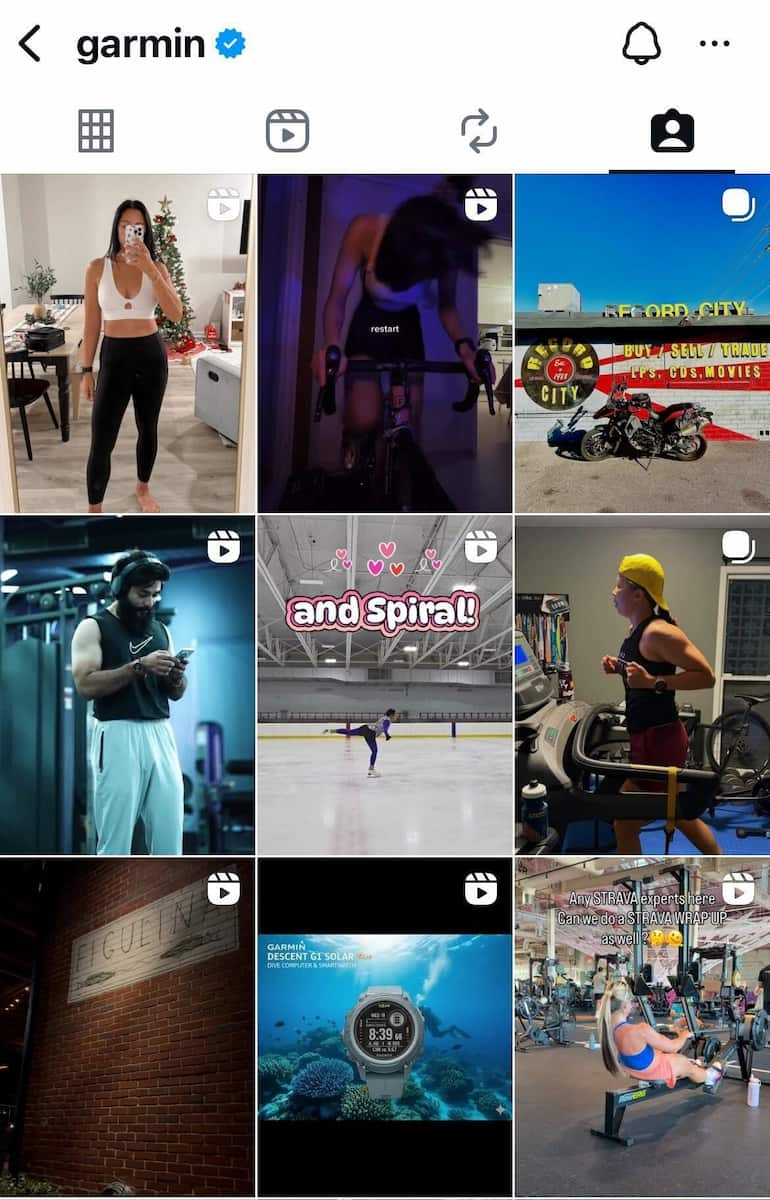
Here are some practical ways you can use UGC to boost your brand recognition on social media:
- Share how customers use your product – encourage users to post content featuring your products or services in a creative way.
Example: Garmin’s social media strategy strongly relies on UGC featuring both professional athletes and amateurs using their smartwatches for different activities. - Reward your creators – a mention, comment, tag, or even a financial reward often encourages more people to share.
Example: LEGO’s campaign “LEGO Ideas” showcases fans’ creations, inviting customers into brand collaborations. - Tell customers stories about themselves – use your data and insights to give something meaningful back to your users.
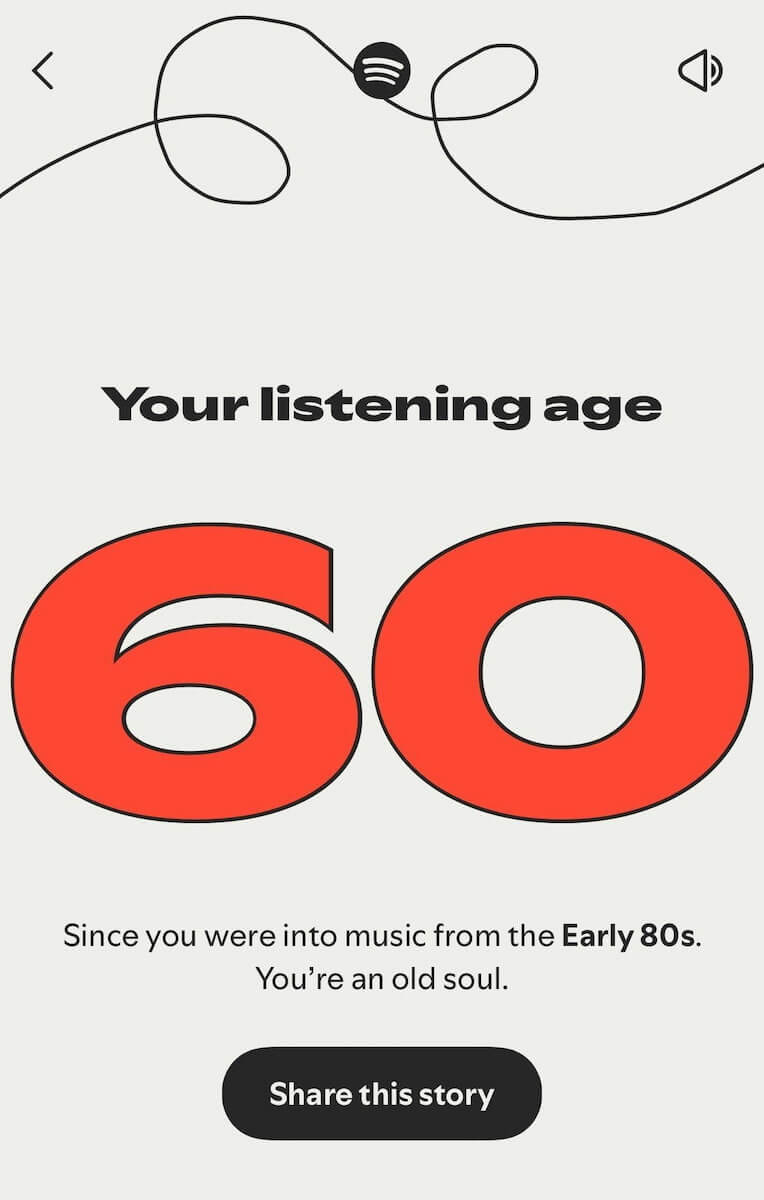
Example: Spotify’s Wrapped is a brilliant campaign that turns listening habits of each users into fun and shareable stories.
09 Invest in paid advertising
Gone are the days when organic social content was enough to guarantee visibility.
Algorithms change frequently, competition is higher than ever, and social media platforms intentionally limit organic reach to force… ekhm… encourage brands to invest in paid ads. When in doubt, follow the money.
Paid advertising is a super-powerful brand awareness strategy. And sure, the higher budget you have, the easier the game of attention is.
Mais even a small, well-targeted budget can do wonders for your brand visibility – especially when you use it to boost content that already performs well organically.
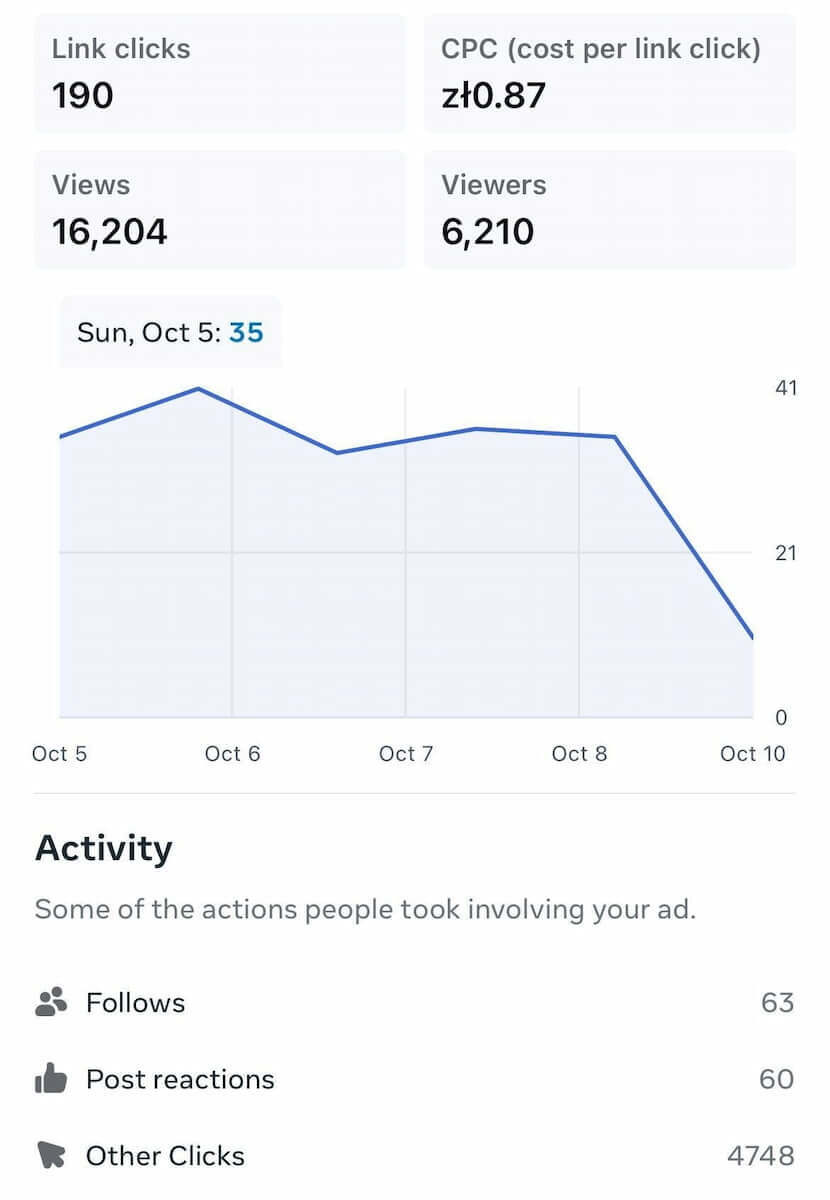
With paid ads, you can:
- Target your ideal audience – demographics, interests, behaviors, lookalike audiences, and more
- Scale your reach fast – especially during key campaigns or product launches
- Test messaging and visuals – to see what resonates best
- Launch retargeting campaigns – to remind users who visited your website, engaged with your content, or interacted with your brand in any way about themselves
- Create predictable, measurable outcomes – something organic reach can’t guarantee.
Conclusion
A strong brand awareness strategy begins with truly understanding who your audience is, because everything else depends on it.
Once you know who you’re speaking to, you can choose the platforms where they actually spend their time.
Comprendre how the chosen platform works will enable you to create content that meets your audience’s expectations, aligns with the platform’s format, and feels natural in their feed.
As for content, remember that quality is fundamental because only valuable posts can hold people’s attention in the constant noise. Clear content themes help you stay consistent, making your brand easier to recognize and remember.
When your presence grows, build trust before selling. It’s crucial for forming real connections.
Tactics like influencer partnerships, UGC, and paid ads can then spread your message to much wider audiences.
When you combine strategic research, strategic content creationet strategic distribution, social media will become a hyper-powerful engine for your brand awareness.
Réflexions finales :
- People remember brands that make them feel something.
- Growth comes from consistency, not shortcuts and randomness.
- Awareness is built long before a single sale happens.
Articles connexes




Lectures de haut niveau
Brand Monitoring: Tools & Guide for 2026
Brand Awareness Strategy [The Ultimate Guide for 2026]
Le meilleur AI Hashtag Tracker et autres outils de suivi de hashtag [2026]
Social Media Reach: How to Measure & Improve It in 2026?
Outils d'analyse X (Twitter) : Les 10 meilleurs à essayer en 2026
Sentiment Analysis: What is it & Why do You Need it in 2026?
Share of Voice: Definition, Calculation, Tools [2026 Guide]
Brand Reputation Management: 6 Expert Tips for 2026
Guide complet de l'analyse des médias sociaux par l'IA [2025]
Comment voir combien de fois un hashtag a été utilisé sur X (Twitter)
Démarrage Écoute sociale !
Obtenez la version d'essai Brand24 et commencez l'écoute sociale comme un PRO.