Tabela de conteúdo
Análise de sentimento do TikTok: como fazer isso (+ exemplo real para 2026)
A análise de sentimento do TikTok mostra se as pessoas falam sobre sua marca de forma positiva, negativa ou neutra, com base em descrições e comentários de vídeos.
Neste guia, mostraremos a você como analisar o sentimento do TikTok passo a passo com um exemplo real de marca.
Principais conclusões:
-
Melhor processo para analisar o sentimento no TikTok
Comece configurando um projeto de monitoramento em uma ferramenta como o Brand24. Filtre os dados para mostrar apenas o TikTok. Em seguida, revise o detalhamento do sentimento, compare diferentes períodos de tempo e analise mentions de alto alcance ou negativos. Por fim, use uma ferramenta de IA como o Brand Assistant para interpretar rapidamente as mudanças e preparar ações.
-
Você pode fazer a análise de sentimentos do TikTok manualmente?
Somente em escala muito pequena. Se sua marca receber centenas de mentions por dia, a análise manual de cada publicação e comentário se tornará muito demorada. Você pode identificar reclamações individuais, mas não conseguirá detectar tendências ou medir mudanças ao longo do tempo de forma confiável.
-
Por que a análise de sentimentos do TikTok é importante para os negócios?
O TikTok desempenha um papel importante na forma como as pessoas encontram e compram produtos. Se o sentimento negativo começar a aumentar, pode ser um sinal precoce de problemas com o produto, reações adversas à campanha ou drama do influenciador. Ficar de olho no sentimento ajuda as empresas a identificar problemas antecipadamente e a reagir antes que eles se transformem em algo maior.
-
Como a IA pode ajudar a analisar o sentimento do TikTok?
Ferramentas baseadas em IA, como o AI Brand Assistant, podem classificar automaticamente um grande número de TikTok mentions. Em vez de lê-los você mesmo, é possível observar as porcentagens de sentimento ao longo do tempo, filtrar o feedback ou perguntar às ferramentas de IA o que pode estar causando os picos. Elas reduzem o trabalho manual, ajudam você a gerar relatórios mais rapidamente e a tomar decisões mais cedo.
-
Limitações das ferramentas baseadas em IA na análise de sentimentos do TikTok
Às vezes, as ferramentas de IA podem não perceber sarcasmo, gírias, nuances culturais ou o que os emojis realmente significam. Elas também analisam o texto escrito (como legendas e comentários), e não o áudio falado nos vídeos. Portanto, embora alguns mentions individuais possam ser rotulados incorretamente, as tendências mais amplas e as alterações percentuais ainda são confiáveis para rastrear a percepção da marca.
Como fazer a análise de sentimentos do TikTok manualmente?
Pode ser tentador fazer isso você mesmo, mas A análise manual de sentimentos do TikTok não é recomendada.
Não é apenas ineficiente, mas também, muitas vezes, simplesmente irrealista fazer isso com precisão em escala:
Razão 1. É muito difícil encontrar todos os mention por você mesmo
O TikTok notifica você quando alguém marca sua marca, mas muitas discussões acontecem sem hashtags ou @mentions, especialmente nos comentários. Além disso, os próprios produtos não podem ser marcados “oficialmente”.
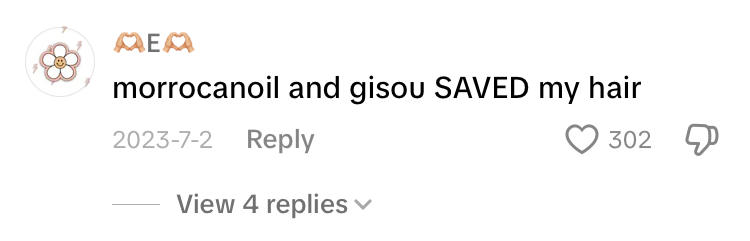
Motivo 2. O volume de dados é muito alto
Imagine analisar centenas ou até milhares de TikTok mentionsdeterminar se elas são positivas, negativas ou neutras e, em seguida, criar relatórios - tudo manualmente.
Algo para se pensar
Marcas como a Gisou recebem mention aproximadamente 100 vezes por dia no TikTok, enquanto marcas maiores, como a Nike, recebem mais de 1.000 mentions diariamente.
Mesmo que você gaste apenas 20 segundos por mention, 1.000 mentions = 5,5 horas/dia. Isso antes de fazer capturas de tela, gerar relatórios ou agir de acordo com o que aprendeu com esses insights.
A única maneira confiável de determinar o sentimento do TikTok é usar ferramentas baseadas em IA projetado especificamente para análise de sentimentos.
Como fazer a análise de sentimentos do TikTok com ferramentas de IA?
Você já sabe o desempenho análise de sentimentos no TikTok requer a ferramenta certa.
Veja como verificar o sentimento do TikTok no Brand24. Usaremos Gisou (uma marca de produtos para cabelos) como exemplo.
Etapa 1: Configurar o projeto de monitoramento e coletar dados
Primeiro, crie um novo projeto de monitoramento e adicione sua palavra-chave.
Nesse caso: “Gisou”.
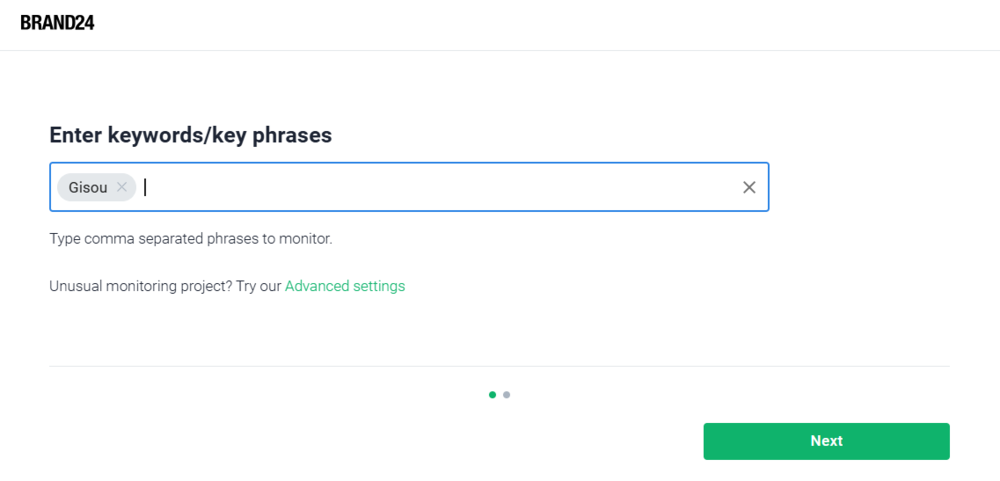
Você também pode adicionar:
- Nomes de produtos (como “máscara labial” ou “óleo para cabelo”)
- Hashtags da campanha (como #honeypup)
- Nomes de concorrentes (como “Morrocanoil” ou “Rituals”)
- Palavras-chave do setor (como “cuidados com o cabelo” ou “cuidados com a pele”)
Se sua marca opera globalmente, monitore todos os idiomas.
Depois que você cria o projeto, o Brand24 começa automaticamente a coletar mentions.
Para se concentrar apenas no TikTok:
- 1 Vá para o painel de filtros à direita.
- 2 Selecione Source ➡️ TikTok.
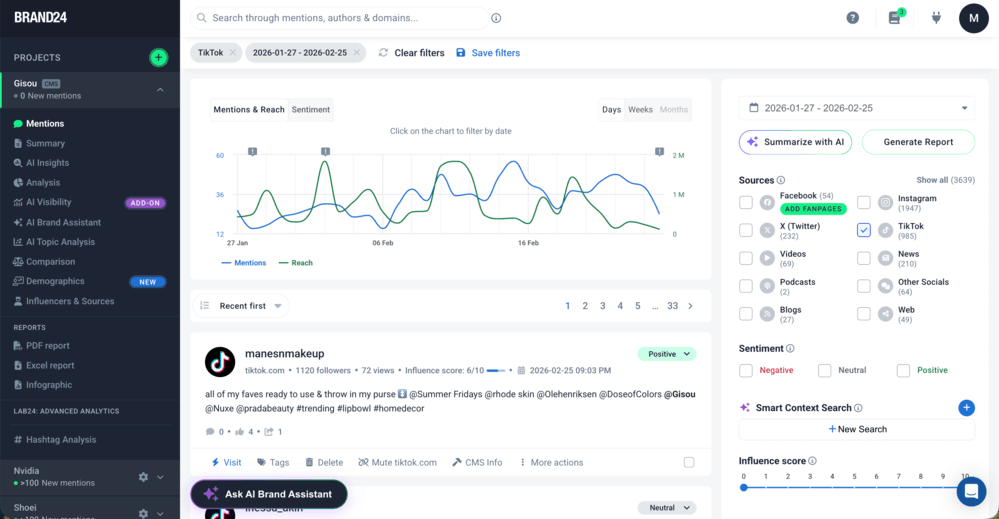
É isso aí! De agora em diante, você está vendo dados apenas do TikTok.
Você pode restringir ainda mais usando:
- Filtro de sentimento
- Localização
- Pontuação de importância
Isso já economiza horas. Em vez de rolar o TikTok manualmente, você vê tudo em um só lugar.
Etapa 2: Verifique o detalhamento do sentimento
Em seguida, verifique seu sentimento de marca no TikTok. Há duas maneiras de fazer isso:
- Use o gráfico de sentimento e compare manualmente o número de mentions negativos com os positivos:
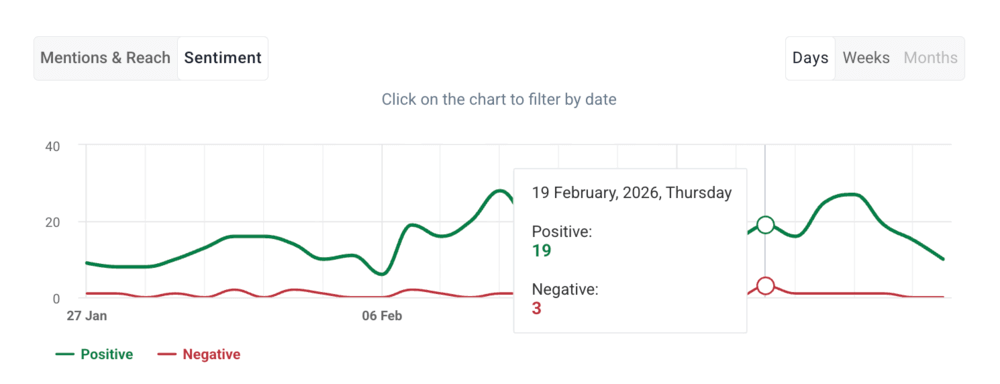
- Verifique o Detalhamento do sentimento. Ele calcula valores percentuais para mentions positivos, negativos e neutros. Para obter uma visualização mais clara, você pode excluir os mentions neutros:
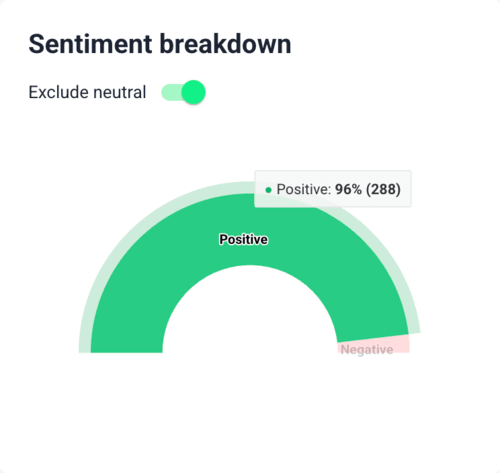
Como você pode ver no detalhamento do sentimento, 96% dos mentions de Gisou são positivos, e apenas 4% são negativos.
Etapa 3: Pergunte ao assistente de marca com IA o que está acontecendo
Depois de verificar os gráficos de sentimento, você ainda pode se perguntar:
- Por que os mentions negativos aumentaram?
- O que causou esse pico?
- O que mudou nesta semana?
Em vez de passar manualmente por dezenas de mentions, abra o Assistente de marca.
Você pode perguntar ou dizer coisas como:
- “Por que o sentimento negativo aumentou no TikTok esta semana?”
- “O que causou o pico em 12 de janeiro?”
- “Quais são as reclamações mais comuns no TikTok?”
- “Resumir o sentimento atual do TikTok”.”
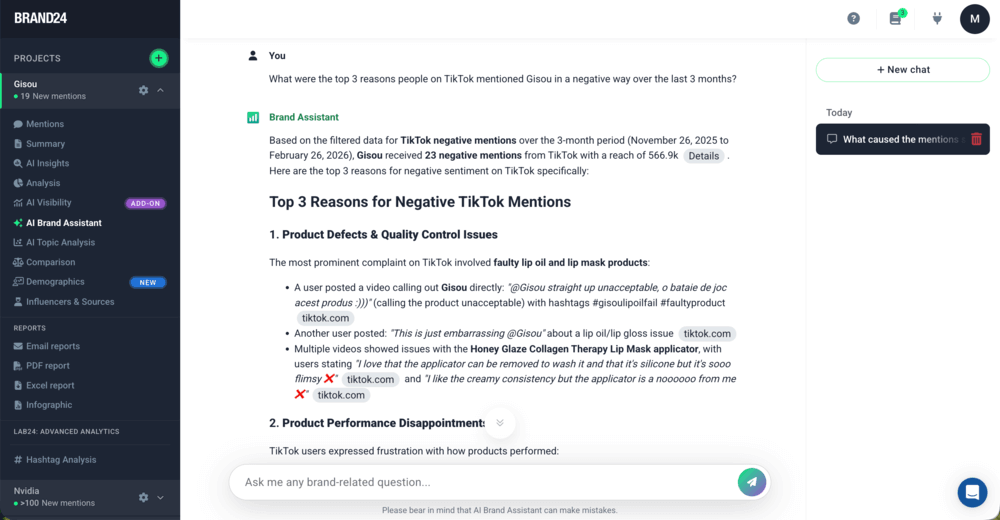
O Brand Assistant analisa seus mentions e fornece uma resposta estruturada com base em dados reais de seu projeto.
Isso é especialmente útil quando:
- Você precisa de uma explicação rápida antes de uma reunião.
- Você está preparando um relatório.
- Você percebe que algo mudou, mas ainda não sabe o motivo.
Em vez de examinar centenas de comentários manualmente, você obtém um resumo que o orienta na direção certa.
Etapa 4: Verifique os emojis
O TikTok é muito orientado por emojis, portanto, isso é surpreendentemente útil.
O Brand24 extrai emojis de mentions e mostra quais aparecem com mais frequência.
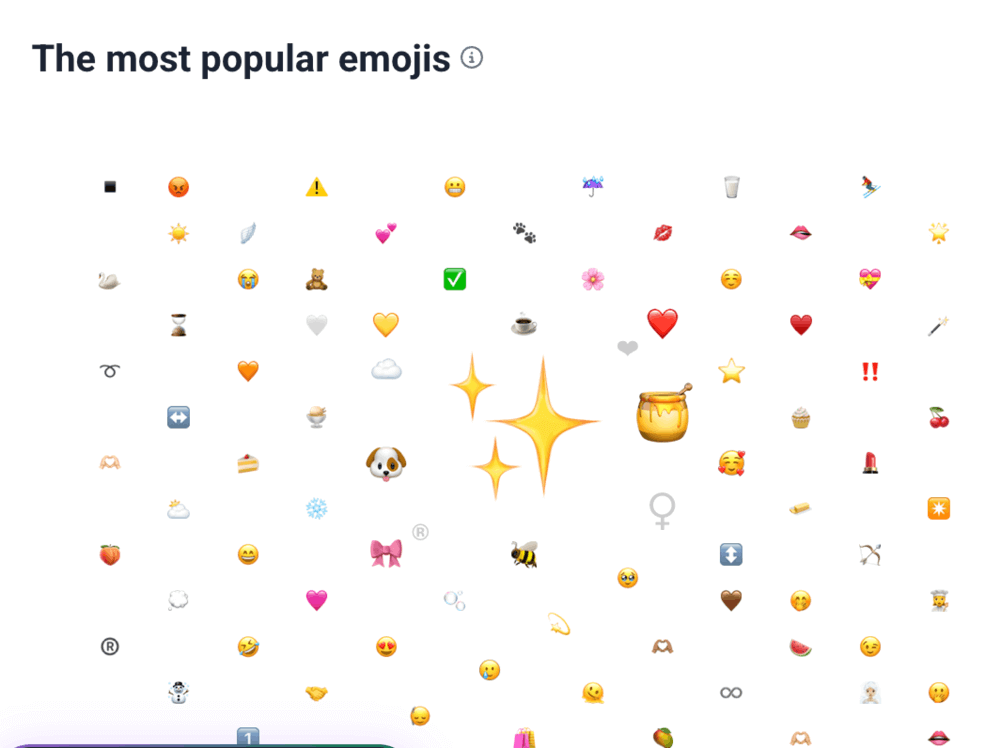
No caso de Gisou, o emoji ✨ aparece centenas de vezes e é normalmente um sinal de admiração ou entusiasmo.
Se, de repente, você começar a ver mais 🙄, 🤡 ou 💀, isso geralmente indica uma mudança de tom, geralmente sarcástica ou negativa.
É não é uma métrica autônoma, mas acrescenta contexto rapidamente, especialmente no TikTok, onde o tom pode ser sutil.
Etapa 5: Analise os tópicos relacionados à sua marca
Agora vá para a seção Análise de tópicos de IA guia.
Essa seção mostra o que as pessoas estão realmente discutindo sobre a sua marca.
Para Gisou, um dos tópicos dominantes são as “rotinas matinais de beleza”.”
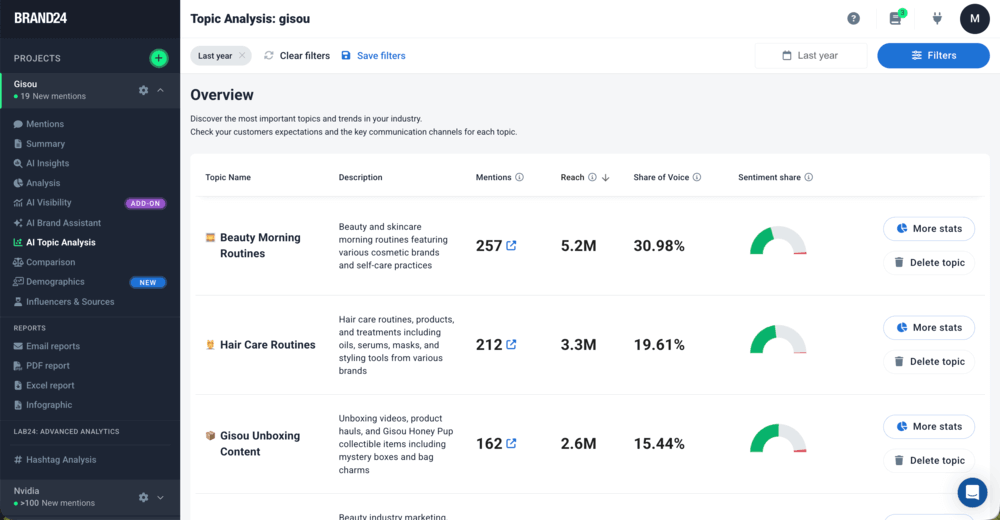
Se você quisesse analisar esse tópico, veria isso:
- “Rotinas matinais de beleza” geradas 257 mentions no TikTok e alcançou 5,2 milhões de pessoas.
- Suas Compartilhamento de voz contas para 30.98% de todas as discussões sobre o Gisou nesta plataforma.
- O detalhamento dos sentimentos mostra que 41% de mentions são positivos, 56% são neutrose somente 2% são negativos.
Isso lhe diz algo acionável: as recomendações orgânicas estão gerando um sentimento positivo.
Se outro tópico mostrar um aumento de mentions combinado com um aumento do sentimento negativo, geralmente é nele que você deve se concentrar primeiro, seja um problema com o produto, atrasos no envio ou um vídeo controverso.
Etapa 6: Monitore o sentimento ao longo do tempo
Por fim, use o Guia Comparação para rastrear e analisar como o sentimento evolui.
O sentimento do TikTok em relação à sua marca ou produto pode mudar em um piscar de olhos:
Um único vídeo de influenciador pode mudar o sentimento em poucas horas. Outras vezes, a negatividade se acumula lentamente em vários comentários e pontos. Mas ambos podem prejudicar seriamente sua reputação da marca!
Ao monitorar constantemente as mudanças de sentimento no TikTok, você pode:
- Identifique o drama antes que ele se transforme em uma espiral.
- Responda prontamente a mentions positivos para criar uma comunidade forte.
- Transforme o feedback do cliente em insights práticos em tempo real.
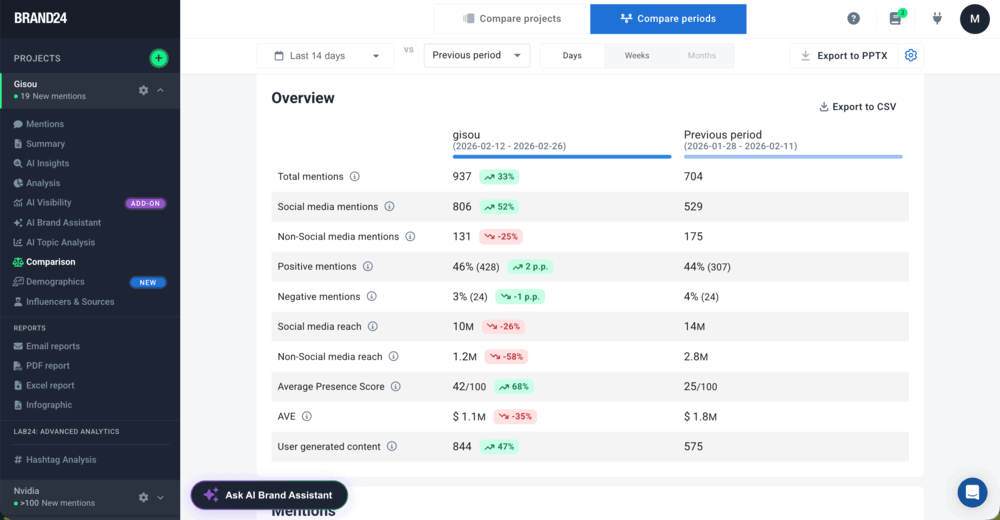
Observando a comparação entre os períodos, você pode ver que Os mentions positivos da Gisou continuam aumentando.
PERGUNTAS FREQUENTES
O que é a análise de sentimentos do TikTok?
A análise de sentimento do TikTok determina se os vídeos do TikTok (mais precisamente, as descrições dos vídeos) e os comentários mentioning de uma marca, produto, hashtag ou tópico específico são positivo, negativo ou neutro.
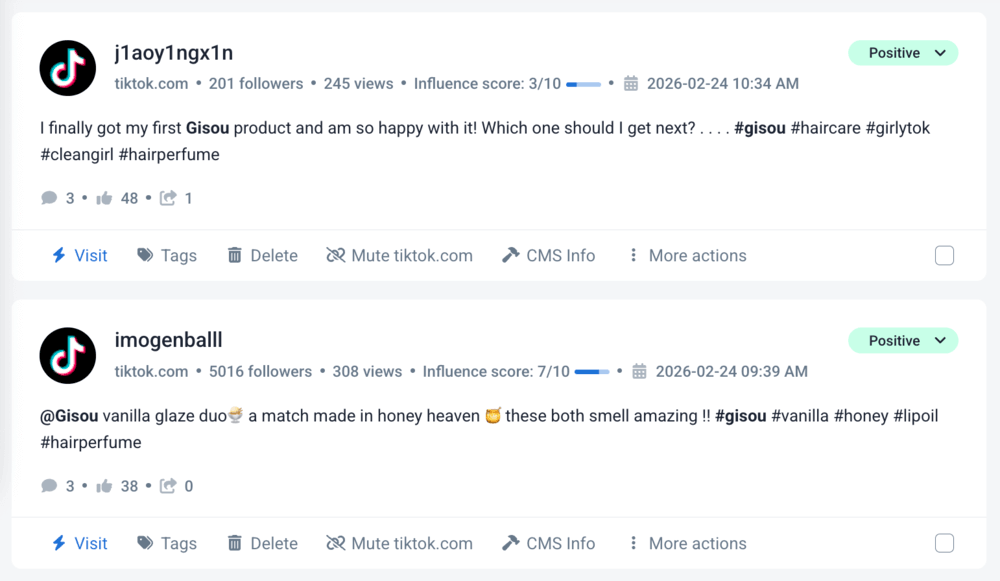
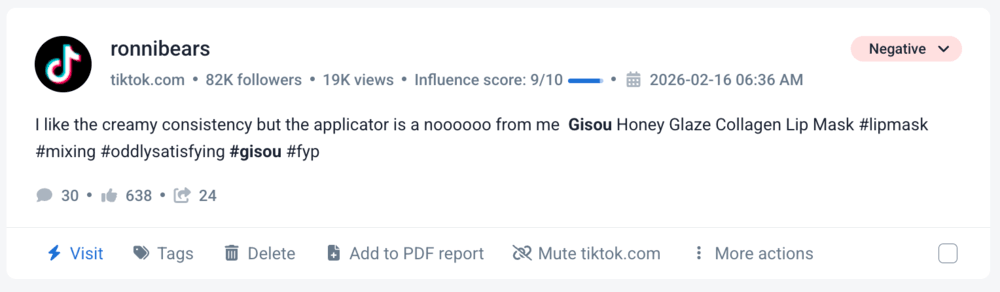
Ele usa o Processamento de Linguagem Natural (PLN) e o aprendizado de máquina para classificar automaticamente o texto, ajudando você a entender a percepção geral da marca sem revisar manualmente centenas de comentários.
Importante: a análise de sentimento funciona em texto (legendas e comentários), não em áudio falado em vídeos.
Por que a análise de sentimentos do TikTok é importante?
Os usuários do TikTok são diretos. Se algo der errado, eles dizem, e muitas vezes publicamente.
O monitoramento do sentimento ajuda você:
- Detectar tendências negativas antes que elas aumentem
- Identificar reclamações recorrentes
- Medir o impacto da campanha
- Responder a mentions positivos
- Entenda como sua marca se compara à dos concorrentes
Como o TikTok influencia a descoberta de produtos e as decisões de compra, as mudanças no sentimento podem afetar diretamente as vendas e a reputação.
Quais são as limitações das ferramentas de análise de sentimentos do TikTok?
As ferramentas de análise de sentimentos do TikTok são muito poderosas, mas não são 100% perfeitas.
Como todos os sistemas de análise de texto baseados em IA, às vezes eles podem ter dificuldades:
- Sarcasmo e ironia
- Gírias e evolução da linguagem do TikTok
- Nuances culturais
- Contexto de emoji
- Comentários muito curtos ou ambíguos
Por exemplo, um comentário como “Well... that's interesting 💀” (Bem... isso é interessante 💀) às vezes pode exigir interpretação humana para entender completamente o tom.
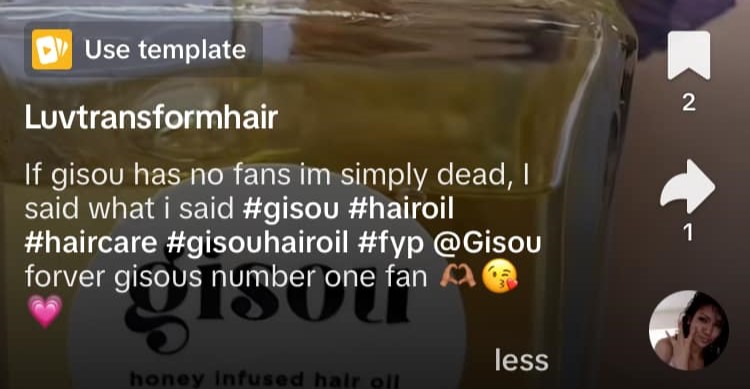
No entanto, embora os mentions individuais possam ocasionalmente ser classificados incorretamente, as tendências gerais e as mudanças percentuais permanecem confiáveis em escala. É por isso que a análise de sentimento da IA funciona melhor quando combinada com a revisão manual de mentions de alto impacto.
Como você pode usar a análise de sentimentos do TikTok para tomar decisões comerciais?
Os dados de sentimento do TikTok dão suporte a decisões práticas de negócios.
Por exemplo:
- Um pico de sentimento negativo pode indicar um problema com o produto ou um vídeo polêmico.
- Um aumento nos mentions positivos após uma campanha confirma que a mensagem está repercutindo.
- Sentimento em nível de tópico mostra quais discussões geram elogios ou críticas.
- Comparações de períodos ajudar a avaliar as colaborações de influenciadores.
Em vez de confiar em suposições, você pode basear as decisões em dados reais de conversas.
Com que frequência você deve verificar o sentimento do TikTok?
Para marcas ativas, revisão semanal do sentimento é um mínimo.
Durante lançamentos de produtos, campanhas de influenciadores ou situações sensíveis de RP, monitoramento diário é recomendado.
Alertas em tempo real ajudam você a reagir rapidamente quando o volume ou o sentimento do mention muda inesperadamente.

Artigo revisado por