Table des matières
Analyse des sentiments sur TikTok : comment faire (+ exemple réel pour 2026)
L'analyse du sentiment TikTok indique si les gens parlent de votre marque de manière positive, négative ou neutre, en se basant sur les descriptions et les commentaires des vidéos.
Dans ce guide, nous allons vous montrer comment analyser le sentiment TikTok étape par étape avec un exemple réel de marque.
Principaux enseignements :
-
Meilleur processus d'analyse des sentiments sur TikTok
Commencez par mettre en place un projet de surveillance dans un outil comme Brand24.. Filtrez les données pour afficher uniquement TikTok. Examinez ensuite la répartition des sentiments, comparez différentes périodes et analysez les mention à forte portée ou négatives. Enfin, utilisez un outil d'IA comme Brand Assistant pour interpréter rapidement les changements et préparer des actions.
-
Est-il possible d'effectuer manuellement une analyse des sentiments sur TikTok ?
Seulement à très petite échelle. Si votre marque reçoit des centaines de mention par jour, l'examen manuel de chaque message et de chaque commentaire prend trop de temps. Vous pourrez peut-être repérer des plaintes individuelles, mais vous ne pourrez pas détecter de manière fiable les tendances ou mesurer les changements au fil du temps.
-
Pourquoi l'analyse des sentiments sur TikTok est-elle importante pour les entreprises ?
TikTok joue un rôle important dans la façon dont les gens trouvent et achètent des produits. Si le sentiment négatif commence à augmenter, cela peut être un signe précoce de problèmes de produits, de réactions négatives à une campagne ou d'un drame d'influenceur. Garder un œil sur le sentiment permet aux entreprises de repérer les problèmes à temps et de réagir avant qu'ils ne se transforment en quelque chose de plus important.
-
Comment l'IA peut-elle aider à analyser les sentiments sur TikTok ?
Les outils alimentés par l'IA, comme AI Brand Assistant, peuvent trier automatiquement un grand nombre de TikTok mention. Au lieu de les lire vous-même, vous pouvez observer les pourcentages de sentiment au fil du temps, filtrer les commentaires ou demander aux outils d'IA ce qui pourrait causer des pics. Ces outils réduisent le travail manuel, vous permettent d'établir des rapports plus rapidement et de prendre des décisions plus tôt.
-
Limites des outils alimentés par l'IA dans l'analyse des sentiments sur TikTok
Les outils d'IA peuvent parfois passer à côté du sarcasme, de l'argot, des nuances culturelles ou de la signification réelle des émojis. Ils prennent également en compte le texte écrit (comme les légendes et les commentaires), et non le son des vidéos. Ainsi, même si quelques mention individuels peuvent être étiquetés de manière incorrecte, les tendances plus générales et les changements de pourcentage restent fiables pour suivre la perception de la marque.
Comment effectuer manuellement une analyse des sentiments sur TikTok ?
Il peut être tentant de le faire soi-même, mais l'analyse manuelle des sentiments sur TikTok n'est pas recommandée.
Il n'est pas seulement inefficace, mais aussi souvent tout simplement irréaliste de le faire avec précision à l'échelle :
Raison 1. Il est vraiment difficile de trouver tous les mention par vous-même
TikTok vous avertit lorsque quelqu'un marque votre marque, mais de nombreuses discussions se déroulent sans hashtags ni @mention, en particulier dans les commentaires. De plus, les produits eux-mêmes ne peuvent pas être “officiellement” tagués.

Raison 2. Le volume de données est trop important
Imaginez que vous passiez en revue des centaines, voire des milliers de TikTok mentionsIl s'agit de déterminer si elles sont positives, négatives ou neutres, puis de créer des rapports, le tout à la main.
🧠 Something to think about
Des marques comme Gisou sont mentionées environ 100 fois par jour sur TikTok, tandis que des marques plus importantes comme Nike reçoivent plus de 1 000 mention par jour.
Même si vous ne passez que 20 secondes par mention, 1 000 mention = 5,5 heures par jour. Et ce, avant de faire des captures d'écran, de rédiger des rapports ou d'agir en fonction de ce que vous avez appris grâce à ces informations.
Le seul moyen fiable de déterminer le sentiment sur TikTok est de utiliser des outils alimentés par l'IA spécialement conçu pour analyse des sentiments.
Comment analyser les sentiments sur TikTok à l'aide d'outils d'intelligence artificielle ?
Vous connaissez déjà l'exécution analyse des sentiments sur TikTok nécessite le bon outil.
Voici comment vérifier le sentiment TikTok dans Brand24. Nous utiliserons Gisou (une marque de produits capillaires).
Étape 1 : Mise en place du projet de suivi et collecte des données
Tout d'abord, créez un nouveau projet de surveillance et ajoutez votre mot-clé.
En l'occurrence : “Gisou”.
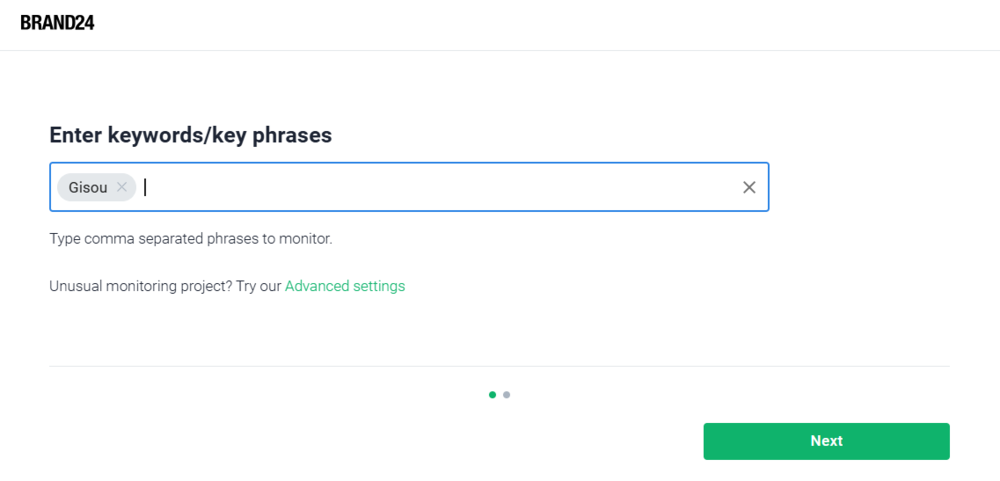
Vous pouvez également ajouter :
- Noms des produits (comme “masque pour les lèvres” ou “huile pour les cheveux”)
- Hashtags de campagne (comme #honeypup)
- Noms des concurrents (comme “Morrocanoil” ou “Rituels”)
- Mots clés de l'industrie (comme “soins capillaires” ou “soins de la peau”)
Si votre marque est présente dans le monde entier, suivez toutes les langues.
Une fois le projet créé, Brand24 commence automatiquement à collecter des mention.
Se concentrer uniquement sur TikTok :
- 1 Allez au panneau de filtrage sur la droite.
- 2 Sélectionnez Source ➡️ TikTok.
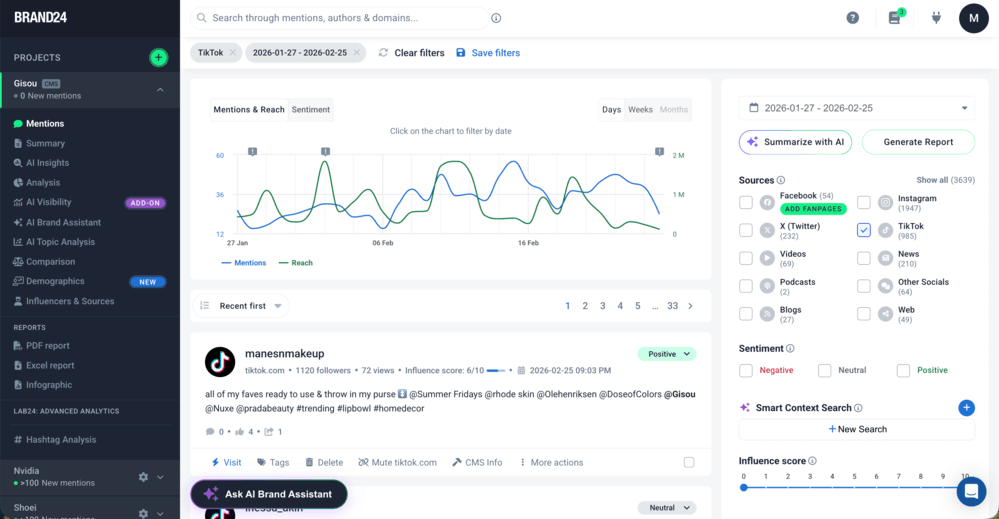
Voilà, c'est fait ! À partir de maintenant, vous n'avez plus qu'à consulter les données de TikTok.
Vous pouvez restreindre davantage la liste en utilisant :
- Filtre de sentiment
- Localisation
- Note d'importance
Cela permet déjà d'économiser des heures. Au lieu de faire défiler TikTok manuellement, vous voyez tout au même endroit.
Étape 2 : Vérifier la répartition des sentiments
Ensuite, vérifiez votre sentiment d'appartenance à la marque sur TikTok. Il y a deux façons de procéder :
- Utiliser le graphique des sentiments et comparez manuellement le nombre de mention négatives par rapport aux positives :
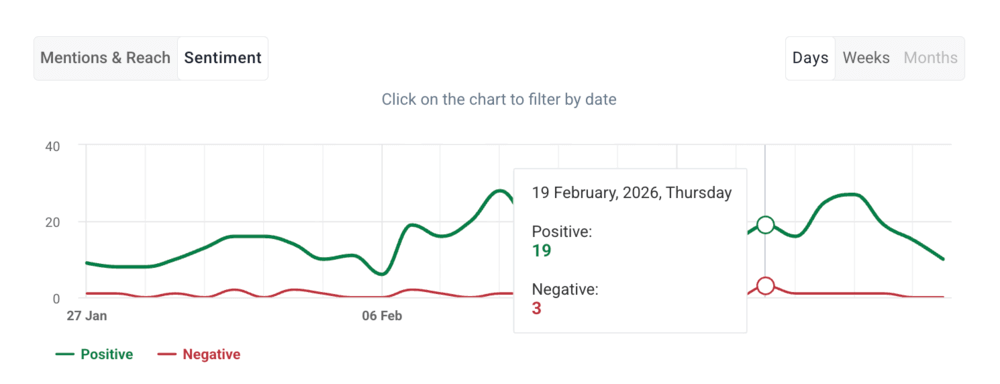
- Vérifier le répartition des sentiments. Il calcule les valeurs en pourcentage pour les mention positives, négatives et neutres. Pour une vision plus claire, vous pouvez exclure les mention neutres :
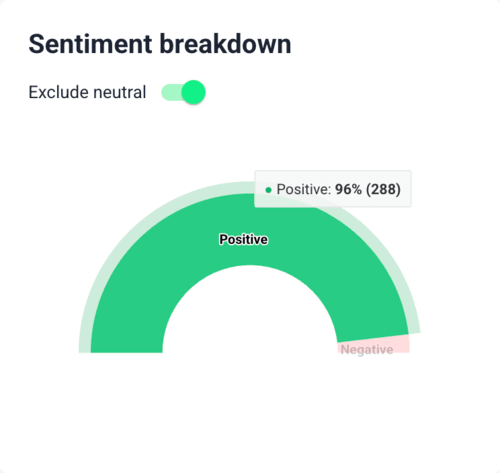
Comme vous pouvez le voir dans la répartition des sentiments, 96% des mention de Gisou sont positives, et seuls les 4% sont négatifs.
Étape 3 : Demander à l'assistant de marque IA ce qui se passe
Après avoir consulté les graphiques des sentiments, on peut encore se poser des questions :
- Pourquoi les mention négatifs ont-ils augmenté ?
- Quelle est la cause de ce pic ?
- Qu'est-ce qui a changé cette semaine ?
Au lieu de passer manuellement en revue des dizaines de mention, ouvrir des Assistant de marque.
Vous pouvez demander ou dire des choses telles que
- “Pourquoi le sentiment négatif a-t-il augmenté sur TikTok cette semaine ?”
- “Qu'est-ce qui a provoqué le pic du 12 janvier ?”
- “Quelles sont les plaintes les plus fréquentes sur TikTok ?”
- “Résumer le sentiment actuel sur TikTok”.”
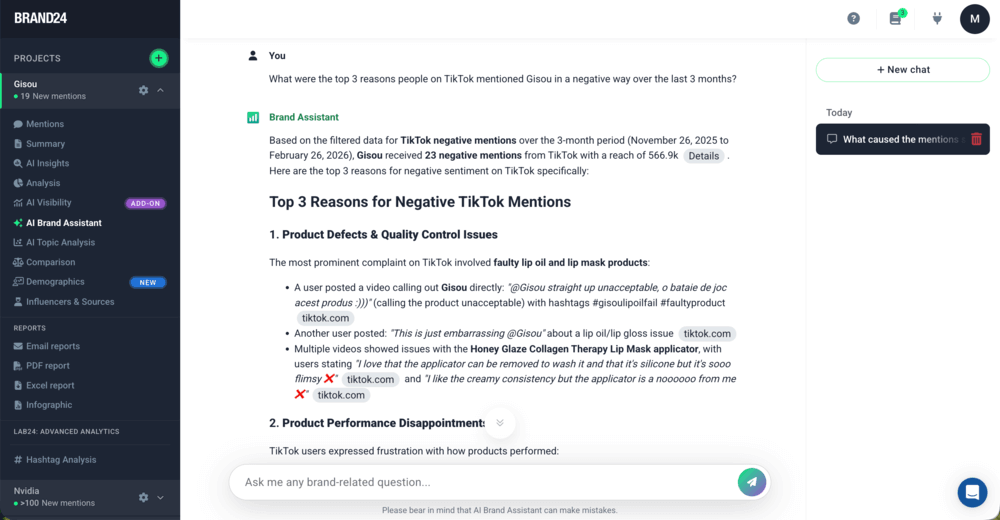
Brand Assistant analyse vos mention et vous donne une réponse structurée basée sur des données réelles de votre projet.
Ceci est particulièrement utile lorsque
- Vous avez besoin d'une explication rapide avant une réunion.
- Vous préparez un rapport.
- Vous remarquez que quelque chose a changé, mais vous ne savez pas encore pourquoi.
Au lieu d'analyser manuellement des centaines de commentaires, vous obtenez un résumé qui vous oriente dans la bonne direction.
Étape 4 : Vérifier les emojis
TikTok est fortement axé sur les emoji, ce qui est étonnamment utile.
Brand24 extrait les emojis des mention et indique ceux qui apparaissent le plus souvent.
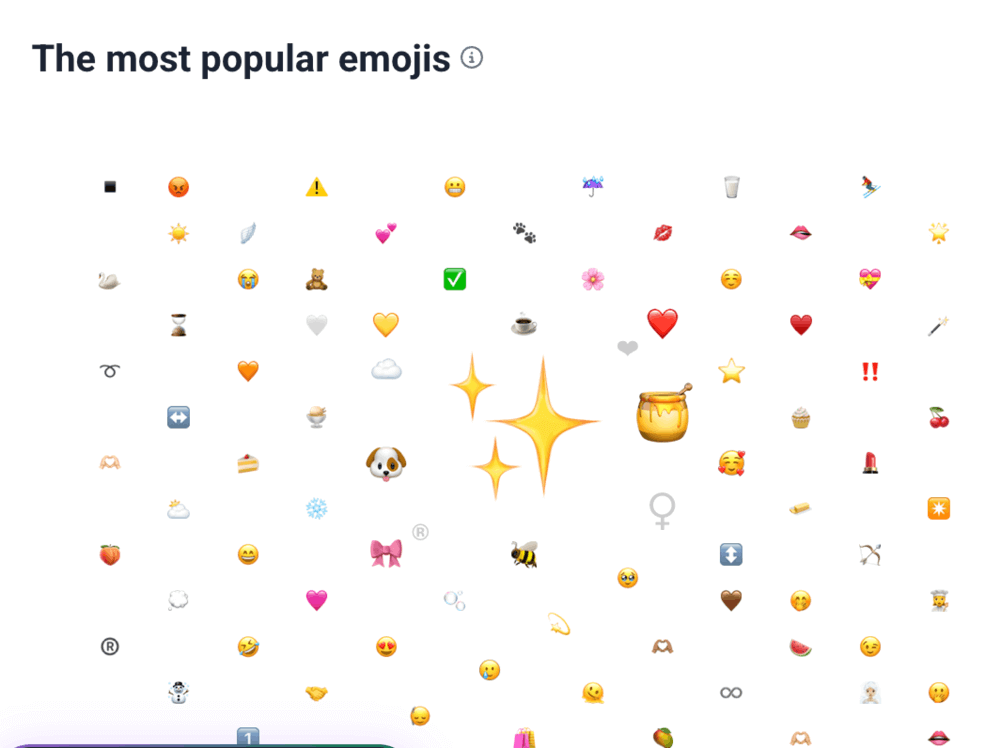
Dans le cas de Gisou, l'emoji ✨ apparaît des centaines de fois et est typiquement un signe d'admiration ou d'excitation.
Si vous commencez soudainement à voir plus de 🙄, 🤡, ou 💀, cela indique généralement un changement de ton, souvent sarcastique ou négatif.
C'est n'est pas une mesure autonome, mais elle permet d'ajouter rapidement un contexte, surtout sur TikTok, où le ton peut être subtil.
Étape 5 : Analyser les sujets relatifs à votre marque
Allez maintenant à la page Analyse des thèmes de l'IA tabulation.
Cette section montre ce que les gens discutent actuellement de votre marque.
Pour Gisou, l'un des thèmes dominants est la “routine matinale de la beauté”.”
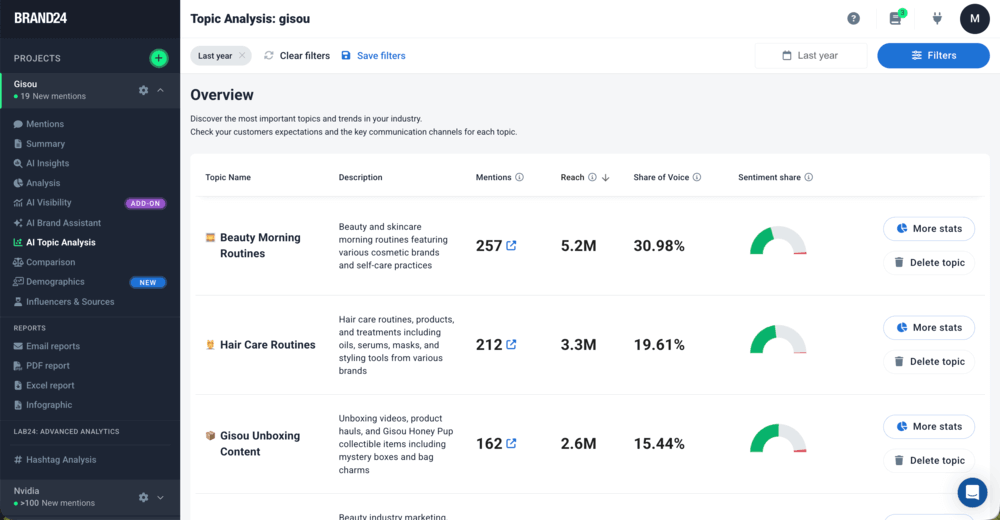
Si vous vouliez analyser ce sujet, vous le verriez :
- “Routines matinales de beauté” générées 257 mentions sur TikTok et a atteint 5,2 millions de personnes.
- Son Share of Voice compte pour 30.98% de toutes les discussions sur Gisou sur cette plateforme.
- La répartition des sentiments montre que 41% de mention sont positives, 56% sont neutreset seulement 2% sont négatifs.
Cela vous indique quelque chose d'exploitable : les recommandations organiques suscitent un sentiment positif.
Si un autre sujet présente une augmentation des mention combinée à un sentiment négatif croissant, c'est généralement là qu'il faut se concentrer en premier, qu'il s'agisse d'un problème de produit, de retards d'expédition ou d'une vidéo controversée.
Étape 6 : Suivre l'évolution du sentiment au fil du temps
Enfin, utilisez la fonction Onglet Comparaison pour suivre et analyser l'évolution des sentiments.
Le sentiment TikTok autour de votre marque ou de votre produit peut changer en un clin d'œil :
Une seule vidéo d'un influenceur peut faire basculer les sentiments en quelques heures. D'autres fois, la négativité s'installe lentement à travers de nombreux commentaires et points de vue. Mais les deux peuvent gravement nuire à votre réputation de la marque!
En surveillant constamment l'évolution des sentiments sur TikTok, vous pouvez.. :
- Repérer les drames avant qu'ils ne s'enveniment.
- Répondre rapidement aux mention positives pour construire une communauté forte.
- Transformez les commentaires des clients en informations exploitables en temps réel.
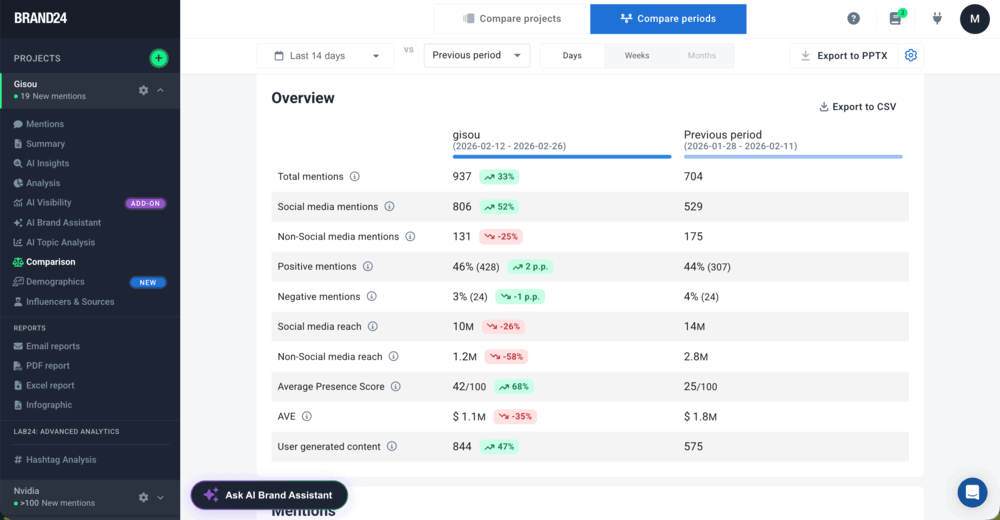
Si l'on examine la comparaison d'une période à l'autre, on constate que Les mention positifs de Gisou ne cessent d'augmenter.
FAQ
Qu'est-ce que l'analyse des sentiments sur TikTok ?
L'analyse du sentiment TikTok détermine si les vidéos TikTok (plus précisément, les descriptions de vidéos) et les commentaires mention sur une marque, un produit, un hashtag ou un sujet spécifique sont positive, négative ou neutre.
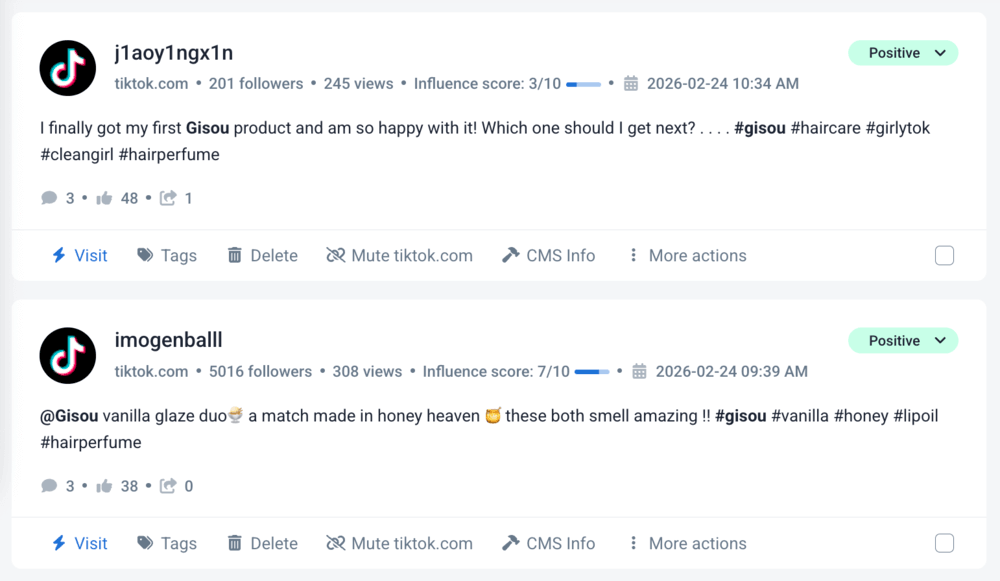
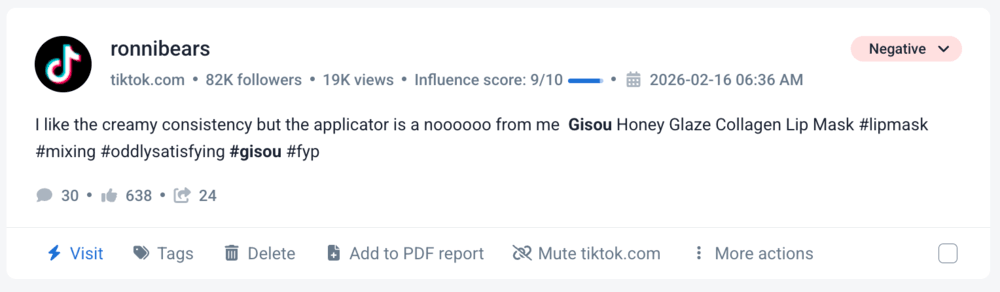
Il utilise le traitement du langage naturel (NLP) et l'apprentissage automatique pour classer automatiquement les textes, ce qui vous aide à comprendre la perception globale de la marque sans avoir à examiner manuellement des centaines de commentaires.
Important : l'analyse des sentiments fonctionne sur le texte (légendes et commentaires), et non sur le son des vidéos.
Pourquoi l'analyse des sentiments sur TikTok est-elle importante ?
Les utilisateurs de TikTok sont directs. Si quelque chose ne va pas, ils le disent, et souvent publiquement.
Le suivi des sentiments vous aide :
- Détecter les tendances négatives avant qu'elles ne s'aggravent
- Identifier les plaintes récurrentes
- Mesurer l'impact de la campagne
- Répondre aux questions positives de mentions
- Comprendre comment votre marque se situe par rapport à ses concurrents
TikTok influençant la découverte des produits et les décisions d'achat, les changements de sentiment peuvent avoir une incidence directe sur les ventes et la réputation.
Quelles sont les limites des outils d'analyse du sentiment sur TikTok ?
Les outils d'analyse des sentiments de TikTok sont très puissants, mais ils ne sont pas 100% parfaits.
Comme tous les systèmes d'analyse de texte basés sur l'IA, ils peuvent parfois rencontrer des difficultés :
- Sarcasme et ironie
- L'argot et l'évolution de la langue TikTok
- Nuances culturelles
- Contexte de l'emoji
- Commentaires très courts ou ambigus
Par exemple, un commentaire tel que “Eh bien... c'est intéressant 💀” peut parfois nécessiter une interprétation humaine pour comprendre pleinement le ton.

Toutefois, si les mention individuels peuvent parfois être mal classés, il n'en va pas de même pour les mention, les tendances générales et les variations de pourcentage restent fiables à l'échelle. C'est pourquoi l'analyse des sentiments par l'IA fonctionne mieux lorsqu'elle est combinée à l'examen manuel des mention à fort impact.
Comment utiliser l'analyse des sentiments sur TikTok pour prendre des décisions commerciales ?
Les données sur le sentiment TikTok permettent de prendre des décisions commerciales pratiques.
Par exemple :
- Un pic de sentiments négatifs peut indiquer un problème de produit ou une vidéo controversée.
- Une augmentation des mention positifs après une campagne confirme que le message est percutant.
- Sentiment au niveau du sujet montre quelles discussions donnent lieu à des éloges ou à des critiques.
- Comparaison des périodes aider à évaluer les collaborations avec les influenceurs.
Au lieu de vous appuyer sur des hypothèses, vous pouvez fonder vos décisions sur des données de conversation réelles.
À quelle fréquence devez-vous vérifier le sentiment TikTok ?
Pour les marques actives, examen hebdomadaire du sentiment est un minimum.
Lors du lancement d'un produit, d'une campagne d'influence ou d'une situation délicate sur le plan des relations publiques, suivi quotidien est recommandée.
Alertes en temps réel vous aider à réagir rapidement lorsque le volume ou le sentiment de mention change de façon inattendue.

Article examiné par