Table of contents
2M Marketers

Did you know that Google can rank your site higher? Even if there’s no backlink involved.
Brand mentions are becoming more and more powerful signals in traditional and AI search. A recent study by Ahrefs found that brands in the top 25% for online mentions appear in AI reviews over 10x more often than those with fewer references.
In this article, we’ll explore how to find brand mentions, make the most of them, and how their role is evolving in 2026.
Key takeaways
-
What’s a Brand Mention?
Any reference to your brand name, product, or website (with or without a hyperlink).
-
What do brand mentions do for SEO?
Brand mentions are direct signals for search engines about your brand. They boost semantic relevance, supporting E-E-A-T, increasing AI search visibility, and driving brand awareness.
-
Mentions vs. backlinks
Backlinks lift one page in traditional search. Mentions build your whole brand's authority — and that's increasingly what decides who shows up, especially in AI answers.
-
How do you monitor brand mentions?
You'll want an advanced media monitoring tool, not just Google Alerts. Brand24 catches your mentions across social media, forums, blogs, podcasts, and reviews — and with LLM Listening, inside AI answers too.
What Are Brand Mentions (and Why Do They Matter for SEO)?
Basically, a brand mention is any reference to your brand name, but not only! There are also your branded products and slogan. Any related terms that can be associated with your brand.
They can be divided into two categories: by format and by intent.
| Type | Description |
|---|---|
|
1
Tagged mention
|
Your brand is tagged or linked (e.g., @brandname on social media, or a hyperlink on a website (sometimes nofollow links)). |
|
2
Untagged mentions
|
Your brand is mentioned in plain text without a clickable link or tag. (Also called implied or default links). |
|
3
Direct Mentions
|
Your own brand name is explicitly used (e.g., “Nike”). |
|
4
Indirect Mentions
|
Your brand is referenced through products, slogans, or campaigns (e.g., “Just Do It” without saying “Nike”). |
That’s why, to track key mentions, I like to start by making a list of all related terms. For example, instead of directly mentioning “Apple,” users can use AirPods, iPhone, iOS, or MacBook. However, it’s still clear what brand they are talking about.
Here’s a little sample of a list for Brand24:
- Brand Assistant
- LLM Listening
- AI Topic Analysis
- Share of Voice
- Influencer Score
This helps ensure I don’t miss valuable feedback and gives deeper insights into how people perceive the brand.
Pro tip: When making a list, remember to include the most common misspellings of related terms and different languages.
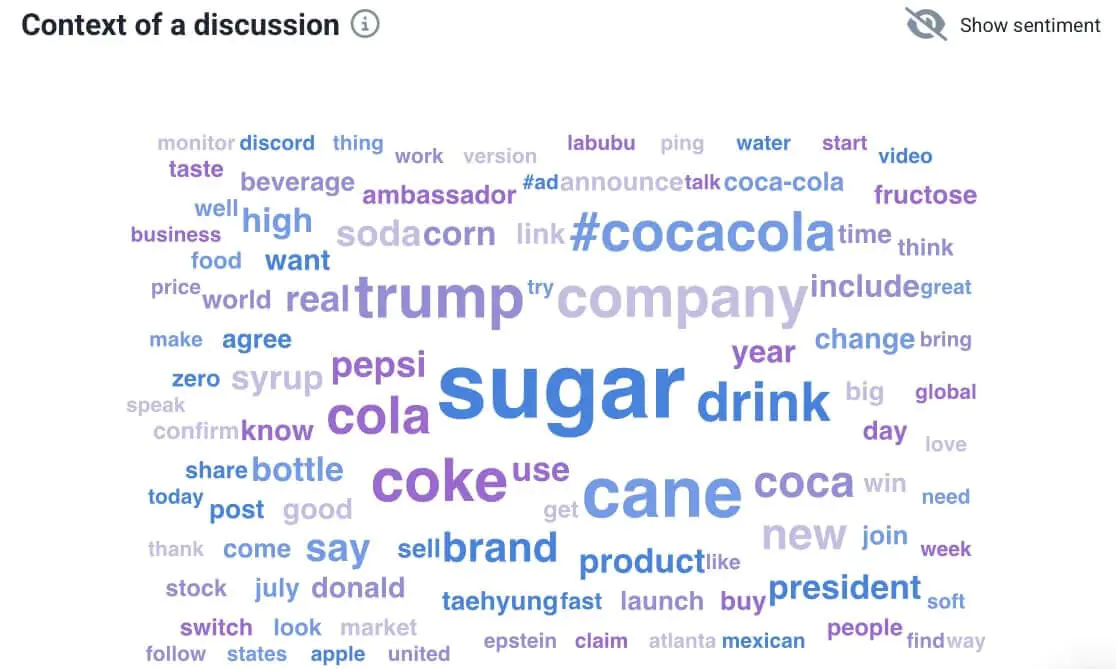
Let’s see some real examples.
What Do Brand Mentions Actually Do for SEO?
From an SEO perspective, mentions act as a digital beacon signaling your brand’s relevance and credibility:
If people talk about you, it pays to know what they say, where, and how. That’s a goldmine of keywords and insights SEO teams can use to adjust their strategy.
This message will also go to Google, AI models, and all users who saw this mention.
And that creates their perspective about your brand. Especially if the same information surfaces frequently — repetition across sources reinforces how both users and algorithms perceive your brand.
But this is just the tip of the iceberg. Let’s look at it in more detail:
| What Mentions Do | SEO Value They Deliver |
|---|---|
|
1
Build Authority
|
Earn trust through association with high-authority, relevant sources |
|
2
Create Semantic Connections
|
Tie your brand to key industry topics + keywords organically |
|
3
Fuel Brand Awareness
|
Show up across traditional and AI search, even in voice or chat-based discovery |
|
4
Drive Direct Traffic
|
Spark brand curiosity that brings users to your site, even without links |
|
5
Enable Digital PR Strategy
|
Amplify coverage and discoverability through strategic placement across online platforms |
|
6
Unlock Insights
|
Analyze mentions for keyword intent, tone, influencer marketing, and optimization opportunities |
1. They Build Brand Authority
When trusted sources regularly mention your brand across different platforms, it creates a brand bat-signal – a strong, public sign that your brand is active, credible, and trusted by others.
This feeds directly into Google’s E-E-A-T framework (Experience, Expertise, Authoritativeness, Trustworthiness), which is exactly what Google looks for when deciding what to rank higher.
| What External Mention Do | Which E-E-A-T Element They Support |
|---|---|
|
1
Show people actually use and talk about your product |
Experience |
|
2
Come from niche experts or respected platforms |
Expertise |
|
3
Happen across credible sources like top blogs or media |
Authoritativeness |
|
4
Come from trusted sources, with a consistent tone and facts |
Trustworthiness |
2. They Improve Brand Visibility in Traditional + AI Search
We’re not just talking about better rankings in traditional search.
That credibility also helps your brand appear across a wide range of search and AI-driven experiences, including:
- Organic search results (SERPs)
- Featured snippets
- “People Also Ask” sections
- Google AI Overviews
- Answers from ChatGPT, Claude, and other AI platforms
- Voice and visual search
It creates a ripple effect:
Stronger authority → greater reach → broader discoverability
3. They Train Search Engines (and AI) on Who You Are
Google doesn’t just learn about your brand from your homepage or LinkedIn profile. It builds a knowledge graph based on the full context of how your brand appears across the web. This includes what is said about you, who is saying it, and how frequently it occurs.
Every mention helps search engines better understand:
- What your brand does
- What topics or industries are you associated with
- What kind of language and sentiment typically surround your brand
For example, if a clothing brand is frequently mentioned alongside phrases like “quality material” or “sustainable fashion,” those associations become part of its semantic identity.
Over time, this shapes how both users and search engines perceive your brand identity.
4. They Drive Website Traffic
Let’s say someone hears your brand on a podcast. Or sees it in a blog, tweet, or news article. What happens next?
They search. They visit. They convert.
5. They Offer Actionable Insights
Monitoring brand mentions isn’t just about seeing who’s talking about you. It gives you real-time, unfiltered insight into how people perceive your brand.
You can uncover:
- What the sentiment is (positive, negative, or neutral)
- Which keywords or topics keep surfacing
- What features, products, or pain points are getting attention
These insights help you:
- Optimize your content around what your audience actually cares about
- Identify influencers or creators already advocating for your brand
- Refine your messaging for clarity, credibility, and differentiation
- See the real perception of your brand, not just your ideal version
Where Brand Mentions Appear Online
Brand mentions are everywhere people are. Here’s where they appear and how to make the most of each channel:
| Channel | Role of Brand Mentions | Recommended Actions |
|---|---|---|
|
1
Social Media Platform
|
Boost visibility, fuel PR strategy, and generate social signals |
Create engaging content, collaborate with creators, use branded hashtags, and encourage user-generated content (UGC) |
|
2
Blogs & News Articles
|
Build SEO authority, drive website traffic |
Pitch story ideas, launch PR campaigns, and collaborate with journalists and editors |
|
3
Online Review Platforms
|
Provide trust signals, improve local SEO, and support AI training signals |
Encourage satisfied customers to leave reviews, and automate post-purchase review requests |
|
4
Podcasts
|
Niche shows, branded podcasts |
Appear as a guest, sponsor episodes, and repurpose podcast quotes for social media |
|
5
Forums & Q&A Sites
|
Validate community sentiment, gain niche insights |
Answer questions authentically, monitor keyword clusters, and gather customer insights |
|
6
LLMs & AI Search
|
Enhance linkless visibility, boost semantic authority, and increase AI discoverability |
Produce expert, contextual content; refresh authoritative sources; explore AEO (Answer Engine Optimization) and GEO (Generative Engine Optimization) opportunities |
Want to learn how to track mentions efficiently?
Dive into how to monitor social mentions or explore full-spectrum media monitoring.
What Is the Best Tool for Brand Mentions Monitoring?
You might be using Google Alerts to track brand mentions. And for quick, basic notifications, it’s not the worst option.
For a better understanding of where and how your brand is mentioned, you need advanced social listening.
To track mentions across social media, online publications, forums, podcasts, and even AI-generated content from tools like ChatGPT, Claude, and Gemini.
The truth is, Google Alerts misses most of that.
Here are my favorite brand monitoring tools:
- Brand24
- Chatbeat
- Semrush
- Ahrefs
These platforms give me insights into what’s being said, where it’s being said about my brand and my competitors. And what it means for my brand reputation, search visibility, and AI presence.
Ahrefs found that brands in the top 25% for online mentions appear in AI-generated reviews over 10x more often than the rest.
Mentions aren’t just an SEO signal anymore. They’re the key to strong AI-visibility.
Our free playbook includes prompts to check how AI currently describes you and which source is shaping it.
Download it and test the prompts:

Key Metrics for Tracking Brand Mentions:
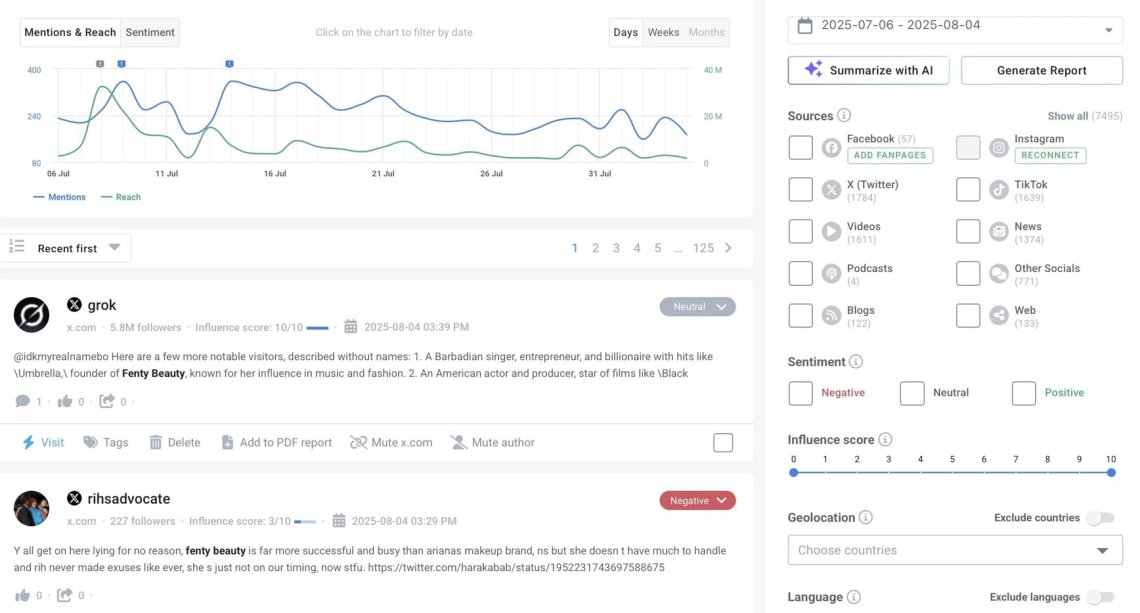
Volume of Mentions
The total number of brand mentions across channels. It’s a signal LLMs and search engines use to determine whether your brand deserves a spot in results.
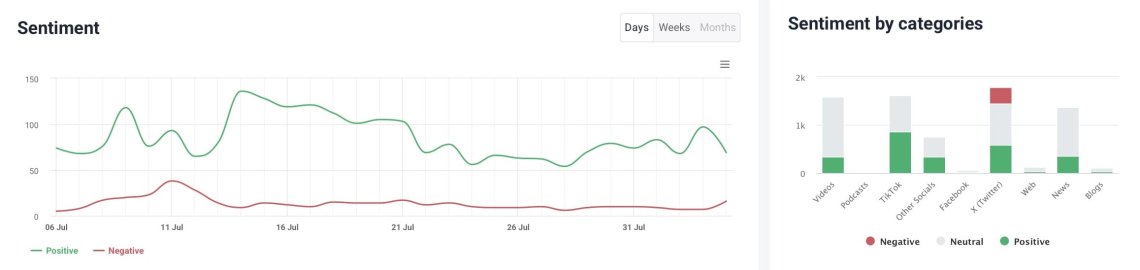
Sentiment Analysis
Are the mentions positive, negative, or neutral? Tracking brand sentiment helps you know how people feel about your brand, and when you need to change the conversation.
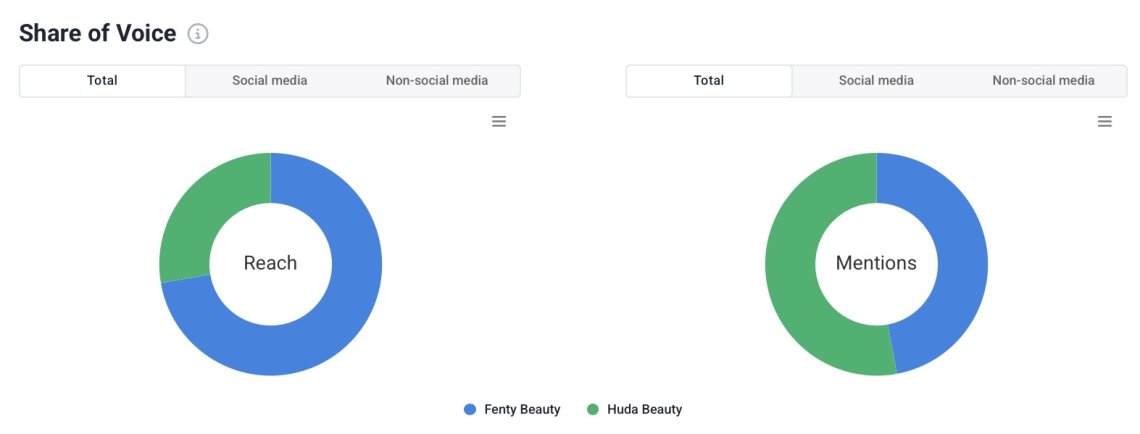
Share of Voice
How much of the online conversation belongs to you vs. your competitors? This metric shows whether you dominate the space… or are drowned out.
Real-time alert
Set up alerts using your brand name, hashtags, or even misspellings to stay informed the moment something happens.
Tools like Brand24 offer real-time tracking and also send weekly and monthly summaries. Giving me insights without manual digging.
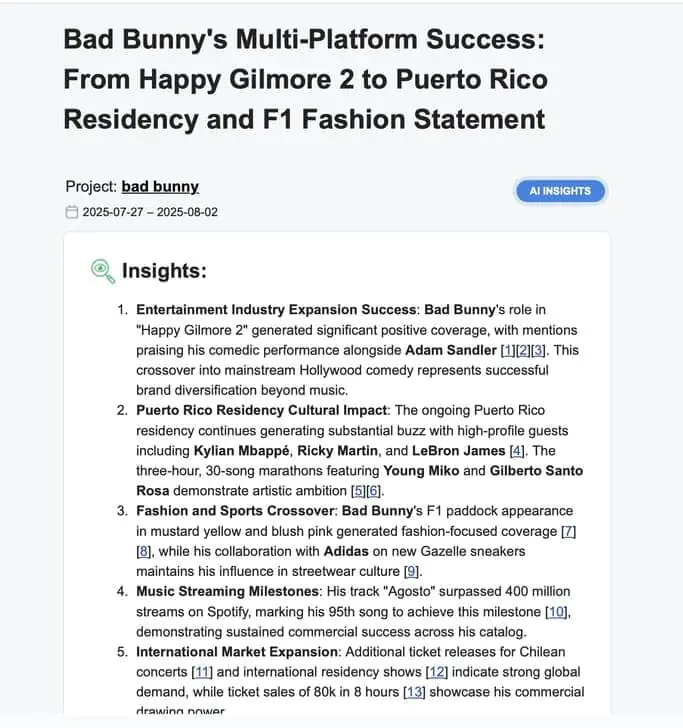
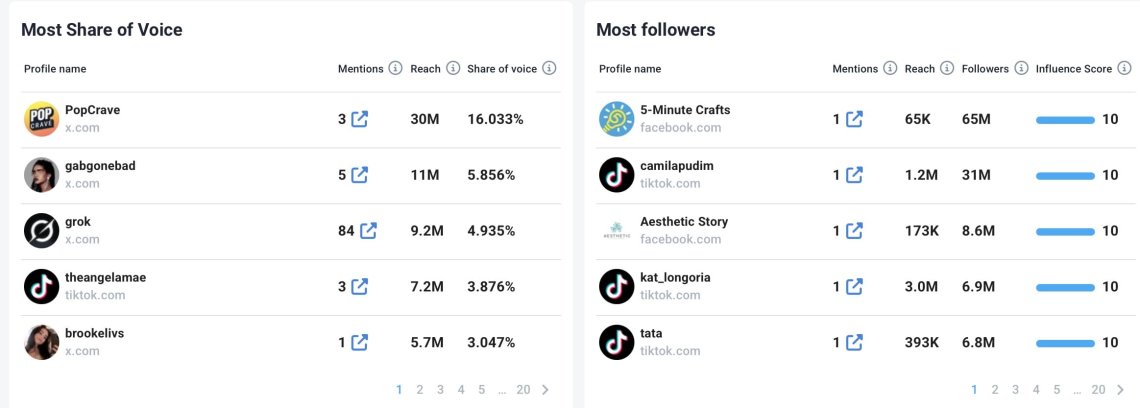
Influencer Score
Not all mentions are equal. This metric shows who’s talking about you and helps you focus on high-authority sources that move the needle.
LLM Listening
Consumer behavior is evolving. People don’t just Google anymore. They ask ChatGPT, check Google’s AI Overviews, or use tools like Perplexity to explore brands, products, and services.
This shift creates a new layer of visibility you can’t afford to ignore.

That’s where I like to use Chatbeat. It tracks how often and how positively your AI brand mentions appear in AI-generated responses.
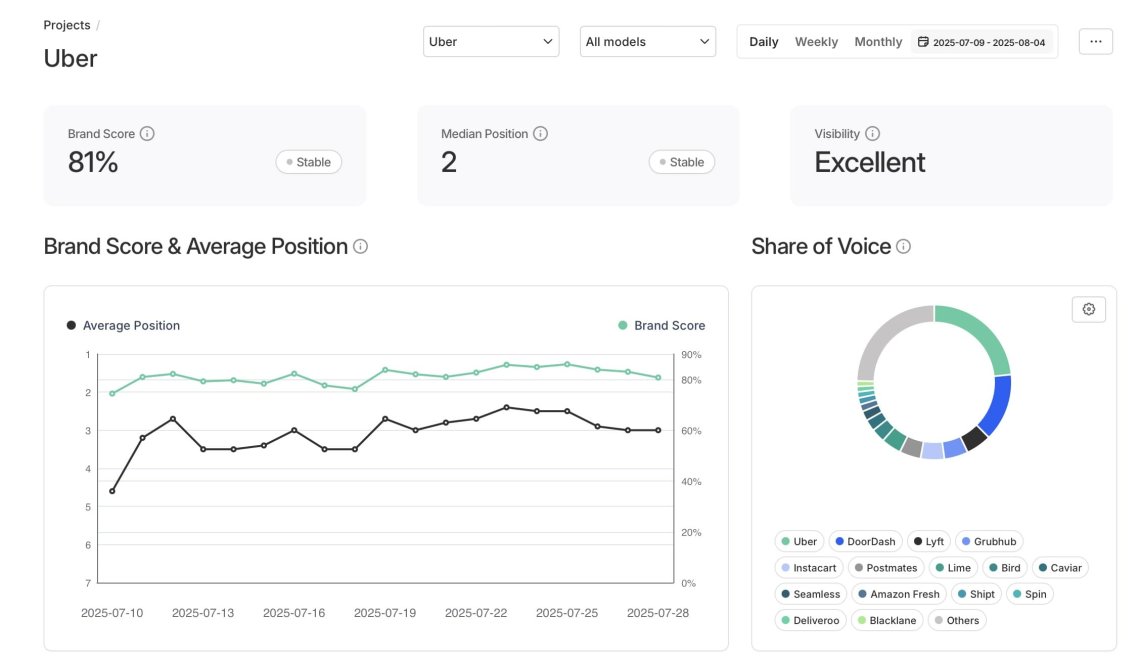
With Chatbeat, You Can:
- See how your brand (and competitors) appear in responses from ChatGPT, Claude, Gemini, Google AI Overviews, and Perplexity
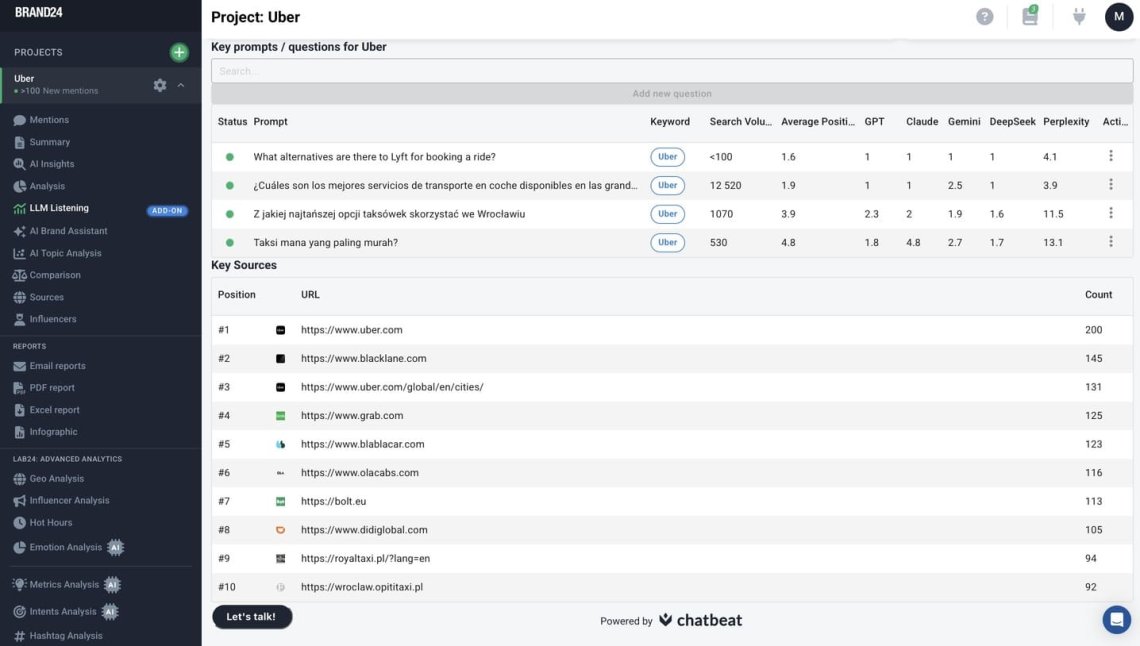
- Track prompt trends: Find out what people are asking that leads to your brand being mentioned (e.g., “best project management tools” or “top fintech platforms”)
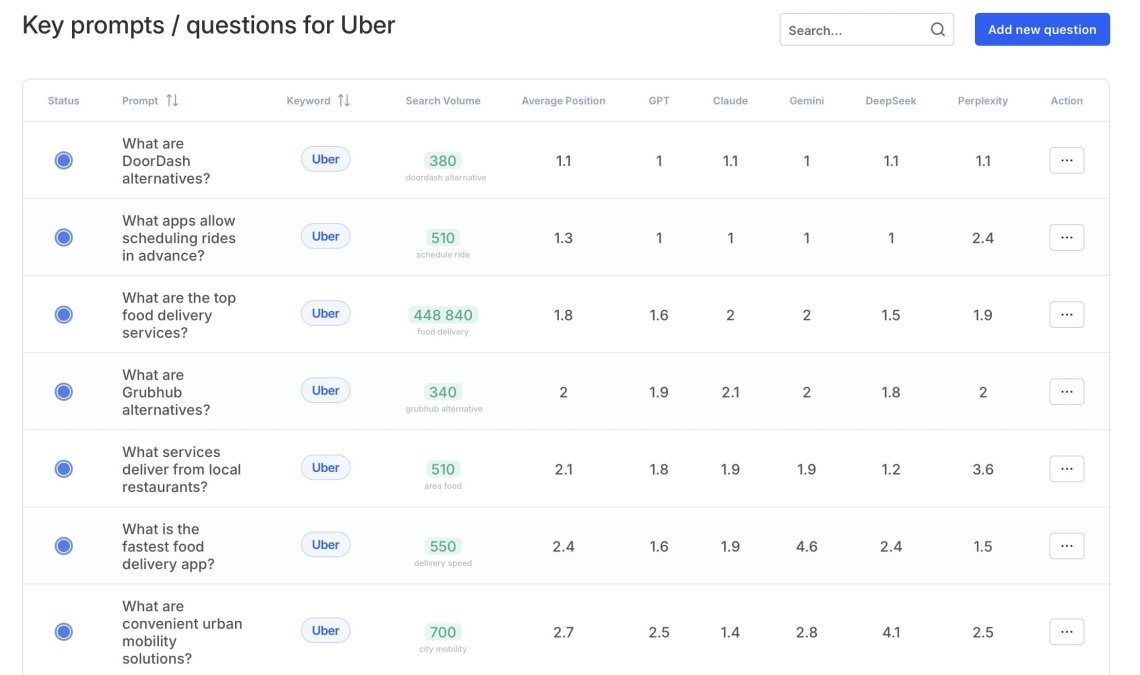
- Monitor sentiment and keyword associations: Are LLMs framing your brand as innovative or problematic?
- Spot blind spots: identify prompts where your competitors appear but you don’t
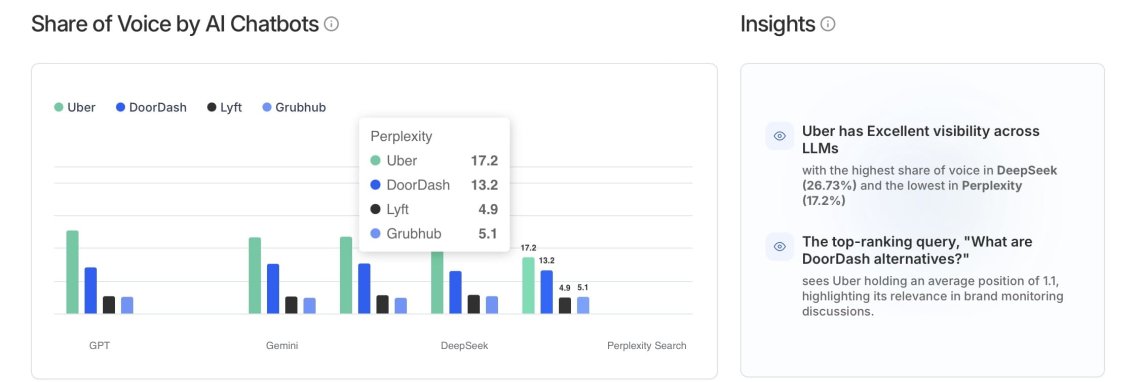
- Gain source-level insights: which blogs, websites, or pages LLMs are pulling from when referencing your brand
And this last one is a game changer for your SEO and content strategy.
If you know what sources influence AI-generated answers, you can:
- Boost and promote brand mentions already driving results
- Collaborate with influential publishers shaping AI output
- Create content optimized not just for Google, but for how AI sees and explains your brand
Used together, tools like Brand24 and Chatbeat provide a fuller picture: one captures what people are saying, the other reveals how machines process and reflect that information.
How to build a brand mention strategy & get more brand mentions?
You don’t need a PR agency or a bunch of time-consuming extra tasks. What I feel is working is consistency.
Here’s my little guide for building real visibility (without burning me out):
- Share blog posts with other creators
When you publish something, don’t let it sit. Within 48 hours, send it to 5–10 people who already cover your topic (niche bloggers, journalists, industry creators). I do this on LinkedIn: I search for people who posted about my topic, then comment it or send a short DM pointing to the one section of my article that adds to what they already said.
That small outreach makes it way easier for them to mention you and your brand in their next post, roundup, or news article covering the niche. That’s how you grow brand mentions across trusted sources and around your network.
- Collaborate with micro-influencers
Influencer marketing might seem expensive and complicated, like YouTube. However, a massive influencer is not needed to reach an audience.
That’s because micro-influencers (roughly 5K–50K followers) often have tight-knit communities and higher trust. A quick mention from them can spark conversations, shoutouts, or even user-generated reviews. These brand mentions feel more natural, and authenticity appears in your audience engagement and even in AI search results.
Pro tip: Tracking brand mentions also allows you to find out if people are talking about your brand, product, or offer even without a collaboration. Don’t miss those key mentions in the buzz!
- Show up beyond Google and social
Podcasts, expert roundups, industry reports, and Q&A threads (Reddit, Quora) are exactly the sources LLMs cite when they describe your category. When you get a chance to contribute — a guest podcast spot, a quote in a report, an answer in a forum — take it. You’re not just dropping your name; you’re building a reputation as an expert, and that’s what earns repeat mentions.
- Explore and share
What gets mentioned is stuff worth referencing or worth sharing. So before you hit publish, ask yourself one thing: is this citable, or is it shareable?
Citable is what blogs, journalists, and LLMs love to pull from. Give every piece at least one of these:
- an original stat or data point
- a framework or step-by-step process
- or a comparison table
My quick test? “Would someone actually screenshot this?” If not, add a number, a table, or your own take.
On social platforms play to it:
- Memes that hit a little too close to home (the easiest tag-a-friend content there is)
- Guides and carousels people actually save
- Inspo posts and reels — quick to watch, easy to reshare
- A hot take or a behind-the-scenes that begs for a reply
Give people a reason to tag you, and the snowball starts rolling on its own. One share turns into a comment, a comment into a repost, and suddenly you’re in conversations you never even started.
- Track your mentions
Set up a project using keywords, hashtags, or common brand name misspellings.
You’ll get real-time alerts, search filters, and a better understanding of how people (and AI) talk about you.
Here’s what that looks like in practice. When I tracked Spotify over the last 30 days, Brand24 surfaced 447K mentions reaching 3.9B people, with an Average Presence Score of 90/100.
On the AI side, Chatbeat put Spotify’s Brand Score at 88% with a median position of 1, basically the first brand most chatbots name. But the share-of-voice breakdown is where it gets useful: even with a 32% share of voice across competitors, Spotify leads in Perplexity (28% SoV).
Using Brand24 & Chatbeat together, I can monitor both tagged and untagged mentions across the web, and see exactly where my brand shows up (or doesn’t) in AI answers.
Ready to upgrade your PR workflow with AI? Explore our expert guide to the most effective AI tools for PR.
- Engage with your audience to boost their UGC
A simple reply, repost, or shoutout can go a long way.
When people feel seen, they share more. That’s how you keep the momentum and build brand mentions that don’t just happen once but keep coming. I like to think about it as any regular relationship: both sides need to show interest, appreciation, and vibe.
Not sure how to respond to brand mentions or boost engagement?
Here’s where to start:
- How to Respond to Online Reviews? 10 Golden Rules
- What is Brand Engagement & Why is it Important?
- How to Get Customer Testimonials? Extremely Easy Method
FAQ
1. Are brand mentions a Google ranking factor?
2. Do unlinked (implied) brand mentions help SEO?
3. What’s the difference between a brand mention and a backlink?
Backlinks deliver:
Direct authority (link equity) passed from the linking page to yours
A stronger, more direct ranking signal for the linked page and its keywords
Referral traffic and faster crawling/discovery of your pages
Brand mentions deliver:
Entity authority — they teach Google and LLMs who you are and what you’re known for, feeding your knowledge graph
Semantic relevance — repeated mentions tie your brand to key industry topics and keywords
E-E-A-T and trust signals from being talked about across credible sources
AI search visibility — mentions are a primary signal for getting cited in ChatGPT, Gemini, and AI Overviews
Brand search demand and awareness, which lift rankings indirectly
In short: backlinks push a specific page up in traditional search, while mentions build the brand-level authority that increasingly decides who gets surfaced — especially in AI search.
4. How do you get more brand mentions?
In practice:
Share your content directly with niche creators, bloggers, and journalists (LinkedIn works well).
Collaborate with micro-influencers: smaller, high-trust communities generate more natural mentions.
Show up beyond Google and social: podcasts, interviews, reports, expert roundups.
Publish genuinely original, reflective content people want to tag.
Engage with every mention (reply, repost, shoutout) to keep UGC coming.
5. How do you get brand mentions in AI tools like ChatGPT?
Here’s a full guide on how to rank your brand on ChatGPT.
6. How do you track and monitor brand mentions?
7. How do you turn brand mentions into backlinks?
More tactics here: how to find unlinked brand mentions.