Table of contents
2M Marketers

Results at a glance
- 1 Coffeedesk.pl became the most-cited site in their category across AI models.
- 2 The number of URL citations for their AI-optimized content increased by 40%.
Key takeaways
-
Coffeedesk observed that the discovery part of the consumer journey is shifting towards AI answers—very often with no click. This led them to realize that their visibility could rise even if session and attribution numbers stayed flat.
-
They used Chatbeat to monitor how their AI visibility changes. The indicators they especially focused on were Brand Score, Share of Voice (SOV), citation sources, and competitor benchmarks.
-
GEO strategy was easy to execute; they started updating their content and then checked Chatbeat to see if and what had changed in their scores. Over time, this gave the team more confidence in identifying which types of improvements were actually strengthening their presence across AI models.
-
The team also tracked which URLs were winning citations, monitored which competitor sources were being picked, and analyzed the “why” behind it.
About Coffeedesk
Coffeedesk is a Polish e-commerce brand. It is built for both professionals and coffee amateurs who want to enhance their coffee experience.
They sell specialty beans, brewing equipment, and accessories, and they teach people how to use them. Have you ever wondered which roastery to choose or which beans work best for a V60? If the answer is yes, then you’ve probably ended up reading one of their articles or guides.
Coffeedesk also operates multiple coffee shops across Poland.
Featured in this case study:
Piotr Kawka – Head of Growth Marketing at Coffeedesk
Challenge
We asked Piotr when his team first noticed the broader shift that many e-commerce brands are now facing: product discovery increasingly moving from search engines to AI-generated answers.
He explained that the first signs appeared in the discovery phase, which is exactly where AI is starting to change the rules for much of the e-commerce market.
The steady stream of SEO traffic they were used to had stopped. Organic search became less predictable. The team needed a plan B.
This was part of a broader shift: consumers were increasingly using AI tools to research products, compare alternatives, and narrow down decisions before ever visiting a store or website.
That created a tricky moment for the market, including Coffeedesk.
On one hand, they saw the impact was real. But at the same time, it didn’t always show up in the dashboards the team relied on.
And then the visibility of their brand and content was growing in AI models. But that didn’t neatly translate into sessions, UTMs, or attribution models.
So the team set new goals:
- to set up a simple, consistent way to measure progress over time
- to grow Coffeedesk’s presence in AI chat answers
In a zero-click world, you have to explain that visibility can grow even when traffic doesn’t look the same.
Why Chatbeat
Piotr’s team could sense that AI models were influencing customer discovery, but unlike many brands, they also had the analytical foundation to start managing that shift more deliberately.
What they couldn’t do without the tool was track this change.
There was no single place to answer the rising questions: Are we being recommended? For which prompts? How often, compared to our competitors? And are we cited as a source, or just mentioned?
Chatbeat became the monitoring and benchmarking layer for AI models, complementing the data Coffeedesk already used from tools like GSC, Ahrefs, and Senuto.
Coffedesk monitored:
- Competitor comparisons
- Brand Score (main KPI)
- Share of Voice
- Citations / Key Sources

How they use Chatbeat
1. Turn “AI visibility” into an optimization loop
Coffeedesk chose Chatbeat as its AI optimization tool. And so the work began.
They turned GEO into a repeatable process:
Improve → measure → adjust.
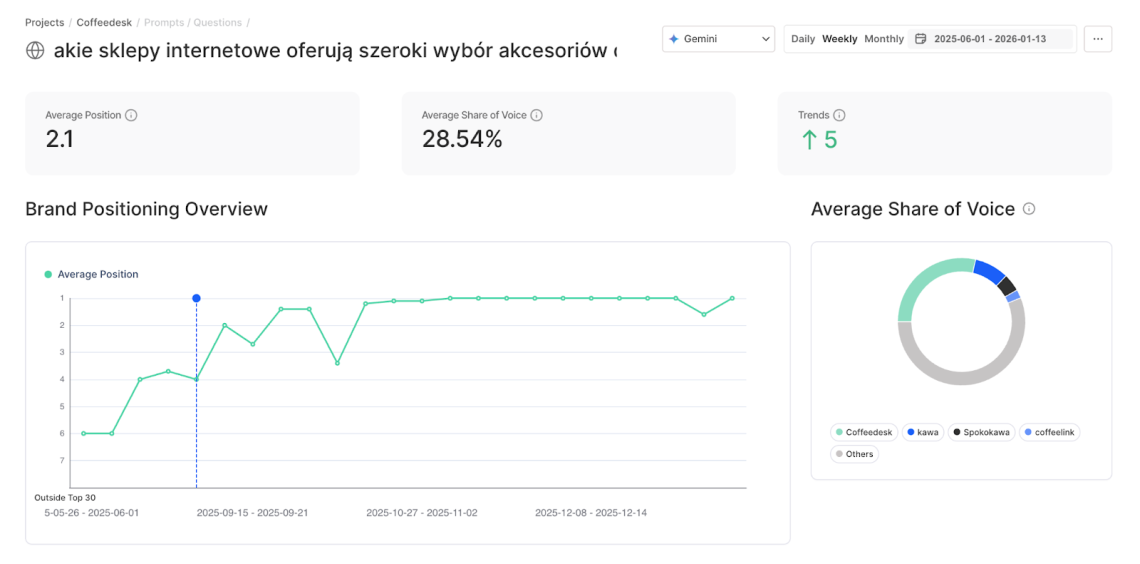
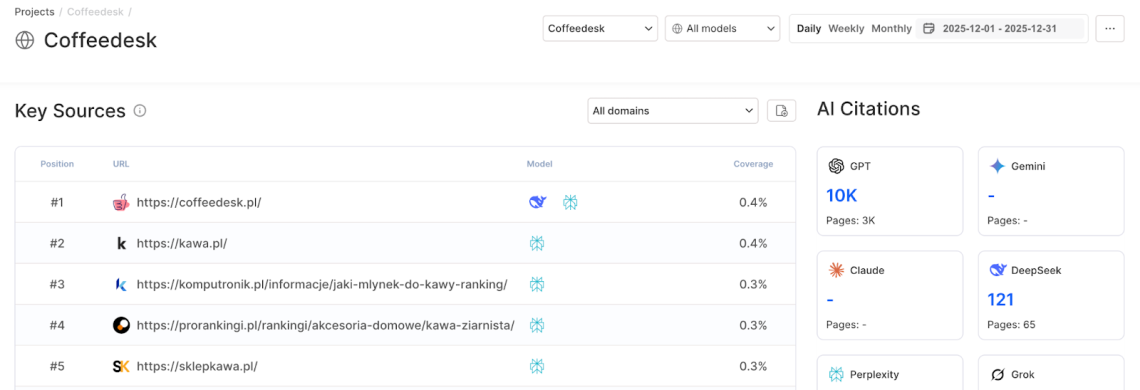
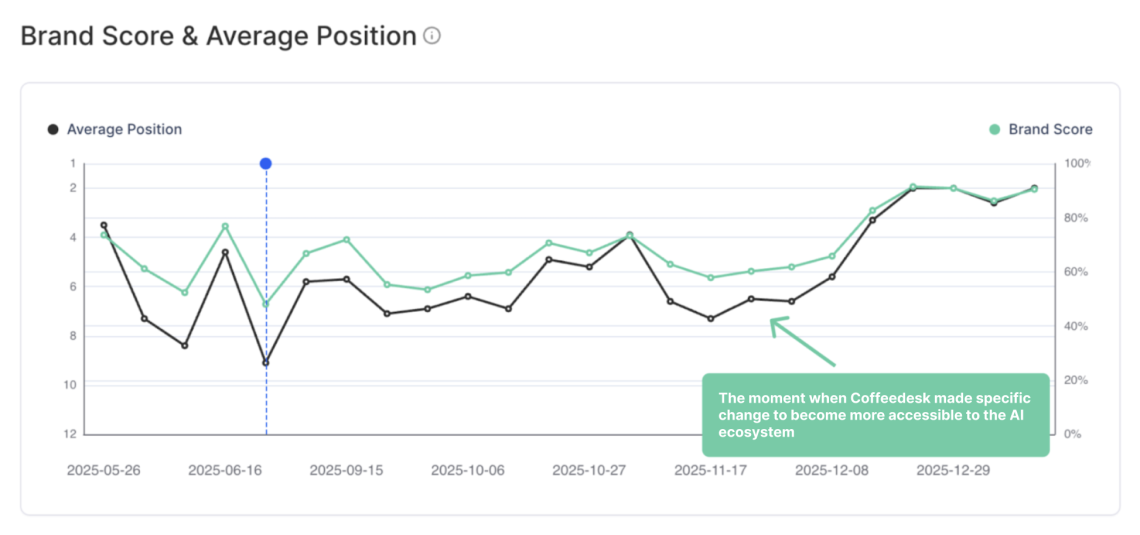
Effect: They started with the 5th average position in their category in September 2025. That meant that four competitors had a better Brand Score and gained more recognition in AI models than they did.
By the end of the year, they became the number one most-cited source.
Their approach centered on reinforcing the basics of strong digital visibility: clearer content, stronger information architecture, and more credible supporting signals.
Then, in Chatbeat, they tracked what changed in Brand Score, Share of Voice, and citations.
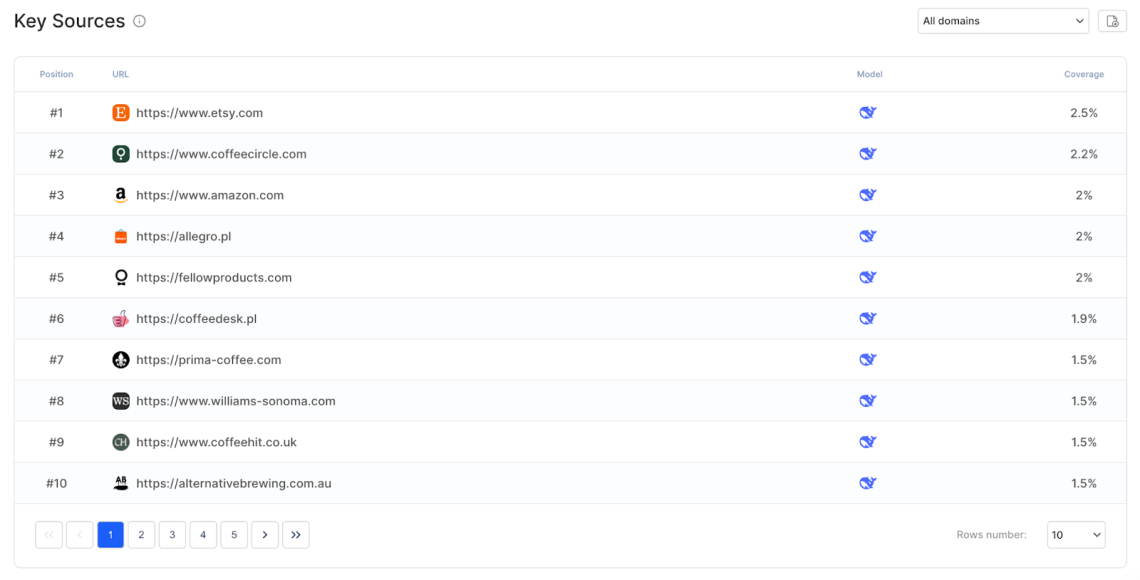
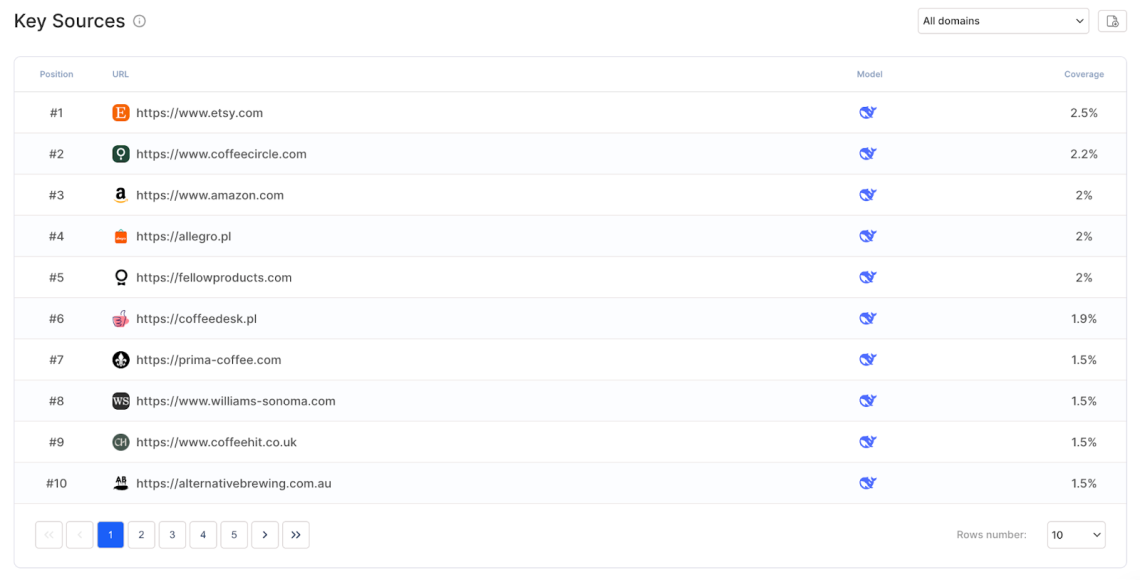
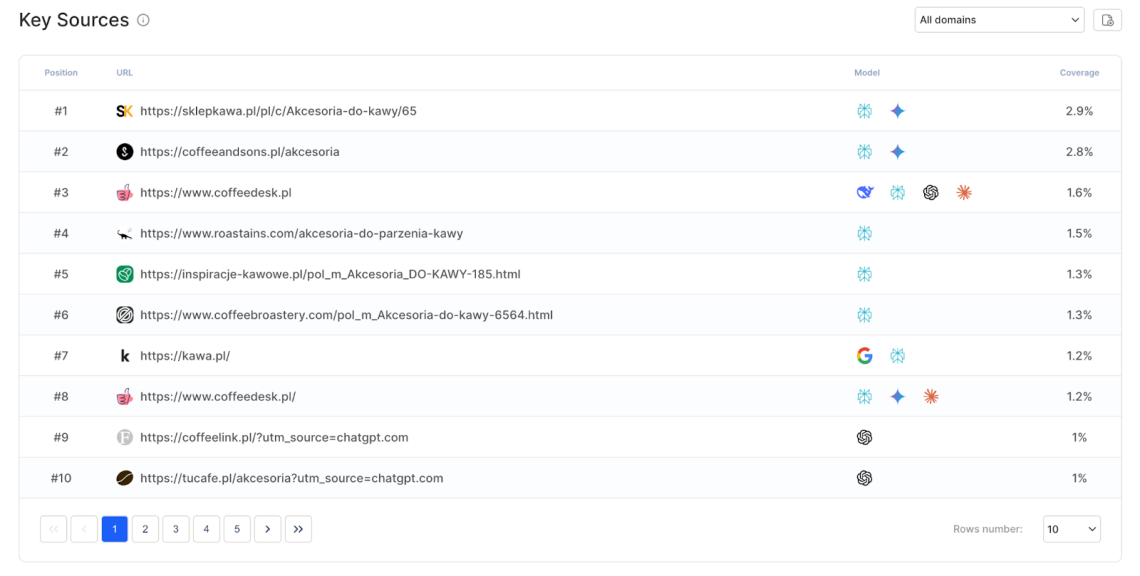
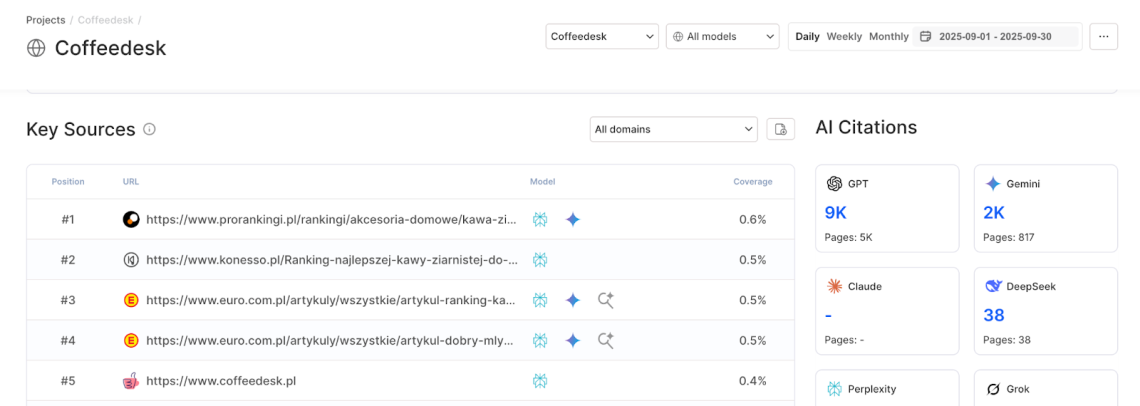
For each prompt and model, they checked Key Sources to see which URLs were cited, and compared those URLs to competitors’.
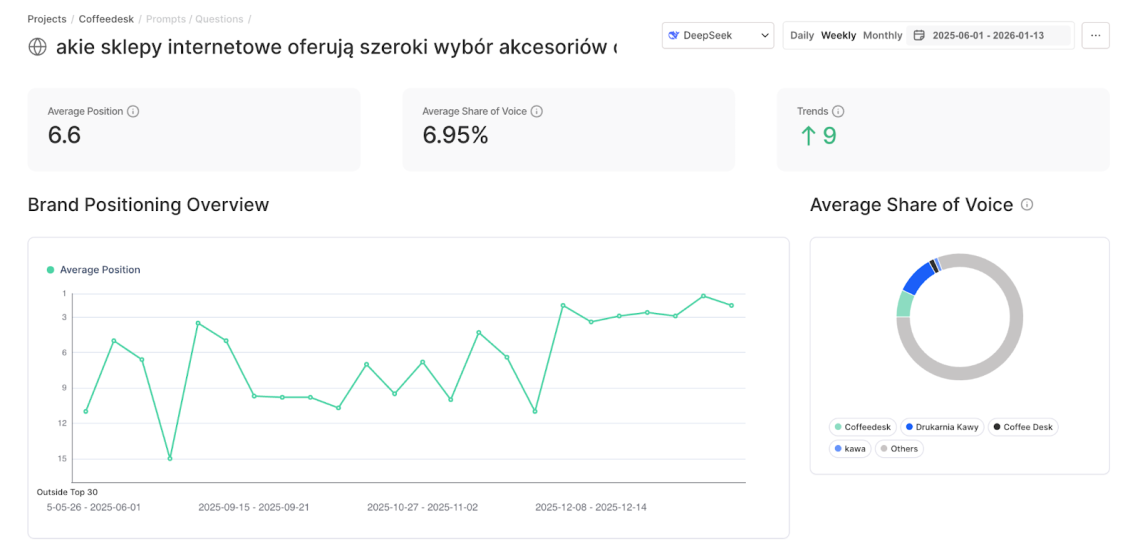
A key insight: different models lean on different kinds of sources. For example:
- In Gemini, Coffeedesk’s /akcesoria page is one of the top-cited sources. This shows their on-site improvements are turning into citations.
- In DeepSeek, the top sources are mostly big global marketplaces. This shows that different models trust different kinds of websites—and you may need different ways to build authority for each one.
The All models Key Sources view helped them prioritize:
- which Coffeedesk URLs get cited across models
- where competitors tend to outrank them
- which external sites are worth targeting for backlinks or benchmarking
2. Build “answer-ready” content – then confirm it’s being cited
They also expanded content designed to support decision-making during the consideration stage of the customer journey. They did this because those kinds of topics align with how people naturally phrase questions in AI models. That means they are more likely to be cited.
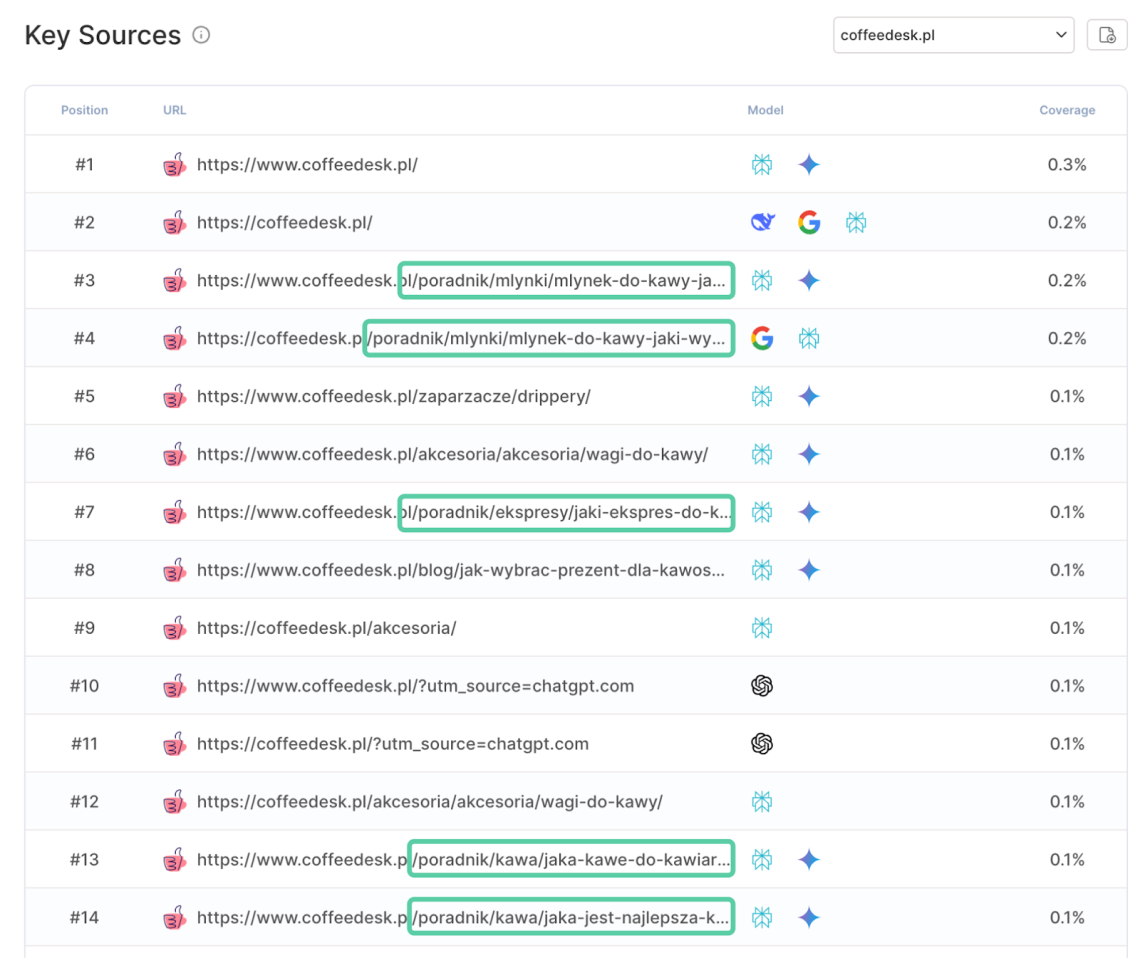
Effect: Coffeedesk increased the number of cited guide URLs from 5 in September to 7 by the end of the year.
With GEO, it’s a mistake to treat anything as “just blog content.” Coffeedesk started writing their guides as answer-ready pages instead.
In practice, this meant creating content that was easier to interpret, more useful in decision-making moments, and better aligned with how AI systems surface answers.
And with Chatbeat, they could see how it impacted their performance. When reviewing tracked prompts, the team opened Key Sources, filtered by coffeedesk.pl, and saw /poradnik (guides) URLs appearing repeatedly across multiple AI models—alongside their core commercial category pages.
3. Validate quick wins: one small change → more AI visibility
They also made selected distribution and visibility decisions that helped their content become more accessible within the broader AI ecosystem.
Especially one action turned into an “aha” moment.
Effect: This move improved their AI visibility.
After making one specific improvement, Piotr later checked the Chatbeat charts. He noticed the spike. The timing of the Brand Score increase aligned with the moment when they made the change.
Takeaway for other brands
Coffeedesk’s experience reflects a broader shift that many e-commerce brands are now facing: more product discovery is happening inside AI tools, often before a customer ever visits a website.
In that environment, traditional traffic and attribution data no longer tell the full story.
The key lesson is not just to improve visibility, but to build a consistent way of understanding what drives it.
With Chatbeat, supported by data from tools like GSC, Ahrefs, and Senuto, Coffeedesk was able to turn AI visibility from a vague signal into something they could track, evaluate, and improve over time.
Related articles

Top Reads
X (Twitter) Analytics Tools: The 15 Best for 2026
Brand Awareness Strategy [Ultimate Guide for 2026]
Sentiment Analysis in 2026: Definition, AI Methods & Original Research
Brand Monitoring: Tools & Guide for 2026
Brand Reputation Management: Expert Guide + Original Research [2026]
How to See How Many Times a Hashtag Was Used on X (Twitter)
9 Hashtag Tracking Tools Tested in 2026
Social Media Reach: How to Measure & Improve It in 2026?
Share of Voice: Definition, Formula, Tools [2026 Guide]
Social Media Analysis: Complete Guide for 2026
Start Social Listening!
Get the Brand24 trial and start social listening like a PRO.