Table of contents
2M Marketers

Emotion detection software is on the rise – by 2030, this market is expected to exceed $100 billion. No wonder, since emotions drive most human decisions and are becoming measurable data that businesses can analyze and act on. In this article, we covered the top 5 tools for different use cases.
Key takeaways
-
Emotions can be measured
Tools like Brand24 and Hume AI turn emotions into actionable data. This helps businesses understand users and make better decisions.
-
One size doesn’t fit all
Different emotion detection software analyze different signals like text, voice, or facial expressions. The right choice depends on your use case and data source.
-
Advanced tools = deeper insights
More advanced solutions like Affectiva or FaceReader offer richer analysis but require more resources. Simpler tools like Brand24 are easier to use and faster to implement.
Top Emotion Recognition Software for Different Use Cases:
| Tool | Use Case | Data Source | Best For |
|---|---|---|---|
|
1
Brand24
|
Social listening & sentiment |
Text (online mentions) |
Marketing, PR, brand monitoring |
|
2
MorphCast
|
Live audience engagement |
Video (face) |
Events, webinars, meetings |
|
3
FaceReader
|
Research & behavioral analysis |
Face and biometrics |
UX, academic research, market research |
|
4
Hume AI
|
Conversational emotion AI |
Voice and text |
AI products, customer support |
|
5
Affectiva
|
Advanced facial + real-world AI |
Video (face and behavior) |
Automotive, enterprise research |
When selecting the emotion recognition software, we considered the following key factors:
• Real-world applicability in marketing, UX, and product
• Different types of emotion detection (text, voice, facial, other)
• Range of use cases (business, research, and enterprise)
• Availability (from plug-and-play tools to advanced AI platforms)
01 Brand24
Brand24 is an AI-powered social listening tool that tracks and analyzes mentions of various keywords (brand names, hashtags, products, services, industries, etc.) in real time.
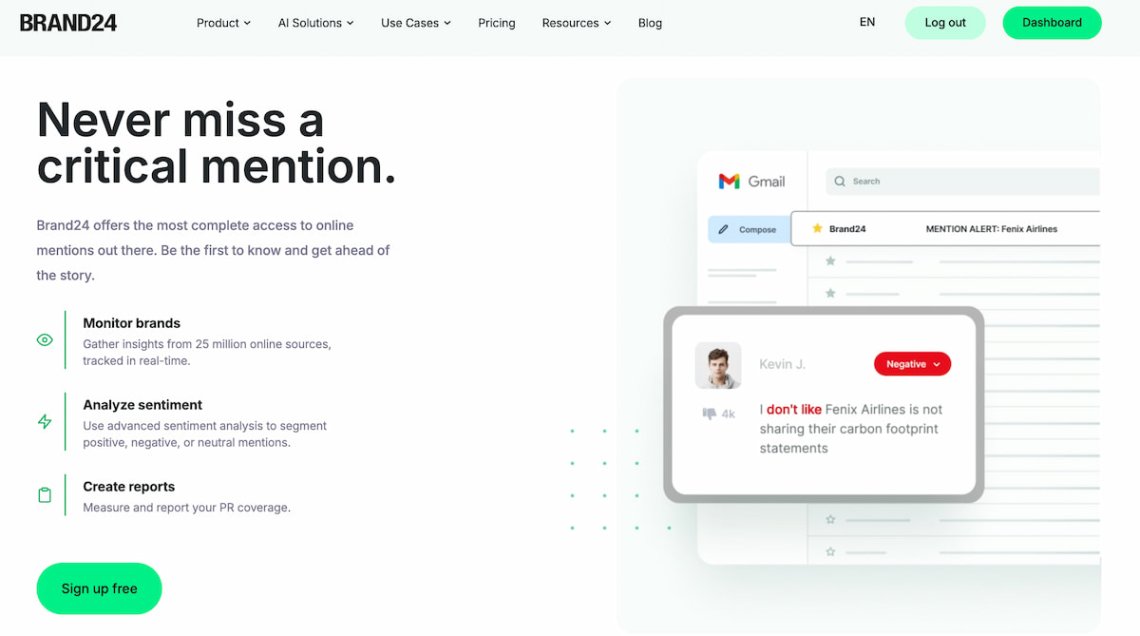
It crawls the web and finds the mentions you want in real-time across:
- Social media platforms, including Instagram, Facebook, X, Reddit, LinkedIn, YouTube, TikTok, Telegram, Twitch, and Bluesky
- Non-social sources, including news, blogs, forums, video platforms, podcasts, newsletters, and other media!
Brand24 uses natural language processing (NLP) and machine learning to perform a sentiment analysis – the process that discovers the emotional tone of mentions.
You can quickly check what kind of sentiment mentions have. It can be positive, negative, or neutral.
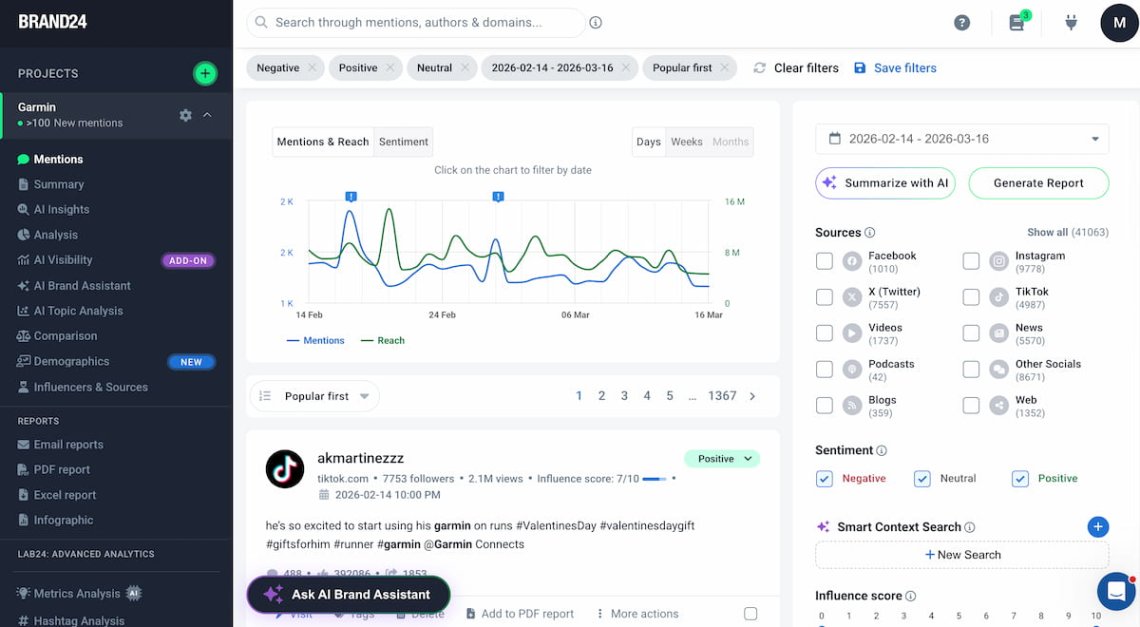
A chart is a representation of the sentiment score over time. The green and red lines accordingly correspond to positive and negative sentiments.
Additionally, if you want, you can filter the results. For example, by data, source, or geolocation.
In Brand24, you can compare the sentiment of your brand and its competitors or any other brand.
So, let’s compare American Airlines with its competitor, United Airlines.
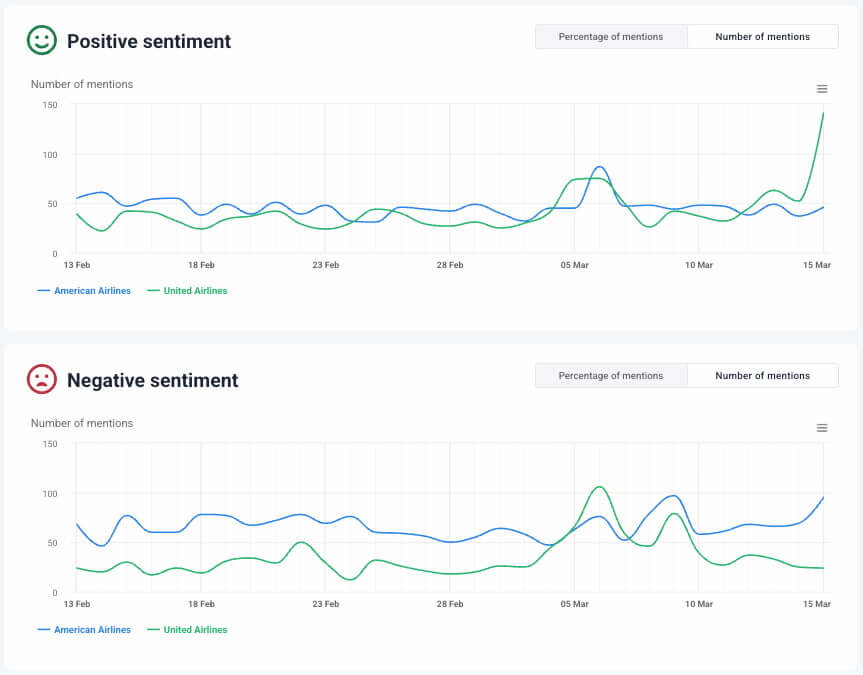
Positive and negative sentiment charts provide clear insight – United Airlines enjoys much more favorable brand sentiment than its market rival.
Key features:
- AI-powered sentiment analysis
- Competitor analysis
- AI Events Detector (for anomalies)
- Real-time alerts
- AI-boosted reports
02 MorphCast for Zoom
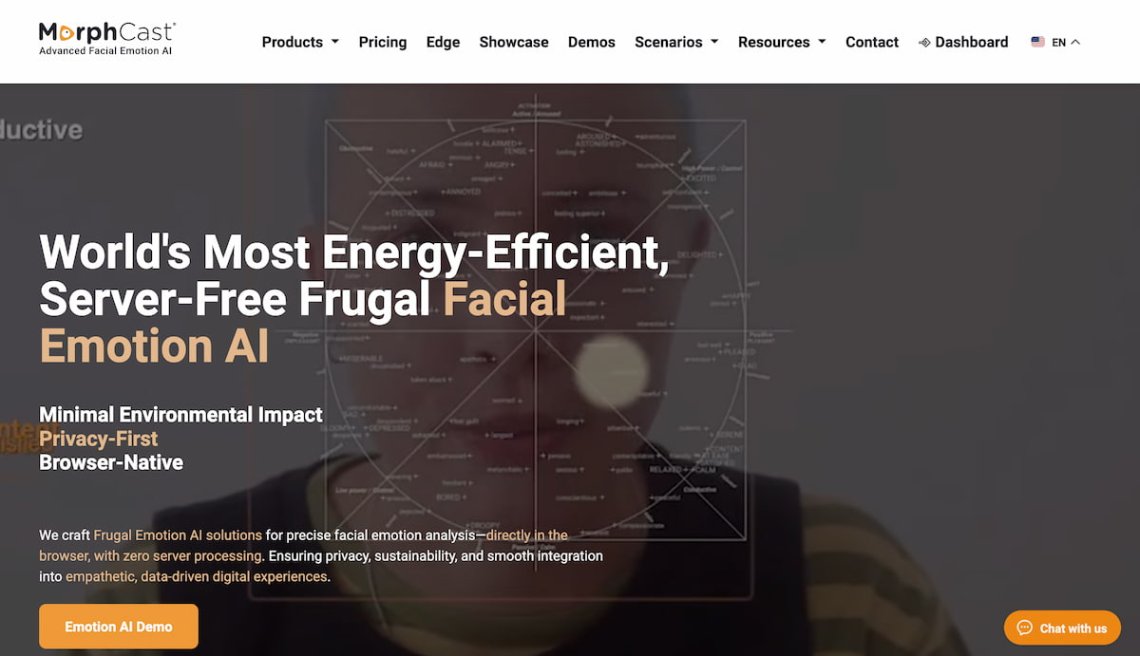
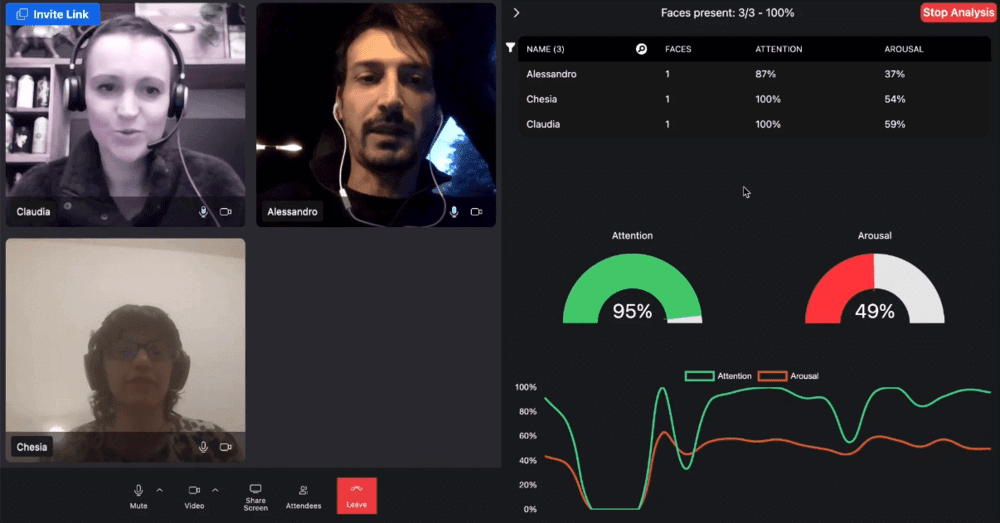
MorphCast for Zoom is a browser-based app that enables facial expression analysis of video conference participants.
Webcam tracks people’s faces, and their facial expressions are analyzed in real time. MorphCast provides data on participant engagement, attention level, and emotions during the video call.
In addition, the collected data are available on the dashboard after the meeting, so you can access them at any time.
This facial emotion recognition software enables the creation of unforgettable digital experiences.
You gain valuable insights that improve communication and help you build better relationships with customers and other meeting participants.
Unfortunately, it’s designed specifically for Zoom users. So, if you use another video conferencing platform and want to start using MorphCast, you must transfer your calls to Zoom.
Moreover, MorphCast only works in the web browser version of Zoom. Using it in the desktop or mobile app is impossible at this point.
⚠️ Important note: participants can accept or reject the analysis, and organizers can also decide whether to start or stop the process. That makes MorphCast safe from a privacy and data protection perspective.
Key features:
- Attention tracking analytics
- Analysis of audience engagement level
- Emotion analysis
- Real-time and post-conference dashboard
- Possibility to use on various devices, but only in a browser
03 Noldus FaceReader
FaceReader is a facial expression analysis platform. It’s a browser-based solution.
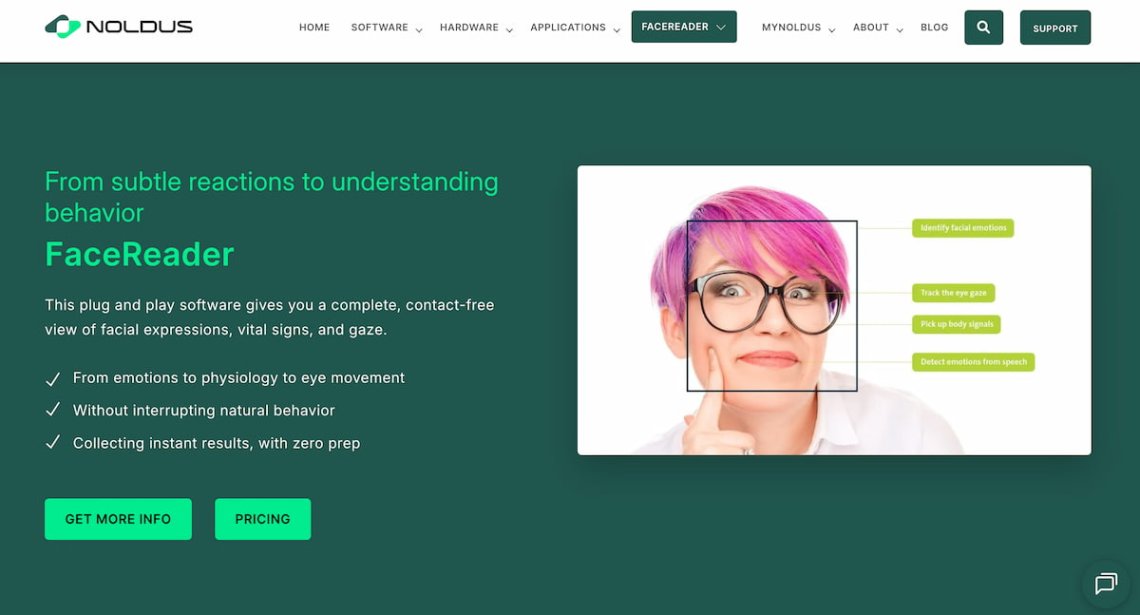
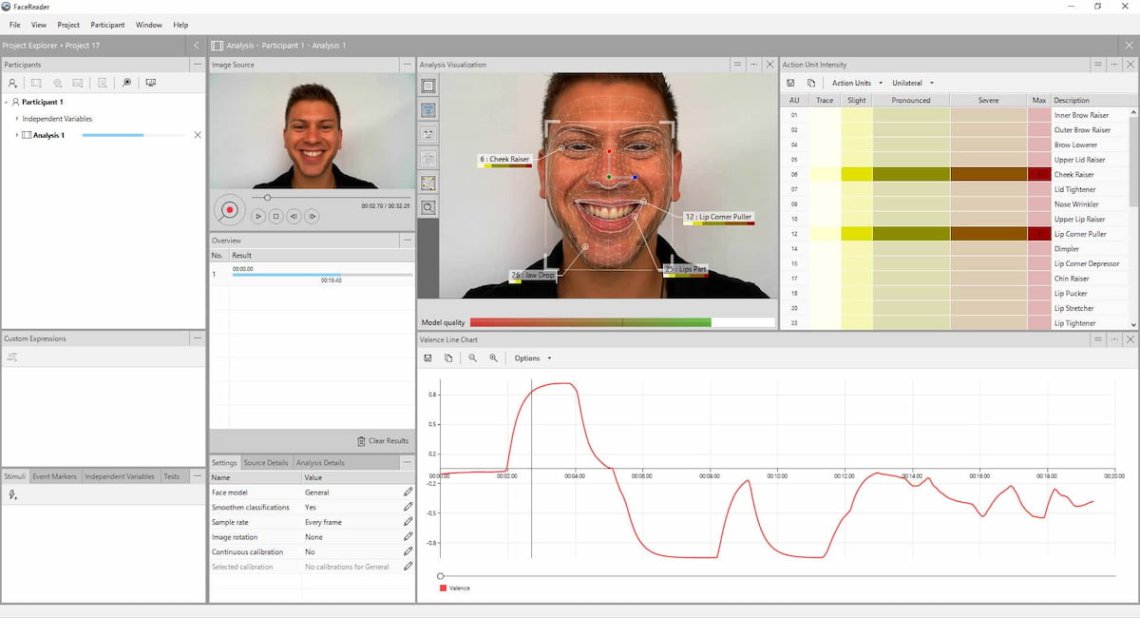
The data collected by FaceReader goes beyond basic emotion analysis.
In fact, it can analyze:
- facial expressions (up to 8 faces at the same time)
- facial Action Units (so observable elements of human expressions)
- head orientation and eyes direction
- webcam-based eye tracking
- voice signals
- physiological signals, such as heart rate, heart rate variability (HRV), and breathing rate (depending on setup)
As you see, it’s a powerful software specifically dedicated to conducting market research, academic studies, and advanced UX experiments.
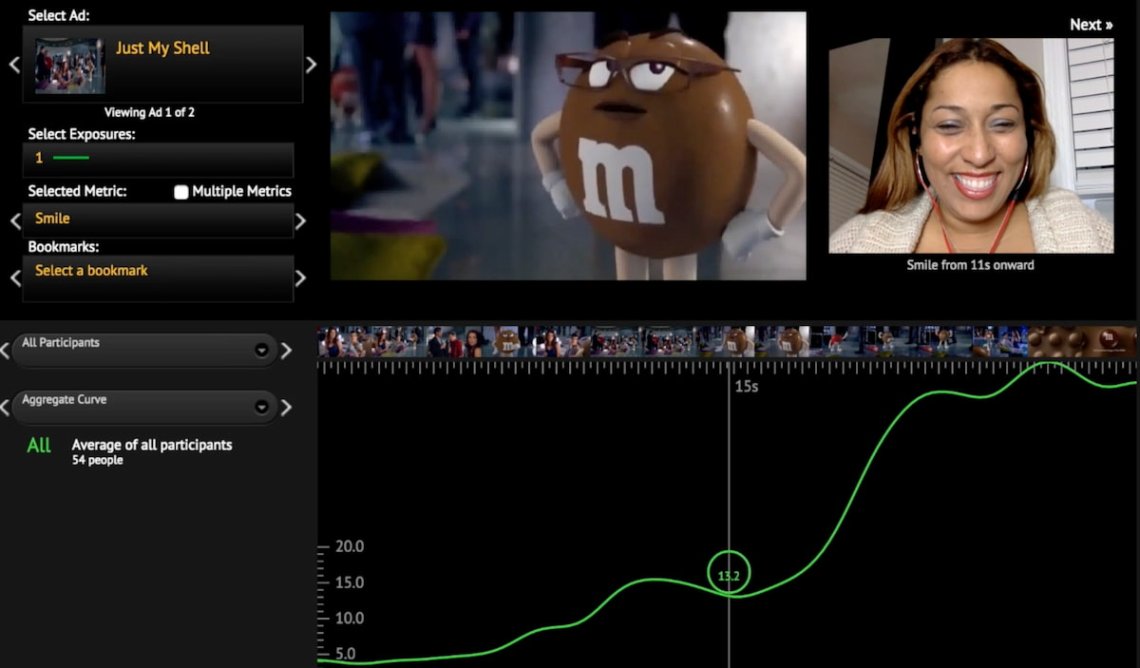
It is most commonly used to analyze audience reactions to videos (especially advertisements), images, goods, and web pages.
As the tool is advanced, so is the pricing. The cheapest plan costs over $2,400 and allows conducting up to 10 studies.
Key features:
- Automated facial emotion recognition
- Recordings of participants’ analysis
- Custom expressions
- Personalized dashboard
- Grouping participants based on various variables
- Comparison of results
04 Hume AI
Hume AI is an advanced emotion AI-powered software focused on voice and text analysis. It is built on large-scale machine learning models trained to understand even very nuanced emotional signals.
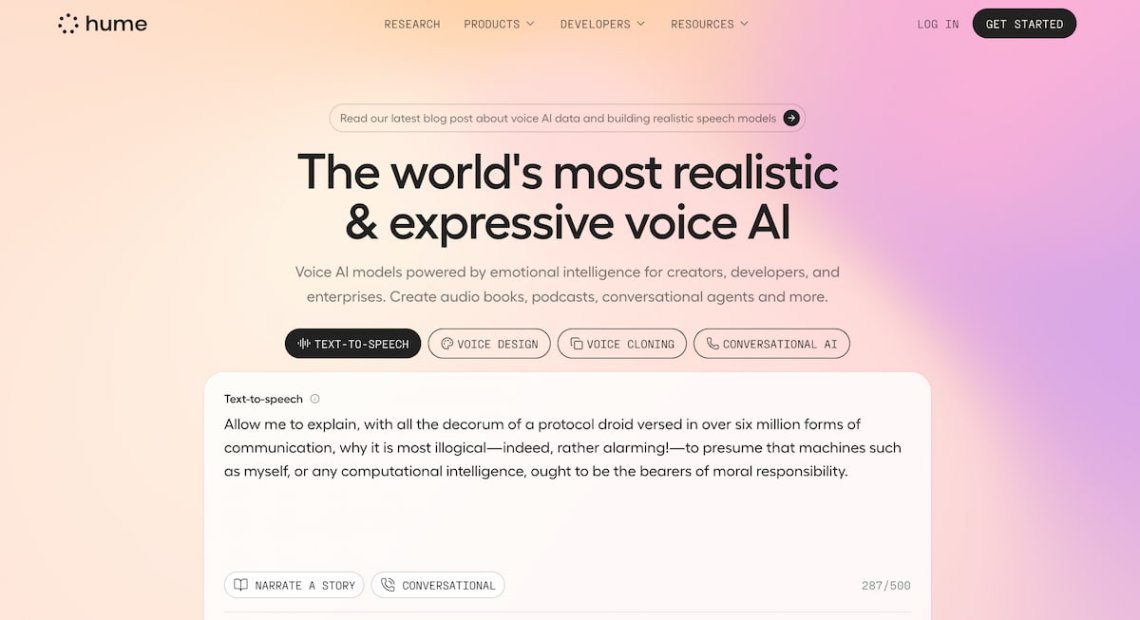
Unlike traditional tools that classify only basic emotions, Hume AI can detect subtle emotional states (e.g., confusion, admiration, anxiety) from:
- voice tone
- speech patterns
- text input
This makes it particularly useful for customer support optimization, conversational AI, and product UX improvements,
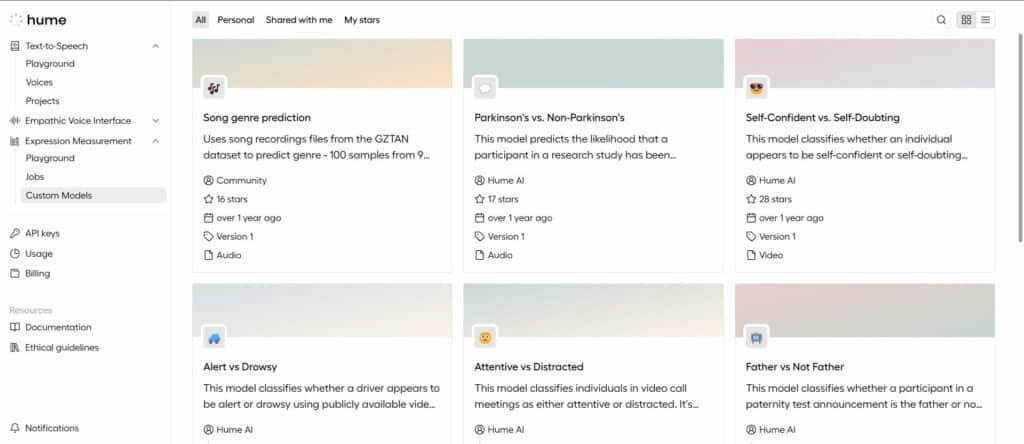
Hume AI is often used via API, making it a strong choice for teams building AI products or integrating emotion detection into apps.
Key features:
- Emotion detection from voice and text
- A large set of nuanced emotional categories
- API for developers
- Real-time analysis
05 Affectiva
Affectiva is an emotion recognition platform based on facial and in-cabin analysis, widely used in automotive, advertising, and research.
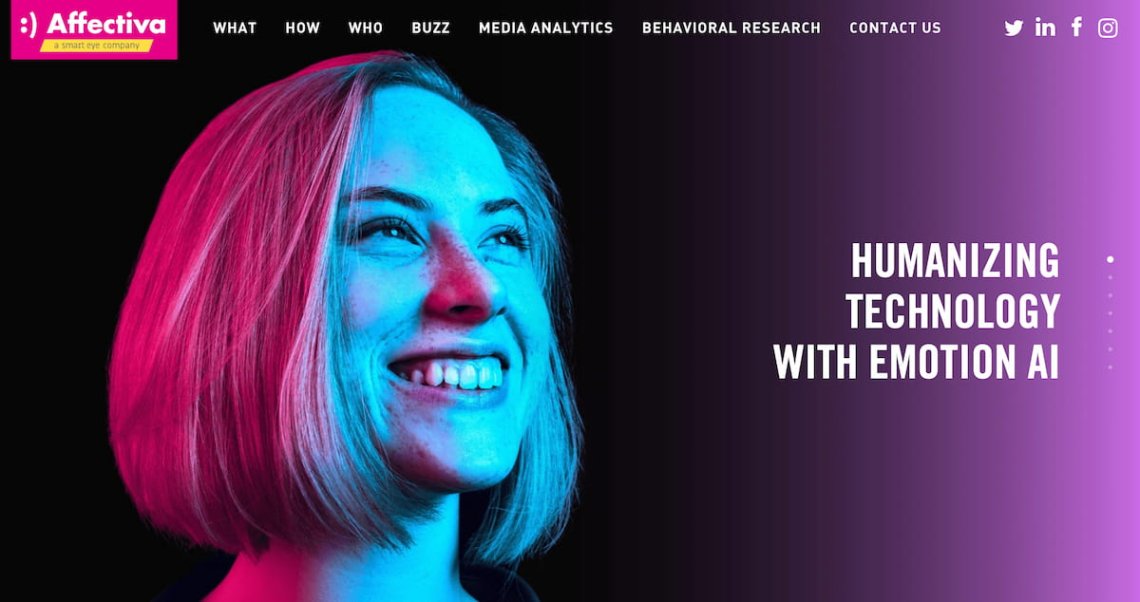
It uses computer vision and deep learning to analyze facial expressions, head position, eye movements, and many more signals.
Affectiva is less “plug-and-play SaaS” and more enterprise software for large-scale businesses.
Key features:
- Facial expression and attention analysis
- Real-time video emotion detection
- AI-boosted driver monitoring
- Audience testing and ad research capabilities
- Enterprise-level integrations