Table of contents
Podcast Marketing Strategy: How to Grow Your Audience?
Podcasts have seen a massive surge in popularity over the past few years, with millions of people tuning in daily.
With this increased popularity comes an opportunity for marketers to use podcast marketing to reach new audiences and grow their brands.
In this blog post, I’ll discuss the proven tips for growing your podcast audience.
Here are some great podcast marketing strategies:
01 Submit your podcast to directories
Submitting your podcast to popular directories like Apple Podcasts, Spotify, and Google Podcasts will make it easier for people to find and subscribe to your show.
Once your podcast is in the directory, keep your podcast information updated, including your podcast’s title, description, and episode titles and descriptions.
Positive ratings and reviews can help your podcast stand out in the directory and attract new listeners. Encourage your listeners to rate and review your podcast on the directory where they listen to your podcast.
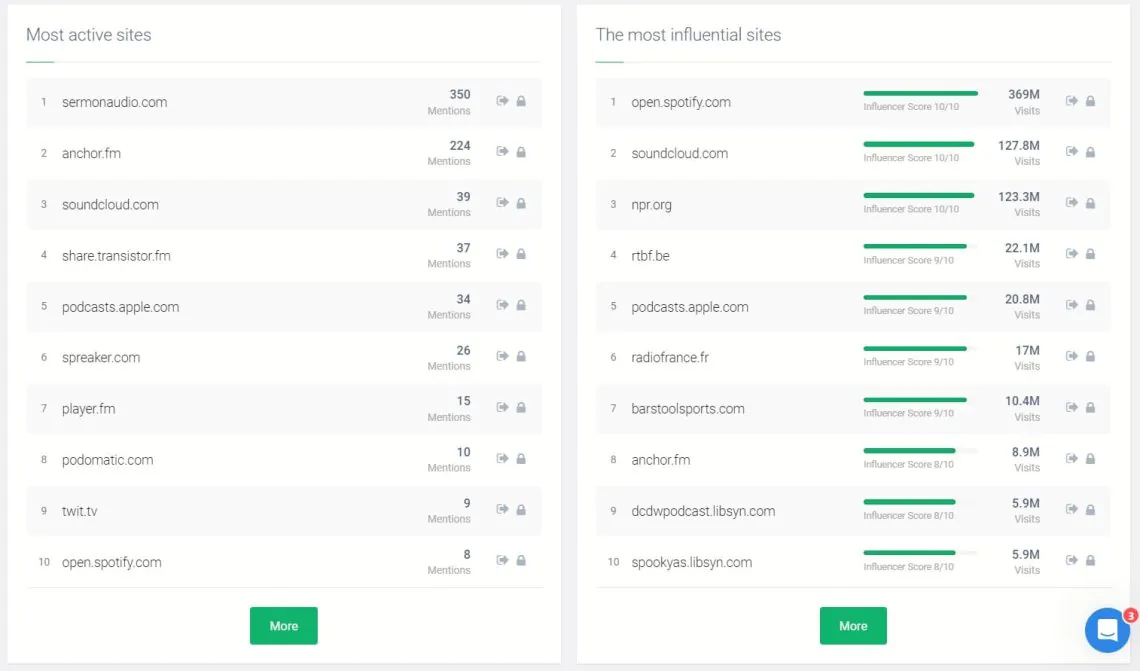
Thanks to the social listening tool, you can discover the most active and influential sites and podcast apps that match your podcast.
02 Use social media platforms
Platforms like Twitter, Facebook, and Instagram are great places to promote your podcast and connect with potential listeners. You can:
- Create a dedicated social media account for your podcast on platforms like Twitter, Facebook, and Instagram. Use this account to share updates about your podcast and connect with potential listeners.
- Share your podcast episode on your social media accounts as soon as it is released. Use engaging captions and include relevant hashtags to increase visibility.
- Share behind-the-scenes content on your social media, such as photos or videos from the recording studio, to give your followers a glimpse into the creation of your podcast.
- Engage with your followers by responding to comments and messages and starting conversations around your podcast’s topics. This can help build a community around your podcast and increase engagement.
- Use live streaming platforms like Facebook Live, Instagram Live, or YouTube Live to interact with your listeners in real time. This can help you build a more engaged community around your podcast.
- Create a social media community for your podcast, such as a Facebook group or subreddit, where your listeners can discuss your episodes, ask questions, and share their thoughts.
03 Reach out to influencers
Identify influencers in your niche and reach out to them to see if they would be interested in promoting your podcast or appearing as a guest on your show.
Here’s how you can do it:
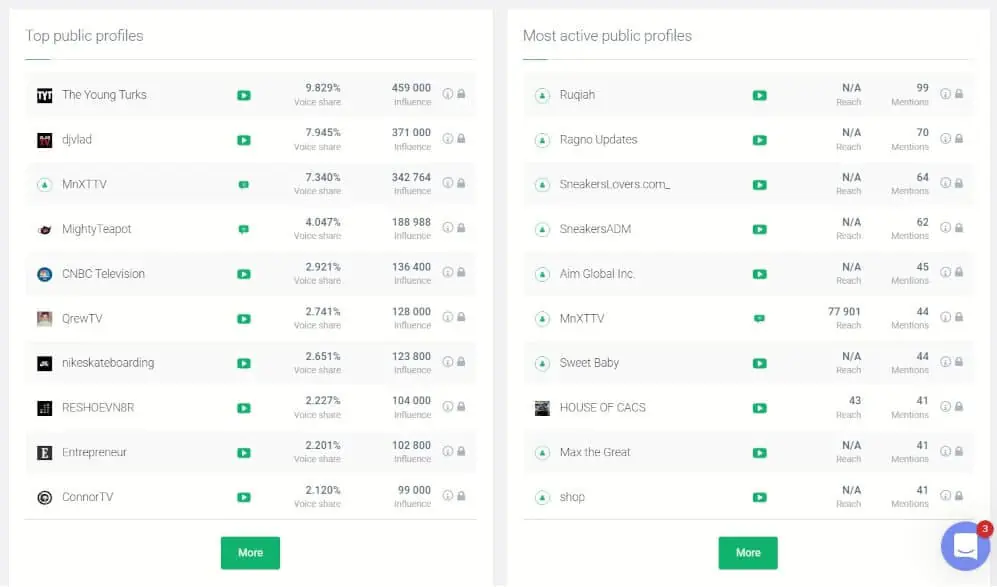
- Identify influencers in your niche by researching popular blogs, podcasts, and social media accounts related to your podcast’s topic. Look for people who have a large and engaged following and who align with your podcast’s values and mission. You can use a social listening tool for this purpose. Such a tool will detect influencers that match your brand.
- Before reaching out to an influencer, research their content and audience to ensure they are a good fit for your podcast. Look at their social media accounts and website to understand their interests and audience.
- Create a personalized message highlighting why you think your podcast would be a good fit for their audience. Provide specific examples of how your podcast aligns with their interests and values, and include a link to it.
- Offer value to the influencer, such as promoting their content on your podcast or social media channels. Building a mutually beneficial relationship can increase the chances of them promoting your podcast.
- Invite the influencer to be a guest on your podcast. This can be a great way to reach their audience and gain exposure for your show.
- Follow up with the influencer after your first message and remind them of your podcast and why you think it would be a good fit for their audience.
04 Start podcast monitoring
Social listening is a powerful tool that can help you promote your podcast more effectively.
Podcast monitoring will present you with insight into what your audience is saying, what they are interested in, and how they perceive your podcast.
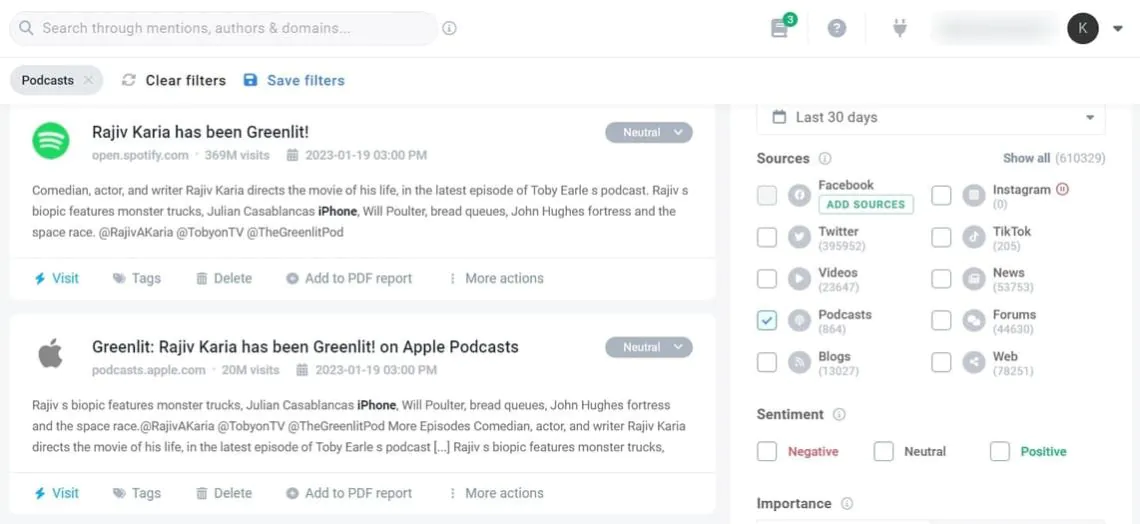
Here are a few ways to use social listening to promote your podcast:
- Identify key topics and hashtags related to your podcast’s niche and set up alerts to track mentions of these topics and hashtags. This will help you identify opportunities to join conversations and promote your podcast.
- Monitor your competitors’ podcasts to understand what they are doing well and where they may need to catch up. Use this information to inform your own podcast marketing strategy.
- Engage with your audience by tracking podcast mentions and responding to comments and messages. This will help you build a loyal community around your podcast.
- Monitor the impact of your social media promotions by tracking the key social media metrics. Use this information to inform your future promotions and understand what content resonates well with your audience.
- Identify trends in the conversations about your podcast and use this information to inform your content strategy. Use the feedback to improve your podcast, align it to your audience’s needs, and tailor your promotions accordingly.
📚 Read more: The Best Podcast Monitoring Tools
05 Collaborate with other podcasters
As a podcast host, you can invite others to record episodes together. Collaborating with other podcasters in your niche can effectively attract new podcast listeners.
It’s a great way to promote a podcast!
Here are a few ways to collaborate with other podcasters:
- Identify other podcasters in your niche with a similar target audience and content to yours. Look for podcasters with a similar style and tone and who align with your podcast’s values and mission.
- Reach out to the podcasters you identified and introduce yourself and your podcast. Explain how your podcast complements theirs and how a collaboration would benefit both of your audiences.
- Once you’ve established a partnership, cross-promote each other’s episodes by sharing them on your social media accounts, websites, and email lists. This will help you reach new listeners and increase the visibility of both podcasts.
- Co-host an episode of your podcast together and discuss a topic that interests both of your audiences. This can help you reach new listeners and gain exposure for your podcast.
- Create a bundle where you and the other podcaster discuss a specific topic of interest. This can create a more engaging experience for your listeners and increase the chances of them listening to both podcasts.
- Organize live events or meetups related to your podcasts. This can help you connect with your listeners and build a community around your podcasts.
06 Optimize your podcast’s SEO
Using SEO strategies can effectively improve visibility and increase engagement with listeners when promoting a new episode of a podcast series.
By optimizing titles, descriptions, website content, and social media posts related to the show, marketers can ensure their content is seen by more people interested in the topic.
Here are a few tips:
- To optimize your podcast for SEO, focus on keyword research, creating a relevant theme or topic, writing a podcast description, and including episode summaries.
- Upload your podcast to popular platforms such as YouTube and Spotify, and optimize your podcast by creating a podcast trailer and episode descriptions.
- Additionally, creating content on evergreen topics and trending topics can be helpful for podcast SEO.
07 Create a podcast website
Having your own podcast website is a great way to provide more information about your show and make it easy for people to find and subscribe.
Take a look at some benefits:
- Build credibility
- A dedicated website for your podcast will help you build credibility with podcast listeners. A website allows you to post all of your episodes, show notes, and other relevant information about your podcast.
- This helps build trust with potential listeners by showing that you take the time to provide quality content consistently.
- Furthermore, having an easy-to-navigate website makes it easier for listeners to find exactly what they need quickly and efficiently.
- Generate traffic
- Creating a website for your podcast also allows you to generate more traffic to your show.
- You can promote each episode on social media platforms and link back to your own podcast website, which can help increase engagement with potential listeners who may not have heard of you before.
- You can also use SEO tactics on your website by incorporating keywords into the title tags and meta descriptions so that search engine crawlers can easily find it when users perform searches related to the topic of your podcast.
- Grow your audience
- Having a podcast website allows you to grow your podcast audience by giving them something tangible – a home base where they can go for resources related to the show.
- Additionally, suppose someone has already listened to one of your episodes but does not remember its title or certain details about it.
- In that case, they can easily look up that information on your website instead of scrolling through endless lists of episodes in their streaming app library.
An SEO-optimized website is a great way of podcast promotion. It provides opportunities to generate traffic and build credibility with potential listeners.
Also, it makes it easier for existing listeners to reference past episodes or find new ones without having to search endlessly on streaming apps like Spotify or Apple Music.
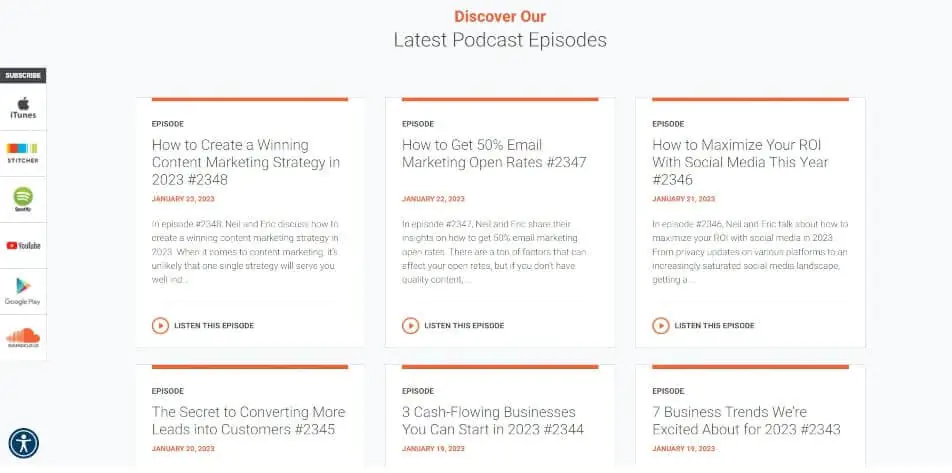
Here you can see an example of a great podcast website:
08 Leverage email marketing
Building an email list of your listeners and sending them regular updates on your podcast is a great way to keep them engaged and coming back to listen to the newest podcast episode.
- Email marketing can be an excellent tool for podcast owners looking to build a loyal audience. It is a great way to stay in touch with your listeners and develop relationships.
- Through email, podcast owners can provide their subscribers with special content and episode reminders.
- Also, it’s a great way to let your audience know you host other podcasts.
- With careful targeting, podcast owners can ensure their content reaches the right people and boost their podcast’s popularity!
- Email marketing also provides insight into which content resonates with users, as podcast owners can track which types of emails generate the most interest and engagement from the audience.
When done right, podcast email marketing will not only help you build an enthusiastic tribe of loyal fans – but it will tell you exactly how to do it too!
09 Publish podcast episodes on YouTube
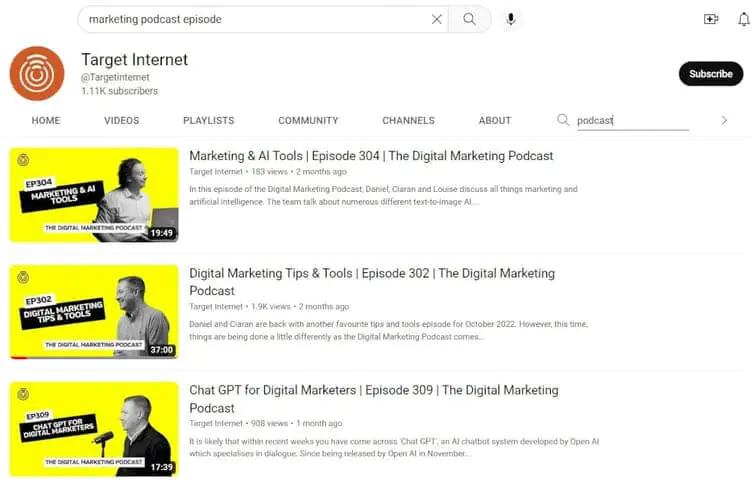
Publishing your new podcast episodes on YouTube can greatly expand your social media reach, engage new listeners, and drive more traffic to your website.
According to CNBC, YouTube is the second-largest search engine after Google, so it makes sense for podcasters to leverage this platform for additional exposure and reach.
- Publishing your podcast on YouTube makes it easier for potential listeners to find you and helps attract people who are less likely to listen than watch.
- YouTube also makes it easy to embed your podcast on websites and social media pages. This can help you spread your podcast’s message even further, and increased visibility can lead to more downloads and subscribers.
- YouTube videos can also be used to monetize your podcast through ads and sponsorships, giving you the potential to earn extra income.
- Finally, uploading episodes to YouTube lets listeners watch the podcast’s video version, which can be a great way to engage viewers who prefer visual content.
10 Think of a listener persona
Understanding your audience is the cornerstone of any successful marketing strategy, and podcasting is no exception. One effective way to do this is by creating a listener persona. A listener persona is a semi-fictional representation of your ideal listener, complete with demographics, interests, and listening habits.
To illustrate this better, based on my experience with podcast marketing, I prepared an example persona named “Tech-Savvy Tim”:
Tim is a 30-year-old software engineer with a keen interest in emerging technologies.
He’s always on the lookout for podcasts that can offer him the latest insights into tech trends and coding languages.
By creating content tailored to meet the needs and interests of “Tech-Savvy Tim,” you’re more likely to attract listeners who fit this profile.
So, how do you go about creating a listener persona?
Step 1: Define objectives
- Determine what you want to learn from your listener persona, such as interests, age group, and listening habits.
Step 2: Choose data collection methods
- Decide whether to use surveys, social media polls, or both to gather data.
Step 3: Create questions
- Formulate questions that target the information you want to gather.
- Make sure they delve into interests, age group, and reasons for listening to your podcast.
Step 4: Use Brand24 for social media insights
- Utilize Brand24 to monitor mentions and discussions about your podcast on social media.
- This can provide valuable data on your audience’s preferences and behaviors.
Step 5: Conduct surveys and polls
- Distribute surveys and polls to your existing audience via appropriate channels, such as email or social media.
Step 6: Analyze data
- Once you’ve collected enough responses, analyze the data to identify patterns and trends.
Step 7: Create a listener persona
- Use the analyzed data to create a detailed listener persona.
- This persona will guide your content creation and marketing efforts.
Step 8: Implement findings
- Apply the insights from your listener persona to tailor your podcast content and marketing strategies.
Creating a listener persona helps in content planning, advertising, and community engagement.
Knowing who you’re speaking to can make all your podcast marketing strategies more effective and targeted.
11 Network, network…and network
Networking is a cornerstone of podcast growth, opening doors to opportunities you might not find otherwise.
It’s not just a matter of handing out business cards or making small talk!
The essence of networking lies in forging meaningful, lasting relationships that can lead to collaborations, sponsorships, and even opportunities for guest appearances on other shows.
Let’s take a look at a practical example:
Say your podcast focuses on entrepreneurship.
In this case, attending startup events or business seminars can be incredibly beneficial.
These events put you in direct contact with potential guests who are experts in the field, other podcasters who might be open to collaboration, and even businesses looking to sponsor content that aligns with their brand.
The face-to-face interaction you get at these events can be invaluable, giving you the chance to make a memorable impression that an email or social media message might not convey.
However, the networking landscape extends beyond physical events.
Social media platforms like LinkedIn, Twitter, and specialized online communities offer a fertile ground for making new connections. Engage in relevant discussions, share your episodes, and offer valuable insights to establish yourself as a thought leader in your niche. This online presence can attract influencers and experts who might be interested in contributing to your podcast, thereby enriching your content and expanding your reach.
The key to successful networking is reciprocity. Always think about how you can offer value to your new connections, whether it’s by promoting their work, offering a platform for their ideas, or collaborating on mutually beneficial projects.
This give-and-take approach strengthens your existing relationships and makes you a more attractive connection for future opportunities.
12 Run contests and giveaways
One of the most engaging ways to attract new listeners and reward your loyal audience is through contests and giveaways. These promotions can create a buzz around your podcast, encouraging more people to tune in, subscribe, and even become active members of your podcast community.
For a concrete example, consider hosting a monthly contest where listeners can win a free consultation with an expert guest featured on your show.
To enter, listeners could use a specific hashtag like #FreeConsultWith[YourPodcastName] on social media. This incentivizes listeners to engage with your podcast and serves as a promotional tool, as the hashtag can trend and attract new listeners.
The mechanics of the contest can be as simple or as complex as you like. You could ask listeners to answer a question related to a recent episode, share a personal story, or even create fan art.
The key is to make the contest relevant to your podcast’s content and appealing to your target audience.
Benefits of running contests and giveaways:
- 1 Immediate audience engagement
- 2 Increased social media activity and visibility
- 3 Opportunity for audience growth
- 4 Collection of valuable listener data
- 5 Strengthening of community bonds among listeners
- 6 Enhanced brand loyalty
- 7 Potential for viral marketing effects
- 8 Increased episode downloads and subscriptions
Remember, the ultimate goal of these promotions is not just to temporarily boost numbers. It’s to create a more engaged and loyal audience.
13 Engage your listeners everywhere you can
A successful podcast relies on more than just high-quality content. Building a community of engaged listeners is equally important.
To achieve this, you need to interact with your audience on multiple platforms, not just where your podcast episodes are hosted.
For example, Instagram Stories offer a unique way to engage with your audience.
You can post quick polls or Q&A sessions related to your latest episode. This real-time interaction keeps your audience engaged and provides valuable feedback. You can gauge what topics resonate with your listeners and what they’d like to hear more about in future episodes.
Twitter is another platform that can be leveraged to engage listeners.
You can tweet interesting quotes from your episodes or share behind-the-scenes content. This kind of content can create anticipation for upcoming episodes and keep your podcast top-of-mind for your followers.
LinkedIn offers a different kind of engagement.
Here, you can post articles that go in-depth into the topics you cover in your podcast. These articles can serve as supplementary material that adds an extra layer of value to your episodes.
It’s a way to establish yourself as a thought leader in your niche, attracting a more professional audience that might not be reached through other platforms.
14 Run paid advertising
Investing in paid advertising can give your podcast the boost it needs to reach a wider audience. Unlike organic growth, which takes time and consistent effort, paid advertising offers immediate results. It allows you to target specific demographics, making your reach more focused and effective.
For instance, Facebook Ads can be a powerful tool for podcast promotion.
If your podcast is about vegan cooking, you can target users who follow vegan recipe pages or are members of vegan lifestyle groups. This ensures that your ads are seen by people who are already interested in your niche, increasing the likelihood of gaining dedicated listeners.
Google Ads is another platform that can be highly effective, especially for podcasts that cover specialized topics.
You can use keywords to target people who are searching for content in your niche. If your podcast is about digital photography, keywords like “best DSLR cameras” or “photography tips” can help your ads reach an audience that’s likely to be interested in your content.
But paid advertising isn’t just about reaching new listeners.
It can also be used to re-engage with your existing audience. Platforms like Instagram and Twitter allow you to create retargeting campaigns. These campaigns show your ads to people who have previously interacted with your podcast or website, reminding them to tune in to your latest episodes.
15 Join an existing community in your niche
Joining a community related to your podcast’s niche offers a wealth of benefits. It gives you immediate access to an audience that already has an interest in your subject matter. Communities are hubs for discussions, questions, and the sharing of valuable content. They offer a pulse on what’s trending and what matters most to your potential listeners.
Take, for example, a podcast focused on digital marketing:
LinkedIn groups and Reddit communities are excellent platforms for this niche. These online spaces are often frequented by professionals and enthusiasts who discuss the latest trends, share articles, and seek advice.
Active participation in these communities allows you to offer your own insights and expertise. This establishes your credibility and attracts listeners who find your contributions valuable.
Participation in a community goes beyond mere self-promotion.
It’s about adding value to the conversations already taking place. Answer questions, offer solutions, and share relevant episodes from your podcast when appropriate. This approach helps you strengthen your reputation within the community.
Engaging with a community in your niche is a long-term investment. It helps you understand your audience better, keeps you updated on industry trends, and offers a platform for organic growth. Over time, this engagement can significantly contribute to the success and sustainability of your podcast.
Conclusion
Podcast marketing is an ongoing process and requires consistent effort. It’s important to be creative and experiment with different tactics to find what works best for your podcast.
Additionally, it’s essential to track and measure your results to see what’s working and what’s not so that you can adjust your strategy accordingly.
In conclusion, podcast marketing is a powerful way to promote your brand. By combining the podcast marketing strategies discussed above, you can increase your visibility, reach a wider audience, and build a loyal following for your podcast.
FAQ
What is podcast marketing?
There are three main approaches: hosting your own show to share expertise and discuss industry topics, sponsoring existing podcasts that reach your target audience, or sending a company representative as a guest to tell your story and connect with new listeners.
Is the podcast market oversaturated?
Success comes down to quality and uniqueness, not how many other shows exist.
A clear point of view, good audio, consistent publishing schedule, and genuine value for listeners are what separate podcasts that grow from ones that don’t.
How do you create a marketing strategy for a podcast?
Engage with listeners directly — respond to comments, ask for feedback — to build a loyal base. Make sure your title and description are SEO-optimized so new listeners can find you, and use analytics to track what’s working and adjust accordingly.
How do I get 1000 listeners for my podcast?
Optimize your title and description so people can actually find you. Promote on social media, collaborate with other podcasters for cross-promotion, and tap your existing network early on.
Consistently deliver valuable content, ask listeners for reviews and ratings, and engage with them directly. Guest blogging in relevant publications can also drive new listeners your way.

Article Reviewed by