Table of contents
2M Marketers

One negative result on Google’s first page costs you 22% of potential customers before a single conversation starts (ALMcorp, 2026). Reputation directly impacts revenue, and even small issues can escalate quickly.
At the same time, nearly half of internet users post reviews every month. That creates billions of new opinions shaping brand perception across review sites, social media, and AI-generated results.
A single unresolved complaint can appear when someone asks: “Is this brand trustworthy?”
This guide presents a five-step system to help you assess your current position, strengthen your presence, monitor conversations, respond effectively, and improve over time. It’s designed for teams that need a structured, repeatable approach.
Key takeaways
-
70% of consumers will not visit or choose the services of an unfamiliar company without first checking reviews online (BrightLocal, 2025).
Your online reputation directly influences buying decisions before you even enter the conversation. Prioritize brand consistency and maintain a steady stream of recent, responded-to reviews. Both volume and recency affect how customers and search engines evaluate your credibility.
-
Respond to negative review fast
Businesses that reply within 24 hours see measurably lower escalation rates and recover sentiment faster than those that wait. A dedicated media monitoring tool is what makes that speed possible at scale.
-
Online reputation protection requires a system
Revisit your positive-to-negative mention ratio, Average Presence Score, and social media reach regulary. In a 2025 businesses that monitored review sentiment monthly were 3× more likely to catch and resolve reputation issues before they reached Google's first page.
What is online reputation management?
Online reputation management (ORM) is the ongoing process of monitoring, influencing, and improving how your brand is perceived online. It covers everything that appears about your business across search engines, review platforms, social media, and AI-generated results.
Why does online reputation matter?
Digital footprint is often the first touchpoint for potential customers, partners, or candidates. What they see (reviews, mentions, and search results) shapes their perception before they ever interact with you.
That’s why ORM focuses not only on what is being said, but also where it appears and how visible it is.
In practice, ORM means actively building and maintaining a consistent, positive brand presence. It includes:
- Brand monitoring, which is:
- Tracking and analyzing mentions of your brand or company across social media platforms and other online channels
- Proper management of the content, which is:
- Creating and providing positive content about your brand or company
- Communicating what is happening in your brand or company
- Responding to comments, both positive and negative comments
- Staying in touch with the audience
- Removing negative content about you from social networking sites and other search results
Why is it important to protect brand reputation?
Nowadays, people check your business online before making a purchase decision. They base their opinions on what they find through social media posts, online reviews, websites, and other results from search engines.
They are especially influenced by the opinions of others, both negative and positive reviews!
Every business owner, including you, should ensure the information people find online works in their favor!
Protecting your company’s reputation online directly impacts the success of your business!
There are a lot of benefits of doing this, for example:
- You gain a positive online reputation, which helps establish trust and credibility with your current and potential future customers.
- You prevent a crisis that can lead to harm to your reputation and other significant losses, such as financial ones.
- You build a solid digital presence that makes your brand visible and raises brand awareness.
How do you protect your reputation online?“I look at sentiment, reviews, mentions, and the tone of what’s being said. I pay attention to patterns in feedback and how people respond over time. These signals help you understand what’s working—and what needs to change!”

How to protect your brand online?
Step 1: Examine your current online reputation
Of course, you must start with a deep analysis of your current online reputation. This will be your starting point and reference for further action.
Unfortunately, you are not able to do this manually!
You need to choose the right brand monitoring tool, preferably one that offers advanced AI features like sentiment analysis and others to track the key reputation metrics. I recommend Brand24.
So, choose a tool and do these things sequentially:
Conduct the Sentiment Analysis of your brand
You’ve got the Reputation Score behind you, so now it’s time for social Listening.
Thanks to it, you track all your brand mentions and get their emotional tone. You can easily discover negative online, positive, and neutral reviews.
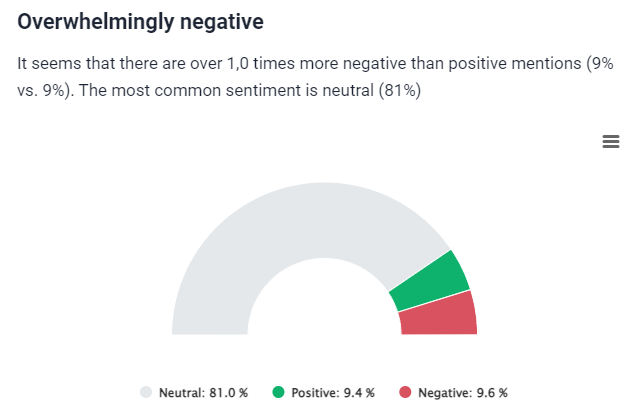
Remember that a high number of negative sentiments indicates that a crisis is coming. You can protect your brand’s reputation by quickly reacting to negative reviews.
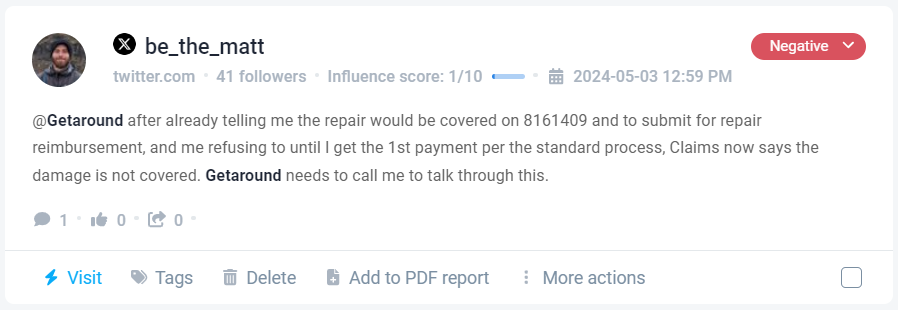
Brand reputation monitoring tools, like Brand24, let you go directly into the discussion about your brand and take appropriate action.
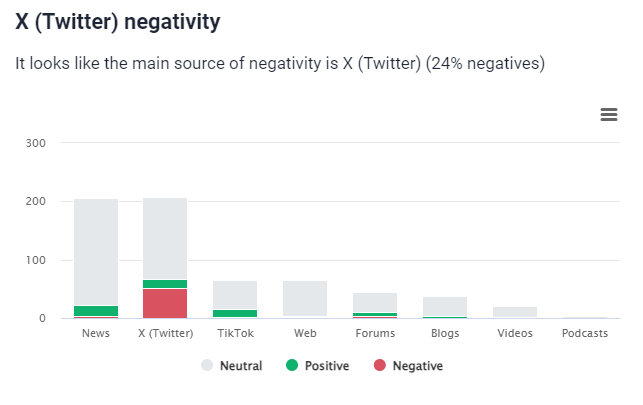
Moreover, Brand24 lets you detect which source brings the most positive and negative brand feedback.
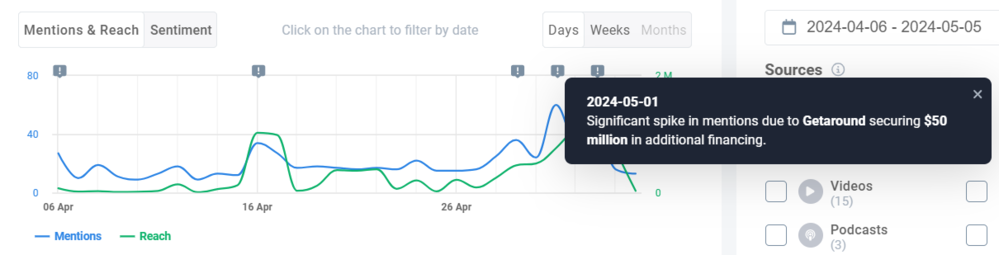
With another AI-powered feature, the Anomaly Detector, you can quickly discover why your brand’s mentions increased.
Summing it up, thanks to sentiment analysis, you can:
- Automatically detect unhappy customers and turn them into happy ones
- Take appropriate actions quickly to prevent crisis and reduce reputation damage
- Maintain a positive brand image
Discover emotions around your brand
You’re probably wondering why you should discover emotions around your brand since I’ve just shown you the Sentiment Analysis.
Well, they are two different things!
Emotion Analysis delivers more detailed information. It precisely names the emotions (disgust, admiration, sadness, anger, fear, and joy) the target audience feels about your brand.
Advanced AI tools such as Brand24 can analyze which channels are the source of which types of emotions.
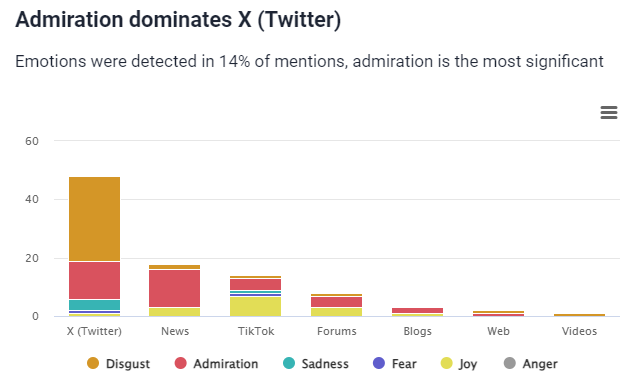
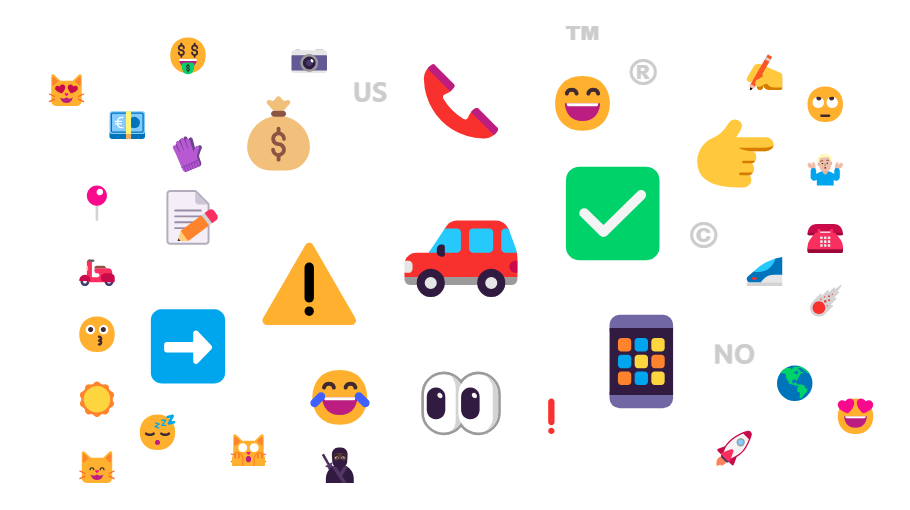
Check emojis included in discussions about your brand
People often use emojis in their comments instead of directly expressing it in words. Therefore, it is important to check and analyze them.
Brand24 provides it for you:
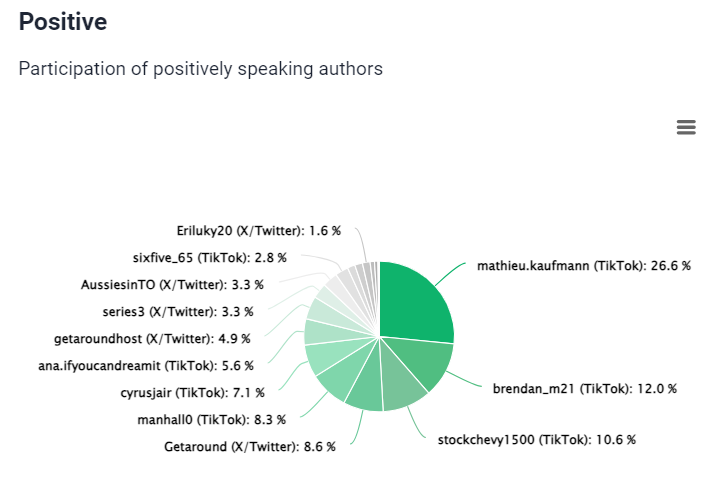
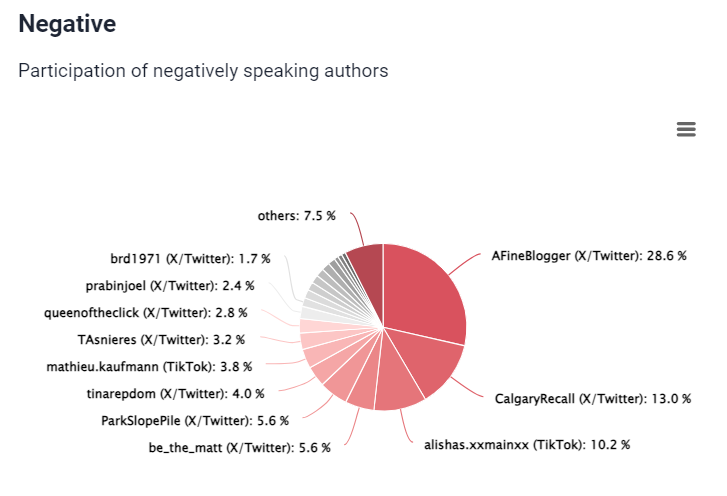
Discover whether influencers talk about your brand in a positive or negative way
The next step is to watch how influencers talk about your product or service.
69% of consumers trust influencer recommendations (data released by Matter Communications).
People largely make their purchasing decisions based on what influencers say, so keep your hand on the pulse.
Take a look at the sentiment of the topics
There is another essential point that you need to keep in mind.
Each brand generates discussions in a specific area.
For example, a window manufacturing company will be discussed in terms of different topics than a film production company. I guess this is obvious (?).
So, let’s check out the topics within which Getaround is being discussed:
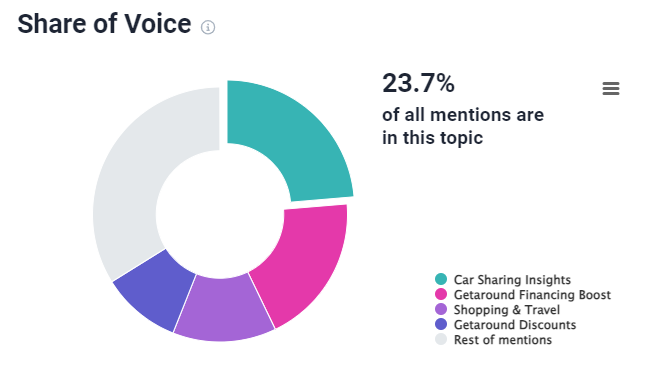
Monitor popular topics around your company and check what sentiment they generate.
It may happen that only one topic causes negative discussions.
Step 2: Build a positive reputation online
A strong positive online presence comes from consistent, visible actions that shape how your brand is perceived. Customer feedback, consistency, and activity across channels directly influence your digital reputation.
How can you do it? Here are practical examples:
1. Publish customer proof weekly
Share a customer quote, case study, or before-and-after result on your main social channel at least once a week. User-generated content and testimonials consistently drive higher trust and engagement than branded posts.
If you don’t yet have a review generation process, introduce one. A post-purchase email asking for a review (sent 3–5 days after delivery) helps generate a steady flow of recent reviews. I also like reposting customer stories on Instagram Stories or adding them to highlights, which also works especially well, since it keeps real feedback visible and easy to revisit.
2. Respond to feedback within 24 hours
Many brands focus mainly on negative feedback and overlook positive or neutral mentions. Responding across all types of feedback creates a more complete communication loop.
I’ve noticed this builds stronger, longer-lasting relationships with customers and encourages others to share their own experiences, since they see their opinion is acknowledged and valued. A review monitoring tool that aggregates all mentions into one dashboard makes this manageable at scale.
3. Audit your brand voice across platforms quarterly
Review how your brand communicates on LinkedIn, Google Business Profile, X, and review platforms. Differences in tone, naming, or messaging can weaken credibility.
Create a short brand voice guideline (tone, vocabulary, do’s and don’ts) and share it with everyone responsible for communication. This improves alignment and gives your team more control within your industry.
It’s also worth noting that AI systems increasingly rely on public content from platforms like Reddit, YouTube, and forums when forming an understanding of brands. These signals can influence how your brand is represented in LLM-driven search experiences, making consistent communication across public channels even more important.
4. Optimize your Google Business Profile as a live asset
Keep descriptions updated, upload fresh photos regularly, and respond to all reviews within 48 hours. Ongoing activity improves visibility and supports stronger positioning.
At the core of this strategy is visibility and accountability. Solving customer issues openly shows how your brand operates in practice, building trust through real interactions and shared knowledge.
Step 3: Monitor your reputation
You need to monitor your reputation constantly.
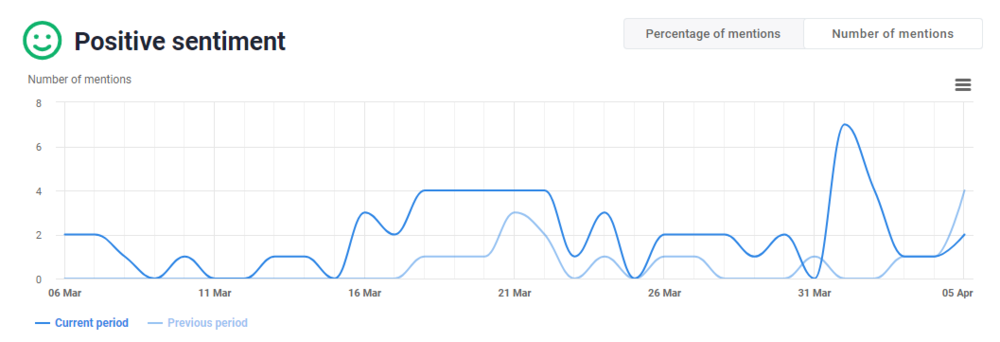
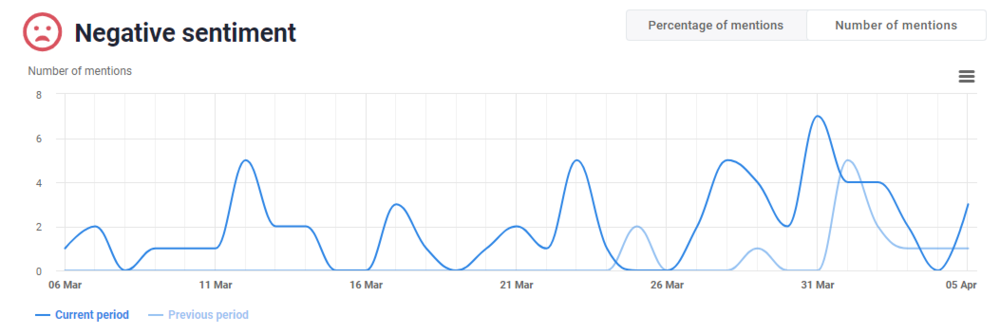
I recommend you to compare, for example, the sentiment of mentions from the consecutive periods.
You’ll be able to see precisely whether your online positive reputation building is working.
In Brand24, you can make a period comparison of the sentiment of negative and positive mentions. You will find it in the Comparison tab.
Traditional monitoring covers social media, review sites, and news. But search behavior has shifted. More and more people skip Google entirely and go straight to AI tools, asking:
“What is Brand X like?” “Is Brand X better than Brand Y?” or “Should I trust Brand X?” They get an instant answer, and they often stop there.
Those answers aren’t neutral. They’re shaped by everything publicly available about your brand: your reviews, articles, forum discussions, and social media presence. A brand with strong positive signals gets described favorably.
Brand24’s AI Visibility feature, powered by ChatBeat, tracks when and how your brand appears in AI-generated answers across tools like ChatGPT, Perplexity, and Google AI Overviews.
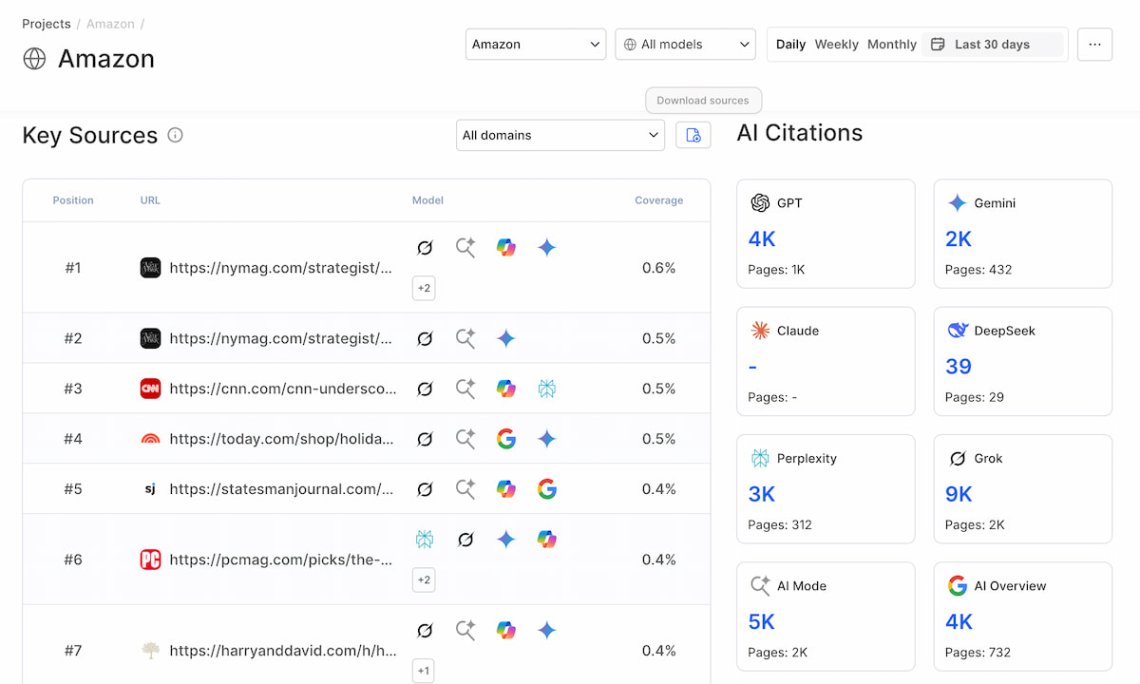
Here’s what it shows you:
- AI mentions volume — how often your brand appears in AI-generated responses over time, so you can spot trends and measure whether your visibility is growing or shrinking.
- Share of Voice — how much space your brand occupies in AI answers compared to competitors. If a user asks “what’s the best tool for X” and your competitor appears three times more often, that’s a gap worth closing.
- Sentiment in AI responses — whether AI tools describe your brand in a positive, negative, or neutral context. A single widely-cited negative article can quietly influence how ChatGPT describes you for months.
- The exact responses — you can read the actual AI-generated answers mentioning your brand, so you know precisely what potential customers are seeing when they ask about you.
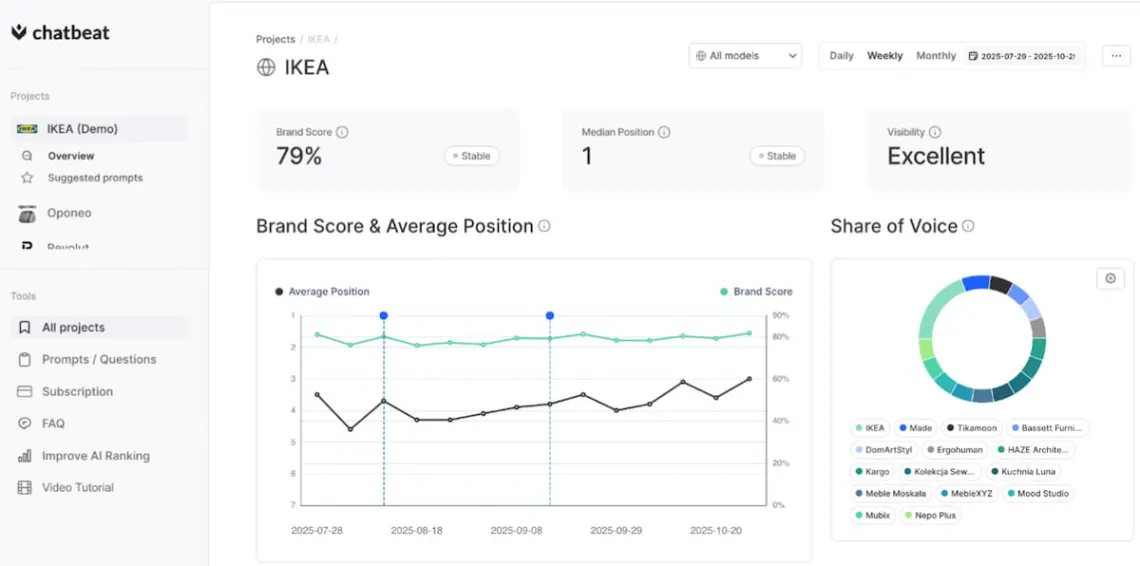
Thanks to AI Visibility monitoring, you can:
- Discover how AI tools currently describe your brand — before your customers do
- Identify which competitors are mentioned more favorably and understand why
- Track whether your reputation-building efforts are changing the AI narrative over time
- Catch negative framing in AI responses early, before it influences a wider audience
Step 4: Respond to negative online reviews
Responding to negative reviews is a key step in protecting your online reputation!
You received a notification – someone is unsatisfied with your product or service.
Stay calm. Negative reviews happen to every brand. What matters is how you respond.
So what to do?
Here are some hints:
- Respond quickly: The sooner, the better. Don’t wait a week to respond. If you see a negative review, try to respond to it as soon as you can.
- Stay professional: It can always be that the customer lets emotions get involved, is upset, and uses bad language. Stay professional regardless of the reviewer’s tone. A defensive or emotional reply amplifies the damage; a calm, helpful response contains it.
- Respond to every negative mention: There is no determinant of which bad reviews are the worst. Every negative mention deserves a response, even when you can’t fully resolve the issue. Silence is always the worse option.
- Apologize: Apologize specifically, not generically. Name the exact issue: “We’re sorry the delivery arrived three days late, that’s not the standard we hold ourselves to.” Specificity signals you actually read the complaint.

- Offer compensation: Depending on the type of feedback and the severity of the situation, offer the customer compensation. Encourage the customer to contact you, preferably by email. Compensation can be, for example, a refund, an exchange, or a discount on the next purchase.
- Don’t use excuses: When explaining why a problem occurred, do not use excuses. Do not do it under any circumstances! Excuses are often seen as not taking responsibility for the issue that has arisen.
If negative reviews start affecting your brand more broadly, it’s helpful to understand both how to repair your online reputation and how brand reputation crisis management can support you in handling more serious situations.
Step 5: Constantly improve digital reputation
Protecting your image online is not a one-time action. It is an ongoing process. That’s why you have to take all the steps I mentioned repeatedly.
Regularly check that what you are doing is effective!
You can also set goals that will be your checkpoints. For example, you can assume how much the number of negative mentions of your brand will decrease in a given period.
Remember to use in-depth analysis. It allows you to understand what is happening within your brand quickly.
FAQ
How do negative reviews affect search engine ranking?
Negative reviews directly impact your local search engine ranking. Google treats review signals — including the quantity, quality, and recency of reviews on platforms like Google Business Profile — as one of the top factors in local search results. A pattern of unaddressed negative reviews signals low credibility to both search engines and potential customers. Responding to negative reviews professionally and consistently is one of the most effective digital marketing actions a local business can take to protect its position in search results.
What’s the fastest way to manage a damaged online reputation?
Start with a complete audit of your digital footprint: search your brand name in an incognito browser, check the top review sites (Google, Trustpilot, G2, Glassdoor), and set up Google Alerts for your brand name and common misspellings. Then prioritize two actions: respond to every unanswered negative review within 24 hours, and begin publishing positive, authoritative content — articles, updated profiles, customer stories — to push negative results down in search engines. Suppression through consistent content creation is more reliable than attempting removal.
Do online reviews affect local businesses differently than large brands?
Yes. For local businesses, reviews carry even more weight — 97% of consumers read reviews for local businesses before visiting (BrightLocal, 2025), and Google’s local pack rankings are directly influenced by review volume and response rate. A local business with fewer than 10 reviews and no responses to negative feedback is effectively invisible to a large share of potential customers. The good news: local businesses can close the gap faster because the competition for review signals is less intense than at national scale.
How do I monitor what people search about my brand on social media apps and review sites?
Set up Google Alerts as a free baseline — it catches new content mentioning your brand across the web. For real-time coverage of social media apps, forums, and review sites, a dedicated media monitoring tool like Brand24 tracks mentions as they appear, including sentiment, so you can prioritize responses. The key is to consolidate signals from multiple sources into one view — checking each platform manually is unsustainable once mention volume exceeds 50 per week.
Can a personal online reputation be managed the same way as a business reputation?
The principles are the same — audit, monitor, respond, build positive content — but the tactics differ. For personal reputation, the priority is controlling what appears on the first page of search engines when someone searches your name: your LinkedIn profile, a personal website, articles you’ve authored, and professional social media profiles. For people search directories (Spokeo, Whitepages), most offer opt-out options. The core tip: publish consistent, high-quality content under your full name across credible platforms to build a positive digital footprint that stands on its own.
How do social media interactions affect brand credibility?
Every public interaction — a response to a complaint, a like on a customer post, a comment on a thread — contributes to how your brand is perceived. Brands that respond consistently and professionally to social media interactions signal accountability and build credibility over time. Inconsistency, long silences, or defensive replies do the opposite. Brand consistency in tone and response speed across all social media sites is one of the most underrated factors in long-term brand reputation management.
Does online reputation management help with search engine ranking beyond local results?
Yes. Publishing regular, authoritative content — articles, guides, case studies — on your own domain builds topical authority that search engines reward. Earning mentions and links from credible third-party sites amplifies this further. For branded queries specifically, owning the first page of Google results (your website, LinkedIn, press coverage, review profiles) is both a reputation goal and an SEO outcome. The two are inseparable: a strong reputation generates the content signals and engagement that search engines use to determine ranking.
What role do AI tools like ChatGPT and Google AI Overviews play in online reputation?
AI Overviews and LLMs like ChatGPT increasingly synthesize publicly available content — reviews, articles, forum discussions — to answer consumer queries about brands. What they surface is shaped by the quality and volume of content indexed about your brand. A business with strong review profiles, consistent content creation, and positive press coverage is more likely to be described favorably by AI tools than one with thin or mixed signals. Monitoring your AI mentions — what LLMs say about your brand when asked — is now a distinct part of a complete reputation strategy, separate from traditional media monitoring.
What are the most important tips to protect your online reputation long-term?
The fundamentals don’t change: audit your digital presence every 90 days, respond to negative reviews within 24 hours, publish content consistently on channels your customers use, and maintain brand consistency in tone across all social media sites and review platforms. The additions for 2026: monitor your AI visibility alongside traditional search engines, track your Average Presence Score and positive vs. negative mention ratio as your core KPIs, and treat your Google Business Profile as a live reputation asset — not a one-time setup.
What are you waiting for? Click here to protect your reputation online!