Table of contents
2M Marketers

AI visibility is the buzziest new marketing category, but it’s also causing a lot of heated debates.
According to Semrush research, only 44.3% of pages ranking in Google’s top 10 appear in any AI-generated answer, and for ChatGPT specifically, that overlap drops to just 2.1%.
To identify the AI visibility pain points marketers are facing, we used Brand24’s social listening and media monitoring data to track 46,350 online mentions across social and non-social media platforms from March 1 to May 10, 2026.
Only 3% of those mentions are openly negative, but they reached 1.8M people. 80% of the discussion centers on AI visibility tracking and optimization, and the same problems show up across 5 distinct marketer personas in very different forms.
Key takeaways:
-
Check if your AI visibility tools give you proper measurement or just sampling
Many practitioners openly call current AI visibility scores "lottery tickets". Before you adopt any tool, ask three questions: does it sample multiple prompts, does it run across multiple LLMs, does it tell you where you got displaced? If the answer to any of those is no, you're paying for sampling, not measurement.
-
Your AI visibility personas live in the data, not in internal assumptions
5 distinct marketer personas emerged when I clustered the negative mentions in this dataset, and the pain in each is structurally different. "Write for a specific persona" is nowhere near new advice, but the useful move is extracting those personas from real media monitoring data, not from internal assumptions. That's where their actual language and the unanswered pain points live.
-
Catch category criticism weeks before it goes viral: watch the small persistent voices
The big-reach negative posts came from one-off mentions by huge, global accounts. But the criticism in those viral posts wasn't new, as it had already been showing up for weeks in much smaller-follower influencers that were posting category criticism consistently long before mainstream news amplified it. When a viral negative post about your brand or category lands, it's almost never the origin, the small voices got there first. Watching them is your early-warning system.
A quick look at the top AI visibility tracking issues
DataReportal estimates that over more than 2 billion people are now actively using generative AI, and Semrush predicts that by 2027, AI Search will drive as much business value as traditional search.
This is a huge change, and it explains why the conversation is so loud.
Here’s a closer look at the most frustrating pain points of AI visibility that people flagged across those 46,350 mentions:
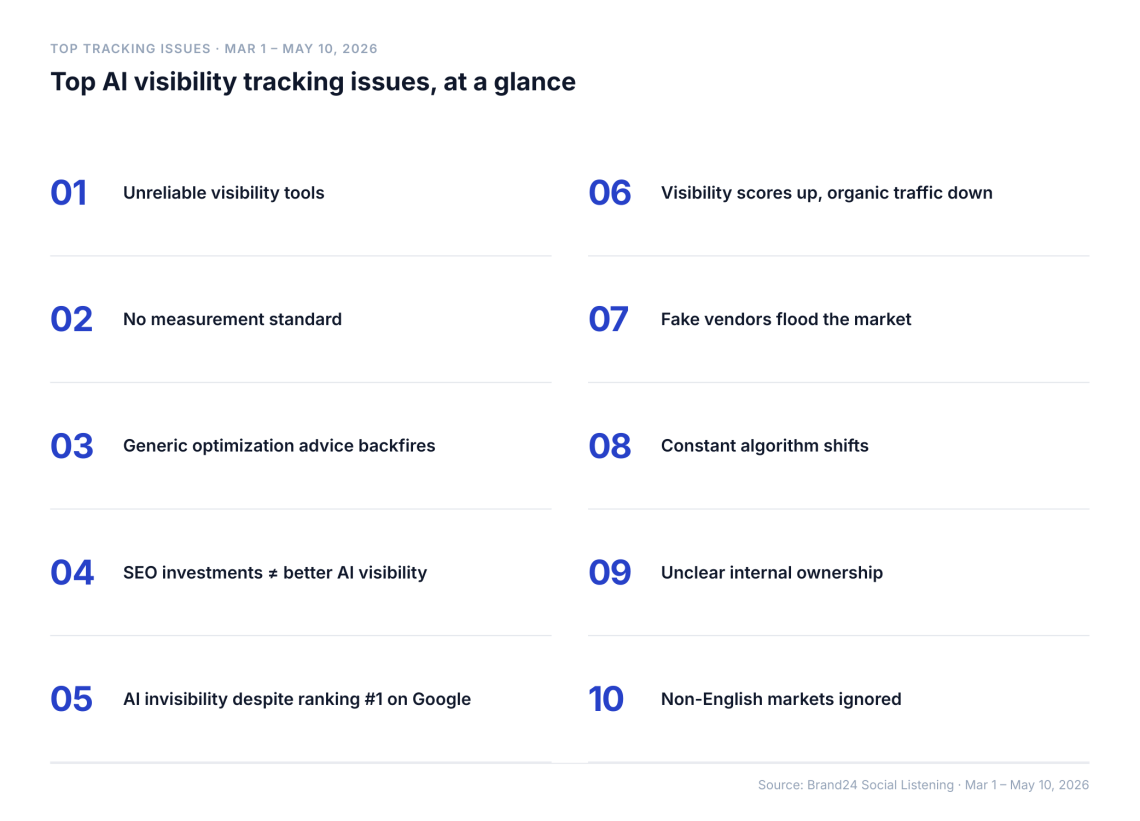
- 1 AI visibility tools are widely seen as unreliable
- 2 No standardized way to measure AI visibility across LLMs
- 3 Generic optimization advice backfires badly in specific industries
- 4 Traditional SEO investments don't transfer to AI visibility
- 5 Brands stay invisible in AI recommendations even when ranking #1 on Google
- 6 AI visibility scores can rise while organic traffic and revenue go down
- 7 Fake AI visibility guarantees and scammy vendors are flooding the market
- 8 AI search algorithms change constantly and every update can feel like starting over
- 9 Internal ownership of AI visibility is unclear across many companies
- 10 Non-English markets and industry-specific contexts are mostly ignored
Let’s unpack where each problem shows up, which industries are hit hardest, and what you can do about it as a marketer.
Brand visibility in AI Search generates a new mention every 2 minutes
Before I went anywhere near the pain-point analysis, I wanted to know one thing: how big is the AI Visibility conversation?
So I pulled the overall social listening metrics from the Brand24 media monitoring project for the 70-day window (March 1 to May 10, 2026).
Here are the basic stats:
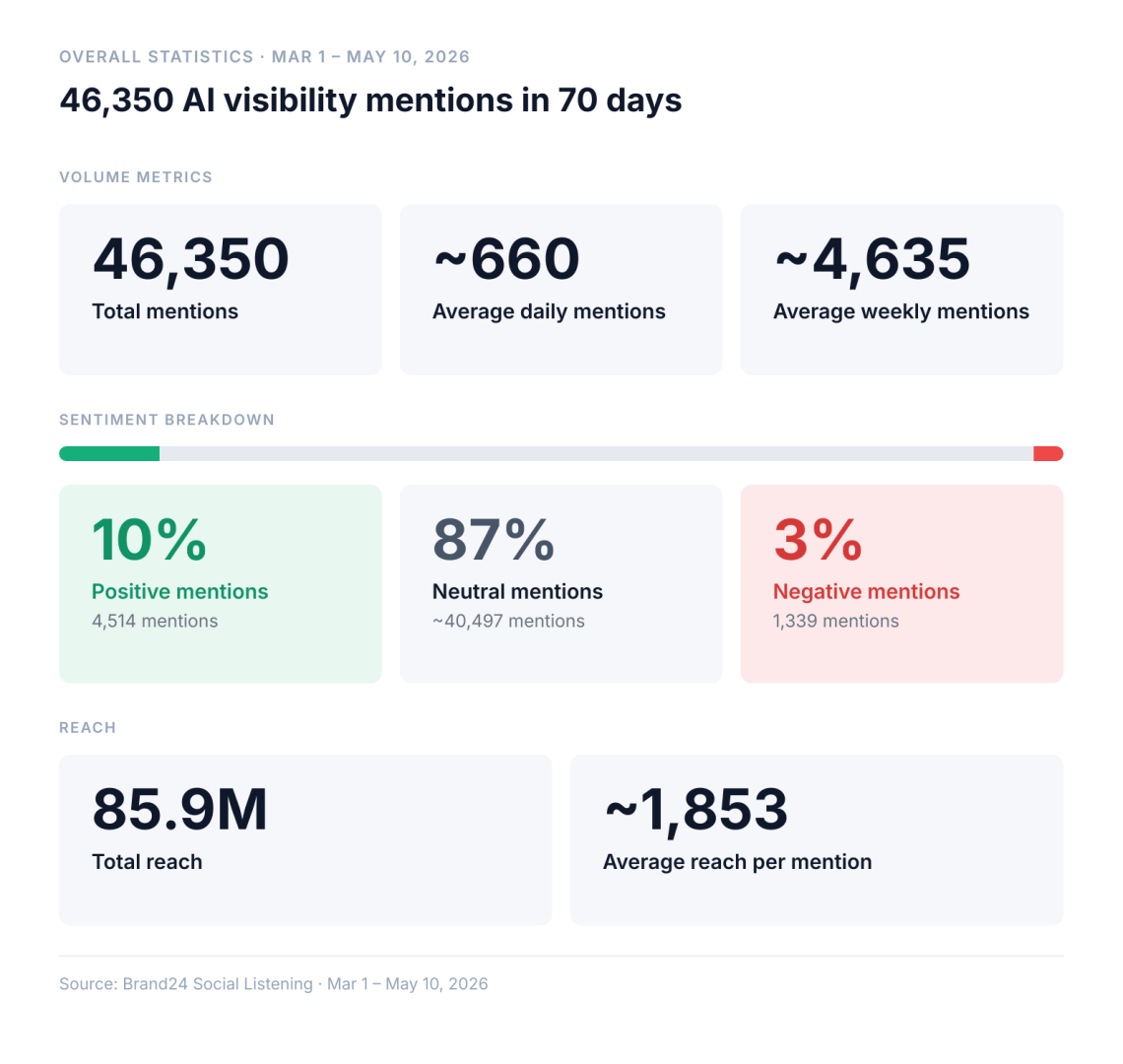
- 46,350 mentions of “ai visibility”, “brand visibility in ai”, “llm visibility” across all monitored channels (social media and non-social media)
- 85.9M total reach (to visualize this, it’s roughly the population of Egypt)
- ~660 mentions per day (about one every 2 minutes)
- ~4,635 mentions per week on average
- Sentiment share: 10% positive, 3% negative, 87% neutral
For a relatively young marketing category (that existed only as a fringe concept just 3 years ago): that’s a serious baseline of organic brand awareness.
It tells us AI visibility tracking has already crossed the line from “emerging topic” into “established marketing category.”
The monthly trend: steady mention volume, with a slight reach drop in April
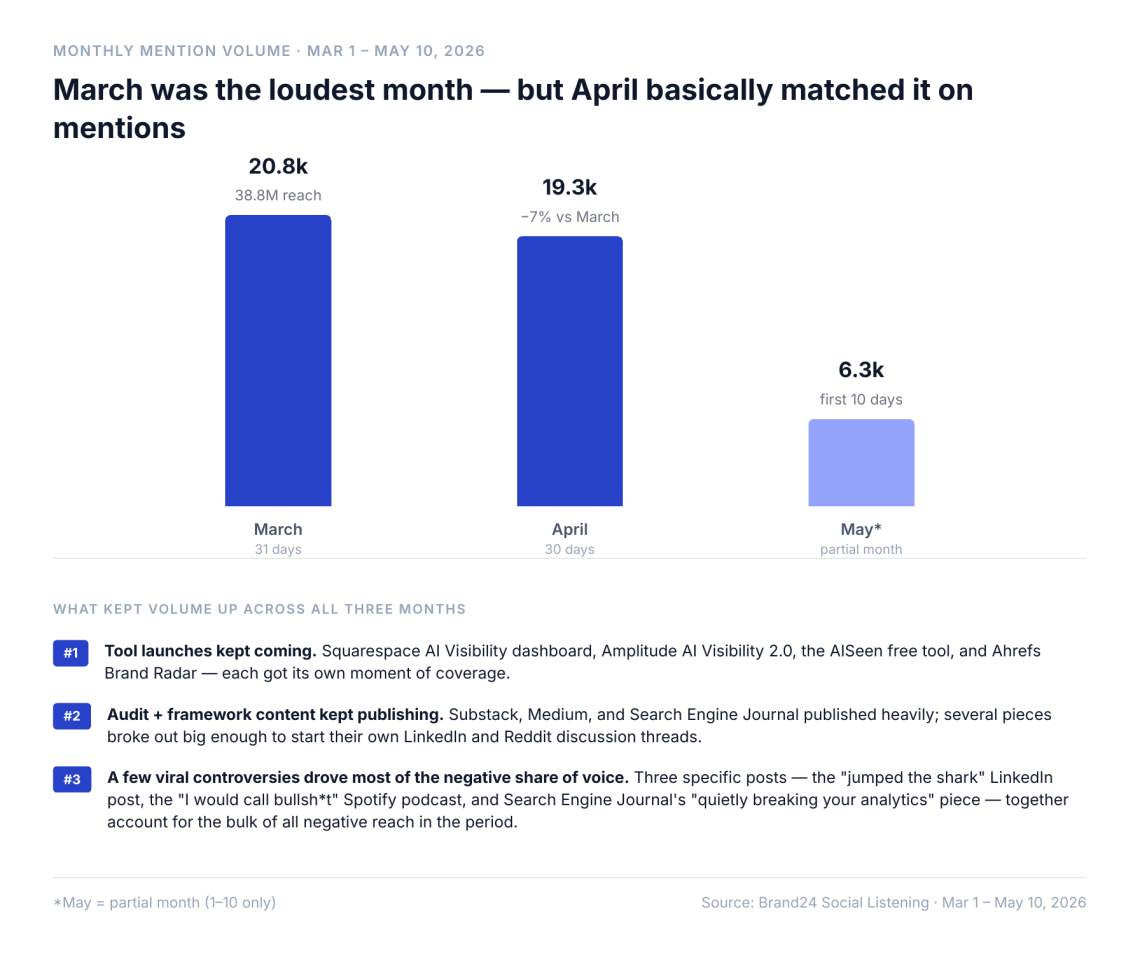
March was the busiest month, with 20.8k mentions and 38.8M reach, driven by a few AI tool launches and audit reports coming out at the same time.
April mention volume stayed pretty consistent (19.3k), though fewer people saw those posts as the initial excitement from the March launches started to fade.
And the first 10 days of May already produced 6.3k mentions. If people keep talking about AI visibility at this pace, May’s mention volume is looking like it will be just as big as March, if not bigger.
Two topics carry 80% of the AI visibility tracking conversation
After sorting through those 46.3k mentions, I found that the whole AI visibility conversation comes down to 5 main themes, though some are way louder than others.
In fact, just two topics: how to measure AI brand visibility (39% SoV) and how to improve it (40.9% SoV) make up about 80% of everything people are talking about.
The other three topics are much smaller in volume, but that’s where some of the biggest frustrations and “acute pains” are discussed.
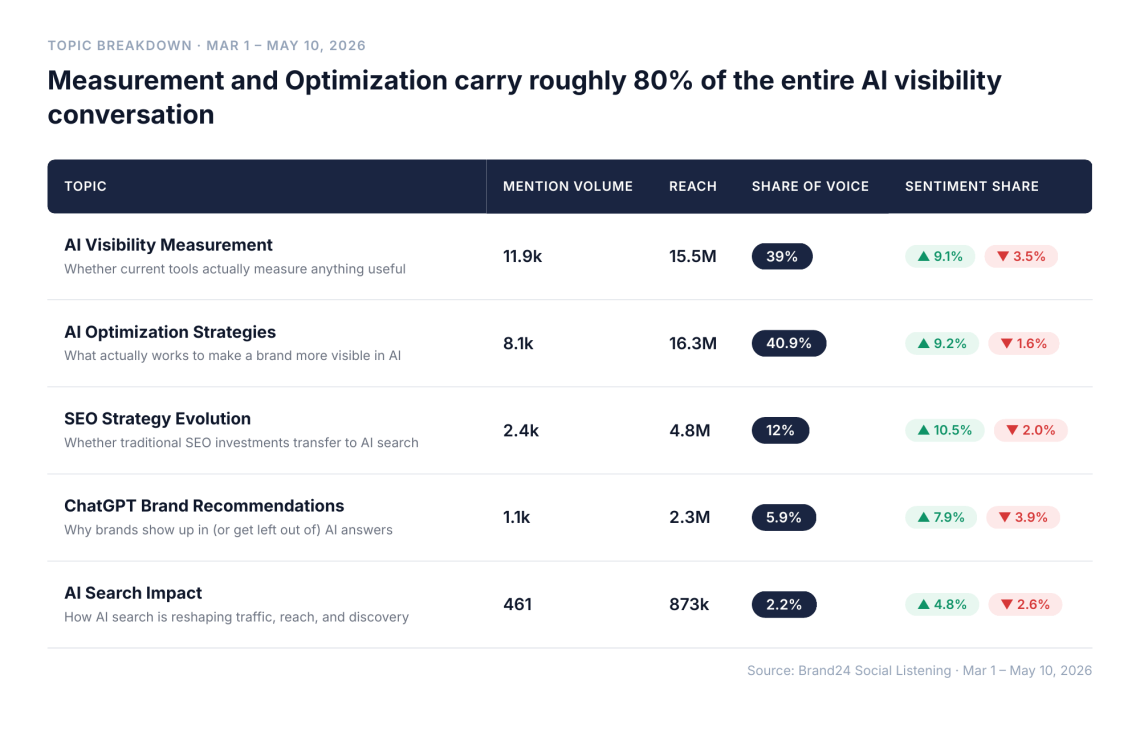
Here’s a quick look at the top 5 discussion topics:
01 AI Visibility Measurement
11.9k mentions | 15.5M reach | 39% Share of Voice | 27.8% Brand24 Controversy Index
This is the single largest discussion topic by mention volume, and it’s where almost all the AI visibility tool criticism is expressed.
The main complaint is that AI visibility tools are seen as unreliable, messy, or misleading.
What the data shows about this topic:
- It generated 1,5k emotionally-charged mentions (positive + negative combined): more polarized engagement than every other topic combined.
- 420 negative mentions with a 3.5% negative sentiment: the highest negative volume of any topic.
- 9.1% positive sentiment is mostly driven by specific tool launches (Squarespace’s AI Visibility dashboard, Amplitude AI Visibility 2.0, Ahrefs Brand Radar, the AISeen free tool).
- #aivisibility was the top negative hashtag in the dataset, with 35 negative mentions.
The most-cited critical voices I saw:
- A Reddit thread from May 8 said “AI visibility score” is on track to become “a vanity metric in a new costume,” with tool dashboards being marketed like Google rankings.
- An Instagram critic pointed out that: tools tell you “You’re missing from 60% of AI answers”, but offer “no optimisation, no execution, no attribution.”
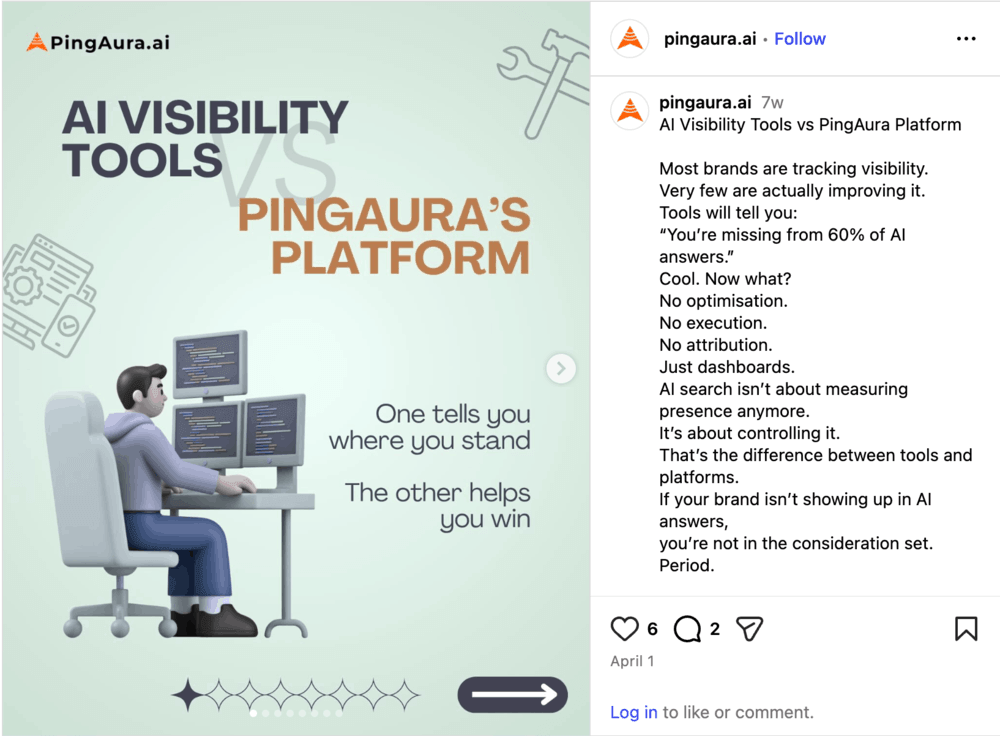
- ShipFasterHQ on X (May 10): “AI visibility is not enough. If your tooling counts mentions but can’t show where your brand got displaced, you bought visibility without diagnosis.“
02 AI Optimization Strategies
8,1k mentions | 16.3M reach | 40.9% Share of Voice | 15.3% Brand24 Controversy Index
This is thebiggest topic by share of voice, and it has the lowest Brand24 Controversy Index of all five.
Lots of people are constructively talking about how to fix AI brand visibility. But the negative voices that do exist carry enormous reach.
What the data shows:
- The largest absolute negative reach in the entire project: 659.4k, driven mostly by Entrepreneur’s Facebook and X posts (which together bring over 26% of all negative SoV).
- There are only 133 negative mentions for this topic, meaning each negative mention here amplifies at roughly 5× the average.
The two most-cited critical voices:
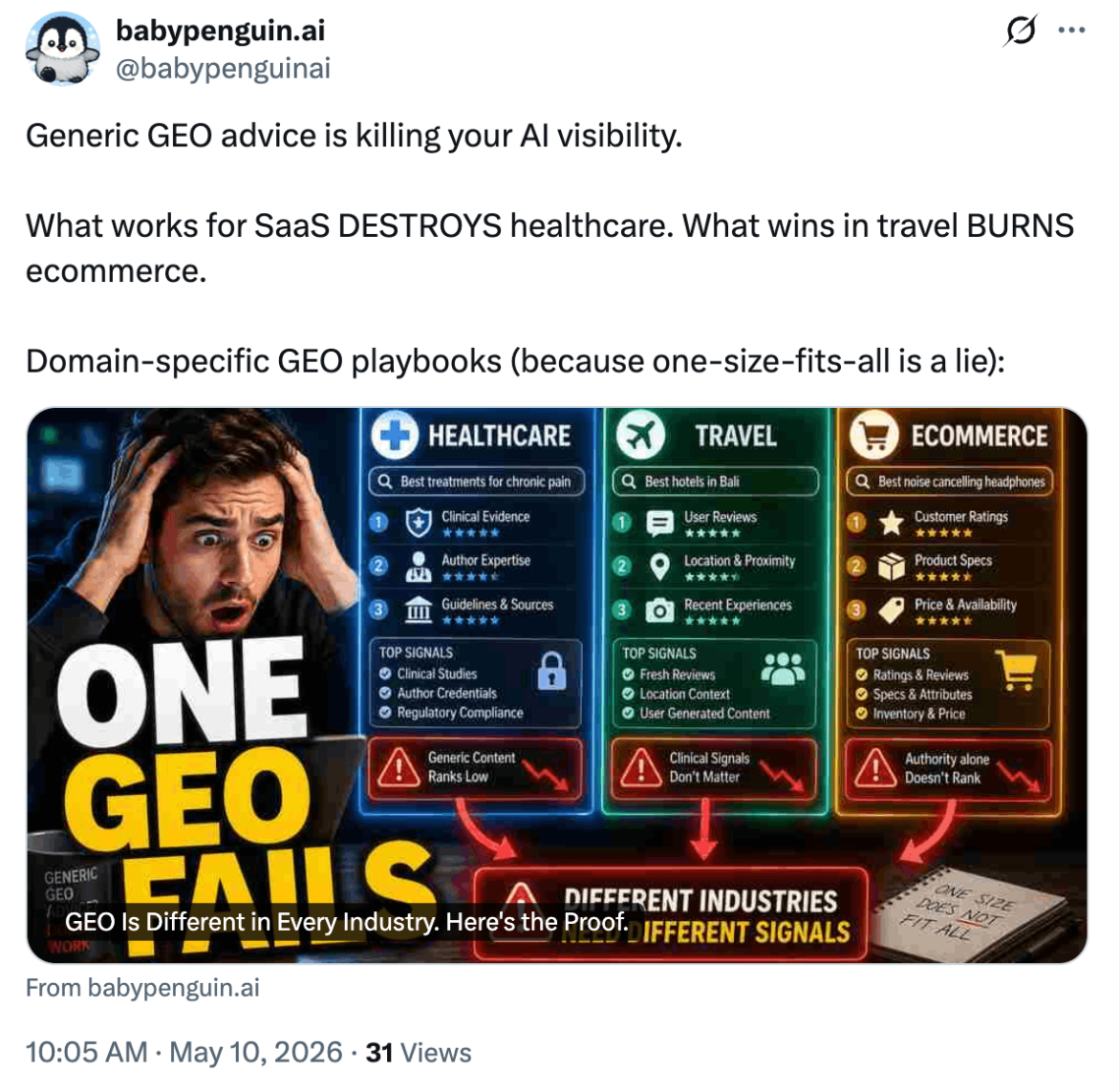
- babypenguinai on X (May 10): “Generic GEO advice is killing your AI visibility. What works for SaaS DESTROYS healthcare.”
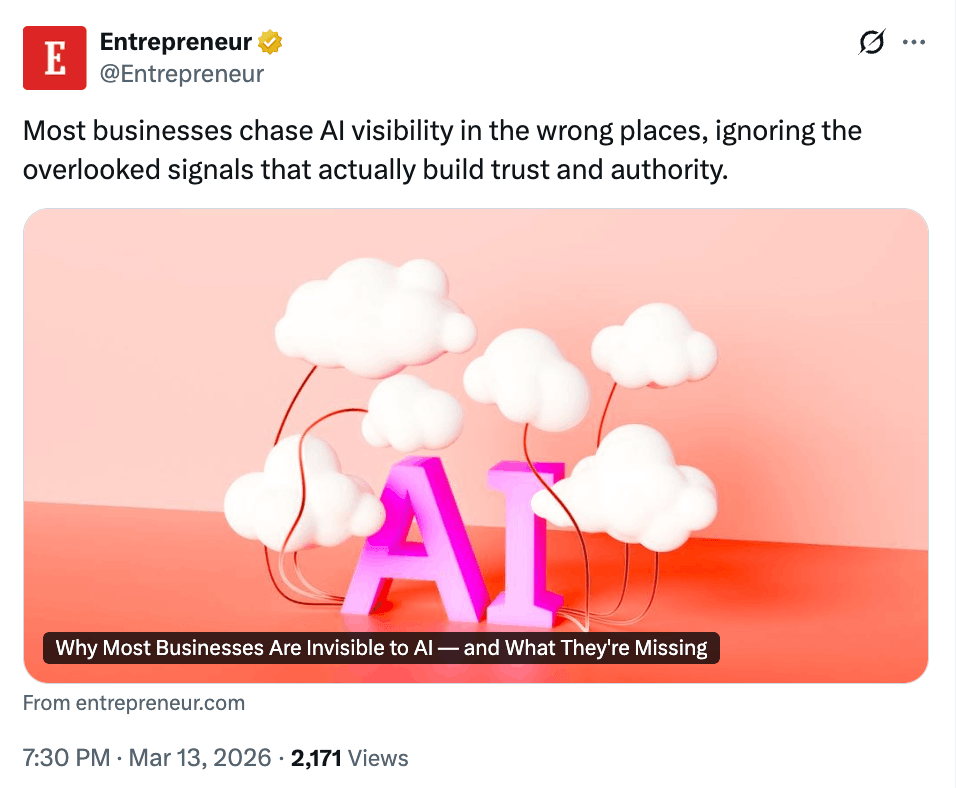
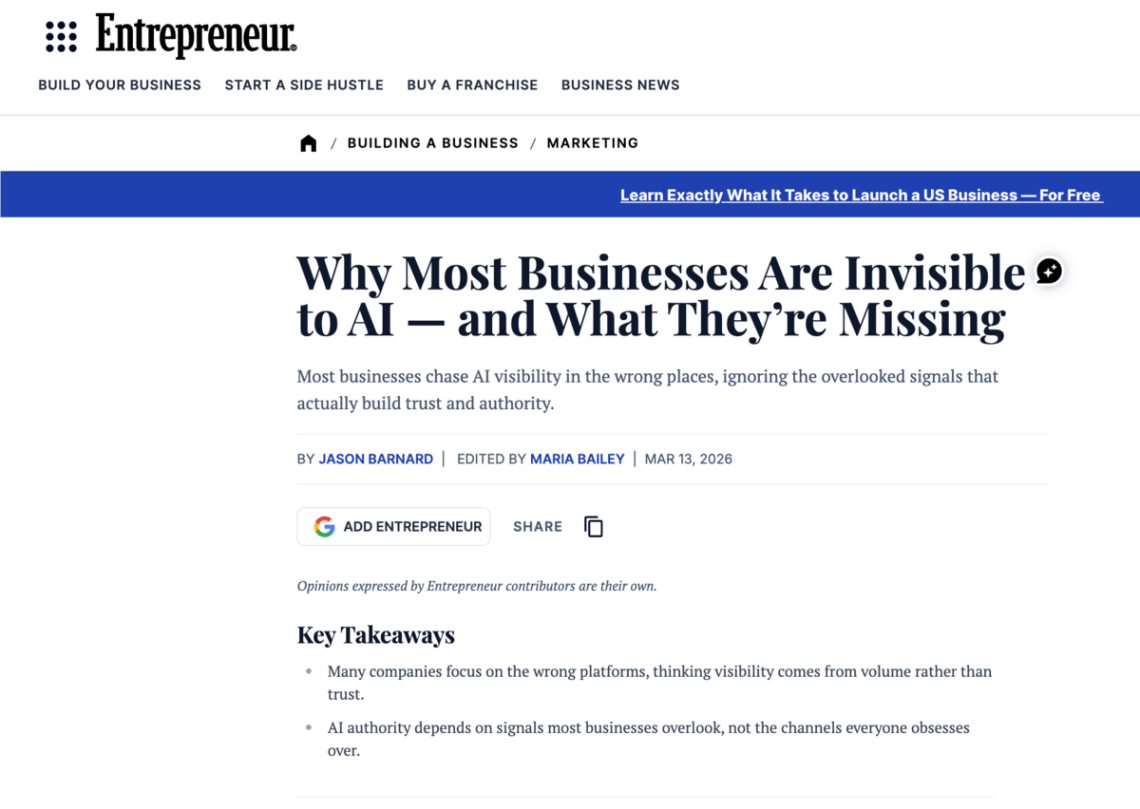
- Entrepreneur (Facebook and X, March 13): “Most businesses chase AI visibility in the wrong places, ignoring the overlooked signals that actually build trust and authority.”
03 SEO Strategy Evolution
2.4k mentions | 4.8M reach | 12% Share of Voice | 15.8% Brand24 Controversy Index
This is the smaller-volume but emotionally heavier topic: SEO specialists confronting the fact that their existing investments may no longer be applicable
What I noticed in the data:
- The highest positive rate of any topic (10.5%), driven by SEO experts excited about reinventing their skill set around AI visibility.
- The top negative hashtags: #seo (46 negative mentions) and #aiseo (22 negative mentions).
The two major critical voices:
- A May 10 LinkedIn post: “Your social-media-first communications strategy meant your website never got the attention it needed. That investment does not carry over to AI visibility. At all.”
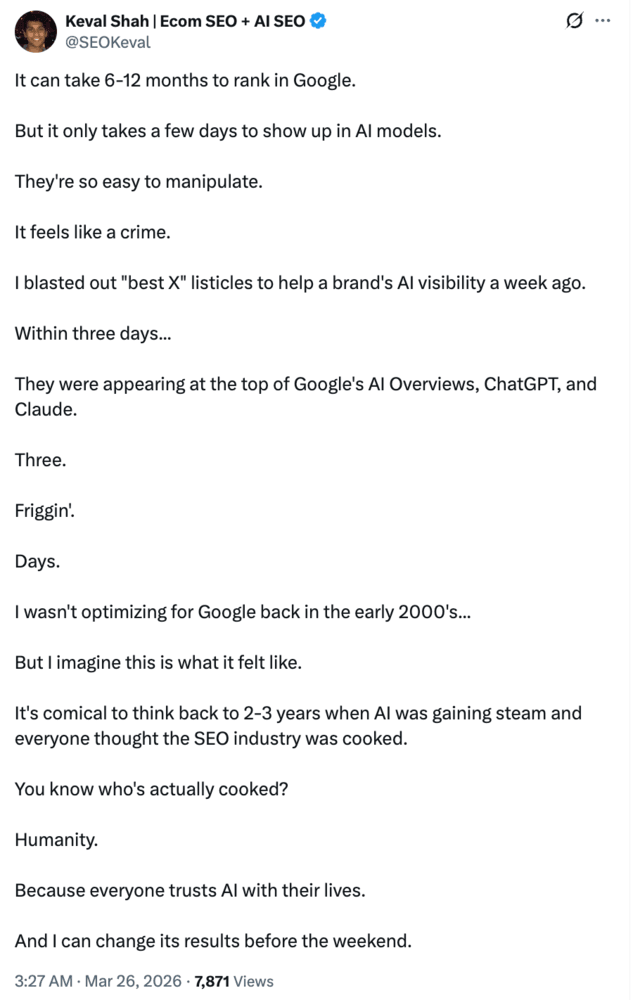
- SEOKeval on X (March 25): described blasting “best X” listicles to game AI models, with brands appearing within three days, and called the practice “a crime.”
04 ChatGPT Brand Recommendations
1,1k mentions | 2.3M reach | 5.9% Share of Voice | 32.8% Brand24 Controversy Index
Much smaller by volume, but it has one of the highest controversy levels in the whole social listening analysis.
What the data shows:
- Positive-to-Negative ratio of 2.0:1 is the lowest in the report. For every two excited posts about a brand getting recommended by ChatGPT, there’s one skeptical or frustrated.
- The 3.9% negative rate is the second-highest of any topic.
- The 202.8k in negative reach is amplified by deep skepticism from industry analysts.
Two examples:
- Debra Aho Williamson (Sonata Insights, on Linkedin, April 17): “AI visibility is important. But AI visibility has also jumped the shark.”
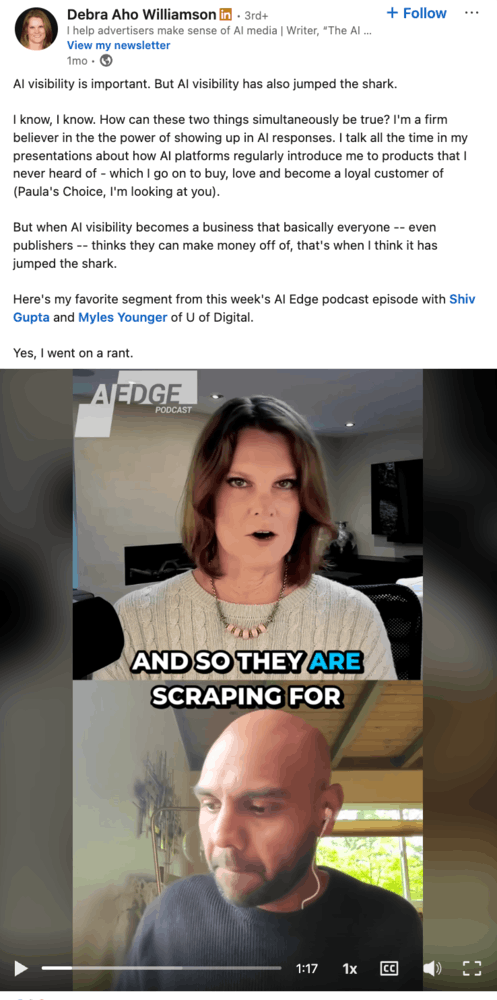
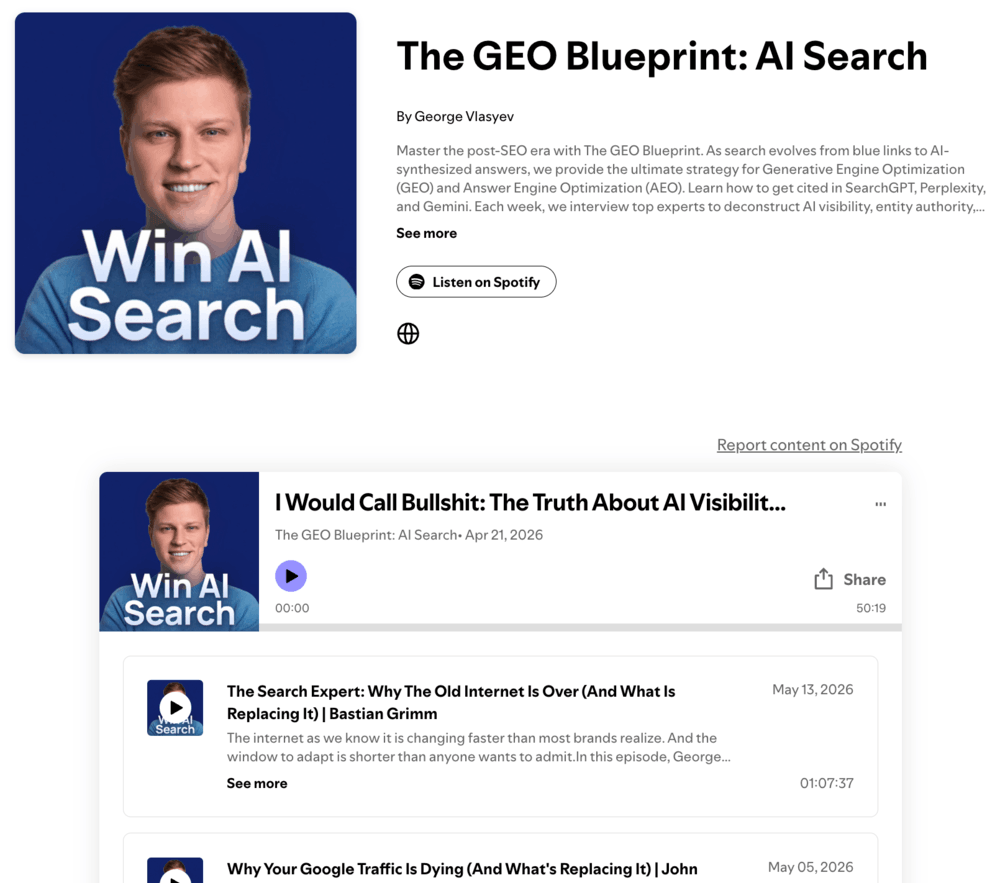
- Gareth Bull on Spotify (April 21): “I Would Call Bullsh*t: The Truth About AI Visibility Guarantees” — a podcast arguing that “most people selling AI visibility guarantees have no idea what they’re talking about.”
05 AI Search Impact
461 mentions | 873k reach | 2.2% Share of Voice | 35.3% Brand24 Controversy Index
It is the smallest topic by mention volume (only 461 mentions), but the highest share of emotionally charged opinions here is negative.
What the data shows:
- Brand24 Controversy Index of 35.3% is the highest of any topic. Among the small group of charged mentions here, more than a third are negative.
- Positive rate of 4.8% is the lowest of all five topics. Even the optimists are hedging.
- 92.6% of mentions are neutral, which is the highest of any topic. It means people are still trying to figure out what to think about the AI search impact.
Two examples:
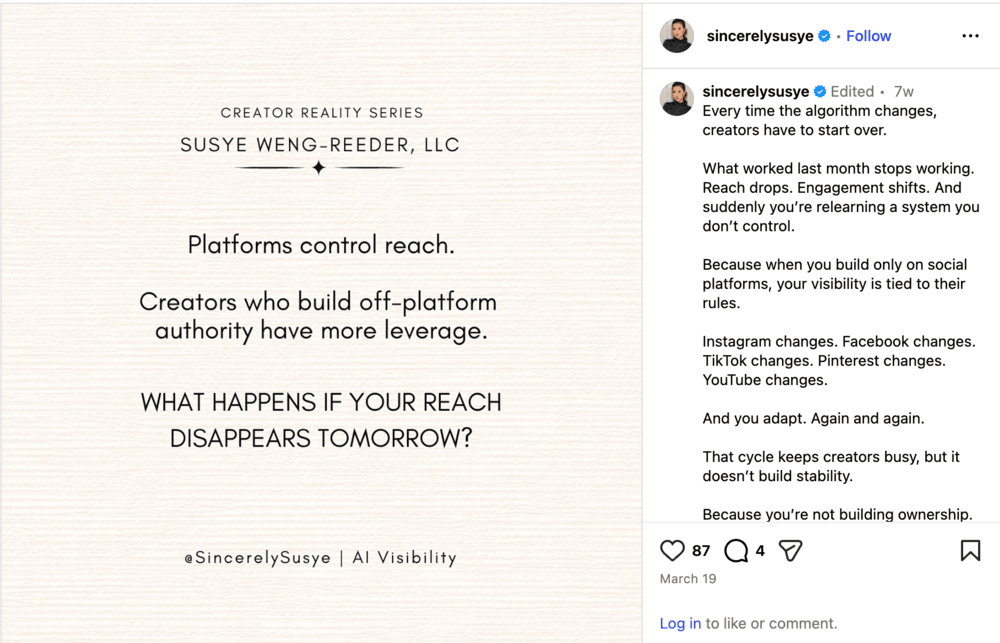
- susye weng-reeder on Instagram (March 19): described how creators “have to start over” every time the algorithm changes — reach drops, engagement shifts.
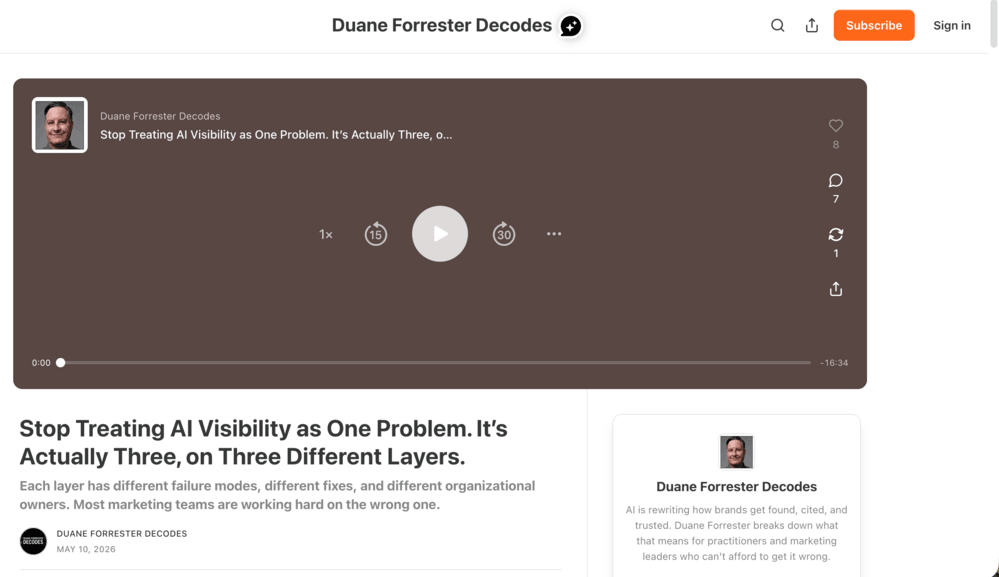
- duaneforresterdecodes on Substack (May 10): argued for separating AI brand visibility into three layers like retrieval, representation, and trust, and warned that mixing them causes “wasted budget, missed quarters.”
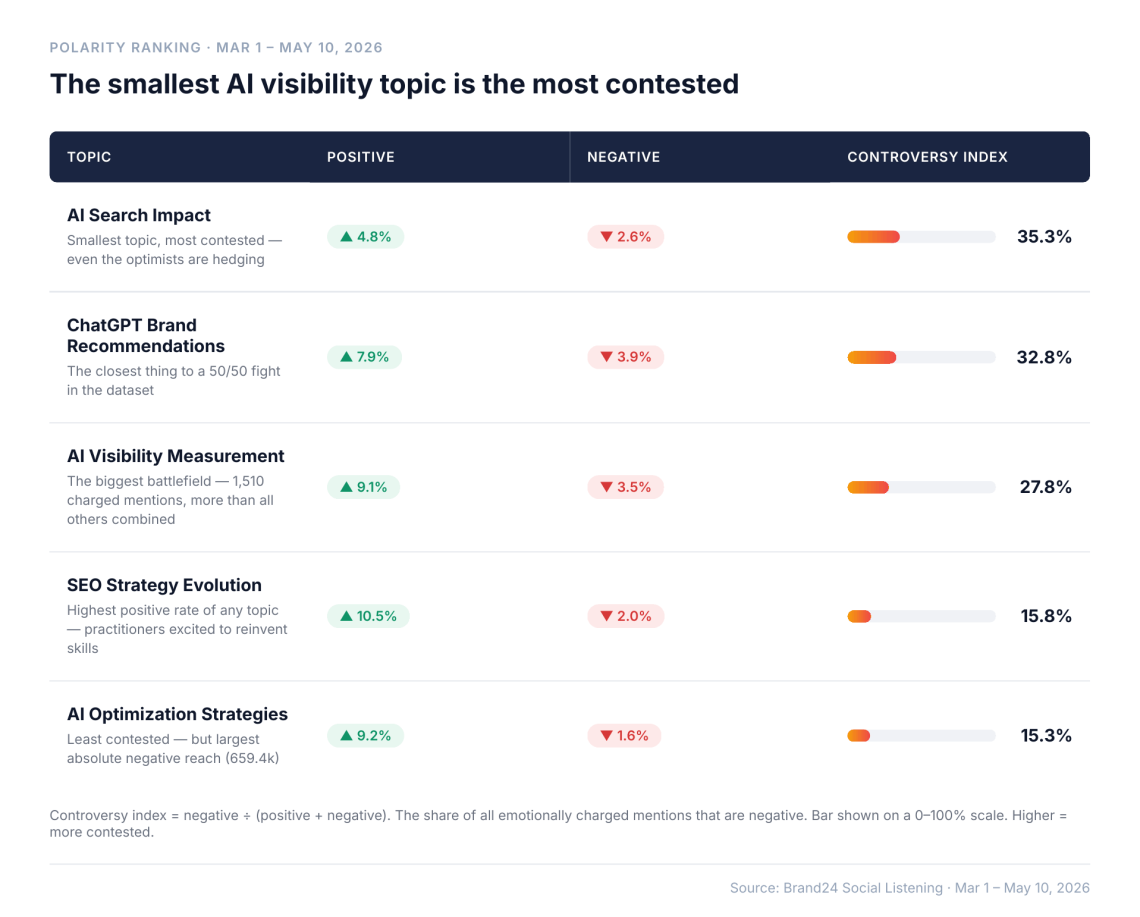
The smallest AI visibility topic is the most divisive
Volume tells us what people are talking about when they mention AI visibility. But to figure out which topics are the most contested (where the loudest fights happen), I needed to focus on different metrics.
I analyzed three additional polarity metrics for each of the five topics:
| Metric | How to read it |
|---|---|
| Negative rate (%) | Raw share of all topic mentions that are openly negative |
| Overall negativity ratio (positive ÷ negative) | How many positive mentions exist per negative one. The smaller this number is, the more heated the debate. |
| Brand24 Controversy index (negative ÷ (positive + negative)) | The share of all emotionally charged mentions that are negative. A higher number means the topic triggers more disagreement than enthusiasm. |
Here’s how the five topics rank:
| Topic | Mentions volume | Positive sentiment % | Negative sentiment % | Pos:Neg Ratio | Brand24 Controversy Index |
|---|---|---|---|---|---|
| AI Visibility Measurement | 11.9k | 9.1% | 3.5% | 2.6× | 27.8% |
| AI Optimization Strategies | 8.1k | 9.2% | 1.6% | 5.6× | 15.3% |
| SEO Strategy Evolution | 2.5k | 10.5% | 2.0% | 5.3× | 15.8% |
| ChatGPT Brand Recommendations | 1.1k | 7.9% | 3.9% | 2.0× | 32.8% |
| AI Search Impact | 461 | 4.8% | 2.6% | 1.8× | 35.3% |
Four findings stood out for me when I read the data:
01 ChatGPT Brand Recommendations is the closest thing to a 50/50 fight
- Pos:Neg ratio of 2.0:1: the lowest in the dataset.
- For every two excited posts about a brand getting recommended by ChatGPT, there’s one skeptical or frustrated one.
- This is the topic where the gap between “AI visibility is exciting” and “AI visibility is a scam” is narrowest.
02 AI Search Impact: smallest topic, highest controversy
- Brand24 Controversy Index of 35.3%: the highest of any topic.
- And yet only 461 mentions: barely 2.2% of the total volume.
- Positive sentiment of just 4.8%, the lowest of all five topics, which can mean that even the optimists are hesitating.
03 AI Optimization Strategies has the largest absolute negative reach
- 15.3% Brand24 Controversy Index: the lowest of any topic.
- But 659.4k in negative reach: the largest of any topic.
- That reach is driven mostly by Entrepreneur’s Facebook and X posts, which together account for over 26% of all negative SoV in the report.
- A few high-reach voices can carry an entire negative sentiment for a topic, even when most of the conversation around it is neutral or positive.
04 AI Visibility Measurement is the biggest battlefield by mention volume
- 1.5k total emotionally-charged mentions (positive + negative combined): more than every other topic.
- Both sides are loud: practitioners investing in new tools, and critics calling those same tools “vanity metrics” or “lottery tickets.”
- This is the topic where the future of the entire category is being argued in real time.
Platform breakdown: News drives 60% of AI brand visibility mentions
When I broke the negative mentions down by platform, the most striking finding was the gap between where the conversation volume is and where most of the criticism is coming from.
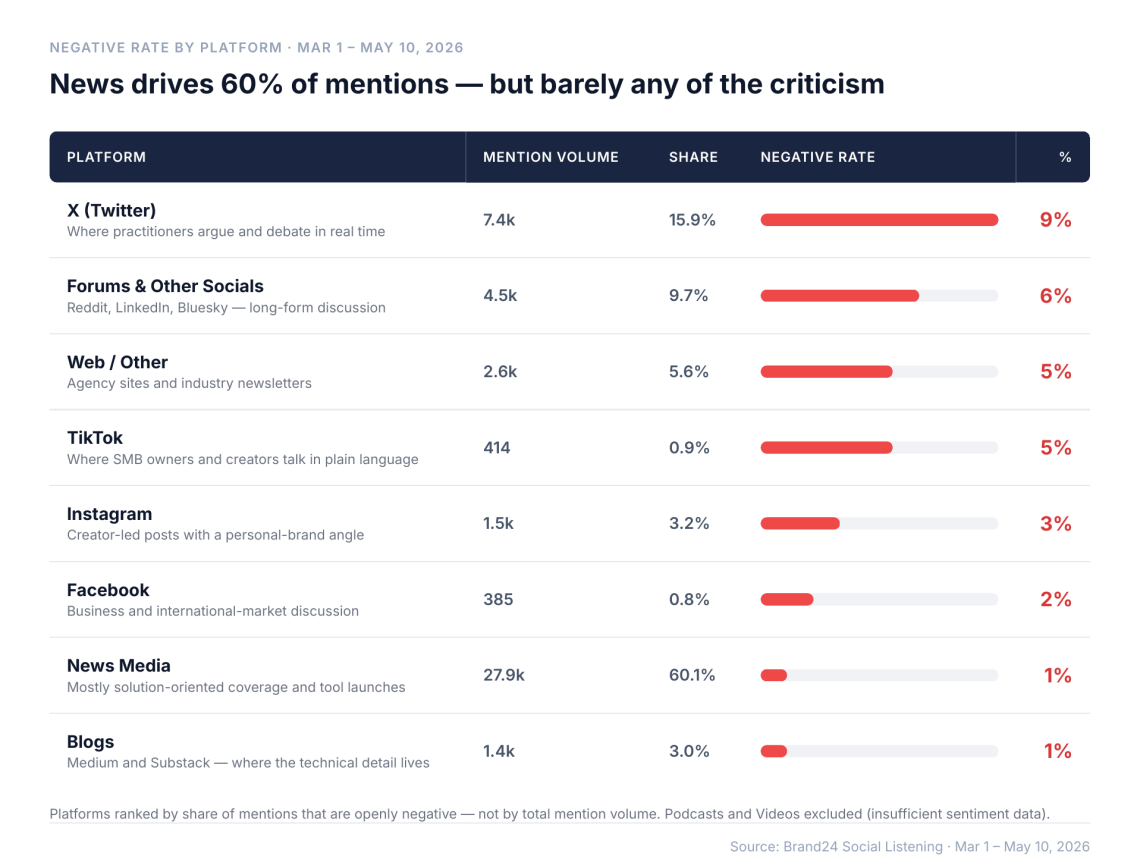
News drives 60.1% of all AI visibility mentions in the dataset, but only 1% of those mentions are negative. The criticism is almost entirely elsewhere.
If your media monitoring strategy only focuses on news, you could think here that the topic of AI visibility is only a polite, solution-oriented professional discussion.
I re-ranked the platforms by negative sentiment share (the share of each platform’s mentions that are openly negative) instead of by total mention volume:
01 X (Twitter): the sharpest criticism, the highest polarity
7.4k mentions | 15.9% share of voice | 7.2M reach | 22% positive | 9% negative
X is the most topic-concentrated platform in the dataset: AI Visibility Measurement gets 81% share of voice here.
The criticism on X is punchy, specific, and very practical. People here are pointing out real-world flaws in how AI visibility works (or doesn’t).
The most popular themes are:
- Tool reliability — AI visibility trackers breaking analytics pipelines.
- Language barrier — strategies that don’t translate outside English-language markets.
- Pricing inequality — There’s a lot of anger about the price gap, where some businesses pay $50k+ for AI visibility data that others access for free.
- Existential brand risk — brands becoming invisible in AI while competitors dominate recommendations.
- Fact-finding fails — AI models can’t reliably extract facts from brand websites, even well-structured ones.
- Tool-market skepticism — there are signs of skepticism that “AI visibility optimization” is just the latest marketing gimmick or “scam.”
X is basically the internet’s early-warning system. If there’s a red flag about trust or tech in the AI space, it’s going to show up here first, and it’s going to be loud.
02 Forums & Other Socials: Small volume, huge impact
4.5k mentions | 9.7% of total | 35.6M reach | 12% positive | 6% negative
Despite ranking third in mention volume, Forums & Other Socials achieve 35.6M reach, nearly matching News.
This shows that a single post on a forum or a niche social site can be incredibly powerful. Even though these platforms aren’t the “loudest” when it comes to how often people mention AI Visibility here, their influence is undeniable.
The conversation is also very balanced.
People are jumping back and forth between trying to figure out what’s wrong (AI Visibility Measurement, 38.4% SoV) and how to fix it (AI Optimization Strategies, 36.6% SoV). It’s a very practical, problem-solving environment.
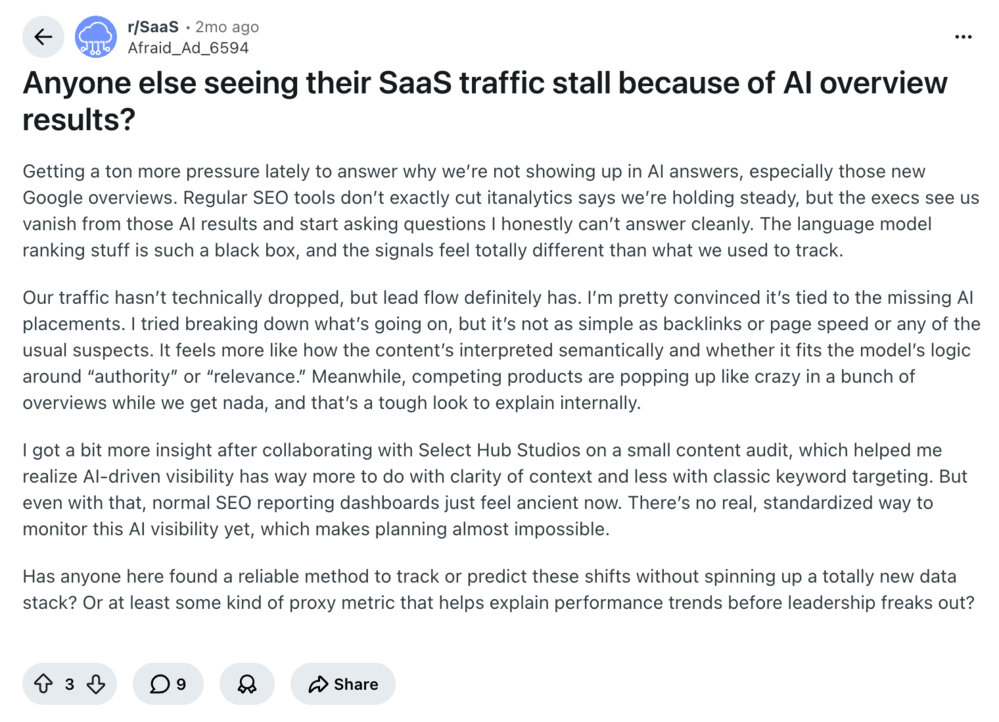
Taking a closer look at what people were saying in these discussions, I found a lot of really detailed complaints and concerns:
| Pain point | How it’s described on forums and other socials |
|---|---|
| Market is too crowded | Many feel the market for AI visibility software is totally packed, and a lot of these companies might not last because their business plans seem shaky. |
| Ranking high doesn’t guarantee AI mentions | Just because you rank #1 on Google doesn’t mean AI tools will even mention you. As one person said, “You can be #1 in Google and still not exist in the answer,” which is a huge, confusing problem for the industry. |
| No standard way to measure | There’s currently no single, agreed-upon method for tracking how well brands show up in LLMs. |
| Content clarity over content volume | There is a lot of discussion that says pumping out tons of content won’t solve your visibility issues. It’s more important to make sure AI models can understand your content and pull out the key details. |
| The real problem is deeper than visibility | Many brands are tackling AI invisibility like a simple visibility fix when the real issue might be deeper: their core identity or positioning isn’t clear enough in the data AI models are trained on. |
| AI Search is killing organic traffic | AI Overviews are starting to kill organic traffic for some SaaS companies that depend on people finding them through regular search. |
| New tools aren’t impressing | Even big company launches, like HubSpot’s AEO, are being called “pure mediocrity” by users, suggesting a disconnect between what enterprise tools offer and what marketers need. |
03 News: 60% of the volume, but only 1% negative
27.9k mentions | 60.1% of total | 36.7M reach | 6% positive | 1% negative
News makes up a massive part of the conversation (6 out of 10 mentions), but almost none of it is negative (just 1%): news articles (like audit reports or tool reviews) usually stick to giving solutions and facts, not emotions.
They treat AI Visibility problems as “professional challenges” to be solved, rather than emotional “critical failures”.
The two main topics here are fixing AI visibility (AI Optimization Strategies, 50.3% SoV) and figuring out how to measure it (AI Visibility Measurement, 33.1%).
The main issues mentioned in the News:
- Brands are vanishing everywhere — mentions of reports showing that some brands were totally invisible across 4 different AI platforms at the same time.
- Data gaps for PR and comms teams — it’s structurally hard to put a number on LLM visibility and fit it into current PR reporting.
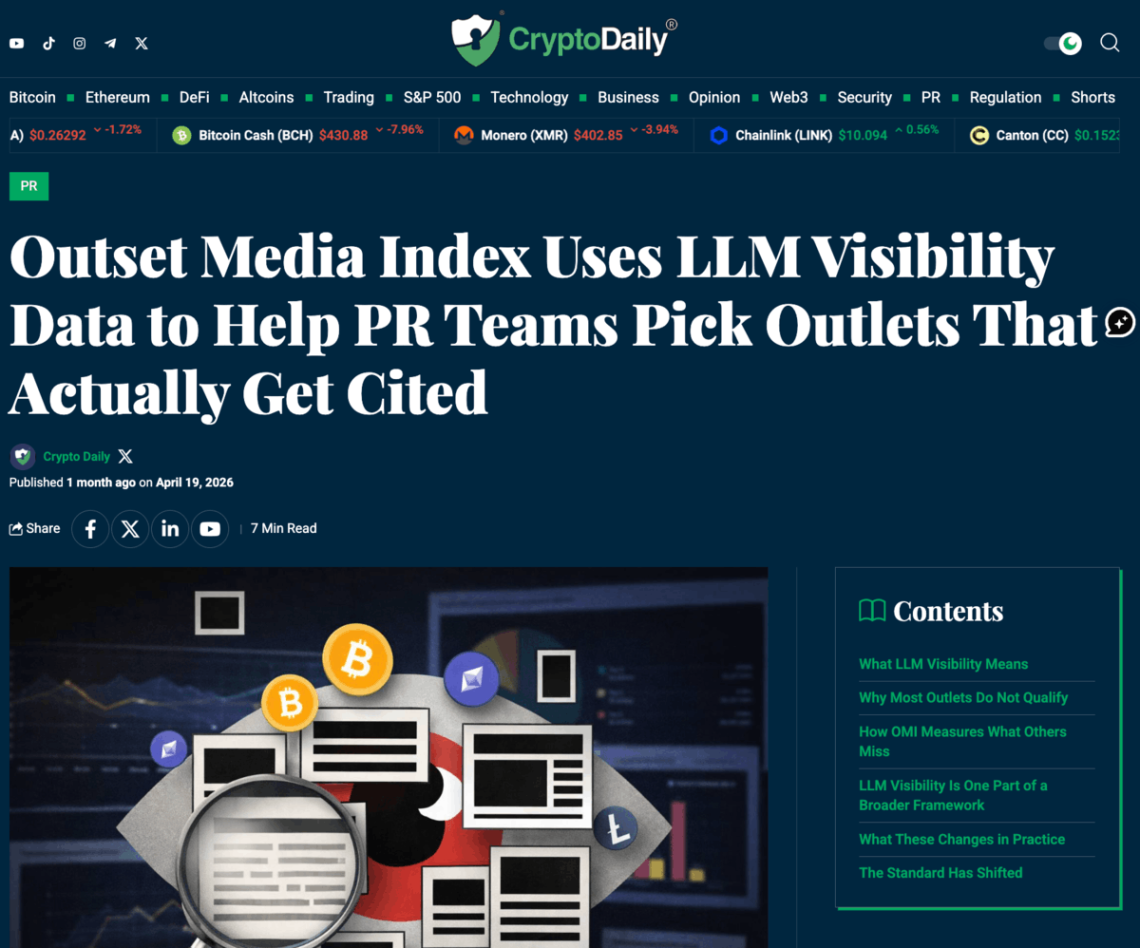
- AI Overviews are destroying CTR — documented cases of organic CTR dropping 61% as AI Overviews take over traffic.
04 Blogs: the most technical pain points
1.4k mentions | 3.0% of total | 2.3M reach | 5% positive | 1% negative
Just like with News, Blogs have a low negative sentiment, but that doesn’t mean there’s no pain. Instead of complaining, long-form writers use their posts to break down technical problems and offer solutions.
Most of the content here focuses on AI Optimization Strategies (48,9% SoV) and AI Visibility Measurement (24.7% SoV).
The problems I found here are the most specific and technical:
| Pain point | How it’s described on blogs |
|---|---|
| JavaScript is getting in the way | Websites that use a lot of complex JavaScript are basically blocking AI crawlers from seeing and indexing their content, which hurts visibility. |
| Too few prompts for testing | Trying to measure AI visibility using a small, random list of prompts is a major flaw that produces results that just aren’t accurate or reliable. |
| GEO is hurting SEO | When companies try to optimize specifically for Generative Engine Optimization (GEO), they often end up damaging the basic SEO work that AI visibility needs. |
| Content clarity over content volume | There is a lot of discussion that says pumping out tons of content won’t solve your visibility issues. It’s more important to make sure AI models can understand your content and pull out the key details. |
| Chasing the wrong LLM optimization goal | Most teams are focusing on getting AI tools to cite them, but a citation doesn’t actually guarantee your brand will have a real impact or meaningful visibility. |
| AI Search is killing organic traffic | AI Overviews are starting to kill organic traffic for some SaaS companies that depend on people finding them through regular search. |
| Third-party dependency | A huge amount (85%) of brands’ AI visibility comes from external references and third-party sources, meaning just optimizing your own website is not enough to solve the problem. |
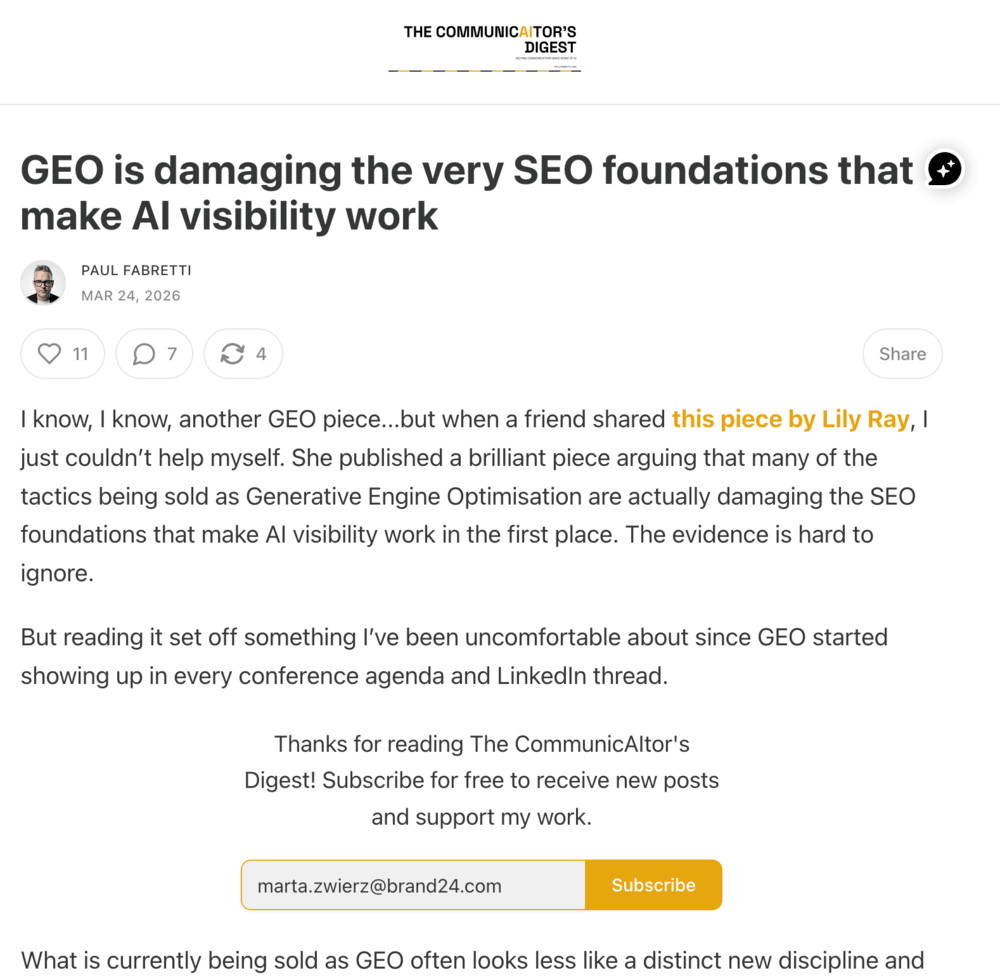
05 Web / Other (agency sites, niche publications, newsletters): the B2B accountability layer
2.6k mentions | 5.6% of total | 1.7M reach | 4% positive | 5% negative
Even though the emotional intensity on the Web / Other category isn’t as high as on X, the negative sentiment is definitely there (5%, higher than News, Blogs, or Instagram).
What stands out is how much people here care about SEO Strategy Evolution (leading at 33.1% SoV), closely followed by talks on AI Optimization Strategies (30.2%).
The pain points here are mostly agency- and vendor-evaluation-related:
- Confusing pricing in AI visibility tools — It’s currently really hard to get a straight answer from vendors on how they price their AI tracking services.
- Agency automation waste — Agencies building complex Zapier automations for AI visibility reporting, criticized as burning client budget without meaningful output.
- Moving target problem — No stable “Page 1 equivalent” exists in AI search; AI visibility is constantly changing, which makes it hard to track progress.
- Wrong goal: citations — Many teams are obsessed with getting mentioned or cited by AI models, even though those citations don’t always lead to actual business results.
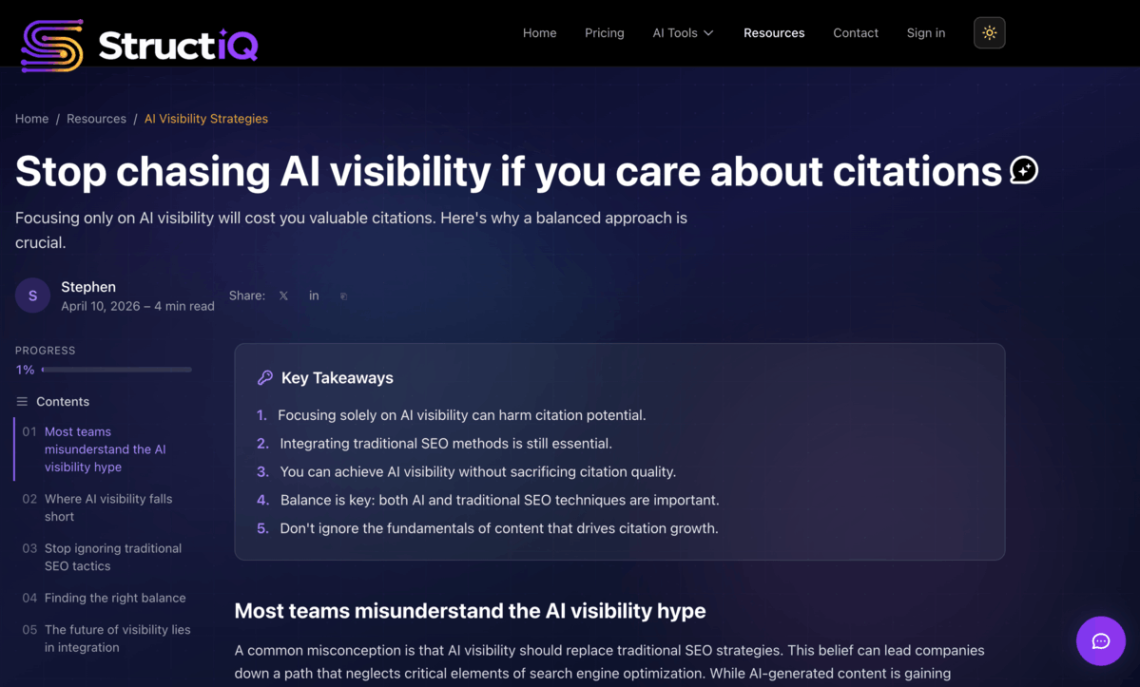
- Unprepared vendors — A lot of digital agencies just aren’t ready yet to provide the kind of deep, credible AI visibility audits that clients are looking for.
Quick hits: unique pain points on the smaller platforms
A few platforms, smaller in negative mentions volume, surface AI visibility pain points that don’t appear anywhere else:
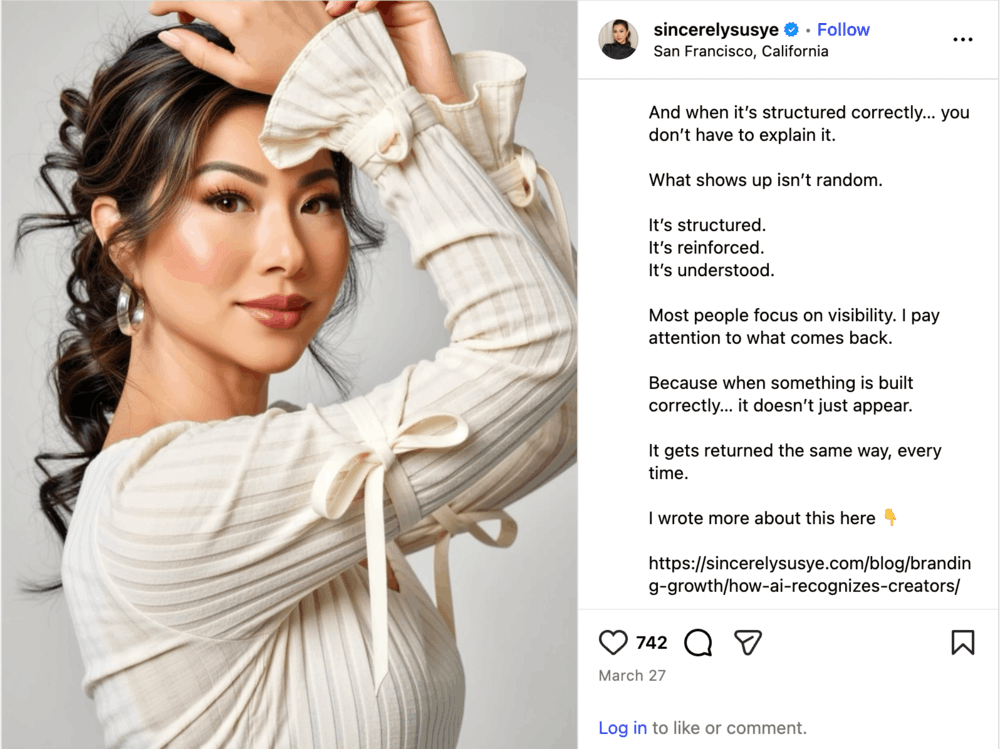
Instagram (1.5k mentions, 26% positive, the second-most positive platform)
- Here, the conversation is all about fairness and cultural identity.
- It’s the only platform where people are discussing how AI seems to miss or fail to recognize non-Western creators or cultural identities.
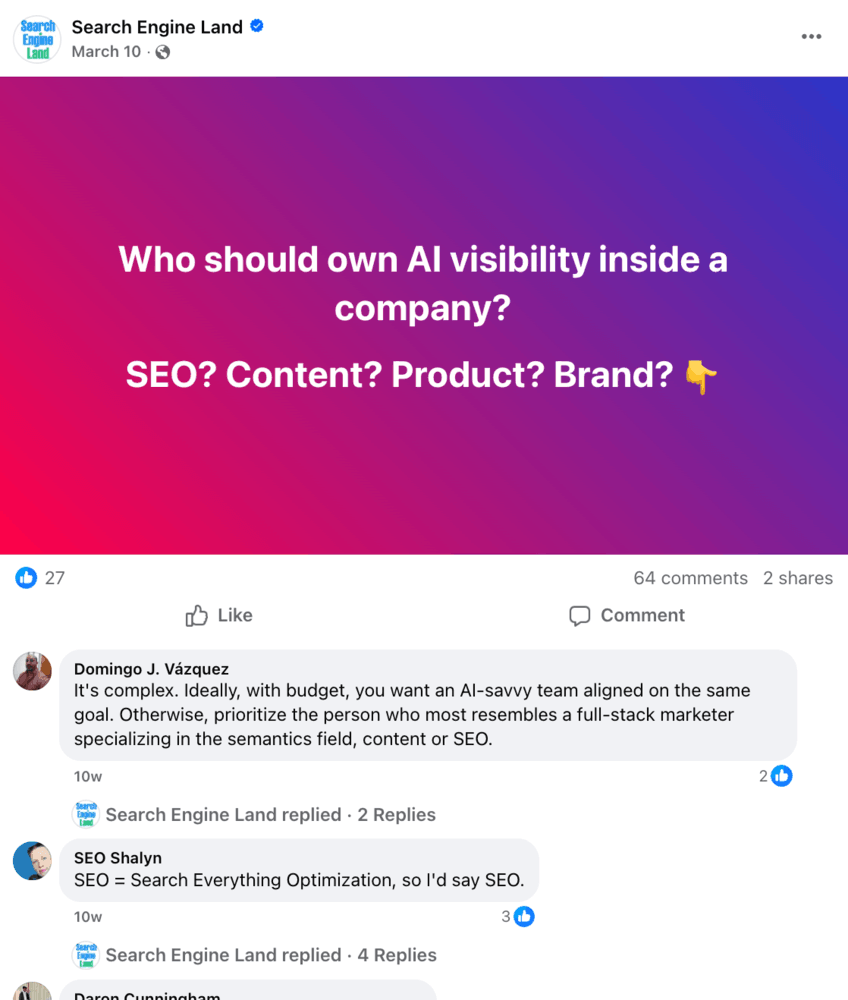
Facebook (385 mentions, 1.28M reach)
- The biggest issue here is who’s responsible for AI visibility within a company. People are discussing: Does Marketing own it? SEO? PR? Communications? It becomes a major roadblock for getting things done.
- This is where most of the international content shows up, with publishers from Thailand, Poland, Vietnam, and Romania actively posting.
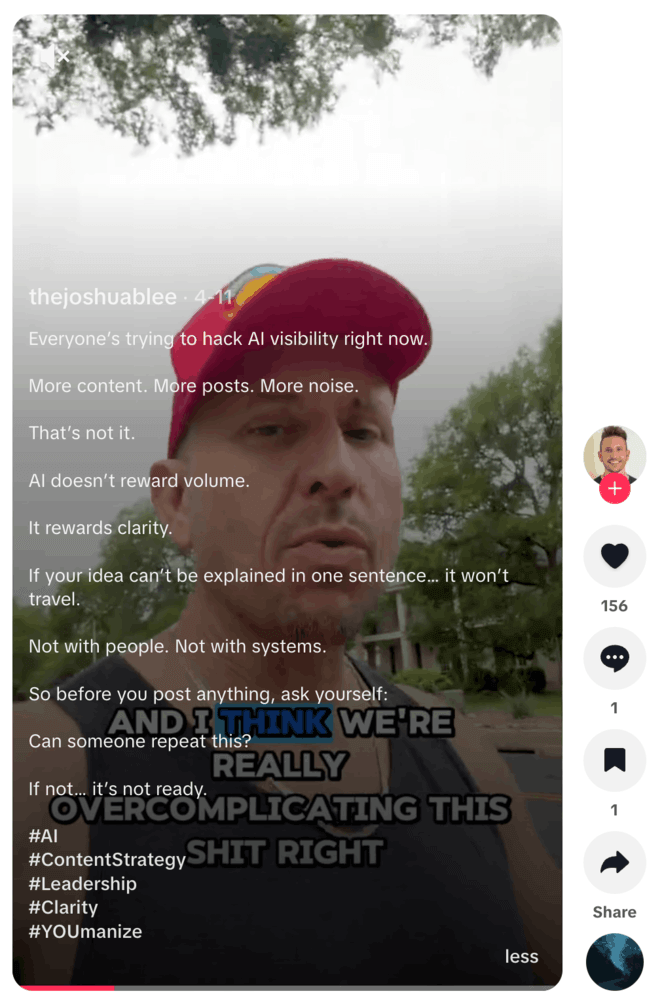
TikTok (414 mentions, 23% positive)
- Translates AI visibility for the everyday small business owner.
- The language is simple, jargon-free, and super urgent.
- Small business owners comment on watching their competitors get recommended by AI while their brand is nowhere to be seen.
Podcasts (196 mentions)
- Here, the most credibility-critical voices amplify.
- The Gareth Bull “I Would Call Bullsh*t” episode on AI visibility guarantees is the flagship example.
The voices driving the AI brand visibility criticism
When I looked at who was actually doing the criticizing across all the platforms, the negative sentiment landscape split cleanly into two influencer tiers:
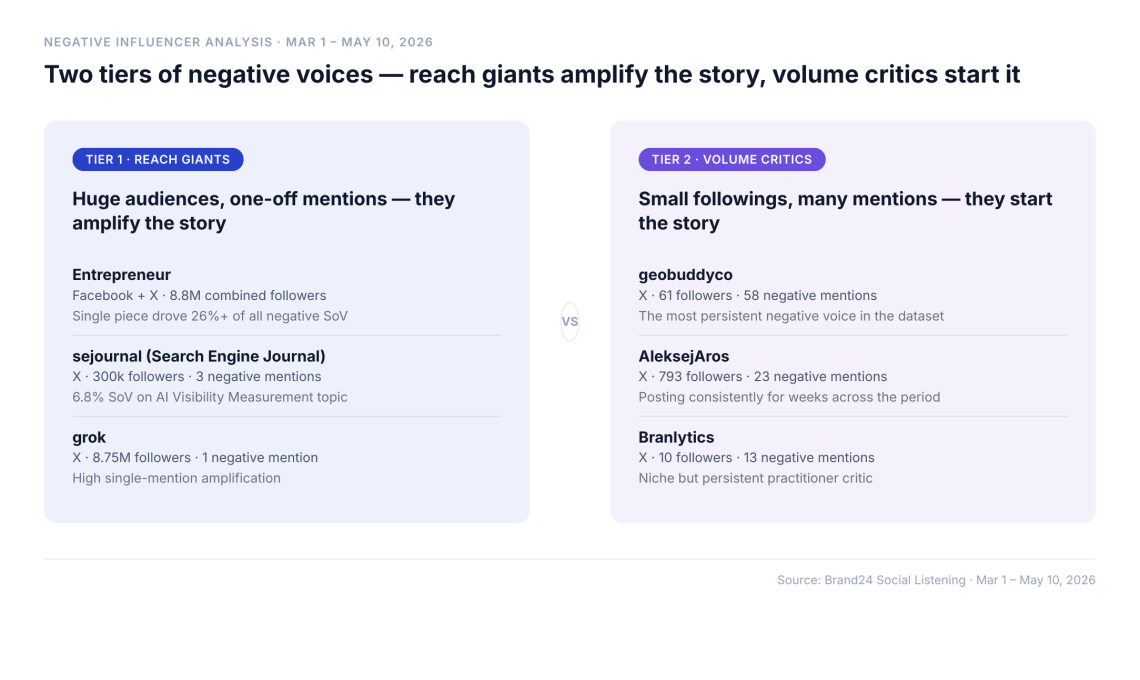
Tier 1: Reach giants (massive audiences, single mentions):
- Entrepreneur magazine (Facebook + X combined): over 26% share of voice among all negative reach. A single piece of content from their magazine amplified criticism to millions of followers.
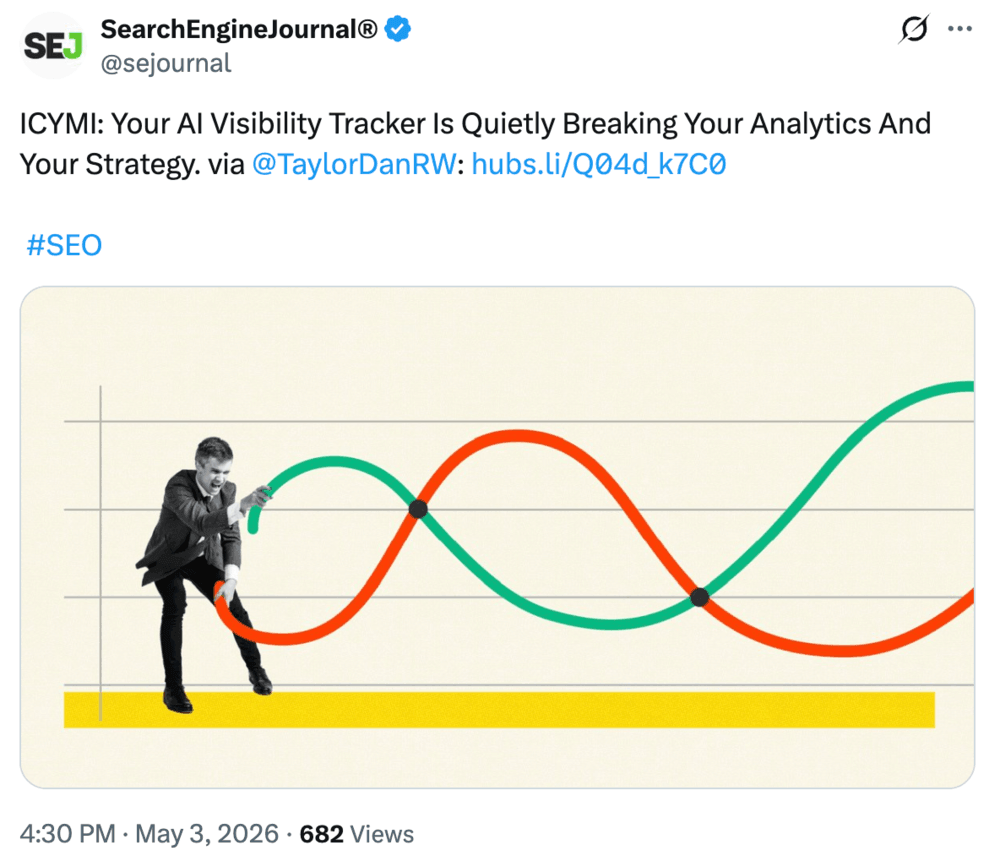
- sejournal (Search Engine Journal on X, 300k followers): 6.8% share of voice on the Measurement topic. The “Your AI Visibility Tracker Is Quietly Breaking Your Analytics” post was the most-cited critical piece in the dataset.
- grok (X, 8.75M followers): a single mention with significant amplification.
Tier 2: Volume critics (many mentions, smaller followings):
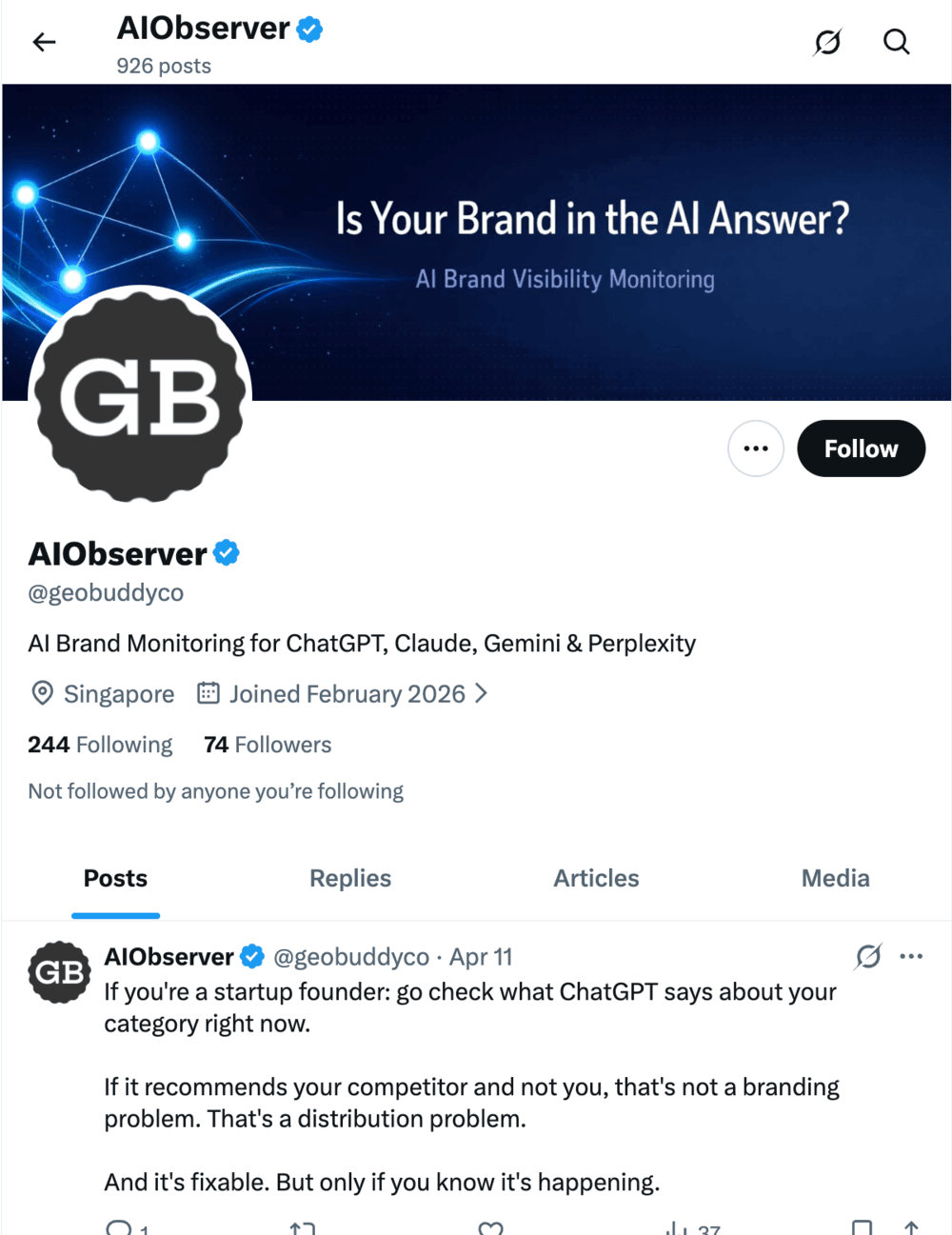
- geobuddyco (X, 61 followers): 58 negative mentions. The most persistently negative voice in the dataset.
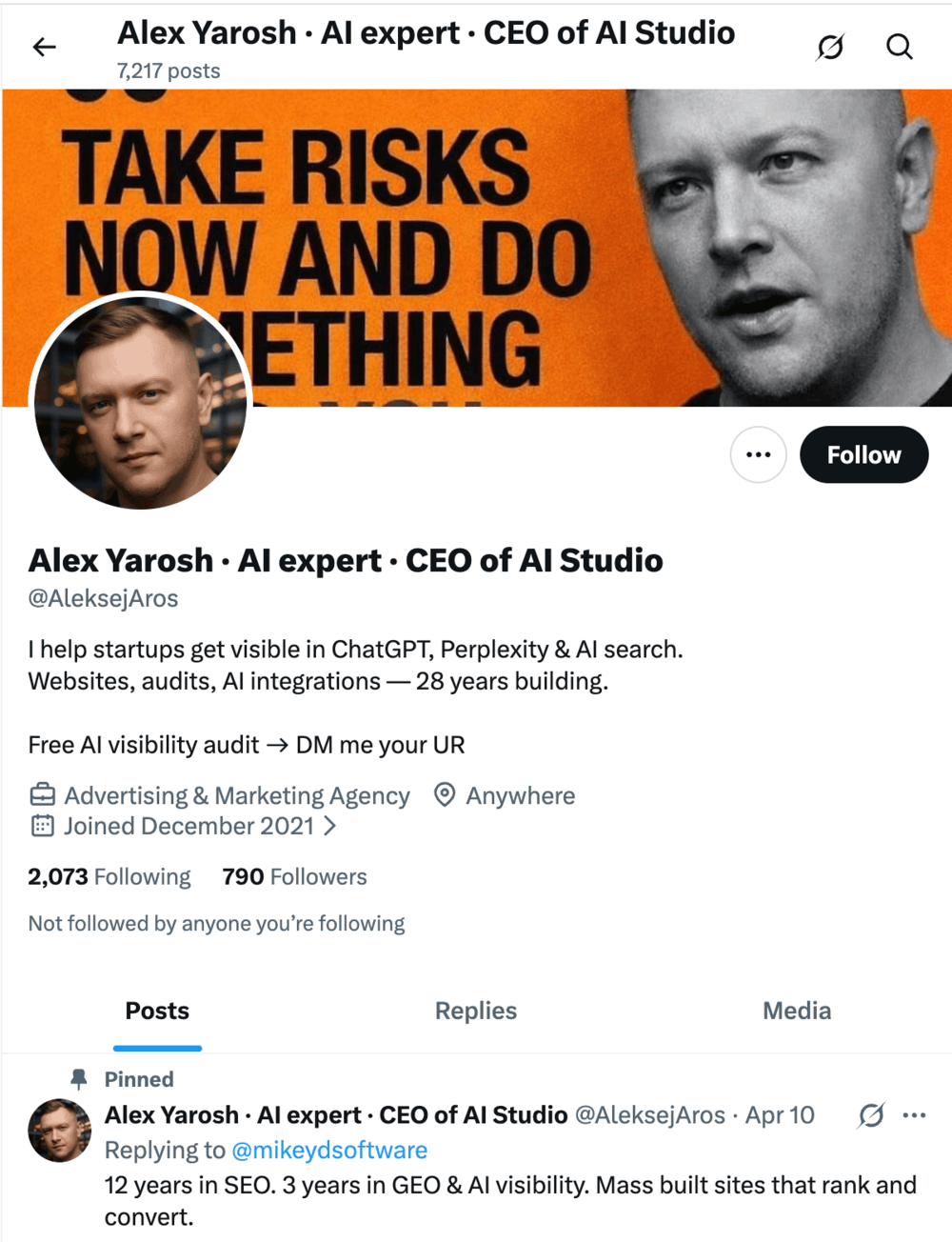
- AleksejAros (X, 793 followers): 23 negative mentions.
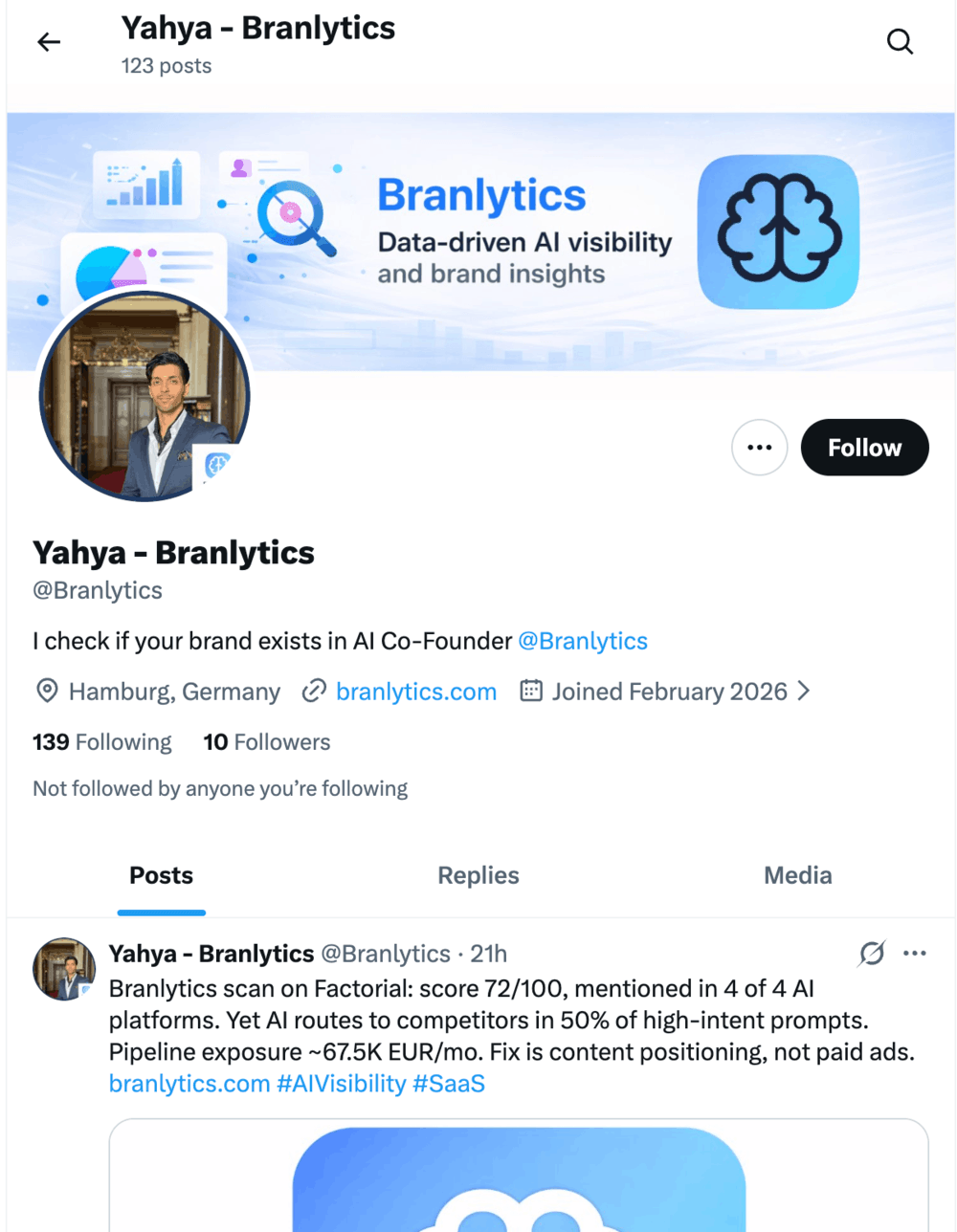
- Branlytics (X, 10 followers): 13 negative mentions.
Reach giants are massive influencer accounts that can take a single negative story and make it go viral instantly.
On the other hand, Volume critics are smaller accounts that keep up a steady stream of negative comments.
These smaller voices often act as an early warning sign, creating a persistent stream of skepticism, long before the bigger influencers come into the discussion.
If you’re doing media monitoring and analyzing AI visibility for your brand, those volume critics are usually the first signal you should be watching.
5 marketer personas that struggle with AI visibility
When I segmented all the negative mentions by who is complaining and what they’re complaining about, the “pain” didn’t fit into just one shape, so I organized it into 5 distinct marketer personas.
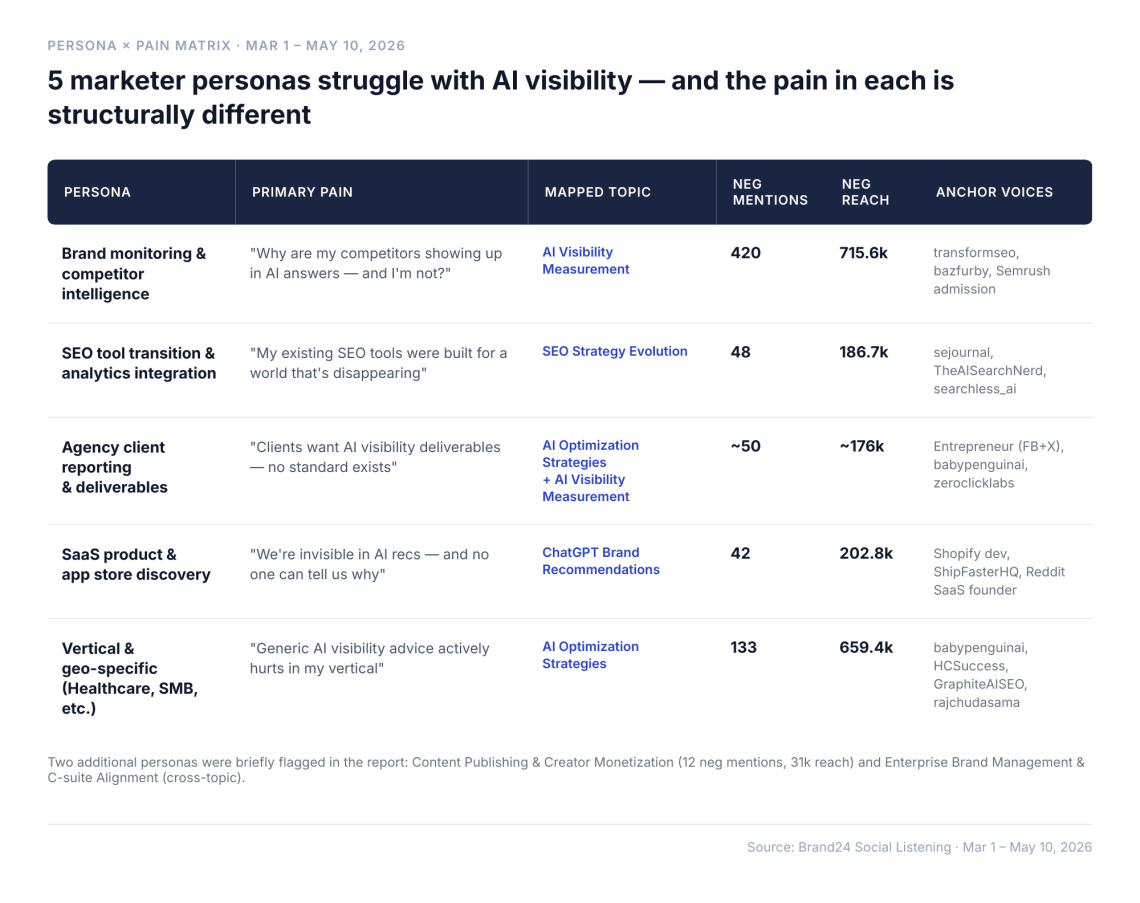
01 Brand monitoring & competitor intelligence
Primary pain: “Why are my competitors showing up in AI answers when I’m not, and why can’t anyone tell me?”
This group is complaining the loudest, with 420 negative mentions and a huge reach of 715.6k.
Their main frustration is a “surveillance gap”: companies just can’t reliably tell when AI chatbot answers are skipping over their brand.
One example:
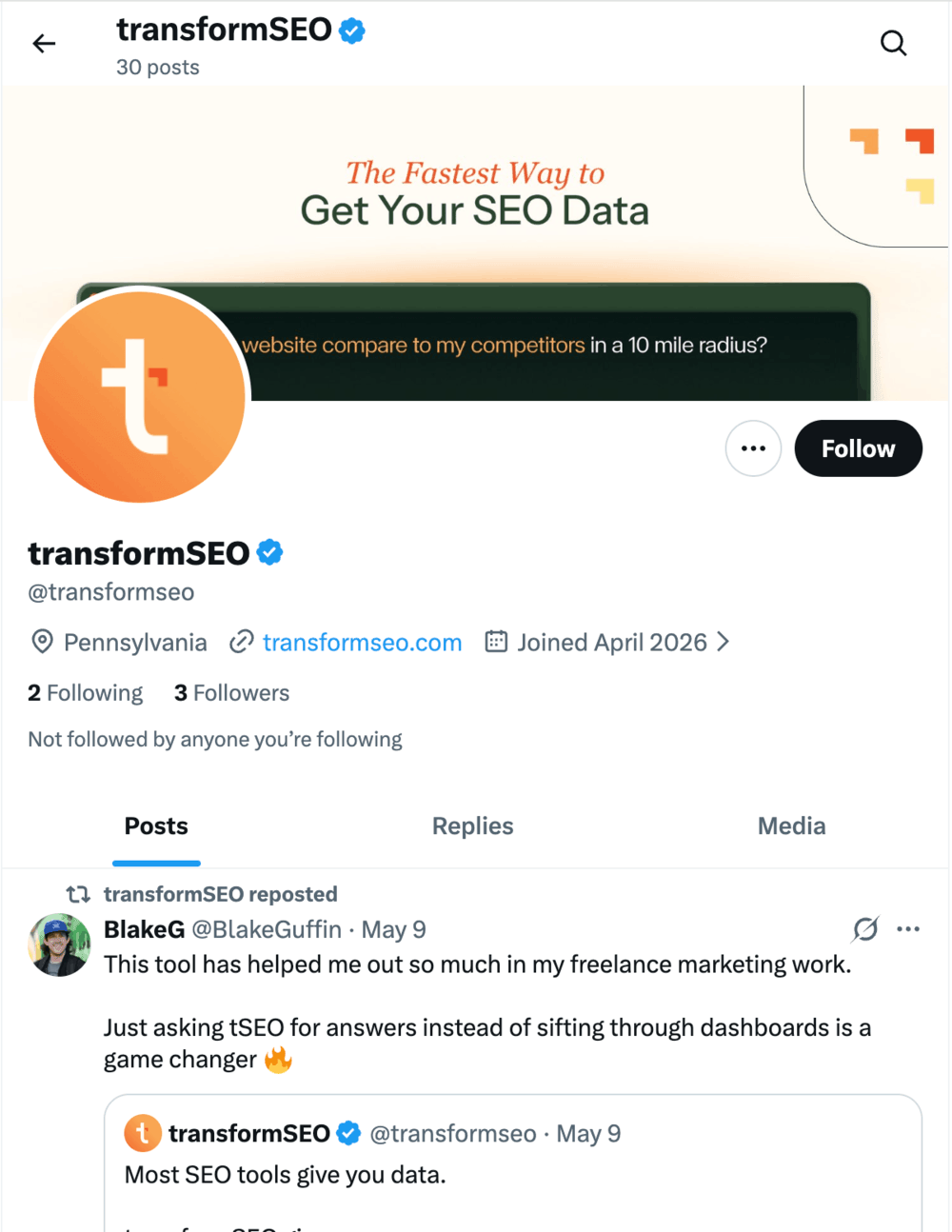
For example, transformseo on X shared a clear problem: they tested a Fortune 500 brand and found that ChatGPT didn’t mention them in any of the three relevant searches. As they put it, “Their SEO team has no idea this is happening”.
Pain summary: Even brands actively investing in AI presence struggle with detecting when and how they’re absent, and there are only a few tools that don’t create a false sense of coverage.
02 Agency client reporting & deliverables
Primary pain: “Clients want AI visibility deliverables, and there’s no agreed-upon standard for what one even looks like.”
Digital agencies are facing a credibility crisis right now. Their clients are demanding concrete results for AI visibility, but here’s the problem: there are no official rules, standard audit forms, or ROI benchmarks.
The negative sentiment is being amplified by major players like Entrepreneur magazine (~176k reach, 26.6% negative share of voice) that calls out the skepticism around what agencies are offering.
This is a common issue for any new service category, and here are the specific pain points present in the discussions:
01 Bad advice doesn’t travel across industries
babypenguinai: “Generic GEO advice is killing your AI visibility. What works for SaaS DESTROYS healthcare.”
02 A growing “pay-to-play” scam
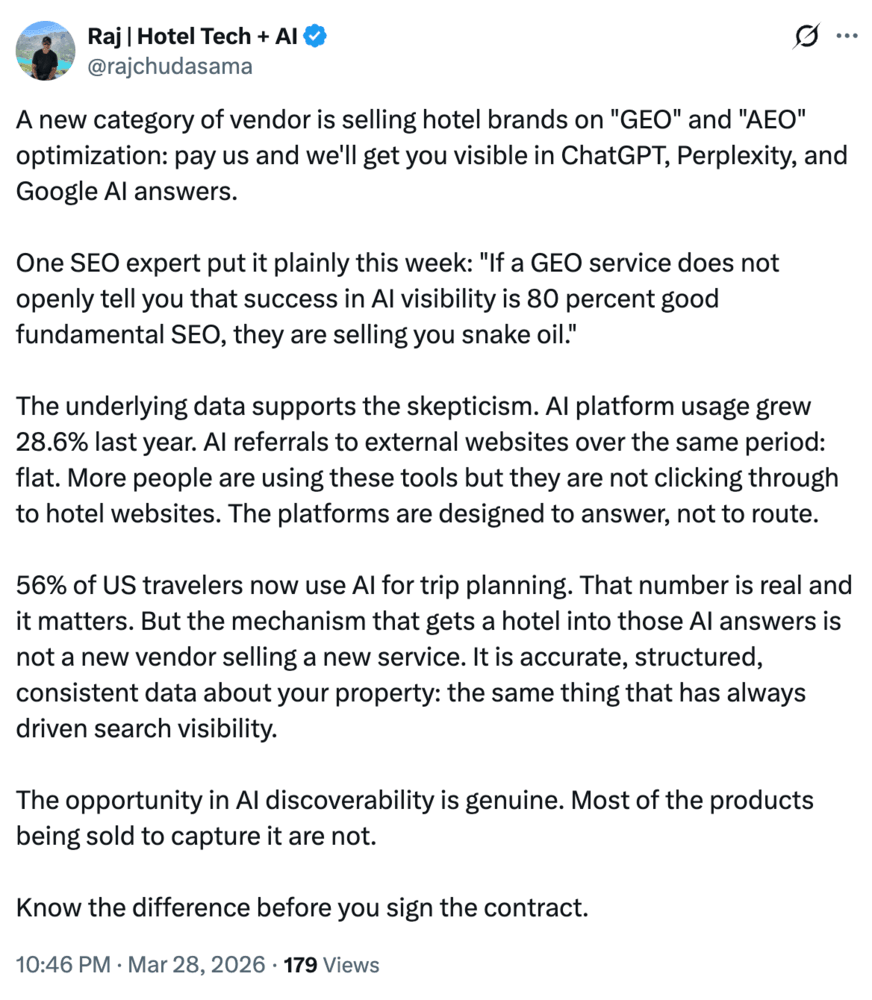
A worrying pattern involves vendors promising brands, especially hotel chains, “guaranteed visibility in ChatGPT” for a fee, but they offer no proof or accountability for the results.
03 An implied new standard
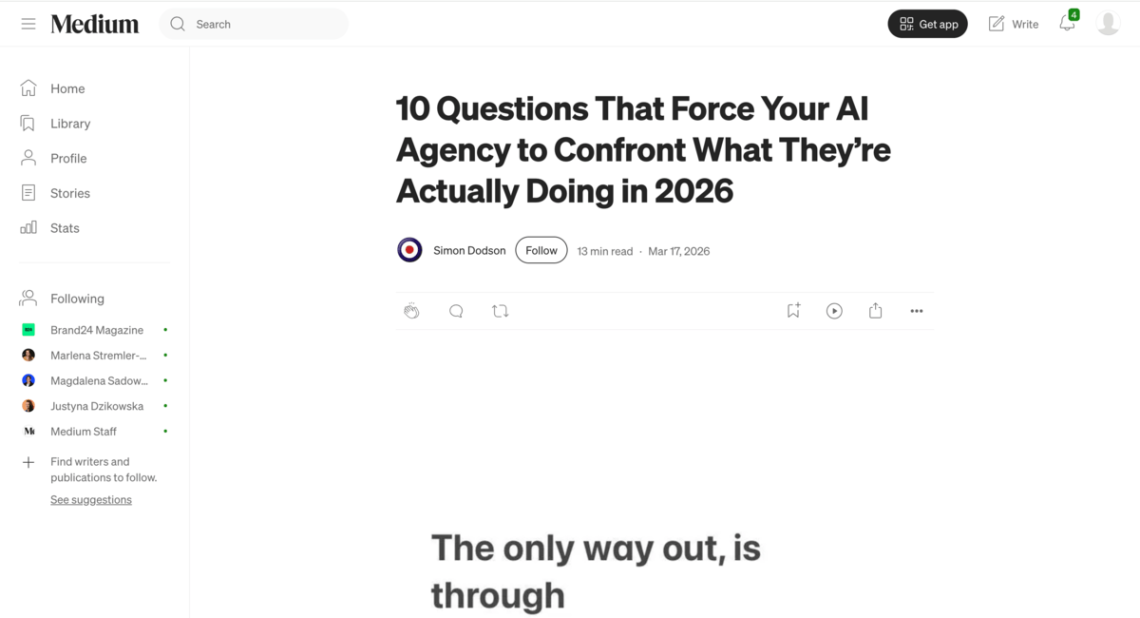
“If your agency cannot produce a page-level AI visibility audit within 72 hours of being asked, they are not an AI agency.”
Pain summary: Agencies are stuck between clients demanding AI visibility results and having zero standardized ways to audit, implement, or track them.
This often leads to them serving up old SEO advice just rebranded with new buzzwords. The advice they serve is often describes as SEO dressed up with new terminology.
03 SEO tool transition & analytics integration
Primary pain: “My SEO tools were built for a world that’s disappearing, and the new tools aren’t ready yet.”
The struggle is real for SEO experts right now. I found 48 negative mentions with a reach of 186.7k, led by Search Engine Journal’s 300k followers on X.
Most of the frustration boils down to one simple problem: the SEO tools we’ve used for years just aren’t built for the AI age.
The main pain points mentioned in the discussion:
01 The “New” tools are just rebranded
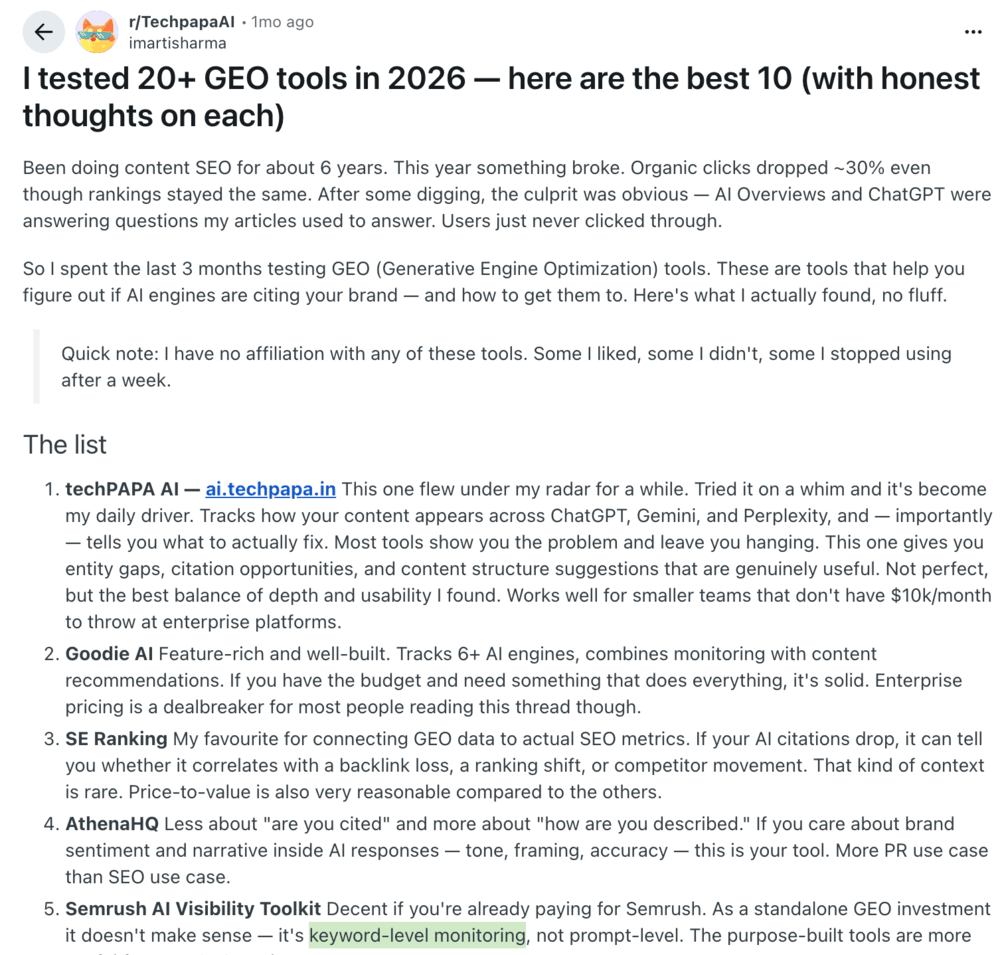
Many people feel that current AI Visibility tools are just traditional SEO with a fancy new label. If a tool only provides keyword-level monitoring instead of prompt-level, it can be missing the point.
02 Ranking #1 doesn’t mean you exist
You can be at the top of Google, but get a zero score on ChatGPT. These are two different audiences, and the AI one is growing by 1.6 billion queries every day.
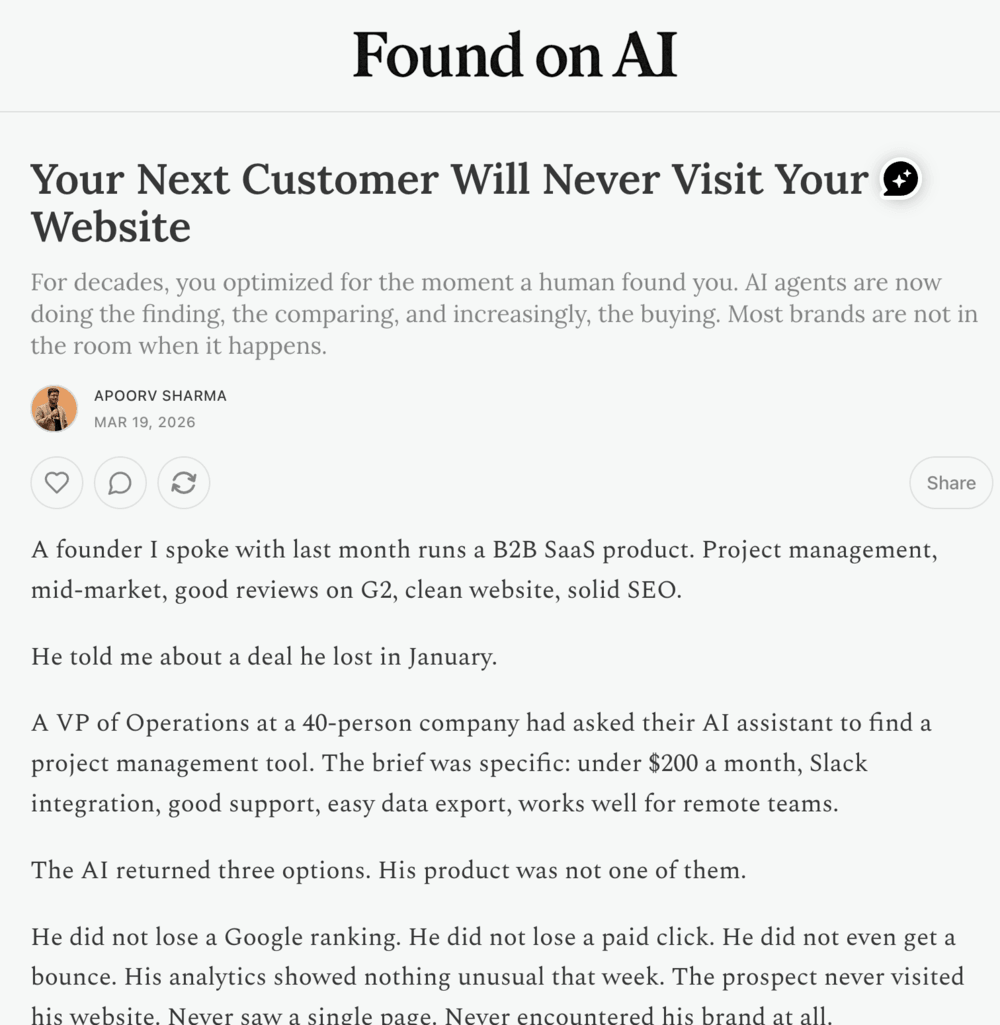
03 Analytics are breaking
New AI tracking tools often mess with your existing data and strategy, making it even harder to see what’s actually working.
04 Pricey and confusing
With costs ranging from $24 a month to massive enterprise fees, and mainstream launches being described as “pure mediocrity,” marketers feel stuck.
Pain summary: The SEO tool stack we rely on for rankings, keyword tracking, and backlinks is failing in an AI-first world.
Marketers feel stuck between tools that are too shallow (keyword-level) and new tools that are too expensive or too complicated to figure out.
04 SaaS product & app store discovery
Primary pain: “We’re invisible in the AI recommendations our customers see, and no one can tell us why or what to do about it.”
42 negative mentions, 202.8k negative reach, 3.9% negative rate: the second-highest of any topic.
SaaS founders and product teams are finding they’re being left out of AI-generated product recommendations, even in their own distribution channels (App Stores or Product Hunt).
Their conversations bring up a fairly new kind of marketing pain points:
01 SEO paradox
A developer was building an AI visibility tool, but ironically, his own product ranked only #23 for its key term in the Shopify App Store. This shows that just ranking high in old-school SEO won’t guarantee you show up in AI.
02 Measurement gap
One Reddit SaaS founder summarized the strategic problem: “There’s no real, standardized way to monitor this AI visibility yet, which makes planning almost impossible.”
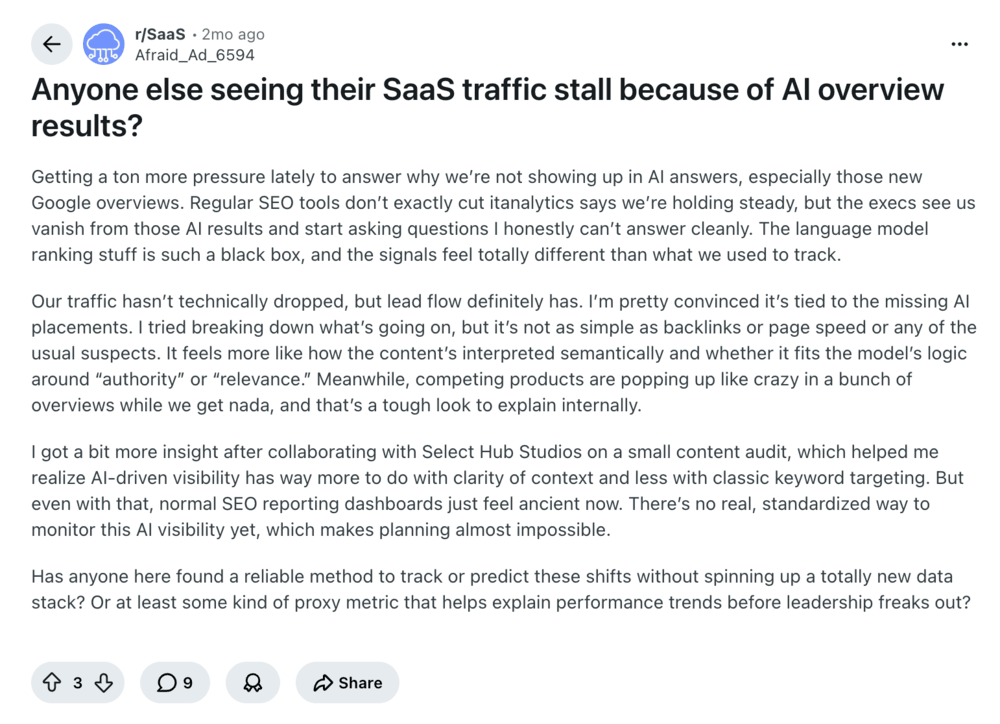
03 Tools that don’t help
Even new, purpose-built tools for this problem are often criticized for just tracking the issue instead of helping you improve it.
ShipFasterHQ nailed it when they said: “If your tooling counts mentions but can’t show where your brand got displaced, you bought visibility without diagnosis”.
04 Major invisibility
One audit found that fewer than 30% of 50 tracked B2B SaaS brands appeared in AI recommendations.
05 Platform risk
Major platform moves, like Bing’s new AI Performance Dashboard launch, were seen as something that could instantly “kill most AI visibility startups” overnight.
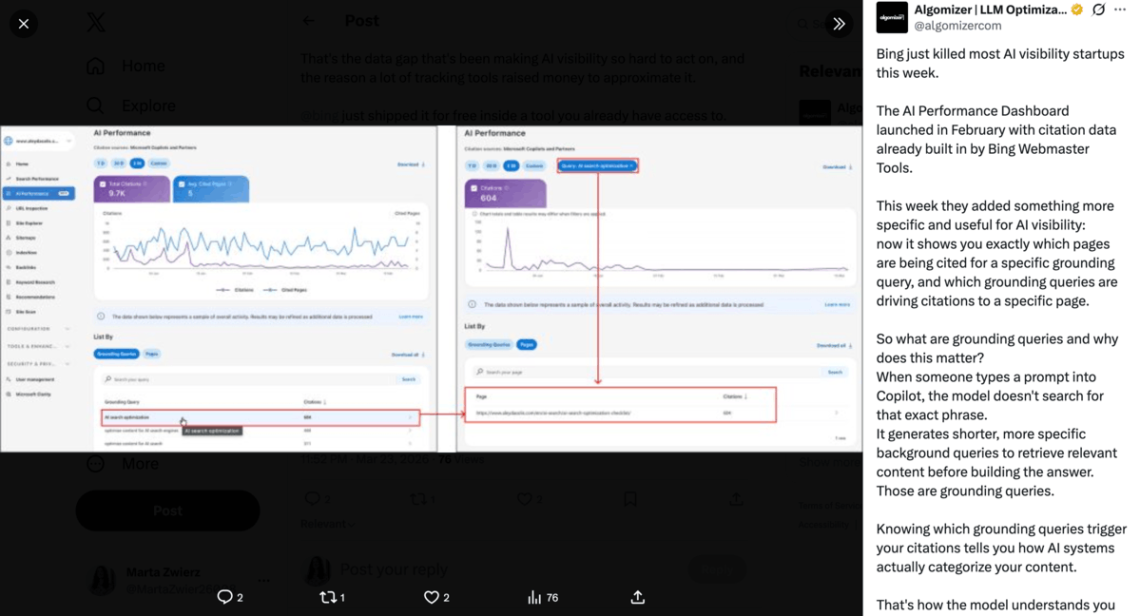
Pain summary: SaaS teams can’t effectively track where they’re missing from AI recommendations, and their old App Store SEO is giving them false hope.
Since they can’t link an AI mention back to actual product discovery, it’s hard to justify investing in it.
05 Industry & geo-specific optimization
Primary pain: “Generic AI visibility advice doesn’t just fail in my industry; it actively hurts.”
133 negative mentions, 659.4k negative reach: the second-largest negative reach of any persona.
There are also a few industries that are discussed as being hit the hardest. This group is feeling the heat because generic AI advice can painfully backfire.
As one user on X put it: “Generic GEO advice is killing your AI visibility. What works for SaaS DESTROYS healthcare. What wins in travel burns ecommerce.”
Here is a quick look at the specific challenges these categories are facing:
01 Healthcare needs trust, not just content
For healthcare, getting earned media (like press mentions and digital PR) is crucial for AI to trust a brand.
But most brand strategies focus only on their own website content, which is the wrong approach for the vertical (HCSuccess on X).

02 Hospitality’s “pay-to-play” scam
Hotel brands are being sold services that promise, “pay us to appear in ChatGPT,” with no accountability or measurement to back it up (rajchudasama on X).
03 Geo-language blind spot
Most SaaS companies only think about English distribution, missing the same searches in other languages with far less competition. (marzooqahq on X).
04 SMB struggle in India
Small businesses in India are dealing with extra problems like localization, language barriers, and limited resources, on top of the universal AI measurement gap.
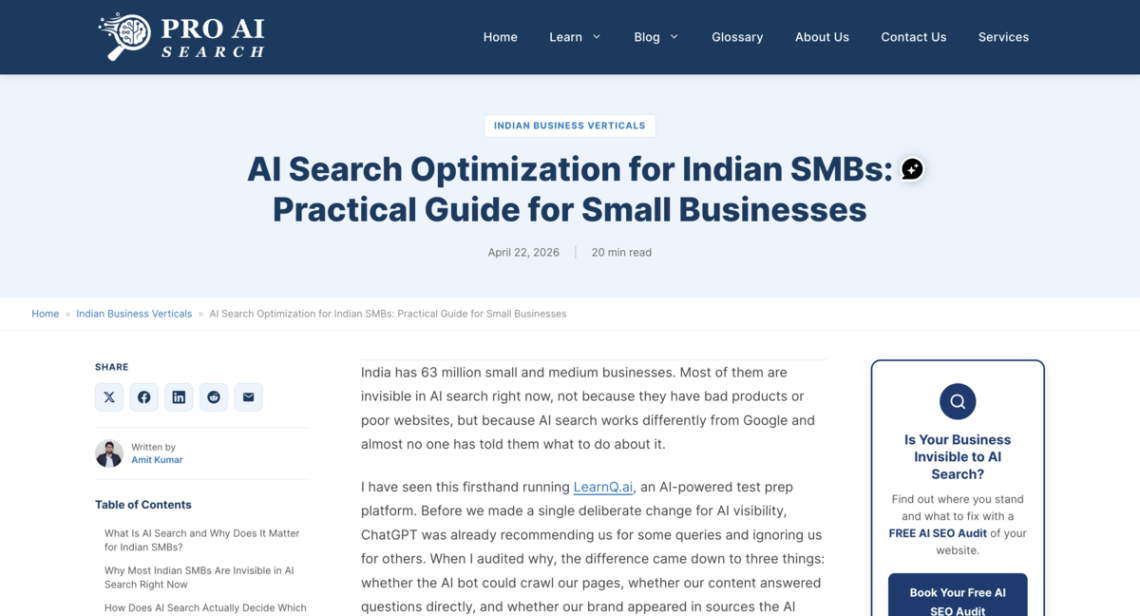
Pain summary: These users feel they get double-hit. First, by generic AI visibility advice that doesn’t apply to their industry’s trust requirements or regulatory context.
Second, by a vendor ecosystem that has almost no industry-specific tools built yet.
What this means if you’re a marketer tracking AI visibility in 2026
Three practical takeaways from the dataset. Each one is tied to a finding in the report above, and each one ends with a concrete social listening/media monitoring move you can use right away.
01 Before you buy any AI visibility tool, ask detailed questions
Social listening metrics show that marketers openly call current AI visibility scores “lottery tickets”: one prompt, one platform, one answer, packaged as a number.
One user put it best on X: “They send one prompt to ChatGPT, check if your brand appears, and hand you a score. That’s not measurement. That’s one lottery ticket.”
Before you adopt any AI visibility tool, ask three things:
- Does it sample across multiple prompts?
- Does it run across multiple LLMs?
- Does it tell you where you got displaced, or just count whether you appeared?
If the prompt set is small, single-LLM, or doesn’t include the real questions your customers ask, you’re paying for a data sample, not proper data measurement.
02 Extract your personas from real conversations
“Write for a specific persona” isn’t new advice, and I’m sure every marketer has heard some version of it.
5 main marketer personas emerged when I clustered the negative mentions in this dataset, and the pain in each one is structurally different:
The hardest question here is how you extract those personas. None of the internal assumptions or workshops will tell you:
- which personas are actually showing up in your brand conversation,
- what vocabulary they use,
- or which of their pain points are still sitting unanswered.
A social listening project with Topic Analysis will surface your real personas in their own language.
Brand24’s AI Visibility tab and Brand Assistant can tell you who’s actually talking about your category, what pain points they’re describing, and which of those pain points haven’t been answered yet by anyone else.
That’s the step many marketers skip, and it’s exactly where the most useful AI visibility content, campaigns, and positioning come from.
03 The early warning signal can hide in a constant small voice, not a viral post
When I broke down the negative voices in the dataset, the big-reach negative posts came from one-off mentions by huge accounts (Entrepreneur, Search Engine Journal, Grok).
The earliest signal of category problems though came from the opposite tier: a few small-follower accounts posting consistently over weeks. They surfaced AI visibility criticism weeks before it reached mainstream news.
If your social listening tool is currently set to only cover news, you’d get a falsely calm read on this category.
For AI visibility (and any new category), tune your brand monitoring tool so that it pays attention to which kind of negative voice you’re seeing.
A single viral post from a big account is very often an amplification of what smaller practitioner voices repeat for weeks and weeks.

