The 15 Key Benefits of Sentiment Analysis (Labubu Case Study)
Trends online change fast. One day, your brand is loved, the next hate explodes. Take the recent hot topic, Labubu. It has thousands of fans and a huge buzz on Instagram. Almost 50% of mentions are positive. But there are also over 10% negative ones related to scams or stolen products. Sentiment analysis can show it all, the good, the bad, and how the trends change. It can help your brand spot problems early and make the most of the hype…. What else? Let’s explore the key benefits of sentiment analysis based on real-life examples!
Quick summary: – Sentiment analysis goes beyond numbers. It helps brands understand how people truly feel, spot risks before they grow, and discover opportunities hidden in customer conversations.
– By monitoring customer sentiment online, you can improve marketing strategies, strengthen brand perception, and build customer loyalty.
– Tracking sentiment in real-time is key. It uncovers insights into product demand, market trends, and consumer behavior, and helps to act accordingly.
Why is sentiment analysis important?
Emotions are important, as they’re the map guiding your actions. Not only in your personal life, but in business as well.
How your audience feels about your products or your brand provides you with context that enables you to evaluate your marketing and communications strategy.
How?
Sentiment analysis helps you understand the various valuable insights waiting for discovery in the customer feedback online.
“Because numbers alone don’t tell the full story. You can track reach, clicks, or mentions — but without understanding the emotional tone behind them, you’re missing the context that really matters. Sentiment analysis allows brands to decode how people feel about their experiences, not just what they say. As a CMO and marketing consultant, I use it to shape strategy across messaging, product development, and brand perception. It’s a crucial tool to anticipate shifts in audience behavior, prevent reputational risks, and build brands that truly connect — not just communicate.“
So, without further ado, here are some of the crucial advantages you gain via sentiment analysis:
15 Key Benefits of Sentiment Analysis
01 Data-based strategy
Thanks to sentiment analysis, you can learn what excites your audience and what frustrates them.
Your customers are definitely already talking about what they like and dislike. Sentiment analysis will give you data based on which you can bring your marketing strategy to the next level.
Analysing the sentiment around your brand helps you understand the motivations behind your customers’ purchasing decisions and the intent behind their searches.
Is your packaging a strong point? Does the ingredients make your product unique? Or maybe a feature you wouldn’t have expected conquered your customers hearts?
In Labubu’s case, fans love special edition dolls, but many complain about limited availability.
Perform sentiment analysis and analyze customer satisfaction.
It can be a sign to adjust supply strategies… or use the exclusiveness of the product and highlight it in messaging.
02 Identifying market gaps and competitor advantages
Moreover, sentiment analysis provides information when it comes to market trends and competitor analysis. A sentiment analysis solution enables real-time monitoring of competitor sentiment, helping you quickly identify market opportunities and shifts in customer perception.
There should be components of your marketing strategy that distinguish you from your competitors.
And enabling it is one of the key benefits of sentiment analysis – it allows you to discover the unique parts of your offering and leverage them.
In Labubu’s case, it’s clear that people love the mystery boxes idea:
Sentiment analysis: Identifyng market gaps and competitor advantages.
03 Adds context to raw data
I’ve mentioned it before, but I would like to stress this point one more time.
The quantitative data (for example, the number of likes, shares, comments, or social media reach) should be the backbone of your marketing analysis to assess the success of your marketing campaign.
But to properly monitor the results of your marketing campaign, you need qualitative data as well.
Sentiment analysis will provide the context for the numbers. Sentiment scores can show the emotional tone of customer feedback and help track changes over time.
Is the negative sentiment around anything specific?
In marketing, it’s not all about numbers.
Sentiment is equally important. And the natural language processing that sentiment analysis algorithms use makes it all at your fingertips.
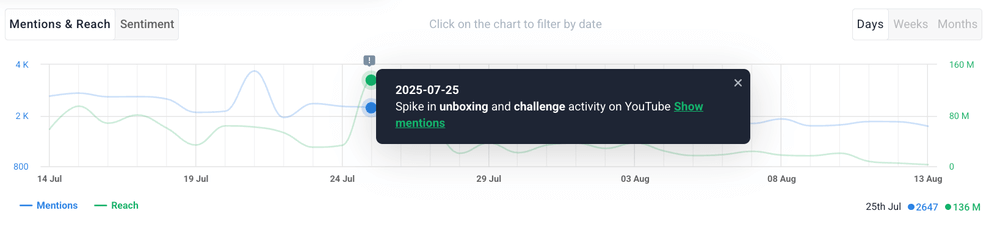
For example, Labubu had a significant spike in mentions around 24 July. Using the AI Event Detector feature, I was able to identify what caused the spike – viral unboxing videos:
Sentiment analysis system: AI Events by Brand24.
But was this buzz positive, or did people hate the way the boxes open?
Understanding the emotional background behind the analysis is crucial to really take care of the brand.
In Labubus case – most of the customer sentiment during that time was positive, so there wasn’t anything particular to address.
04 Monitoring your brand perception in real-time
Sentiment analysis will help you ensure that the messages you share are relevant and target the right audience.
A consistent perception of your brand is one of the biggest assets you have.
Real-time insights from sentiment analysis enable brands to respond quickly to sentiment shifts and better engage their target audience.
You can prevent any PR crisis before it escalates and respond to both positive and negative sentiment mentions to improve customer satisfaction and make them feel valued.
Plus, by monitoring sentiment around your industry, you can spot how people feel about certain topics and adjust your content accordingly.
05 Find highly relevant partners
By monitoring certain keywords or phrases, you’re able to find the industry leaders and influencers you could work with to boost your business to another level, especially by tracking their activity and engagement across various social media platforms.
If you want to run a successful influencer marketing campaign, you need to choose the most relevant influencer.
Apart from examining the number of likes and shares, take a closer look at the sentiment around a given author.
Of course, you can go for a more controversial influencer, who might align better with the overall tone of your brand. But it has to be a conscious decision, not a random or uninformed one.
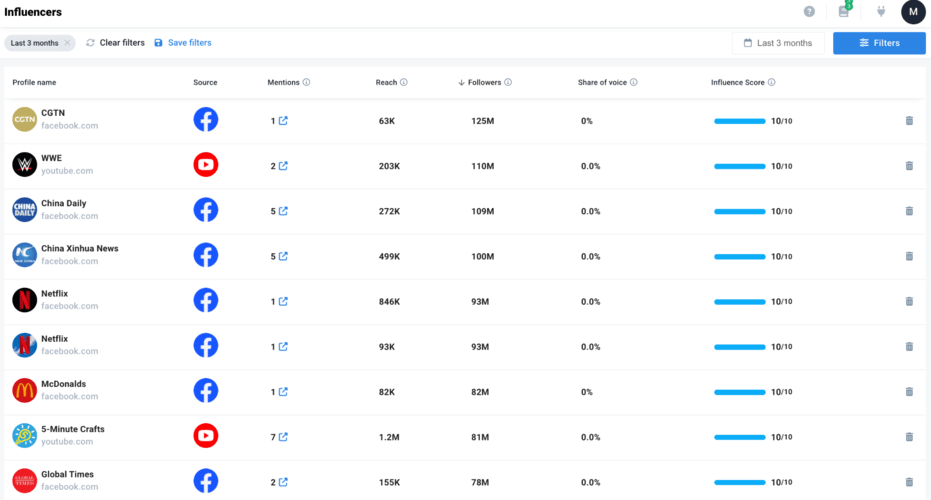
I checked Brand24’s Influencers Tab and here’s the analysis I got for Labubu:
Sentiment analysis: Top profiles with positive sentiment towards Labubu – analysis by Brand24.
It’s a great way to find your potential partners as you can filter the results to “positive sentiment” only and analyze the profiles based on key different metrics like:
The number of times they mentioned your brand
The platform they’re active on, including their presence and engagement across various social media platforms
The reach they generated
Their share of voice
Their Influence Score
Their number of followers
Identifying influencers who consistently generate positive sentiments can enhance your brand reputation and foster greater customer loyalty.
Once the crisis hits, you have to act fast, before it escalates.
Sentiment analysis and social listening will help you take care of the crisis around your brand, or even turn the tables around and use it to your advantage.
The key is to act fast!
Spotting negative comments early will help you nip the critical situations in the bud. Addressing negative sentiment promptly is crucial for protecting your business reputation and improving customer loyalty.
The faster you react, the better your chance of resolving the problem.
And… more chances that happy customers will spread the positive word about your brand.
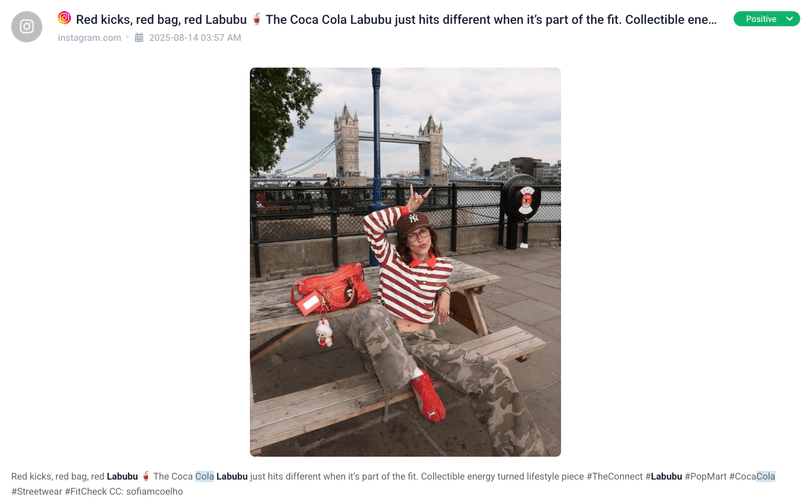
Labubu fans fell in love with the Coca-Cola collaboration. It shows how much people value exclusive partnerships.
Tracking that excitement signals that more collabs (maybe with other lifestyle or fashion brands) would likely be well received.
Customer sentiment analysis about a specific product: Labubu x Coca-Cola collaboration.
09 Get instant feedback
Traditional feedback loops take months…
One of the great things about sentiment analysis is that it gives you answers the moment your campaign, ad, or product goes live.
You don’t have to wait for quarterly reviews to know if something works.
Sentiment analysis can also be applied to survey responses, allowing you to quickly interpret open-ended feedback and use these insights to inform business decisions.
This lets you course-correct fast, saving money and protecting product reputation.
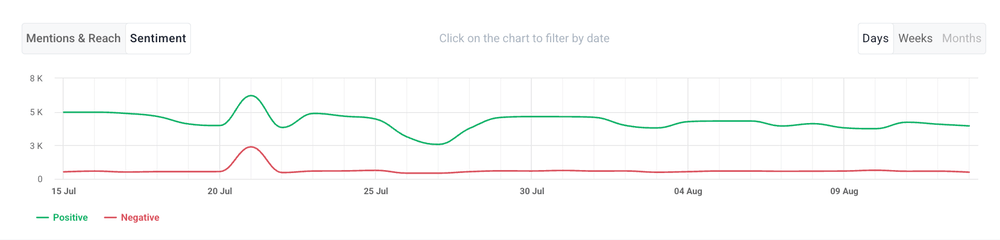
You can also monitor how it changes over time as social listening tools provide charts and graphs.
Here’s what it looks like in Brand24:
Customer sentiment analysis over time: Brand24 chart.
10 Do faster and cheaper market research
Why spend lots of money and effort on surveys when your customers already tell you everything online?
Sentiment analysis lets you “listen in” and analyze feedback at scale, in real time.
Customer sentiment analysis datasets enable efficient processing of large volumes of customer feedback and social media comments, making it easier to derive actionable insights quickly.
It’s market research without the long timelines or costs.
Pricing isn’t just about costs, but also about perception.
Sentiment analysis shows how people feel about your price point. By taking the time to analyze sentiment in customer feedback, businesses can better understand perceptions of value and identify areas for improvement.
Do they see your product as worth it, or too expensive?
This customer feedback helps you adjust, justify, or communicate pricing more effectively to minimize negative sentiment.
In Labubu’s case, while many fans are happy to pay a premium for exclusive dolls, some customer preferences are different and consider Labubu as “too expensive.”
Understanding customer expectations could help tailor their pricing and communication strategies to better align with what their audience values.
The brand could address this by highlighting craftsmanship, exclusivity, or offering more affordable “entry-level” collectibles.
Sentiment analysis tools: Brand24 for customer feedback analysis.
12 Predict future behavior
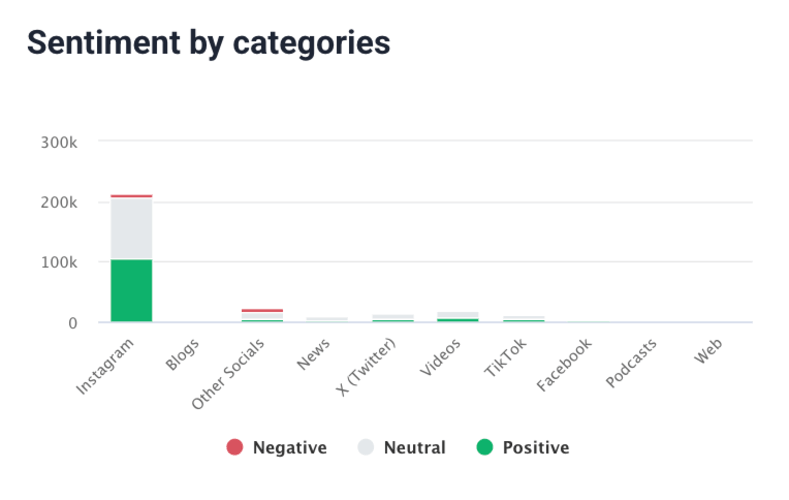
Analyzing sentiment data can help predict future customer behavior and identify emerging market trends, giving your business a strategic advantage.
How?
By looking at patterns in sentiment over time, you can simply anticipate what’s coming.
If negativity is growing in one area, it may signal trouble ahead.
But, if positivity builds around certain features – that’s a clear growth opportunity.
Sentiment analysis tools: Brand24 sentiment analysis by platform using machine learning.
14 Maintain quality
Every product has flaws… but the key is spotting them before they snowball.
Sentiment analysis helps identify early warning signs, like repeated complaints about defects, usability, or packaging. Monitoring negative sentiments allows brands to proactively address quality issues before they escalate.
When conducting the sentiment analysis for Labubu, I noticed so many social media posts and articles pointing out the fakes problem and scammers.
By adding extra marks or a new packaging design, Labubu could protect both the dolls and its company reputation.
Pro tip: Analyzing news articles can provide additional insights into public perception and help identify emerging risks that may not be visible on social media alone. So, make sure the tool you use has good source coverage.
Sentiment analysis tools: Brand24 customer sentiment analysis about Labubu’s quality.
15 Boost employee engagement
Sentiment analysis is mostly for customer satisfaction, but not only.
You can also use it internally to measure how employees feel about their work, leadership, or big changes in the company.
This feedback helps management improve culture and keep teams motivated.
These deeper insights into employee sentiment can help management make informed decisions to boost motivation and engagement.
For example, if staff see a surge in positive mentions about your business’s customer service, it can build pride and motivation.
Sentiment analysis is not another buzzword in the marketing world.
It should be a real and central component of your marketing campaign.
In fact, modern sentiment analysis tools can do most of the analysis processes for you. Your part is using these insights and data to improve customer satisfaction and grow your brand!
Key takeaways:
Sentiment analysis can serve many different purposes (like protecting digital reputation, building community, or improving engagement) and bring valuable insights, but to do it efficiently, you need advanced media monitoring tools that do most of the data crunching.
Sentiment analysis algorithms are more advanced than ever, but they can still make mistakes and struggle with irony and sarcasm.
Don’t be scared to ask AI tools like AI Brand Assistant for a detailed analysis of your brand sentiment – it can uncover many valuable insights and opportunities for growth.
Discover the context of your mentions, detailed emotions & much more!
The 15 Key Benefits of Sentiment Analysis | Brand24
Blog
Sentiment Analysis
Brand24
Insights, analyses & case studies
Marta
Discover the key benefits of sentiment analysis with real examples. Learn how it helps brands improve strategy, protect reputation, and boost customer loyalty.