Table of contents
2M Marketers

Your client wants to know if the PR campaign was worth it. You’ve got a pile of mentions, a few press hits, and a gut feeling it went well. But gut feelings don’t go in reports!
That’s exactly why advertising value equivalency exists. AVE puts a dollar figure on earned media… not a perfect figure, but a useful one. And in 2026, with AI-powered tools doing most of the mundane tasks, tracking it has never been easier or more nuanced.
Here’s what AVE actually means, how Brand24 calculates it today, and how to use it without misleading yourself or your clients.
Key takeaways
-
What is AVE?
AVE (Advertising Value Equivalency) estimates the value of media coverage by comparing it to what an equivalent ad would cost.
-
It's an auxiliary metric
Valuable when combined with reach, mention volume, and sentiment, but not a standalone KPI.
-
How Brand24's AVE works?
Brand24 calculates AVE automatically, factoring in source reach, mention type, sentiment, and location.
-
Where to find it?
You can track AVE in the Analysis tab, Comparison tab, and in PDF reports.
-
AVE is most useful for client reporting and stakeholder communication
It translates PR work into language finance teams understand.
What Is Advertising Value Equivalency (AVE)?
AVE measures what your earned media coverage would have cost if you’d paid for it as advertising. If a publication runs a story about your brand and that publication typically charges $5,000 for a full-page ad, your AVE for that mention is roughly $5,000.
The classic formula looks like this:
AVE = SIZE × RATE
Simple enough. But here’s where it gets interesting and where most explanations fall short.
The old-school version of this formula was built for print media.
A PR specialist would measure column inches and multiply by the ad rate. That worked fine when a story lived only in a newspaper. It breaks down almost immediately when you apply it to the web.
A mention on a niche blog with 200 readers hits differently than the same story picked up by TechCrunch. The column-inch formula doesn’t know that. Modern tools do!
How Brand24 calculates AVE?
This is where things diverge from the traditional formula and where the modern approach gets more useful.
Brand24 calculates AVE automatically for every mention it tracks.
But more importantly, it factors in variables that the old SIZE × RATE formula ignores entirely.
Here’s what actually goes into the calculation:
- Source reach is the biggest factor. A mention on a high-traffic platform is worth more than the same sentence published somewhere few people will ever see. The calculation reflects the actual size of the platform, not just its ad rate.
- Type of mention also matters. A main post is weighted differently from a forum entry or a product listing.
- Sentiment is the one that most people don’t expect. Positive mentions are valued more than neutral ones. This makes intuitive sense, and it’s one of the things that makes Brand24’s AVE more reflective of real impact.
- Location plays a role too. Mentions reaching certain markets carry slightly different weights, reflecting real-world differences in advertising costs.
The result is an AVE figure you can find in the Analysis tab, the Comparison tab, and in the summary section of any PDF report you export.
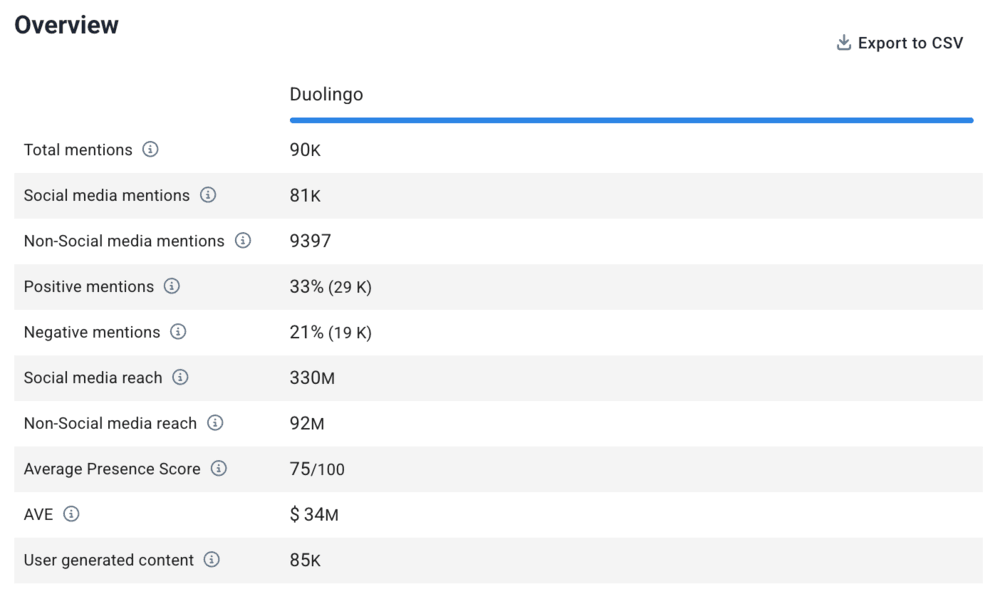
You can also compare your AVE directly against competitors, which is where it gets genuinely useful for competitive positioning.
💡 Pro tip: AVE updates automatically based on whatever filters you’ve applied. If you narrow your analysis to a specific date range or source type, the AVE recalculates accordingly. This means you can isolate the value of a specific campaign, a product launch, or a crisis period and compare it to baseline.
AVE vs EAV
Quick note on terminology: you may see “EAV” (Equivalent Advertising Value) used in some tools or reports. It’s the same metric, same concept.
AVE is just the more common term in PR and communications, so that’s what you’ll see in Brand24 and most industry writing.
Why AVE is important in 2026?
AVE has its critics, and some of the criticism is fair.
It doesn’t capture intent, conversion, or actual business impact.
A flood of negative mentions can produce a high AVE that looks great on paper while your brand’s reputation tanks in real life.
That’s why the approach of weighting AVE by sentiment is a meaningful improvement over the raw formula.
But even so, AVE is best treated as one signal among several, not a north star.
Here’s where it truly helps brands:
- Stakeholder reporting.
Not everyone in the room speaks PR. Finance teams, investors, and executives respond to dollar figures. AVE translates “we got a lot of press coverage” into a number they can benchmark against actual ad spend. It’s imperfect, but it’s legible. - Competitive benchmarking.
The Comparison tab in Brand24 lets you put your AVE next to a competitor’s. If they’re generating twice the media value with half the content output, that’s worth knowing. It doesn’t tell you why, but it tells you to look. - Campaign measurement over time.
Tracking AVE week-over-week or month-over-month reveals patterns. A product launch that generated $200K in AVE this quarter versus $60K last quarter tells a clear directional story, even if the absolute number is an estimate. - Proving the value of earned vs. paid.
When a client asks why they should invest in PR instead of just buying ads, AVE gives you the clearest comparison available. Earned coverage is structurally different from paid. It’s trusted differently, and it compounds, but AVE makes the economic case accessible.
For extra context: Nielsen’s research found that 92% of consumers trust earned media above all other forms of advertising.
That’s not a small edge… that’s a different category of persuasion entirely.
AVE helps you put a dollar value on coverage that’s already working harder than any ad you could buy.
How to calculate AVE?
Let me walk through what this looks like in an actual media monitoring project.
Say you’re tracking a mid-size SaaS brand.
Let’s call them a B2B project management tool, over the month of a product launch.
Brand24 pulls in mentions across news sites, forums, LinkedIn, and review platforms. The Analysis tab shows you:
- 1,400 mentions during the launch month
- AVE: $84,000
- Sentiment: 71% positive, 22% neutral, 7% negative
That $84K figure represents what it would have cost to buy equivalent reach through advertising. It’s a useful talking point for the quarterly review.
But here’s what you also want to look at: the sentiment breakdown.
If that $84K were weighted heavily toward negative coverage – a product bug that blew up on Reddit, and the headline number tells a misleading story.
The AVE is high because there was a lot of conversation, not because the conversation was good.
This is why I always look at AVE and sentiment together.
| High AVE 🟢 | High AVE 🔴 |
|---|---|
|
With strong positive sentiment |
With skewed negative sentiment |
|
PR win |
A reputation issue that needs addressing |
💡 Pro tip: Use the Comparison tab to benchmark your AVE against a direct competitor during the same period. If your competitor had a major press moment while you had a quiet month, the gap in AVE tells you something about the competitive share of voice dynamic (not just your own output!).

Discover our client’s success story — read the case study.
Media monitoring tools will collect every publicly available mention containing your predefined keyword. You can track the number of mentions and get a general idea of how your content is distributed across the web.
By taking into account the number of publications on other pages, you get an overview of the total AVE rate.
How to track AVE? 5 Steps
You don’t need to calculate anything manually. Here’s how to use the tool:
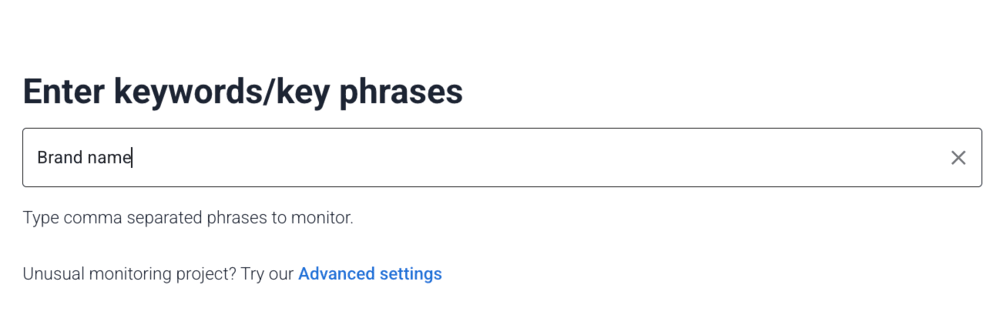
1. Set up a project for your brand, client, or campaign keyword.
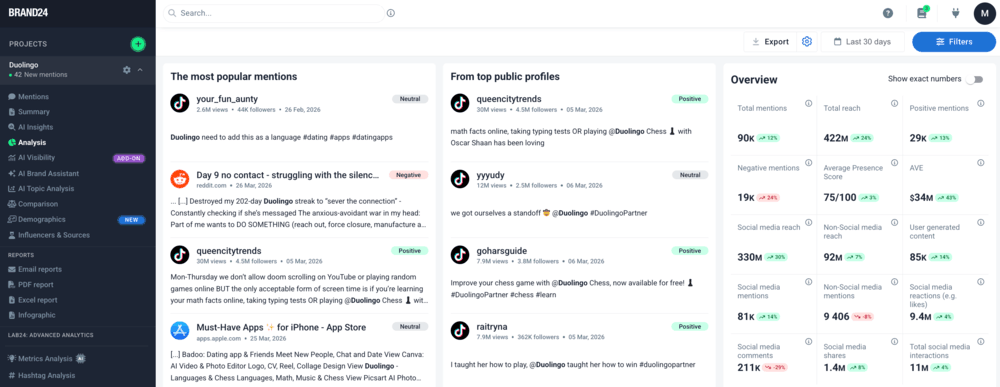
2. Go to the Analysis tab – AVE appears automatically in the numbers table alongside reach, mentions, and sentiment.
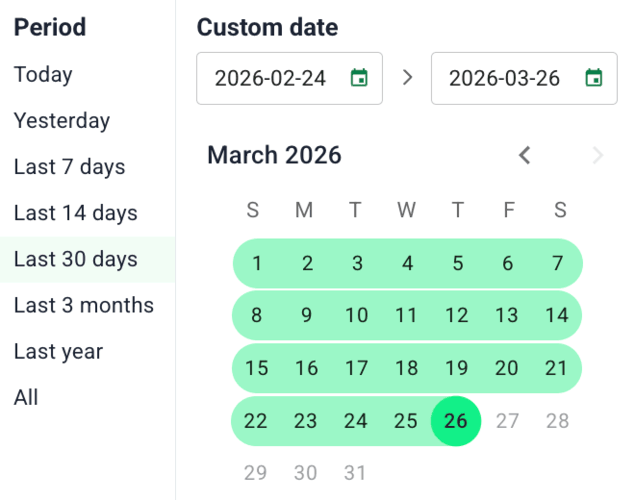
3. Adjust your date range to isolate specific campaigns or time periods. AVE recalculates in real time.
4. Use the Comparison tab to benchmark your AVE against competitors or alternative keywords.
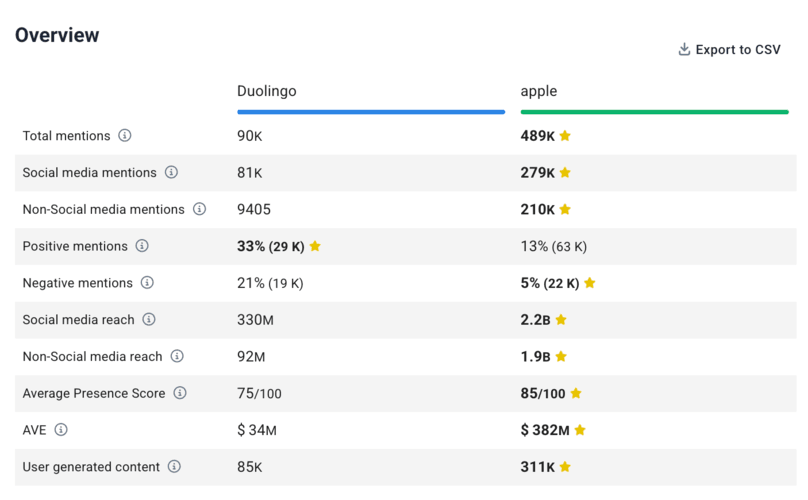
The whole process takes minutes. The harder part (as always) is interpreting what the number means for your specific context.
FAQ
What does AVE stand for in PR?
AVE stands for Advertising Value Equivalency (sometimes written as Equivalent Advertising Value, or EAV). It estimates the dollar value of earned media by comparing it to what similar ad placements would cost.
Is AVE an accurate metric?
It’s an estimate, not a precise measurement. There’s no single “correct” AVE figure, because different tools use different calculation methods. It’s most useful as a directional indicator and for stakeholder communication, not as a hard financial figure.
How does Brand24 calculate AVE differently from traditional methods?
Traditional AVE used a simple size × rate formula designed for print. Brand24’s calculation incorporates source reach, mention type, sentiment weighting, and location, which makes it more reflective of actual digital media dynamics. Positive mentions are valued higher than neutral ones, which is a meaningful improvement over the raw formula.
Where can I find AVE in Brand24?
AVE appears in the numbers table in the Analysis tab and Comparison tab, and in the numerical summary of exported PDF reports.
Should I use AVE as my primary PR metric?
No. AVE works best as an auxiliary metric alongside sentiment analysis, mention volume, reach, and share of voice. Used alone, it can produce misleading conclusions. High AVE can reflect a PR crisis just as easily as a successful campaign.
Can I compare my AVE to competitors?
Yes. Brand24’s Comparison tab lets you put your AVE side by side with competitors or any other tracked keyword, which makes it particularly useful for competitive positioning and new business presentations.
How to measure media coverage?
PR value is the total value of benefits that a person or organization receives from engaging in PR activities.
AVE is one way of measuring the effects of PR campaigns for your clients. Many public relations professionals claim that it is an outdated performance indicator and should not be used in modern PR.
But AVE is not useless. Combined with other metrics, advertising value equivalent will give you the means to measure the results of your public relations campaign.