How to Measure Brand Engagement [2026 Guide]
Table of contents
Whether you’re a large enterprise or a small local business, a strong brand engagement strategy can drive meaningful relationships and long-term success.
Quick summary:
What is brand engagement?
Brand engagement is the strength of the relationship people build with your brand – and how that relationship shows up in actions like mentions, comments, shares, likes, repeat purchases, and recommendations. It’s not just visibility. It’s interaction, loyalty, and advocacy.
Brand engagement = listening + showing up + rewarding people.
The fastest way to grow engagement is simple: use AI insights to learn what your audience cares about, reply to mentions (good and bad – especially influential ones), post at the right times on the right channels, keep your content formats varied, jump on relevant trends quickly while tracking sentiment, and build a small “VIP loop” (loyalty perks + shoutouts) that makes customers want to stay close.
Mentions will be your engagement fuel.
Engagement grows when your brand stops acting like a billboard and starts acting like a participant. Track what’s working with mention volume, sentiment, visibility (Presence Score), and website engagement – then keep experimenting while staying authentic.
What is brand engagement?
Short Answer: Brand engagement is how strongly people connect with a brand and how that connection shows in their actions. It goes beyond awareness to include interaction, loyalty, and advocacy.
Have you seen Calvin Klein’s latest Spring 2025 campaign with Bad Bunny yet? It’s a real hit. Shot in Puerto Rico, it quickly garnered 150,000 mentions and 200,000 interactions. Including 25,000 comments, 50,000 shares, and 75,000 likes. The collaboration with Bad Bunny leveraged cultural relevance, boosting brand engagement and demonstrating the power of authentic brand storytelling.
Establishing an emotional connection with audiences is essential to increase brand awareness.
Brand engagement is not just about being visible; it’s about creating authentic connections with audiences that drive lasting relationships and build a more credible, trusted brand.
It is all about how users connect and interact with your brand.
It includes online actions like mentions, comments, shares, and likes, as well as offline experiences such as customer service and feedback on your products.
There are two types of Brand Engagement:
- External brand engagement covers how customers, potential customers, and the general public engage with your brand.
- Internal brand engagement focuses on the relationship between your company and its employees.
Why is brand engagement important?
Brand engagement matters because it turns awareness into a real relationship – people pay more attention, trust you faster, and are more likely to choose you over a similar competitor.
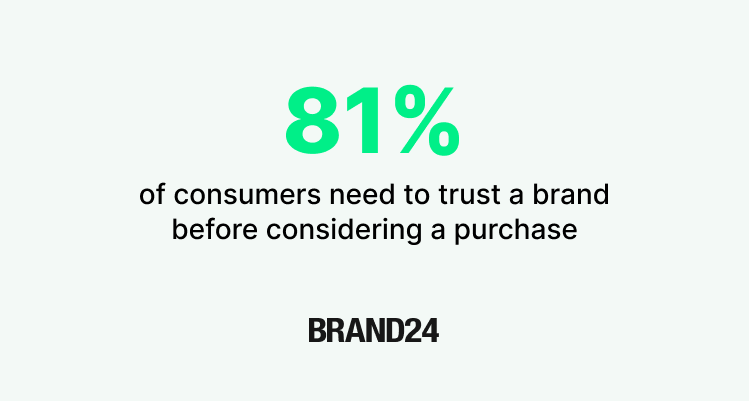
It’s like human relationships – when people feel a meaningful connection, they will likely choose a brand again and speak positively about it.
And this is where word-of-mouth marketing comes in.
No advertisement or campaign can beat the power of a genuine review from friends and family, whom people trust more.
Loyal customers can quickly become your best brand advocates!

How to increase brand engagement? 9 powerful strategies from experienced marketers
It’s crucial to remember that when thinking about brand engagement, it’s not about numbers or metrics – it’s about people, their needs, and their satisfaction.
Let’s break it through:
01 Ask your Brand Assistant
When understanding your audience, a goldmine is waiting to be discovered!
Brand Assistant is an AI-based tool that knows your brand inside out. It analyzes data, tracks performance, and provides actionable insights based on real data, not guesswork.
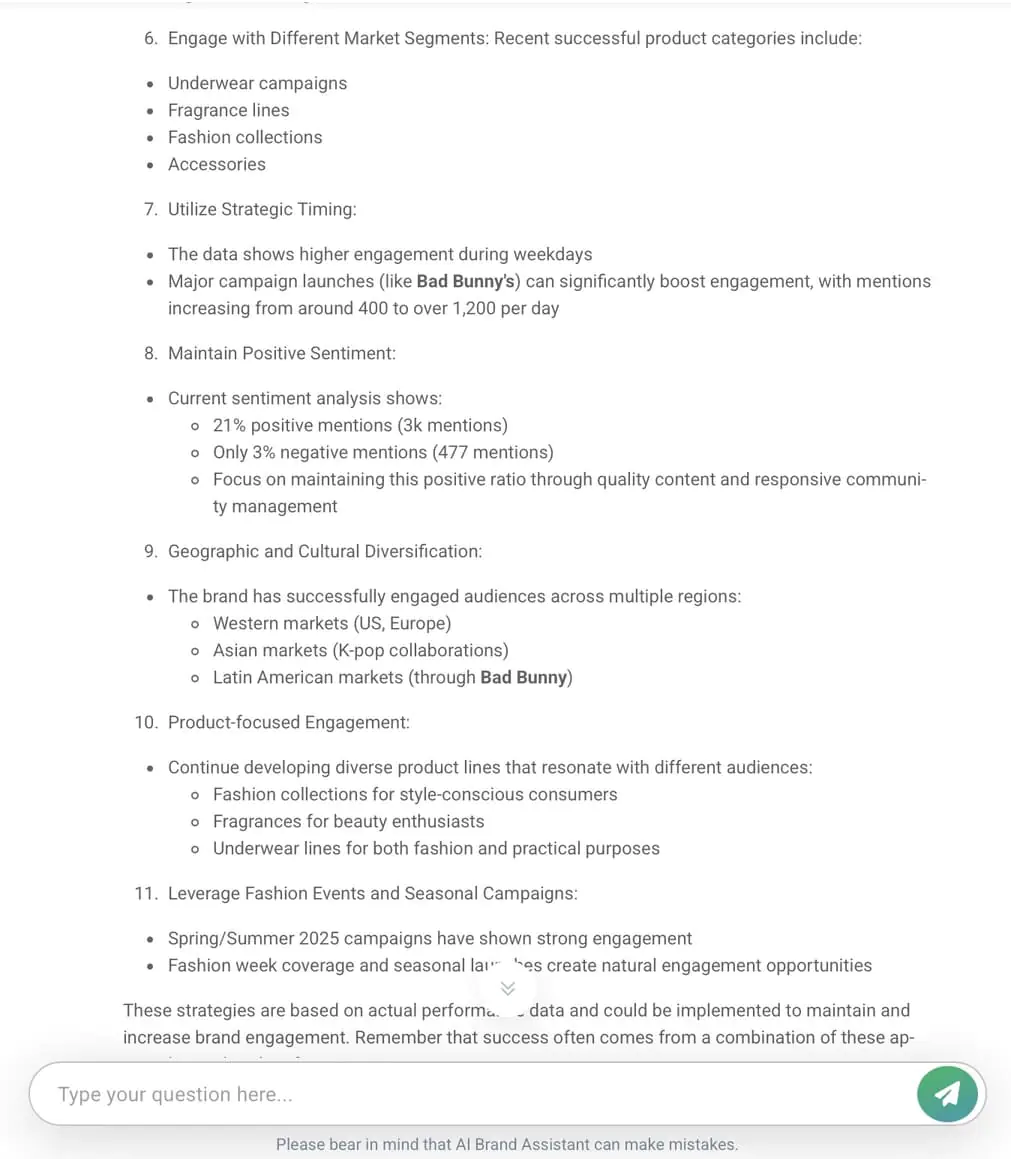
This is the perfect starting point to understand the situation around your brand clearly. This lets me see what’s happening online in just 5 seconds, even on a large scale!
It helps me:
- Identify patterns – Recognizes trends and opportunities for engagement.
- Provide recommendations – Adjusts strategies to increase engagement.
- Analyze trends – Tracks what is most important to your audience.
- Monitor sentiment – tracks how your brand is perceived.
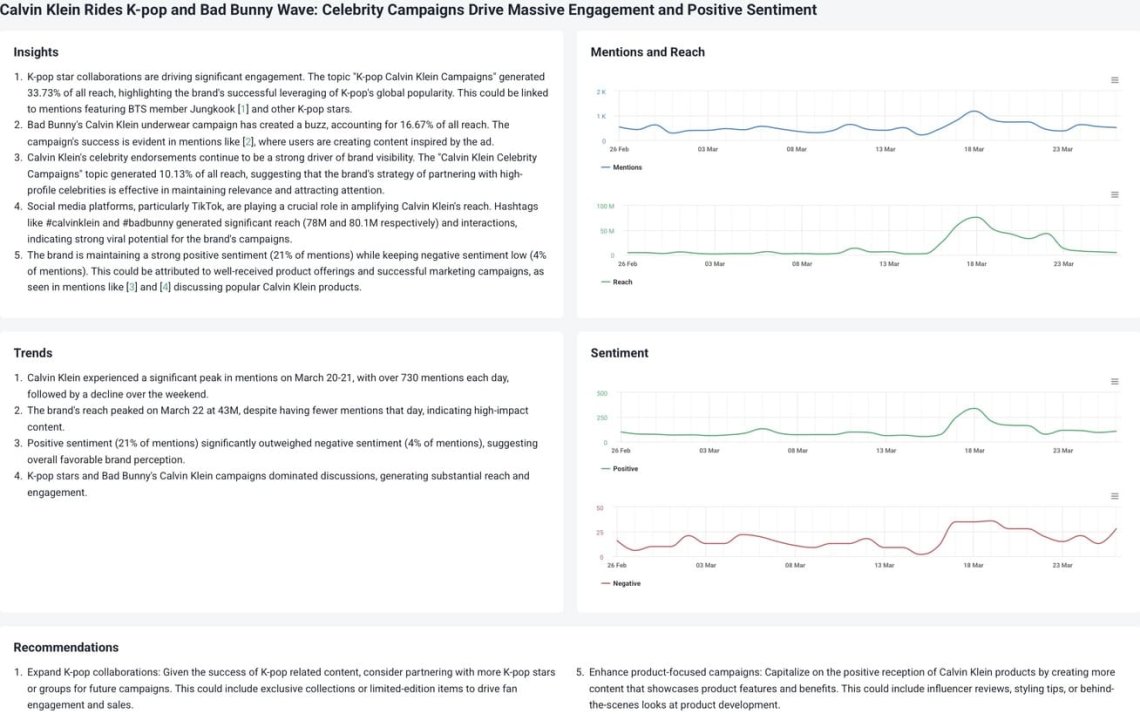
Despite that, I like to use AI Insights to make quick summaries. It gives me a clear overview and shows a pack of key data.

02 Answer to mention
When customers mention your brand, it opens the door to interaction. Jump in!
Remember! When you respond to mentions, you’re acknowledging your customers build trust, and deepening your relationship with them.
Here’s how it helps:
- Strengthened relationships – create personal connections.
- Increased loyalty – Make them feel heard and appreciated.
- Boosted brand perception – Shows your brand is approachable, attentive, and customer-centric.
- Enhanced trust – respond to worries and thank customers for their feedback.
Don’t let mentions go unnoticed. Jump into the conversation, show appreciation, and build stronger relationships with your audience today!
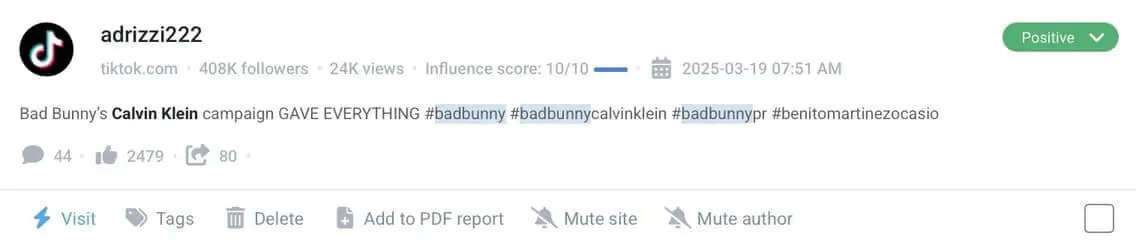
Quick Answer: The key is to react not only to negative comments but also to positive ones! Here, you canread more about how to respond to positive reviews.
How to do that?
Media monitoring tool is your answer. For example, in Brand24 you can filter mentions by sentiment, importance, influence score, and intent on the right side.
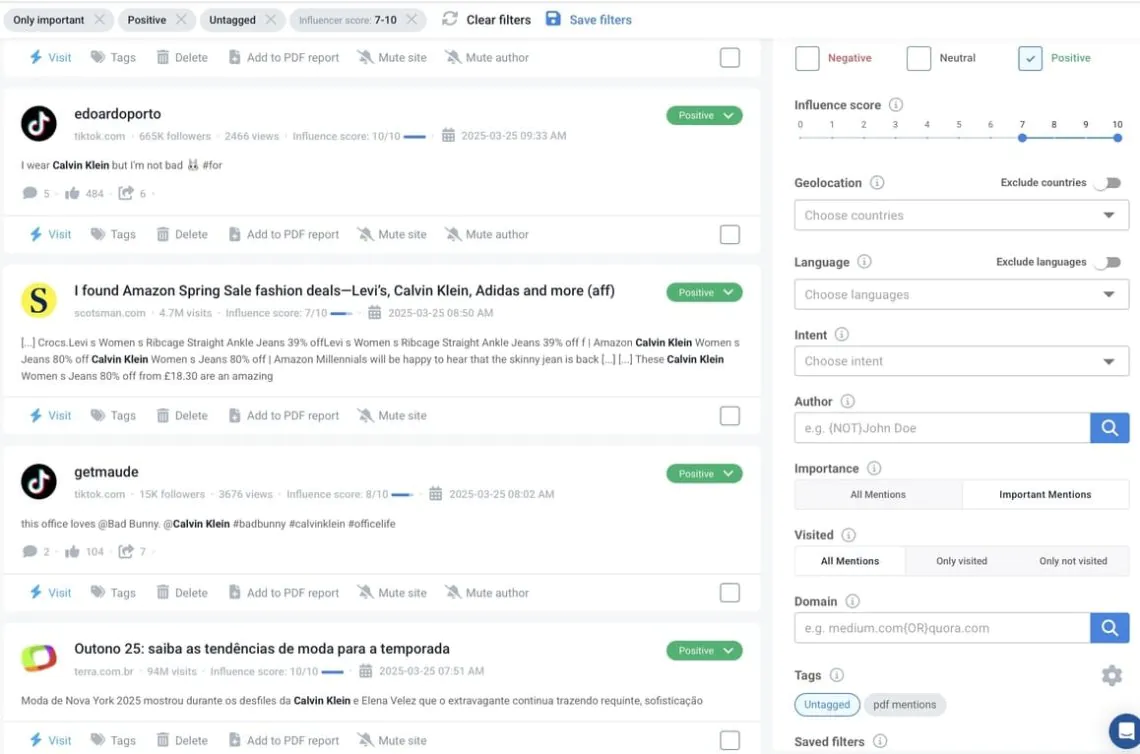
I usually check the most influential ones and the un-tagged ones. Why? It could be a creator, influencer, or other influential review that I wouldn’t want to miss!
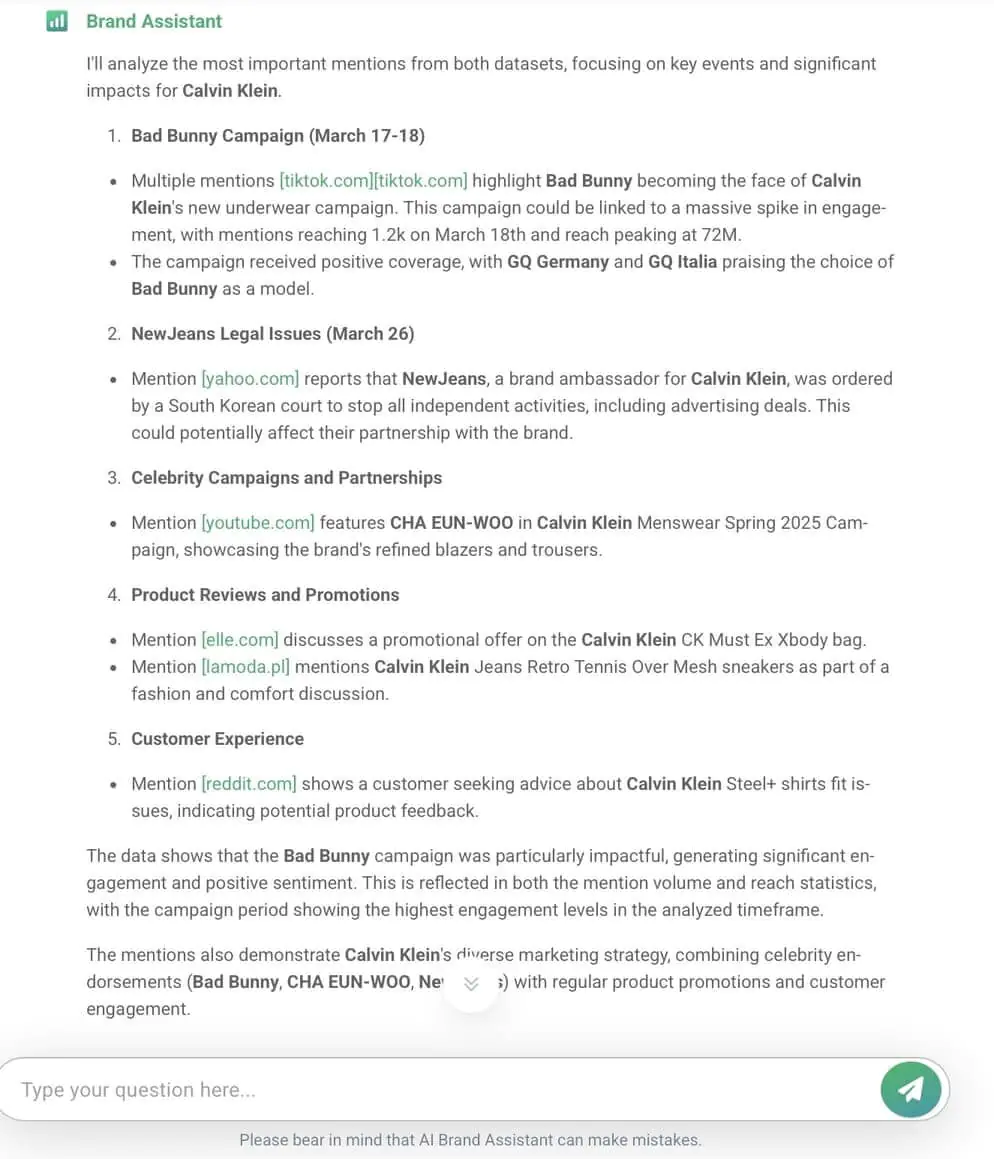
Another option is to ask the Brand Assistant. I’ve found this especially helpful during big-scale campaigns, where plenty of mentions are important.
03 Post at the proper time
It’s all about good timing.
Key fact: Some target groups are more likely to scroll during their morning coffee, others during their lunch break, and still others relax on social media at night. If your target audience is busy, it is more likely that they will miss your post.
Therefore, there is no universal “best time” to publish posts – it depends on the audience and the product.
But there are still many benefits to optimizing the best time to post for your target audience:
- Engagement and Reach – Posting at optimal times increases interactions and potential conversions.
- Increased Visibility – More engagement signals the algorithm to promote your content to a broader audience.
- Improved Brand Awareness – Consistent visibility ensures your audience recognizes and remembers your brand.
- Boosted Conversions – Greater visibility and engagement increase the likelihood of driving sales.
How to do that?
There are two options: You can either use native platforms like Instagram Analytics and Facebook Insights or opt for advanced tools that consolidate data from all platforms in one place.
I prefer the second option and highly recommend getting a comprehensive view of all your social media activity in one dashboard.
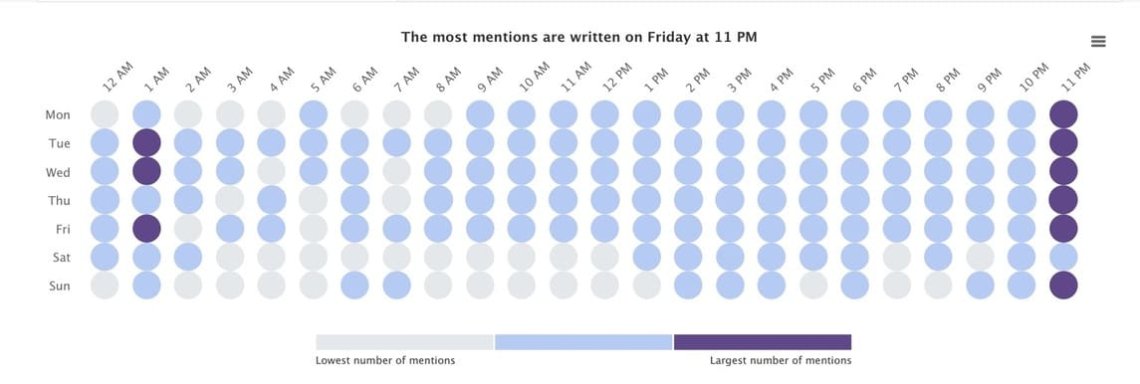
For example, on Brand24, I checked what time people usually mention Calvin Klein – making it easier to spot patterns and optimize timing.
04 Be in the right place
Reach your audience where they spend their time.
If your customers prefer Instagram over TikTok (which could be influenced by age or cultural factors), running a campaign on the wrong platform will only waste your budget.
Benefits of Choosing the Right Platforms:
- Increase engagement – Content resonates when the right people see it.
- Maximize ROI – Resources are better spent where they deliver the highest return.
- Strengthen brand loyalty – Consistent, targeted messaging builds trust and recognition.
- Enhance strategy efficiency – Understanding the platform’s specifics helps refine your content and outreach.
How to do that?
Start by generating a list of the most active sites to see where your brand gets the most mentions and engagement.
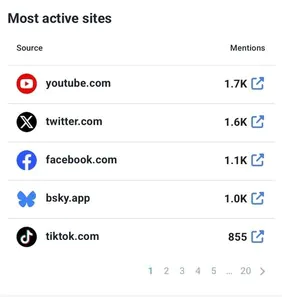
You can also analyze specific pages for deeper insights or generate quick reports for a clear overview of your brand’s performance across platforms.

05 Diversify your content marketing
Just as eating pizza daily can become monotonous, relying on only one type of content can lead to audience fatigue.
Mixing things up makes things exciting, engaging, and more likely to attract attention.
Think of it as a variety of dishes. Each one meets different tastes and preferences. Whether it’s a blog post for deep thinkers, a video for visual learners, or an interactive quiz for those who like a challenge.
Need inspiration? Analyze how brands like IKEA, H&M, or Zara establish their online presence using the Brand Checker.
Types of content to apply:
- User-Generated Content (UGC)
- Polls & Q&A
- Live Streams
- Stories & Reels
- Educational Posts

06 Participate in trending topics
Trends change in just a day or two! This constant change makes it challenging to create fresh and engaging content. However, it’s a challenge worth tackling.
The most important thing to remember is that when you participate in what’s currently trending, you tap into real-time conversations, enabling your brand to connect with a potential customer.
Tip: Join relevant trends to tap into real-time conversations and connect your brand with potential customers.
How this helps me:
- Stay up to date: Responding quickly keeps your brand at the forefront.
- Identify key insights: Find meaningful consumer feedback amongst the noise.
- Engage authentically: Create content that resonates.
- Get ahead of the competition: Act quickly to stand out and connect.
Find an essential topic for your audience to resonate and vibe with them!
How to do that?
A special tab is prepared to categorize all buzz around your brand into specific categories.

This will give you a clearer picture of how the public perceives these topics and help you decide if jumping on the trend aligns with your brand values.
What I like most about AI topic analysis is that it captures and categorizes all mentions, providing insights into popular keywords and patterns.

07 Track events in your niche
Remember, if people are talking about something, it means it’s important to them. An event floods the internet with interest and discussions when it goes viral.
This is the perfect moment to join the conversation, amplify your brand’s voice, and establish authentic connections with your audience.
Tip: Monitor brand mentions to boost customer satisfaction and spot early warning signs before a potential crisis grows
Key Benefits of Tracking Viral Events:
- Increased visibility: Stay relevant by joining viral conversations.
- Stronger loyalty: Quick responses build trust and customer satisfaction.
- Crisis management: Spot negative sentiment early to protect your brand.
- Better engagement: Real-time interactions deepen audience connections.
- Enhanced authority: Show your brand is in tune with current trends.
How to do that?
On the main mentions dashboard, I check the chart showing the volume and reach of mentions. This helps easily spot anomalies or spikes in interest around the brand.

See that little exclamation mark? It’s a quick AI-generated note explaining the reason behind the buzz and linking to the most influential mentions.

Next, I switch to the sentiment view above the chart to see how brand perception has shifted over time. Helping me understand the feelings of the audience and track changes.
08 Loyalty program
Nothing boosts brand engagement like a solid, exclusive loyalty program. It’s one of the best ways to keep your audience connected, engaged, and valued by your brand.
Brand Assistant is an AI-based tool that knows your brand inside out. It analyzes data, tracks performance, and provides actionable insights based on real data, not guesswork.
The goal? Turn those one-time buyers into brand advocates who keep coming back!
How to do it:
Start by defining your rewards – think points for purchases, exclusive discounts, early access to new products, and even special events.
- Make the program easy to join and even easier to use.
- Personalize the experience by customizing rewards based on customer behavior and preferences.
- Excite them about regular updates, surprise bonuses, and milestone rewards.
The goal is to make customers feel like VIPs – the more they feel appreciated, the more likely they will stick around and promote your brand.
09 Use trending hashtags
Hashtags are still going strong! They play a vital role in social media SEO, boosting brand visibility and shaping the customer experience across platforms.
More than just a trend, hashtags help your content get discovered by the right audience, making it easier for potential customers to find you and engage with your brand. Keep an eye on trending hashtags to stay relevant and amplify your reach!
How it helps me:
- Easy content discovery – Hashtags make it simple for users to find content that interests them.
- Geo SEO – Localize your reach by using location-based hashtags.
- Expand your reach – Hashtags help increase your audience and encourage hashtag use
How to do it:
Focus on the ones you are already using naturally to match your brand and niche rather than just generic, popular ones.
For example, I checked out the most popular hashtags around Calvin Klein and discovered some nice insights!

The trending hashtag “elcojamelo” (meaning “Bad Bunny” in Spanish) is a great opportunity for Calvin Klein to engage with Spanish-speaking audiences. It’s a great chance to boost engagement and help track UGC content.
How to measure brand engagement?
Want to know if your brand engagement is on point? Keep an eye on the right metrics!
Some tools offer options to check social media engagement, such as Brand24, which can help you analyze brand engagement rates for specific brands.
- Volume of mentions: likes, shares, comments, and tags all reflect how much your audience is vibing with your content.
- Sentiment analysis: Your secret weapon. Are people loving or hating your content? Tools like Brand24 give you real-time insight into whether the buzz around your brand is positive, negative, or neutral.
- Presence score: Brand24’s unique metric rates your brand’s online visibility from 0 to 100. The higher the score, the stronger your brand’s footprint.
- Website analytics: Track page views, bounce rates, and time on site to see how engaged your visitors are. If people click away too quickly, it might be time to adjust your content strategy.

More about customer engagement metrics you can find here.
Conclusion
Brand engagement isn’t just a task to check off. It’s an ongoing process of staying connected with your audience!
Building meaningful relationships with your audience requires constant attention, tracking key metrics, and adapting to changing customer preferences. The key is to approach it strategically while staying authentic.
Last but not least!
I prepared a short checklist that will help you boost your brand engagement:
| Brand Engagement Checklist | What to do |
|---|---|
| 1) Get a quick audience snapshot | Use AI insights to learn what people talk about most (topics, emotions, patterns). |
| 2) Identify your top “high-impact” mentions | Filter by influence/importance and focus on the posts that can shape perception. |
| 3) Reply to positive mentions | Thank people, reshare UGC, and reinforce the relationship. |
| 4) Reply to negative mentions fast | Acknowledge, fix, and follow up publicly when possible. |
| 5) Post at the right time | Check when your audience is most active and test 2–3 time windows. |
| 6) Be on the right platforms | Double down where engagement happens; stop wasting effort where it doesn’t. |
| 7) Refresh your content mix weekly | Rotate formats: UGC, Reels/Shorts, polls, Q&A, lives, education. |
| 8) Jump on relevant trends | Join fast, but only if it fits your brand values and tone. |
| 9) Track events in your niche | Watch for spikes in mentions/reach and respond while the topic is hot. |
| 10) Monitor sentiment shifts | Check if engagement is positive/neutral/negative after campaigns or events. |
| 11) Build a simple loyalty/VIP loop | Offer perks: early access, exclusive discounts, shoutouts, milestones. |
| 12) Use smart hashtags (not random ones) | Pick niche + brand-fit tags, add location tags if relevant, encourage UGC. |
| 13) Measure the right engagement metrics | Track: mentions volume, sentiment, visibility (Presence Score), website engagement. |
| 14) Run a monthly “what worked?” review | Keep what performs, cut what doesn’t, and set 1–2 experiments for next month. |
Now you are prepared to build strong brand engagement. Congrats! Sign up for Brand24’s free trial period and see how this tool will help you in the process!
FAQ
What is brand engagement marketing?
Brand engagement marketing is a marketing approach focused on building a strong relationship with your audience by encouraging real interaction with your brand (e.g., mentions, comments, shares, participation, repeat purchases, and recommendations) — so people don’t just notice you, they connect, trust, and come back.
What metrics should I track to measure brand engagement across channels?
The best way is to measure engagement as a mix of interaction, conversation, quality, and business impact (not just one “vanity metric”).
Core metrics to track:
- Mentions volume (how often people talk about you)
- Interactions (comments, shares, reactions, saves – platform dependent)
- Reach / visibility (how far engagement travels)
- Sentiment (positive / neutral / negative tone)
- Presence / visibility score (e.g., a 0–100 footprint metric, if your tool provides it)
- Share of Voice (your portion of category conversation vs competitors)
What are the main drivers of brand engagement online?
Think of engagement as “people choosing to react, reply, share, or come back.” The biggest drivers are:
- Relevance: You talk about problems, trends, and questions your audience actually cares about (not what you want to announce).
- Clarity + strong point of view: Clear message, simple language, and an opinion people can agree/disagree with.
- Value per post: Teach something, save time, inspire, entertain, or give a useful shortcut. “Nice update!” rarely wins.
- Consistency: Not spammy frequency – just predictable presence so people remember you.
- Community behavior: You reply, ask questions, tag people, and build back-and-forth (engagement loves conversation).
- Trust signals: Real proof (examples, screenshots, results, customer stories) beats vague claims.
- Format fit: Short video, carousels, polls, memes, threads – whatever your audience naturally engages with on that platform.
How to boost brand engagement?
Brand engagement grows when your brand stops acting like a billboard and starts acting like a participant.
You begin by listening – watching what people say, what they care about, and what emotions show up around your brand. Then you show up in the conversation: you reply to mentions, thank people for praise, handle complaints fast, and pay extra attention to the posts that can influence others.
From there, you make it easy (and fun) to interact with you. You post where your audience actually hangs out, at the times they’re active, and you keep things fresh with different formats like UGC, short videos, polls, Q&A, and educational content. When a relevant trend or event hits, you join quickly – without forcing it – and keep an eye on sentiment.
Finally, you reward the people who keep coming back. Even a simple VIP/loyalty loop – exclusive perks, early access, public shoutouts – can turn customers into advocates who engage naturally and bring others with them.
How can I increase engagement on social media without sounding salesy?
Imagine you’re at a dinner table, not on a stage. The goal is to join the conversation, not hijack it.
- Start with the struggle: “Here’s what we kept seeing…”
- Share the lesson: “We tried X. It failed. Here’s what worked instead.”
- Use gentle CTAs: “Want the checklist?” “Should I share the template?”
- Tell micro-stories: one moment, one takeaway, one question at the end.
If your post is useful even without your product… it won’t feel like an ad.
How can I use social listening to improve brand engagement?
Social listening is like walking into the room before you speak and hearing what people are already saying.
- Find repeating questions → turn them into posts people instantly care about.
- Catch live conversations → reply early with something helpful (not a pitch).
- Spot what triggers reactions → copy the patterns: topics, wording, format.
- Notice confusion or negativity → address it with clarity, fast.
You don’t have to “create engagement.” You just have to show up where it already exists – and add something worth responding to.
How do digital agencies boost brand engagement?
Digital agencies boost brand engagement by turning a brand into something people can actively interact with, not just notice. They start by listening—tracking what audiences already say, ask, and feel across social media, forums, news, and reviews—then they use those insights to shape content that fits the platform and the moment.
They plan creative that’s designed to trigger action (comments, shares, saves, mentions), and they keep it varied: short videos, UGC-style posts, polls, Q&As, creator collaborations, and quick educational pieces that solve a real problem or spark a reaction.
On top of that, they manage the relationship in real time by replying to mentions (especially the influential ones), resharing community content, and addressing negative feedback quickly so the conversation stays constructive.
How does creative content drive brand engagement?
Creative content turns your brand from a broadcaster into something people want to interact with—and that interaction is brand engagement.
Example: Oreo x 360i (Super Bowl blackout, 2013)
During the Super Bowl power outage, Oreo’s digital agency 360i had a dedicated social team ready to react fast. They posted the now-famous “You can still dunk in the dark” creative and it blew up—earning nearly 15,000 retweets and 20,000+ Facebook likes shortly after posting.
Industry commentary later described it as a moment that helped kick off the “social war room” era—brands building teams and processes to respond to culture in real time.