Table of contents
2M Marketers

Social listening helped Traffit generate 500 new leads per month with a 30% engagement rate, compared to just 2% from cold calling. The difference? Instead of interrupting strangers, they found people already looking for a solution like theirs. In this article, I’ll explain how to make social listening help you find more leads.
Key takeaways
-
It's true! social listening is a proven lead generation channel
Brands that monitor online conversations consistently find warm prospects who are already expressing a need, researching options, or complaining about competitors. No cold outreach required.
-
You can find leads at every stage of the buying journey
From people venting about a problem they haven't solved yet, to users actively comparing tools, to customers frustrated with a competitor – social listening surfaces signals at every stage.
-
96% of dissatisfied customers never complain directly to the company
They complain publicly on social media, forums, and review sites instead (according to Forbes). That's where your opportunity is: brand monitoring lets you step in before they move on.
-
Tracking competitors' negative mentions is one of the highest-converting tactics
Set up a project for a rival brand, filter by negative sentiment, and you'll find people who are already open to switching (often in the same thread where they express frustration).
-
Speed matters!
Responding to a lead within the first hour dramatically increases conversion chances. Social listening tools with real-time alerts make this possible without constant manual monitoring.
Can social listening help you find leads in 2026?
Yes. 100%.
Only 24% of customers prefer directing their reviews directly to companies (source: Fera).
The rest?
They talk about you and your competitors in public, without tagging anyone.
Social listening is the practice of monitoring mentions across social media platforms, forums, review sites, and online communities. It gives you a front-row seat to those conversations. And with the right setup, it becomes a repeatable lead generation engine.
Based on a real example, Traffit gains 500 new leads every single month from media monitoring.
It’s easy to spot people in need of your products and services. All you have to do is LISTEN.
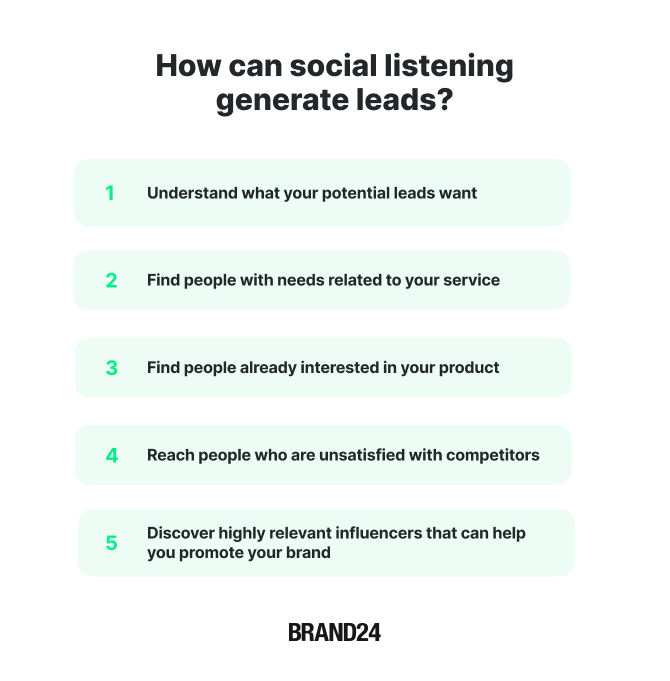
Social listening can help you improve your lead generation by enabling you to:
- Understand what your customers want
- Find people with needs related to your service
- Find people already interested in your product
- Reach people who are unsatisfied with competitors
- Discover highly relevant influencers that can help you promote your brand

I’ll explain each of these ideas with steps and examples.
I structured this article into an easy-to-follow guide. All to get you ready to take over and use social listening in your strategy!
Let’s go!
How Can Social Listening Generate Leads? 5 Ways
01 Finding pain points & customers’ needs
One of the most valuable strategies to find leads is simply paying attention to conversations happening in your industry.
Done with guessing about customer needs!
Social listening enables you to let people tell you directly what they want.
And they usually already do it through their social media posts, forum discussions, and community conversations. You just need to find those talks!
When someone shares their frustration about poor service or a missing feature in a product from your niche – look at it as an opportunity to grow.
The social listening process helps build a clear picture of your ideal customer and shows how your potential customers think & what matters to them.
When your product truly addresses someone’s pain point, they are more likely to become curious about what you’re offering.
How to do it?
Set up a social listening project for your brand, industry, specific product, or your competitors and analyze:
- What features do the customers like?
- What would they want improved?
- What features are missed?
Then, incorporate those insights into your future product development and marketing strategy.
Also, make sure to tell these people that you see their need and will work on covering it.
Even if your business doesn’t offer this specific feature at the time, it’s still a great way to start the conversation and open a potential lead.
Example:
I created a Brand24 project for Herman Miller, a high-end office chair company.
Take a look at what I found for them:
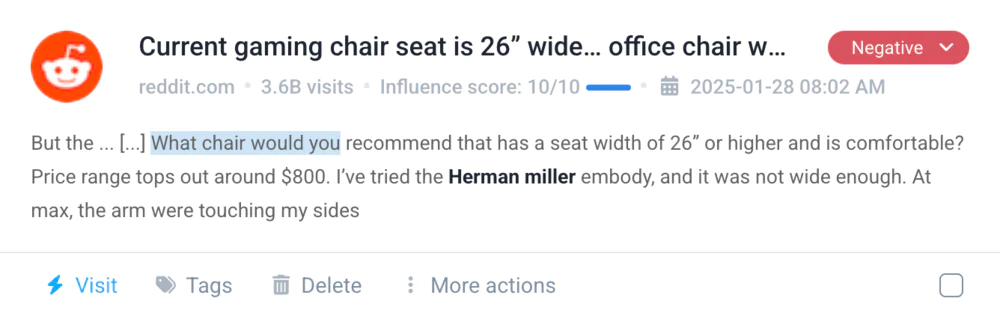
There’s a clear need for a wide seat in office chairs. The person even states that Herman Miller lacks one too.
The company could jump into conversations and show they care about this need. They could also use this information for future upgrades.
02 Finding people with needs related to your service
This approach is related to the first idea but goes a step further.
The idea is to find people who have specific needs, don’t know the solution, and… your business has the solution.
And how to find those?
It’s actually very easy and uses just the basis of social listening – monitoring mentions.
You want to find users that mention the thing you offer but don’t mention you (cause they don’t know you).
How to do it?
I’d start with a detailed overview of what you offer and what problems you answer with your needs. You want to find keywords that express it.
Then, set up a social listening project for the needs or problems you defined.
Finally, browse the mentions to find leads.
Example:
An office chair company could think of covering back pain problems or broader – home office chairs.
So, they will set up a media monitoring project for “back pain chair” or “home office chair”.
For the purposes of this case study, I created a project using the Brand24 tool.
And quite quickly, I found a mention of someone in need of a home office chair.
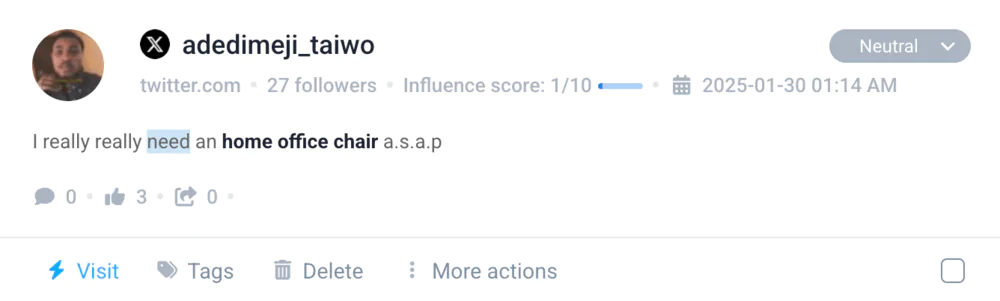
The company could reach out to this guy and propose their offer.
📌 Pro tip: By joining discussions, you can boost awareness of your products or services among people discussing this particular topic. Participating in discussions related to your business can open up many new leads.
03 Find people already interested in your product
Social listening helps you find leads by monitoring your brand mentions.
The idea is simple: people often discuss their purchasing dilemmas, frustrations, and product preferences on social media, forums, and blogs.
By tracking these discussions, you can spot those who are already interested in what you offer but are not so sure to immidietly buy.
The outcome – you can reach people actively looking for solutions like yours.
This approach lets you engage with potential customers at the right moment, which builds trust and increases chances for conversion.
How to do it?
Start with setting up a social listening project for your brand.
What I love about this method is that people don’t need to tag you – social listening enables you to find mentions in which you’re not tagged directly.
This opens the gates to many more possibilities!
Once you have your project live, keep an eye on the mentions that occur.
Look for those who express interest in your offer. Engage by responding to questions, offering helpful advice, or maybe even sharing a discount.
By actively listening and engaging, you can turn online conversations into sales opportunities.
One thing to keep in mind – this tip works only for companies with unique brand names. Otherwise, it’s hard to distinguish your brand from a huge number of other people using this keyword in totally different contexts.
For example: “Adidas” is perfect, but “Pretty Flowers” won’t work.
Example:
Here’s a mention I found for my Herman Miller project. It’s a perfect opportunity to engage and establish a relationship.
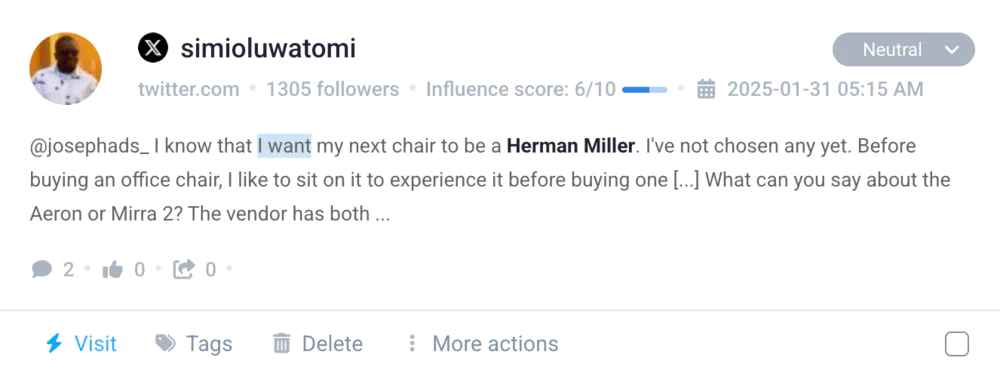
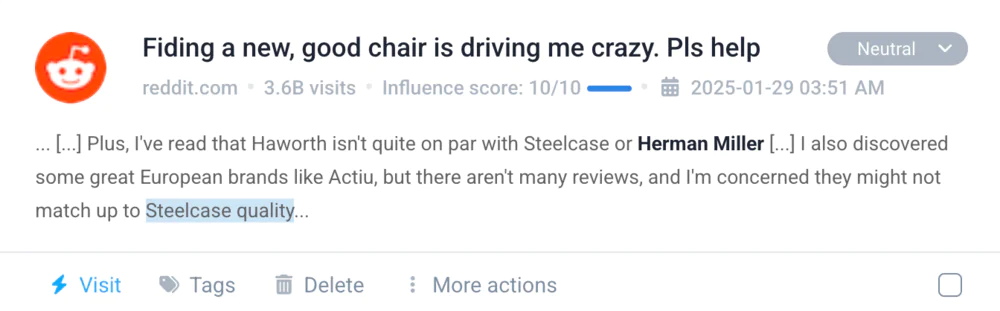
You may also find people who are interested in your offer but also consider your competitor. Such people usually want to justify one product or another before they purchase.
Answering such mention can be a real advantage over the second option, and the chances of sale via such a connection are extra high:
04 Reach people who are unsatisfied with competitors
People frustrated with your competitors don’t always complain directly to them.
In fact, 96% of dissatisfied customers won’t report issues directly to the company (source: Forbes).
So, the potential of finding them online is real.
When people share their frustrations on social media, forums, or reviews, they’re actively looking for a better solution – you just need to step in at the right time.
By using social media monitoring, you can find those people, identify their pain points, and present your product as the better alternative.
How to do it?
First, identify your competitors. AI tools can generate a list of relevant brands in your industry within seconds.
I asked the AI Brand Assistant and ChatGPT, and the results were fantastic:
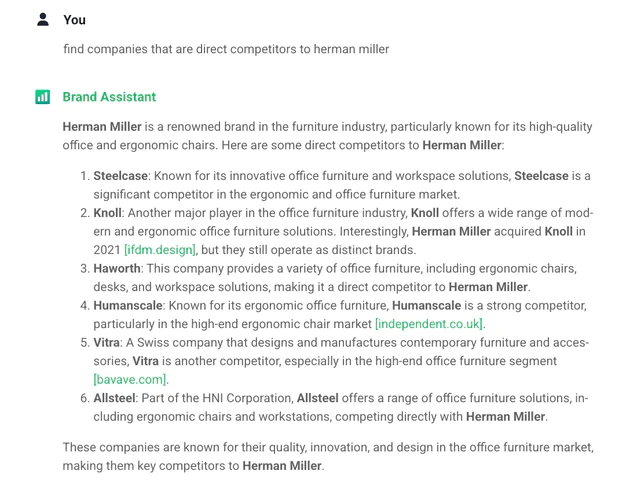
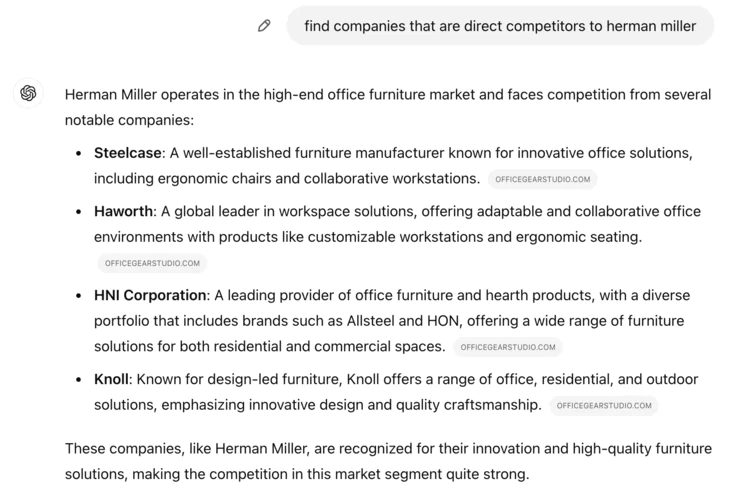
Of course, you probably have your competitor’s analysis at hand. However, I suggest doing a quick check-up if you have even the slightest doubt about whether it’s up-to-date.
Once you have your list, set up a social listening project to track your competitor’s brand name. Set the sentiment analysis filter to “negative.”
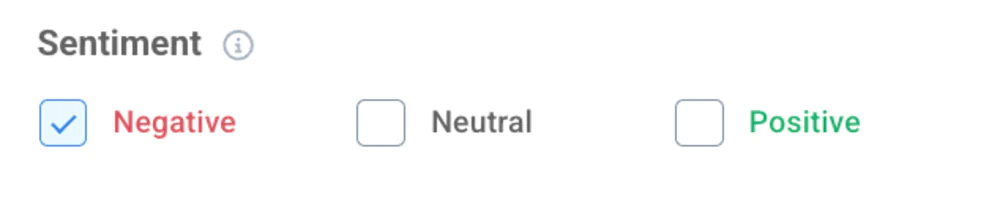
And voila! This lets you catch negative comments in real time.
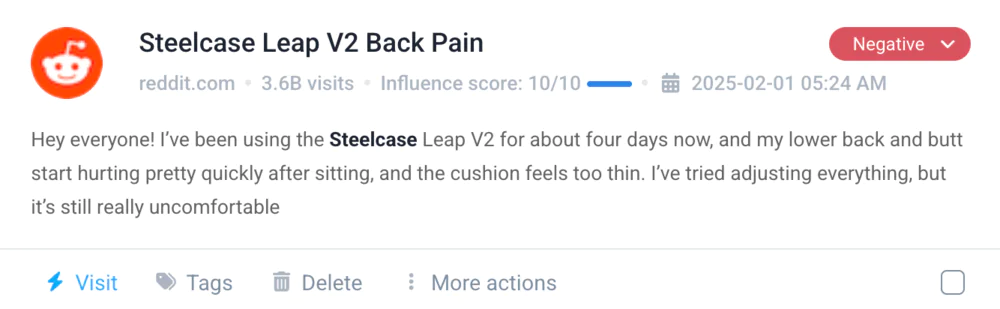
Now comes the fun part – engaging!
If someone tweets: “I hate how my chair from [Competitor] can’t be adjusted to my height. I’m not that tall!”
You can reply with, “Been there – that kind of issue is really frustrating. We actually offer different sizes to solve that problem. Happy to show you how we do things differently if you’re exploring options!”
It’s subtle but effective. You’re not criticizing the competition – you’re simply offering a genuine alternative to someone already looking for one.
Plus, you’re introducing your brand at the perfect moment.
Another approach? Use these insights in your marketing. If you notice recurring complaints (slow shipping, poor customer support, bad quality), craft messaging that highlights how your brand does it better.
By listening and acting on competitor frustrations, you turn their unhappy customers into your leads. And do it when they’re most open to switching.
📌 Pro tip: When you notice someone expressing frustration with a competitor, there’s an opportunity – but timing and approach are everything.
05 Discover highly relevant influencers that can help you promote your brand
Last but not least – social listening isn’t just about immediate sales. It can also help you build a long-term lead-generation strategy by finding niche influencers.
Let’s face it – throwing money at big influencers with a wide audience doesn’t always work. Why?
Because their followers might not care about what you’re selling.
Social listening is a smarter way to do this.
Look for influencers who are already talking about your industry or your brand. These are the people who actually get what you do.
In fact, smaller creators can even work better. Their followers really trust them and take their advice seriously.
And if an influencer already uses and loves your product? Even better.
When they recommend you to their audience, it feels real because it is real. Their followers are much more likely to check you out because the recommendation comes from someone they trust.
How to do it?
I’ll show you on a Brand24 example, as that’s the tool I used for the whole analysis.
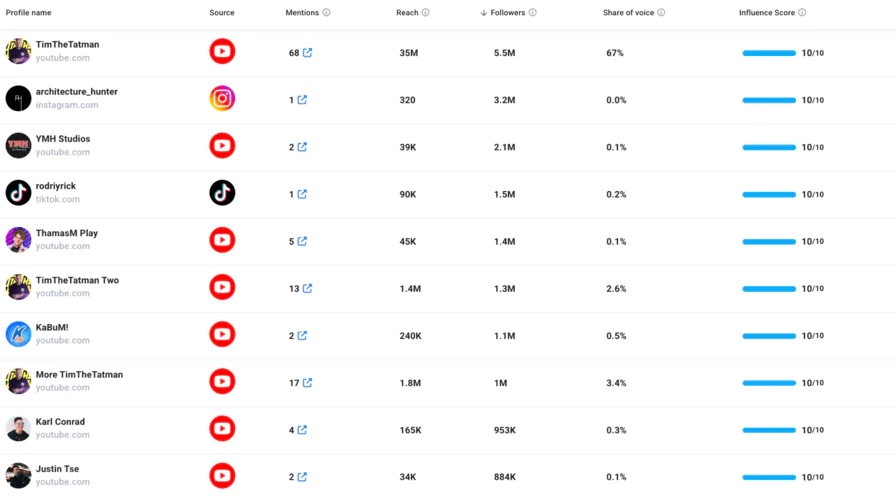
As I set up my social listening project for Herman Miller, I also gained access to an “Influencer Tab”.
It’s a tool that finds the most influential profiles mentioning your brand and organizes them by:
- The number of followers
- The platform they’re on
- The number of times they mentioned you
- The their reach
It’s super easy to find someone relevant and reach out to them for a potential collab.
Here’s what it looks like in the tool:
How to respond to leads found through social listening?
Finding a lead is just the beginning. That doesn’t necessarily mean you won.
To actually place a lead, you also need to approach it the right way.
Here are my top 3 tips for answering leads:
01 Answer the person, not the lead
When you spot someone who might be interested in your product, your first instinct might be to jump in with a sales pitch.
Don’t.
Instead, focus on being genuinely helpful. If someone’s expressing a specific challenge, share your expertise or point them toward helpful resources – even if they’re not your own.
This builds trust and shows you’re interested in solving problems, not just making a sale.
02 Listen to the people’s needs
Pay attention to what people actually want and answer to their needs.
I imagine your product might offer many great features (which are probably very useful). But bragging about them all when answering someone’s one, very particular need is a no-no.
Make the people feel valued, and serve them the answers they’re looking for, not the whole Wikipedia of your product.
03 Don’t push the sale
The goal isn’t to convince everyone to buy right away.
It’s about building relationships and being there with solutions when people are ready.
Take your time, focus on adding value, and let the conversations flow naturally. The best sales often happen when you’re not trying to sell at all.
Best practices for using social listening to generate leads
Social listening is about spotting opportunities and turning them into action.
The key is knowing what to look for and how to act on it.
Here are my simple but effective tips to help you make the most of it:
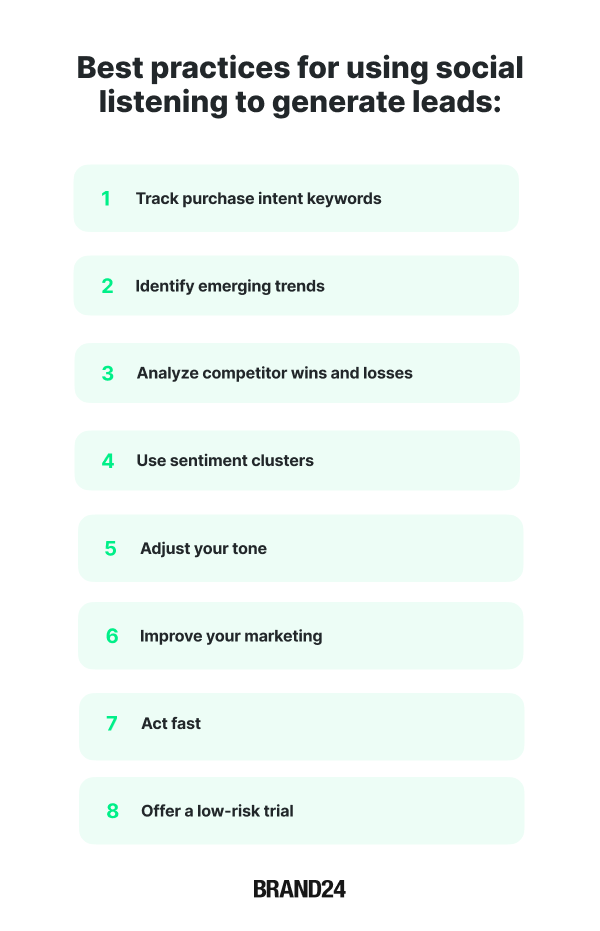
- Track industry keywords: Monitor phrases relevant to what you offer to find people ready to buy.
- Identify industry trends: Use social listening to track shifts in your industry.
- Analyze competitor wins and losses: See what customers love (or hate) about competitors and try to position your brand as the better choice.
- Use sentiment clusters: Use filters to quickly find unsatisfied customers.
- Adjust your tone: Be natural with casual users and more professional with business leads.
- Improve your marketing: If many social media users ask the same questions, create content that directly addresses their concerns.
- Act fast: Respond quickly when users express a need or frustration to increase your chances of converting them.
- Offer a low-risk trial: When engaging with leads, provide free samples, discounts, or trials to lower the barrier to trying your product.
Best social listening tools to help you find leads
- Brand24
An AI-powered tool that monitors mentions across social media, news, blogs, videos, forums, podcasts, and reviews. It provides many AI-based features, covers important sources, and has a notifications system. Perfect choice to identify potential customers. - Brandwatch
A platform that offers detailed analytics on trends, customer sentiment, and competitor performance. It enables you to spot and engage with leads effectively. - Google Alerts
It’s a free alternative. It allows you to monitor specific keywords related to your industry. It can help you find relevant online discussions and identify potential customers. However, people report it misses some mentions.
For a more detailed overview, check out this article about social listening tools.
By using these tools, you can monitor mentions, understand customer needs, and engage with potential leads more effectively.


