Table of contents
2M Marketers

78% of salespeople who use social selling outperform their peers, and 61% of brands report revenue growth as a direct result. Meanwhile, 75% of B2B buyers actively use social media to inform purchasing decisions. The channel has shifted; the question now is how to use it well.
Key takeaways
-
Social selling is about trust, not transactions.
The most effective social sellers prioritize relationship-building over pitching — prospects are far more likely to convert when they feel genuinely understood rather than targeted.
-
LinkedIn remains the strongest B2B social selling platform.
With most decision-makers active there daily, a well-optimized profile and consistent engagement through tools like Sales Navigator and SSI tracking give sales teams a measurable edge over competitors relying on cold outreach.
-
Buyer intent signals are everywhere — if you're listening.
Monitoring keywords like "alternatives to [competitor]" or "looking for a CRM" across platforms reveals warm leads already in buying mode, which is far more efficient than chasing cold prospects. Tools like Brand24 can surface these signals in real time.
-
Speed and personalization determine conversion.
Responding to a buyer signal quickly — and with a message tailored to their specific pain point or sentiment — dramatically increases the likelihood of engagement. Generic, delayed outreach squanders warm opportunities.
-
B2B and B2C social selling require different playbooks.
B2B success hinges on demonstrating expertise and nurturing long-cycle relationships through educational content; B2C leans on brand personality, community, and emotional connection with shorter conversion paths.
What is social selling?
Social selling is a sales strategy built on one principle: people buy from people they trust. Instead of cold outreach or mass messaging, social sellers use platforms like LinkedIn, Twitter, or Instagram to build genuine, targeted relationships with prospects — and let trust do the heavy lifting.
Social selling is personal, it’s intentional, and it’s fundamentally different from broadcasting to an audience.
What it’s not: spamming inboxes with generic pitches or dropping promotional links in comment sections. That kills credibility faster than it builds a pipeline.

To build relationships with potential customers, your interactions must be meaningful and authentic.
Social selling vs. social media marketing
Both happen on social platforms, but they serve different purposes. Social media marketing casts a wide net — it’s about reach, impressions, and brand awareness. Social selling is the opposite: targeted, one-on-one communication with a specific prospect or a small group.
The key distinction is intent. Marketing speaks to many. Social selling speaks to one.
Social selling for B2B vs B2C
B2B is where social selling truly shines.
The goal is to educate prospects, demonstrate expertise, and nurture relationships over time. LinkedIn, Twitter, and Quora are the natural habitats here — platforms built around professional content and industry conversation.
Case studies, webinars, and authoritative blog posts make effective conversation starters.
When a prospect asks for a recommendation in your space, that’s your cue — but respond like a consultant, not a vendor.
Ask about their team size, pain points, and workflow before mentioning your product.
B2C social selling is newer but growing.
The focus shifts to brand personality, emotional connection, and community. Instagram, Facebook, and TikTok take center stage, and content leans visual and authentic — videos, user-generated posts, and stories.
The conversion path is shorter, but the relationship still matters: loyalty programs, incentives, and genuine engagement in comments drive results.

To sum it up:
| Social selling | B2B | B2C |
|---|---|---|
|
Primary goal |
Lead generation, relationship nurturing |
Brand awareness, traffic, direct purchases |
|
Best platforms |
LinkedIn, Twitter, Quora |
Instagram, TikTok, Facebook |
|
Content style |
Case studies, webinars, authoritative blog posts |
Videos, stories, user-generated content |
|
Sales cycle |
Long — trust built over multiple touchpoints |
Short — emotional connection drives faster decisions |
|
Tone |
Consultative, informative, credibility-driven |
Authentic, personality-driven, community-focused |
|
Trust signals |
Thought leadership, social proof, expertise |
Personality, reviews, influencer endorsements |
What are the best social selling channels?
LinkedIn is the default starting point for B2B social selling, and for good reason. Most decision-makers are active there daily. A strong profile is non-negotiable — it’s your digital storefront. Fill out every section, especially the intro and “About” areas, and write them from the buyer’s perspective, not a recruiter’s.
From there, use LinkedIn’s native tools to your advantage.
- Sales Navigator helps with targeted outreach and lead tracking.
- Social Selling Index (SSI) measures your profile completeness, network quality, engagement, and relationship-building — LinkedIn will tell you exactly where to improve.
Tip: Engage in conversations before starting one, follow relevant hashtags and industry voices, join niche groups, and share content that genuinely helps your audience — not just content that promotes your product.
Example: Tomasz Niezgoda, from SurferSEO, wrote a LinkedIn post about a digital course on SEO writing. The post had a broad reach and generated more than 40 comments, with people asking for invitations to the class. This is an excellent way to promote your brand through personal branding on a social selling platform.
According to Tomasz, more than 20,000 people joined the SEO Writing Masterclass. Mainly promoted on LinkedIn.

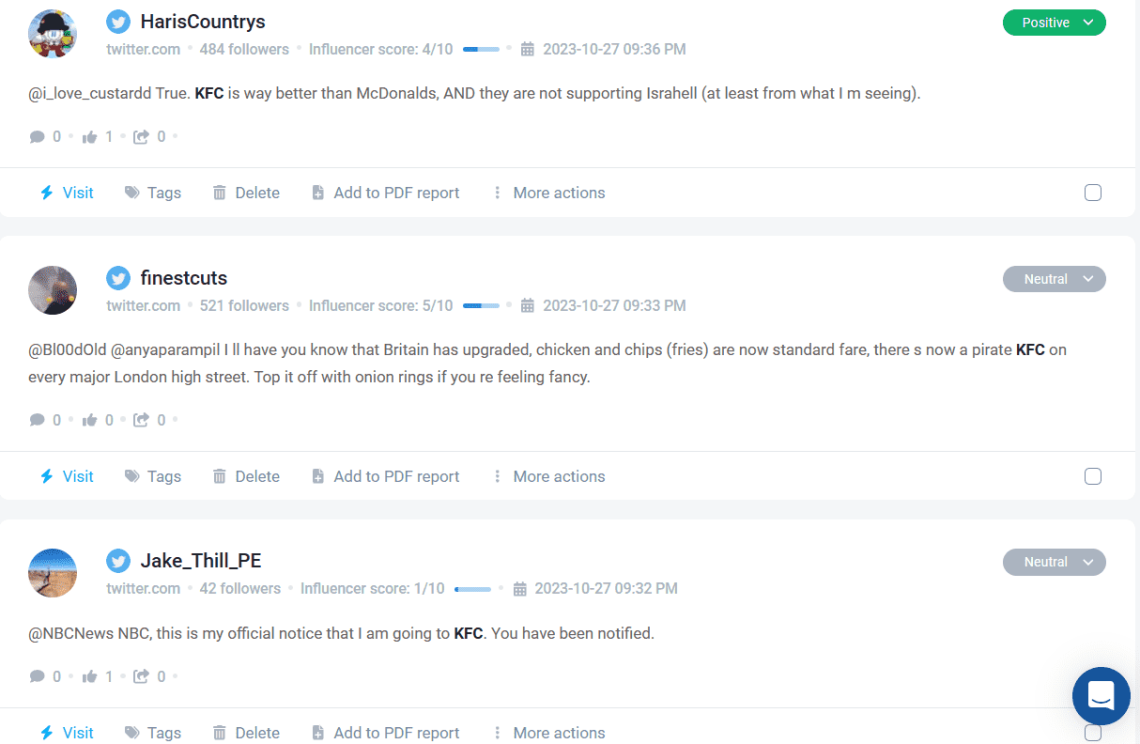
Twitter/X is more open by default — most content is public, which makes prospecting easier. Monitor keywords in your niche, jump into relevant threads, and build visibility through consistent, valuable contributions.
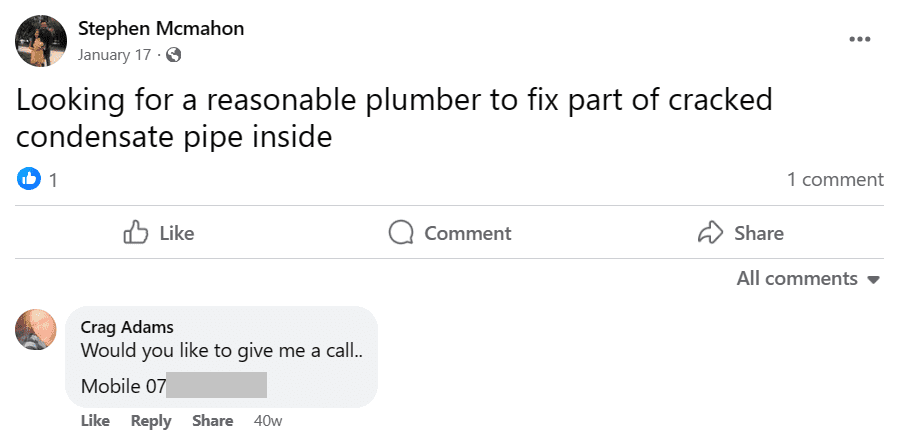
Facebook is harder for cold social selling since most profiles are private, but brand pages and niche groups can still surface opportunities — especially in B2C.
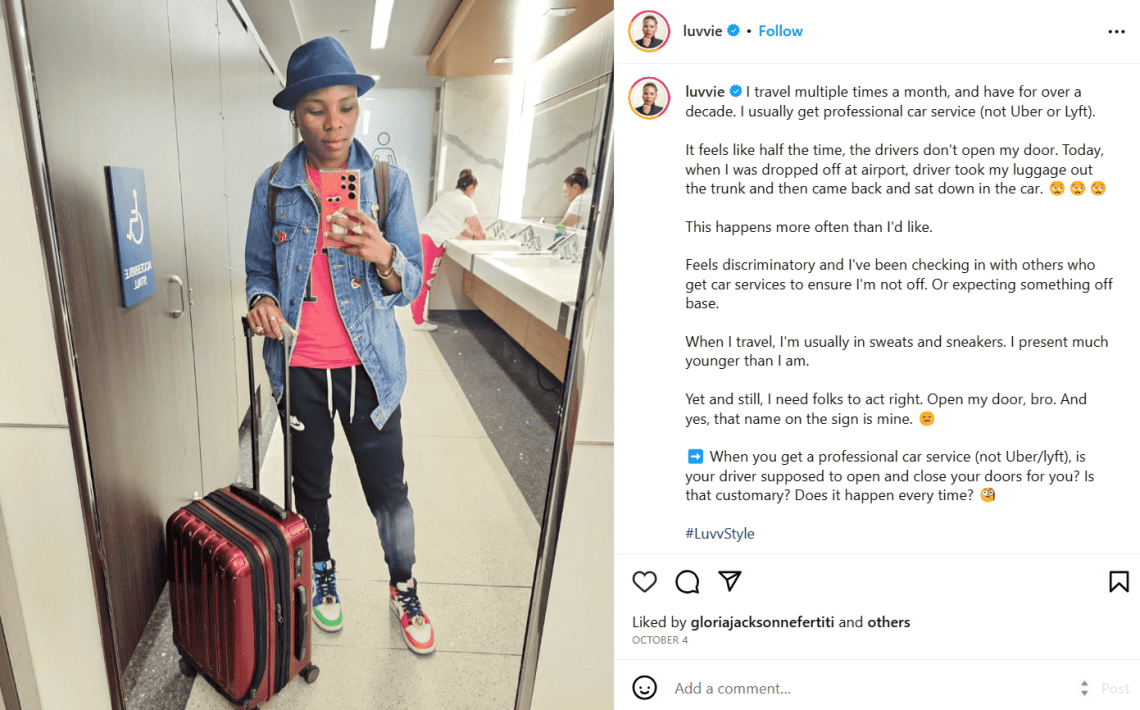
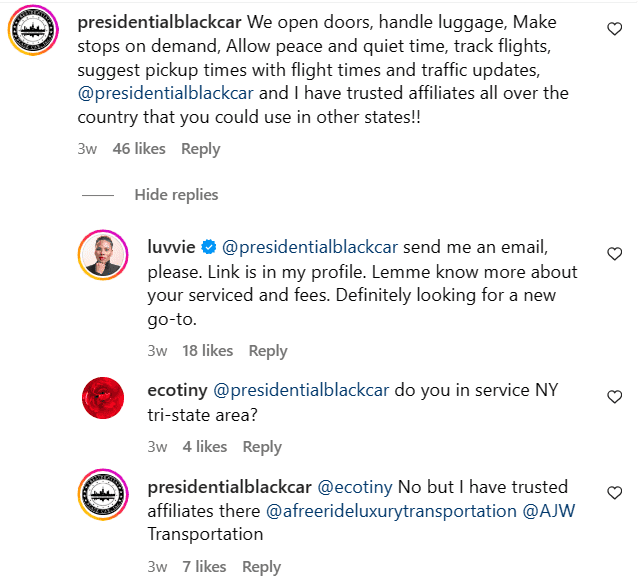
Instagram requires more effort but rewards consistency. The comment section is often underused — showing up there authentically can open doors.
How to do social selling right?
The brands and reps who succeed at social selling share a few habits:
| Habit | What does it mean in practise? |
|---|---|
|
They listen before they speak. |
Using a social listening tool — monitoring mentions, keywords, and industry conversations — lets you identify prospects at exactly the moment they’re looking for help. That’s a fundamentally different entry point than cold outreach. |
|
They share, not sell. |
Useful content — a relevant blog post, a case study from a similar company, a direct answer to a specific question — builds credibility organically. Each piece of value adds to a relationship that eventually converts. |
|
They’re consistent. |
Social selling is a long game. Sporadic activity doesn’t build trust. Showing up regularly in the right places does. |
|
They personalize everything. |
Generic messages fail. A message that references a prospect’s recent post, their company’s challenge, or something specific to their industry tells them you’ve actually paid attention.. |
For social selling best tips and practices, check out our YouTube video!
How to use Brand24 for social selling?
The most effective way to do social selling is to use a social media monitoring tool to track keywords relevant to your business and identify potential customers — the key is choosing the right keywords, since finding customers requires a broader perspective.
How to do it with Brand24:
1. Set up a social selling project with buyer-intent keywords
Don’t just track your brand name. Think like a buyer. Create a project around terms your prospects actually use — “looking for a CRM tool,” “need help with social monitoring,” “alternatives to [competitor].” This is where most teams stop short, and where Brand24’s edge begins.
Tip: Use comma-separated keywords and exclude irrelevant terms to keep your feed clean.
2. Exclude irrelevant terms to keep your feed clean
Brand24 aggregates mentions from Facebook, Instagram, X, LinkedIn, Reddit, TikTok, YouTube, forums, blogs, news, and podcasts into a single feed. Filter by sentiment, source, or reach to zero in on the highest-value conversations — for example, only positive mentions with high social reach, or Reddit threads asking for product recommendations.

Tip: Time matters — the faster you respond to a buyer signal, the higher your conversion rate
3. Engage with the customers
When you spot a relevant mention — someone asking for a tool recommendation, complaining about a competitor, or describing a problem you solve — don’t ignore it.
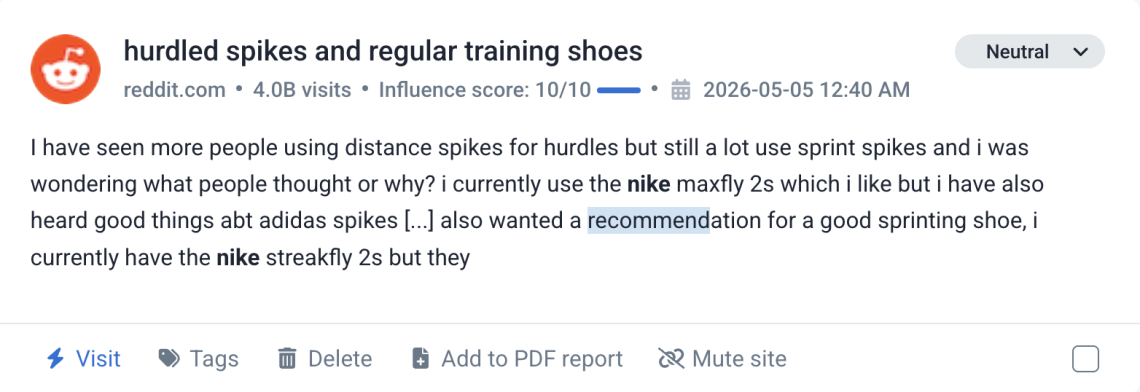
Tip: Tag high-priority leads with internal labels for easy retrieval later
4. Set up instant alerts so you never miss a signal
Configure email or Slack notifications for your social selling project. Every new mention matching your keywords lands in your inbox or channel immediately — so your sales team can act on warm leads the moment they appear, even without logging into the platform.
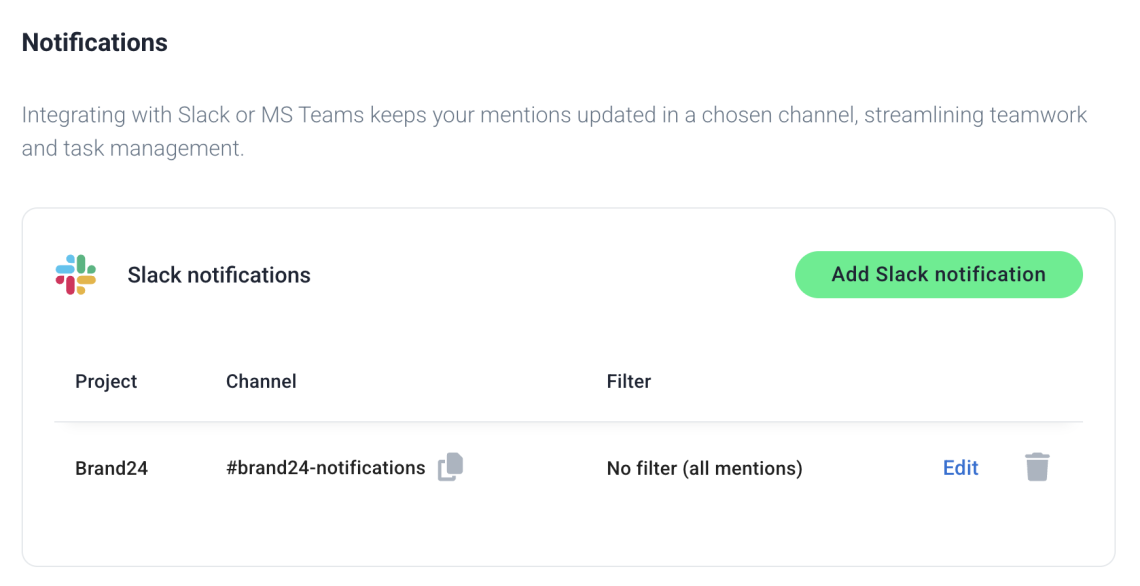
Tip: Route alerts to a dedicated Slack channel for your sales team to triage together
5. Use the AI Brand Assistant to identify patterns and opportunities
Brand24’s AI Brand Assistant is pre-trained on your project’s own data. Ask it which platforms drive the most engaged conversations, which topics are trending around buyer intent, or where your competitors are losing customers. These insights help you prioritize outreach and craft messages that actually resonate.
Tip: Ask the assistant: “Which sources have the most mentions asking for alternatives to [competitor]?”
6. Track sentiment to personalize your approach
Sentiment analysis tells you not just who is talking, but how they feel. A frustrated user venting about a competitor is a very different opportunity than someone casually exploring options. Tailor your outreach tone accordingly — lead with empathy for pain points, with value for explorers.
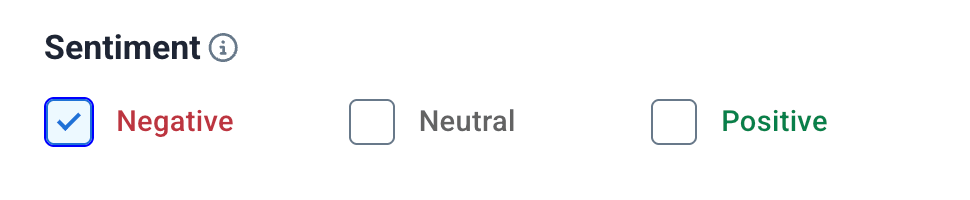
Tip: Negative sentiment around competitors is your highest-intent lead signal
Real-life example:
Traffit, a recruitment software company, used Brand24 to track competitor subdomains — whenever a company posted a job listing through a rival ATS, Brand24 flagged it as a warm lead already in the market for that type of tool.
This strategy alone generates around 500 qualified leads per month, pushing their sales engagement rate from 2% (cold calling) up to 30%.
Brand24 insights also revealed a growing trend of recruiters publishing books, which inspired Traffit to launch a free lending library — a campaign that brought in over 700 additional qualified leads.
Summary
Social selling rewards those who show up consistently, listen carefully, and respond with genuine value. The infrastructure to do that at scale already exists — it’s just a matter of using it deliberately.
Here’s how to use Brand24 to make social selling systematic and effective:
| Step | Action | Why it works |
|---|---|---|
|
1
Hunt for buyer-intent signals |
Set up keyword projects around language prospects use in buying mode — “struggling with [problem],” “switching from [competitor],” “need a tool for [use case]” |
Surfaces people already looking for a solution like yours, rather than cold audiences |
|
2
Filter for highest-priority opportunities |
Use sentiment and reach filters to prioritize high-reach posts with negative sentiment about competitors |
These are your highest-intent leads — someone publicly frustrated with a rival is already halfway to switching |
|
3
Respond before your competitors do |
Set up Slack or email alerts so buyer signals land in your team’s feed the moment they’re posted |
The first credible, helpful response in a thread almost always wins the relationship |
|
4
Let the AI Brand Assistant guide your strategy |
Ask it: “Which platforms have the most mentions asking for alternatives to [competitor]?” or “What problems are people in [industry] discussing most this month?” |
Turns raw mention data into prioritized outreach targets and content direction |
|
5
Lead with the right tone |
Check sentiment before reaching out — lead frustrated users with empathy, curious explorers with insight |
The same pitch in the wrong tone loses the deal before it starts |
FAQ
What are the benefits of social selling?
How can I start social selling?
First, make your profile work for you — nail your headline, About section, and experience descriptions so they speak to your ideal customer, not just your resume. Then use a social listening tool like Brand24 to track relevant mentions and conversations. When you spot an opportunity, open with a genuine question about their business challenges rather than a pitch.
What is the Social Selling Index (SSI)?
You can check your score for free directly on LinkedIn.
What is a good Social Selling Index score on LinkedIn?
The average SSI score across LinkedIn sits around 40. Most sales professionals who actively work on their presence land in the 60s, while top performers typically score 75 and above.
That said, your score is most meaningful in context — LinkedIn compares you to people in your industry and network, so a “good” score varies by field. A 60 in a highly competitive sector may outperform an 80 in a niche with little social selling activity.
The bottom line: aim for 70+, but treat your SSI as a directional tool, not a vanity metric. The goal is pipeline, not a perfect score.
How to improve the Social Selling Index on LinkedIn?
Social Selling Index shows in percentage the completeness of your LinkedIn profile needed for successful social selling. It compares it to similar people in your industry, so you can learn if you are above average or should improve.
How to improve the SSI? Well, if you click the link and calculate your score, you know exactly what to do.
1. Establish your professional brand – think like your potential customer. What do they want to see when visiting your LinkedIn profile? Tell the visitors who you are, your specialty, and why they should trust you.
2. Find the right people – LinkedIn provides suggestions for new connections. Expand your professional network by connecting with industry and sales leaders, former clients, business partners, existing customers, and LinkedIn groups. Your network will grow, and your social presence will, too!
3. Engage with insights – believe it or not, but you are thoroughly profiled on each social media. That means LinkedIn will find relevant groups and great conversations for you to join if you let it. Follow relevant hashtags, brands, and people, and start engaging daily. It’s a great way to find new professional relationships.
4. Built relationships – use LinkedIn to talk with your existing customers, but also engage in new conversations with your network. Learn new relationship-building techniques, and you will become a master in social selling. Don’t forget to join LinkedIn groups valid in your niche.
Does social selling affect sales?
LinkedIn stats show, social media sales leaders are 51% more likely to reach quota.
By building genuine relationships with potential customers, they are more likely to bond with the brand and become recurring buyers. They are also likely to switch from a competitor to your solution.
Of course, a social selling strategy requires a lot of commitment and social skills, but the reward waiting for you is definitely worth the effort.
Decision-makers in companies like to feel cared for. When choosing between two solutions with a similar offer, they are likelier to switch to the one where they were introduced or connected to a key account manager or other sales team members. That’s because they hope that they will receive help if they encounter any difficulties.



Top Reads
X (Twitter) Analytics Tools: The 15 Best for 2026
Brand Awareness Strategy [Ultimate Guide for 2026]
Sentiment Analysis in 2026: Definition, AI Methods & Original Research
Brand Monitoring: Tools & Guide for 2026
Brand Reputation Management: Expert Guide + Original Research [2026]
How to See How Many Times a Hashtag Was Used on X (Twitter)
9 Hashtag Tracking Tools Tested in 2026
Social Media Reach: How to Measure & Improve It in 2026?
Share of Voice: Definition, Formula, Tools [2026 Guide]
Social Media Analysis: Complete Guide for 2026
Start Social Listening!
Get the Brand24 trial and start social listening like a PRO.