Table of contents
2M Marketers

TikTok sentiment analysis shows whether people talk about your brand in a positive, negative, or neutral way, based on video descriptions, transcriptions, and comments.
In this guide, we’ll show you how to analyze TikTok sentiment step by step with a real brand example.
Key takeaways:
-
Best process for analyzing sentiment on TikTok
Start by setting up a monitoring project in a tool like Brand24. Filter the data to show TikTok only. Then review the sentiment breakdown, compare different time periods, and analyze high-reach or negative mentions. Finally, use AI tool like Brand Assistant to quickly interpret shifts and prepare actions.
-
Can you do TikTok sentiment analysis manually?
Only at very small scale. If your brand receives hundreds of mentions per day, manually reviewing every post and comment becomes too time-consuming. You may spot individual complaints, but you won’t reliably detect trends or measure changes over time.
-
Why is TikTok sentiment analysis important for business?
TikTok plays a big role in how people find and buy products. If negative sentiment starts picking up, it can be an early sign of product problems, campaign backlash, or influencer drama. Keeping an eye on sentiment helps businesses spot issues early and respond before they turn into something bigger.
-
How can AI help in analyzing TikTok sentiment?
AI-powered tools like AI Brand Assistant can automatically sort through huge numbers of TikTok mentions. Instead of reading them yourself, you can watch sentiment percentages over time, filter the feedback, or ask AI tools what might be causing spikes. They cut down on manual work, help you report faster, and make decisions sooner.
-
Limitations of AI-powered tools in TikTok sentiment analysis
AI tools can sometimes miss sarcasm, slang, cultural nuances, or what emojis really mean. Most still focus on written text, like captions and comments, though some tools are starting to bring video transcriptions into the mix. So while a few individual mentions might get labeled incorrectly, the bigger-picture trends and percentage changes are still reliable for tracking brand perception.
How to do TikTok sentiment analysis manually?
It may be tempting to do it yourself, but manual TikTok sentiment analysis isn’t recommended.
It’s not only inefficient but also often simply unrealistic to do accurately at scale:
Reason 1. It’s really hard to find every mention by yourself
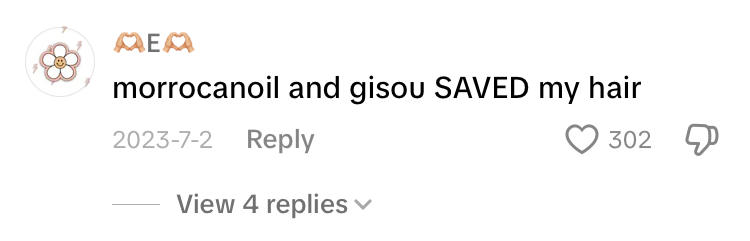
TikTok notifies you when someone tags your brand, but many discussions happen without hashtags or @mentions – in the comments, captions, or even spoken directly in the video. That makes finding every relevant mention manually pretty unrealistic.
Reason 2. The volume of data is too high
Imagine reviewing hundreds or even thousands of TikTok mentions, determining whether they’re positive, negative, or neutral, and then creating reports – all by hand.
🧠 Something to think about
Brands like Gisou are mentioned approximately 100 times daily on TikTok, while larger brands like Nike receive over 1,000 mentions daily.
Even if you spend just 20 seconds per mention, 1,000 mentions = 5.5 hours/day. That’s before taking screenshots, reporting, or acting on what you learn from those insights.
The only reliable way to determine TikTok sentiment is to use AI-powered tools specifically designed for sentiment analysis.
How to do TikTok sentiment analysis with AI tools?
You already know performing sentiment analysis on TikTok requires the right tool.
Here’s how to check TikTok sentiment in Brand24. We’ll use Gisou (a haircare brand) as an example.
Step 1: Set up the monitoring project and collect data
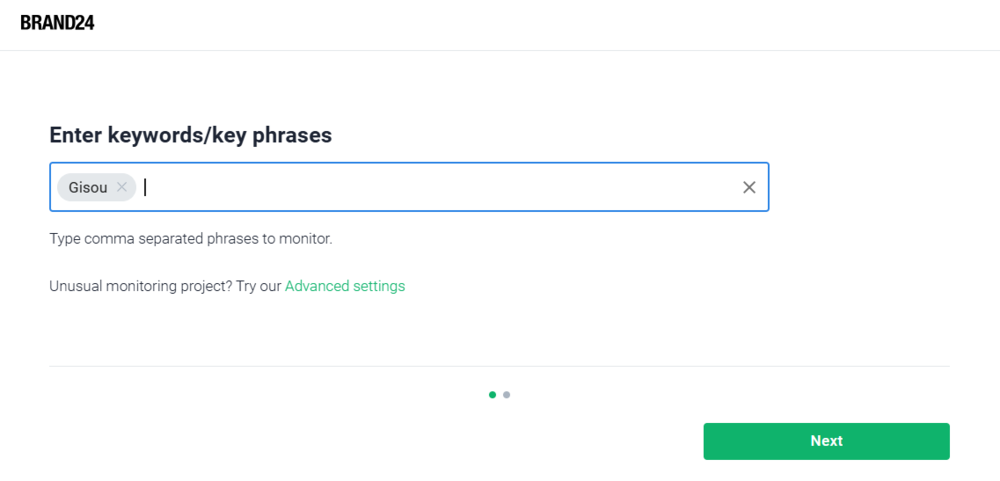
First, create a new monitoring project and add your keyword.
In this case: “Gisou”.
You can also add:
- Product names (like “lip mask” or “hair oil”)
- Campaign hashtags (like #honeypup)
- Competitor names (like “Morrocanoil” or “Rituals”)
- Industry keywords (like “hair care” or “skincare”)
If your brand operates globally, track all languages.
Once you create the project, Brand24 automatically starts collecting mentions.
It can also give you access to transcriptions from TikTok videos collected from monitored profiles, helping you catch relevant spoken mentions that match your project keywords.
To focus only on TikTok:
- 1 Go to the filter panel on the right.
- 2 Select Source ➡️ TikTok.
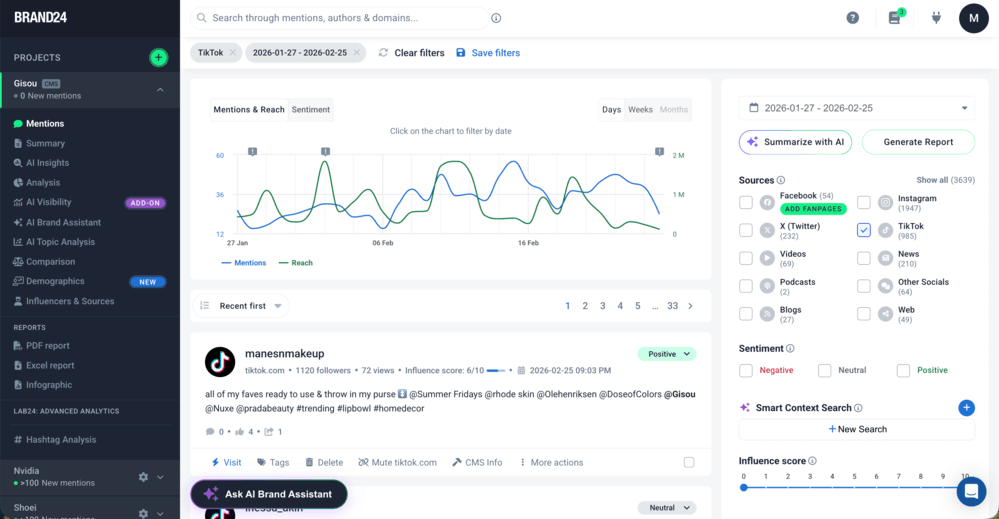
That’s it! From now on, you’re looking at TikTok-only data.
You can narrow it further using:
- Sentiment filter
- Location
- Importance score
This already saves hours. Instead of scrolling TikTok manually, you see everything in one place.
Step 2: Check the sentiment breakdown
Next, check your brand sentiment on TikTok. There are two ways to do this:
- Use the sentiment chart and manually compare the number of negative mentions vs. positive ones:
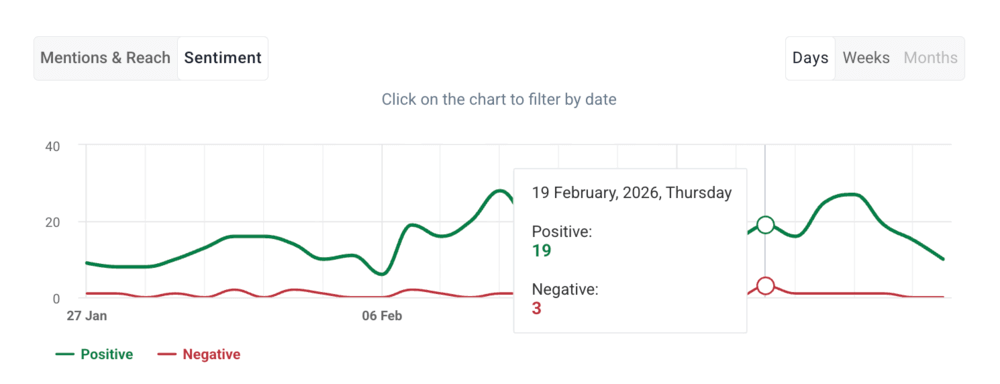
- Check the sentiment breakdown. It calculates percentage values for positive, negative, and neutral mentions. For a clearer view, you can exclude neutral mentions:
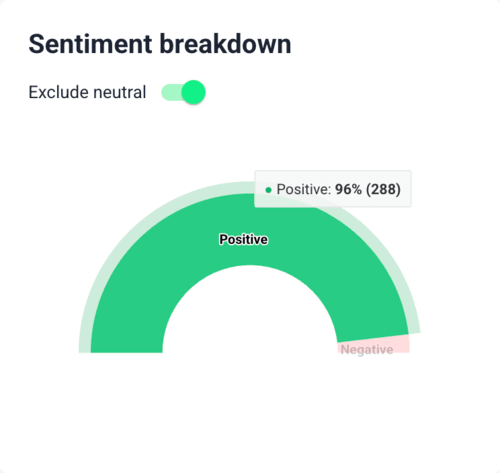
As you can see in the sentiment breakdown, 96% of Gisou’s mentions are positive, and only 4% are negative.
Step 3: Ask the AI Brand Assistant what’s happening
After checking the sentiment charts, you might still wonder:
- Why did negative mentions increase?
- What caused this spike?
- What changed this week?
Instead of manually going through dozens of mentions, open Brand Assistant.
You can ask or say things like:
- “Why did negative sentiment increase on TikTok this week?”
- “What caused the spike on January 12?”
- “What are the most common complaints on TikTok?”
- “Summarize current TikTok sentiment.”
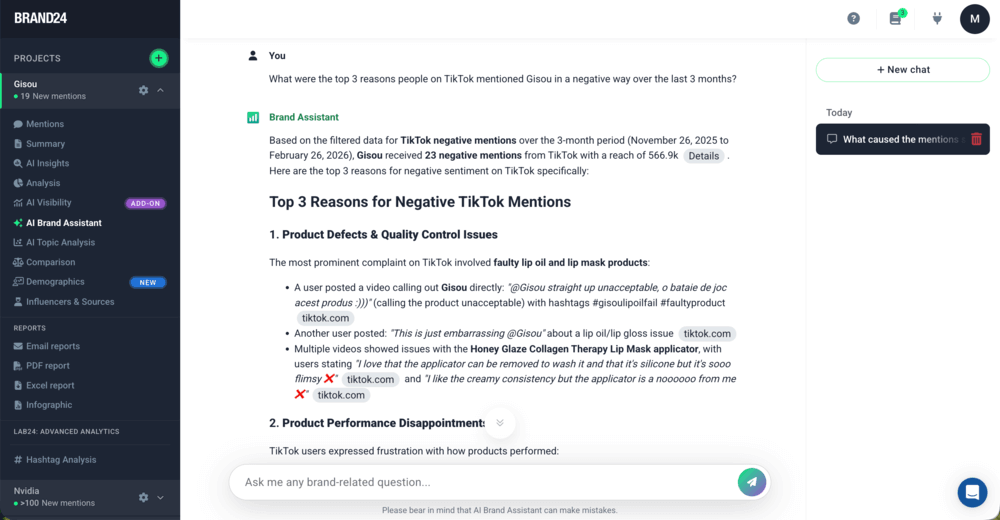
Brand Assistant analyzes your mentions and gives you a structured answer based on real data from your project.
This is especially useful when:
- You need a quick explanation before a meeting.
- You’re preparing a report.
- You notice something changed, but don’t yet know why.
Instead of scanning hundreds of comments manually, you get a summary that points you in the right direction.
Step 4: Check the emojis
TikTok is heavily emoji-driven, so this is surprisingly helpful.
Brand24 extracts emojis from mentions and shows which ones appear most frequently.
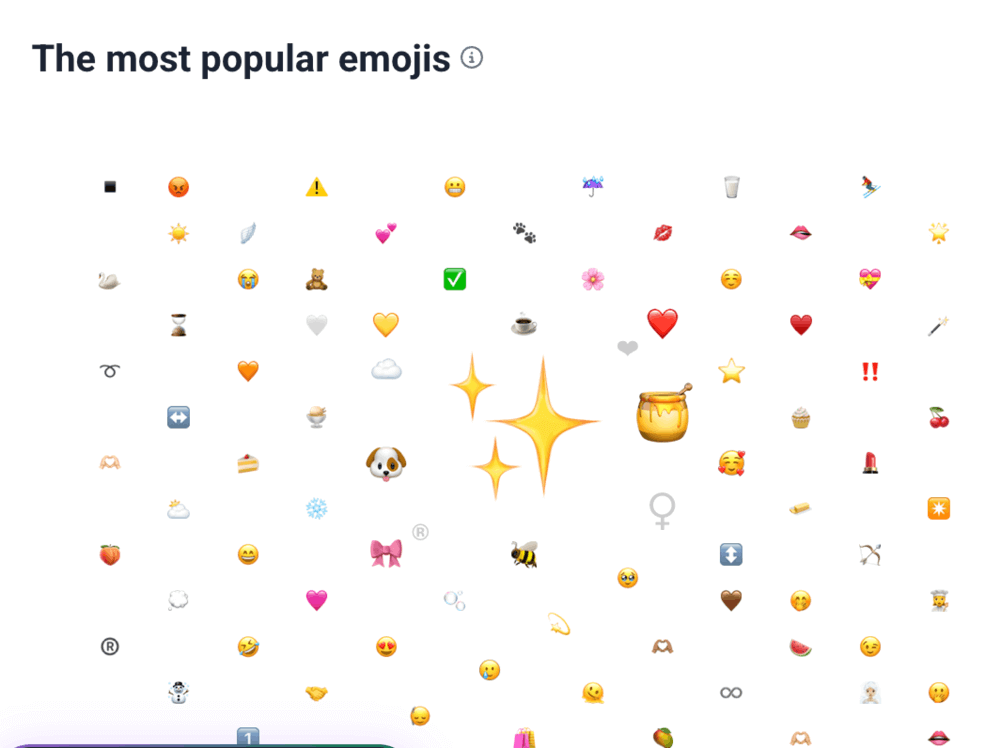
In Gisou’s case, the ✨ emoji appears hundreds of times and is typically a sign of admiration or excitement.
If you suddenly start seeing more 🙄, 🤡, or 💀, that usually signals a tonal shift, often sarcastic or negative.
It’s not a standalone metric, but it adds context quickly, especially on TikTok, where tone can be subtle.
Step 5: Analyze topics around your brand
Now go to the AI Topic Analysis tab.
This section shows what people are actually discussing about your brand.
For Gisou, one of the dominant topics is “beauty morning routines.”
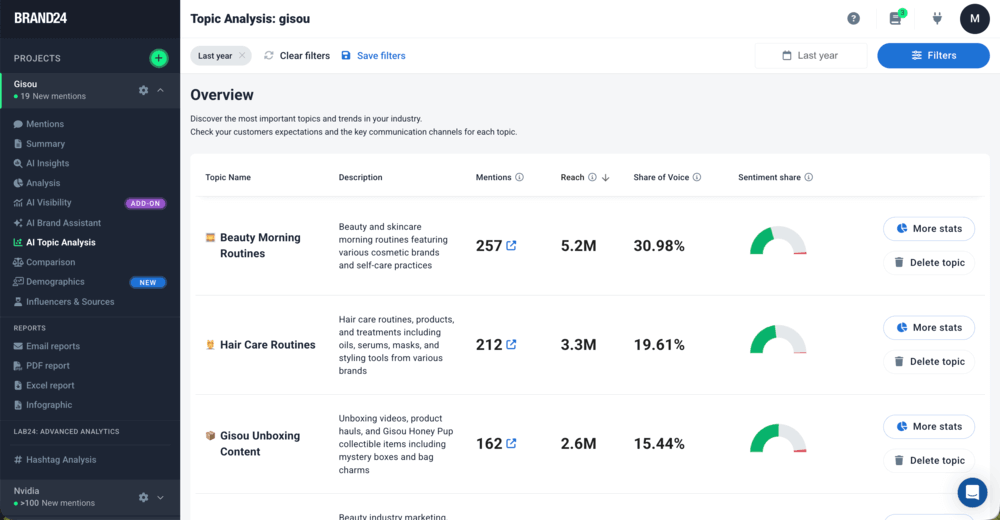
If you wanted to analyze this topic, you’d see that:
- “Beauty morning routines” generated 257 mentions on TikTok and reached 5.2M people.
- Its Share of Voice accounts for 30.98% of all discussions about Gisou on this platform.
- The sentiment breakdown shows that 41% of mentions are positive, 56% are neutral, and only 2% are negative.
That tells you something actionable: organic recommendations are driving positive sentiment.
If another topic shows rising mentions combined with increasing negative sentiment, that’s usually where you should focus first, whether it’s a product issue, shipping delays, or a controversial video.
Step 6: Monitor sentiment over time
Finally, use the Comparison tab to track and analyze how sentiment evolves.
The TikTok sentiment around your brand or product can change in the blink of an eye:
A single influencer video can shift sentiment within hours. Other times, negativity builds slowly across multiple comments and stitches. But both can seriously harm your brand reputation!
By constantly monitoring sentiment changes on TikTok, you can:
- Spot drama before it spirals.
- Respond promptly to positive mentions to build a strong community.
- Turn customer feedback into actionable insights in real-time.
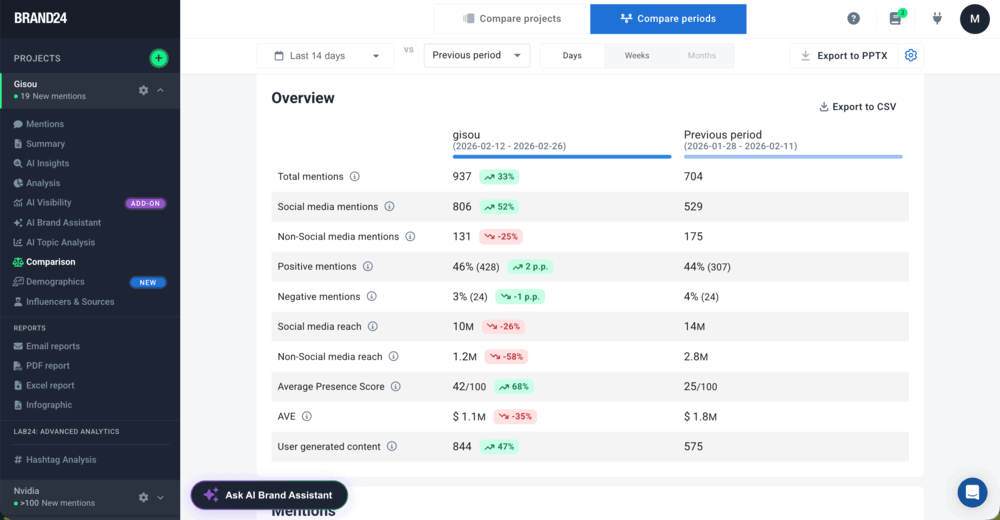
Looking at the period-over-period comparison, you can see that Gisou’s positive mentions keep increasing.
FAQ
What is TikTok sentiment analysis?
TikTok sentiment analysis determines whether TikTok videos (more precisely, video descriptions) and comments mentioning a specific brand, product, hashtag, or topic are positive, negative, or neutral.
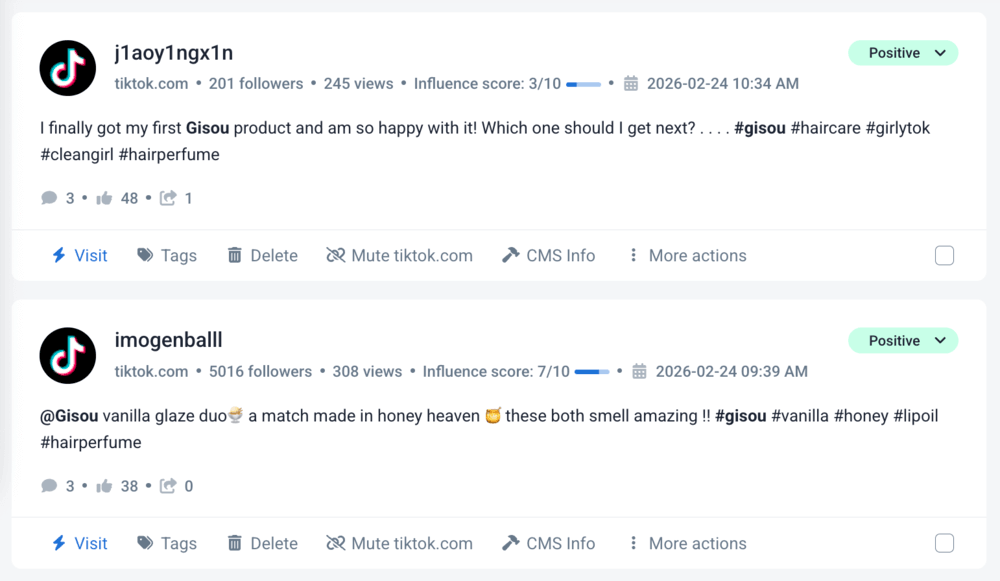
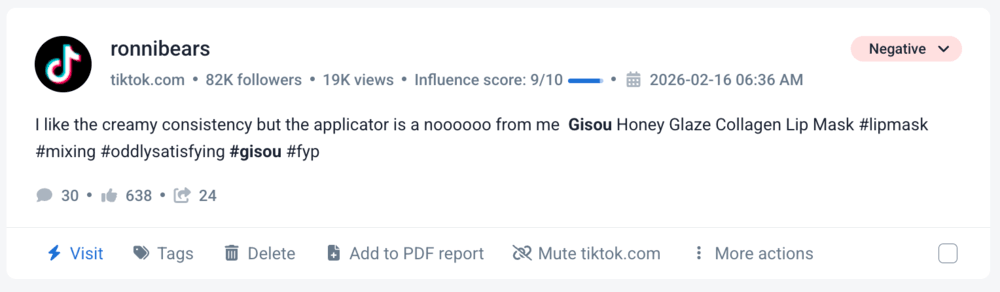
It uses Natural Language Processing (NLP) and machine learning to automatically classify text, helping you understand overall brand perception without manually reviewing hundreds of comments.
Why is TikTok sentiment analysis important?
TikTok users are direct. If something goes wrong, they say it, and often publicly.
Monitoring sentiment helps you:
- Detect negative trends before they escalate
- Identify recurring complaints
- Measure campaign impact
- Respond to positive mentions
- Understand how your brand compares to competitors
Since TikTok influences product discovery and buying decisions, shifts in sentiment can directly affect sales and reputation.
What are the limitations of TikTok sentiment analysis tools?
TikTok sentiment analysis tools are very powerful, but they’re not 100% perfect.
Like all AI-based text analysis systems, they can sometimes struggle with:
- Sarcasm and irony
- Slang and evolving TikTok language
- Cultural nuances
- Emoji context
- Very short or ambiguous comments
For example, a comment like “Well… that’s interesting 💀” sometimes may require human interpretation to fully understand the tone.
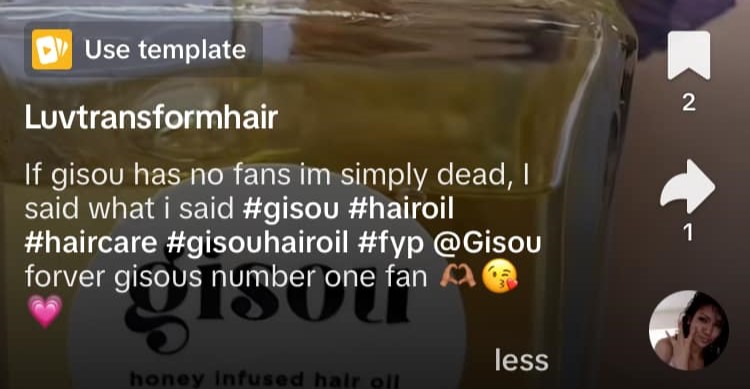
However, while individual mentions can occasionally be misclassified, overall trends and percentage shifts remain reliable at scale. That’s why AI sentiment analysis works best when combined with reviewing high-impact mentions manually.
How can you use TikTok sentiment analysis for business decisions?
TikTok sentiment data supports practical business decisions.
For example:
- A spike in negative sentiment may indicate a product issue or a controversial video.
- A rise in positive mentions after a campaign confirms that messaging is resonating.
- Topic-level sentiment shows which discussions drive praise or criticism.
- Period comparisons help evaluate influencer collaborations.
Instead of relying on assumptions, you can base decisions on real conversation data.
How often should you check TikTok sentiment?
For active brands, reviewing sentiment weekly is a minimum.
During product launches, influencer campaigns, or PR-sensitive situations, daily monitoring is recommended.
Real-time alerts help you react quickly when mention volume or sentiment changes unexpectedly.


