Table of contents
Media Monitoring: Definition, Benefits & Strategy for 2026
-
What is media monitoring? Definition Media monitoring is the continuous process of tracking and analyzing mentions of your brand, competitors, or topics across social, news, blogs, forums, podcasts, video, and review sites. -
The job isn't to find everything. It's to find what matters. AI-powered monitoring filters noise so you respond to the 2% of mentions that move the needle. -
Media monitoring vs. media analysis Monitoring = collecting and tracking in real time. Analysis = interpreting why and deciding what to do. -
Untagged mentions are where the real money is. Most brand conversations happen without anyone tagging you – that's also where most reach lives. -
Core 2026 setup includes: real-time multi-source collection, sentiment + emotion analysis, topic clustering, anomaly detection, advanced filtering, AI summaries, and crisis alerts with reach/sentiment thresholds. -
Response speed is a hard threshold, not an aspiration. 73% of consumers expect a response within 24 hours or sooner, and 73% say they'll buy from a competitor if they don't get one. (Source: Sprout Social Index 2025)
The media monitoring tools market is projected to grow from $6.3B in 2025 to $30B by 2035 , a 16.9% CAGR. (Source: Research Nester / Media Monitoring Tools Market Report )The social media listening market is forecast at $9.61B in 2025, reaching $18.43B by 2030 at 13.9% CAGR. (Source: Mordor Intelligence — Social Media Listening Market )80% of consumers say they trust brands “to do what is right” , higher than government (54%), media (55%), and NGOs (60%). (Source: 2025 Edelman Trust Barometer — Brand Trust )
How I researched this guide?
|
1
|
|
|
|
2
|
|
|
|
3
|
|
|
|
4
|
|
|
|
5
|
|
|
|
6
|
|
|
What is media monitoring? Definition
Tells you who is talking about your brand, where, and how often. Surfaces untagged mentions (the majority of brand conversations. Classifies sentiment (positive, neutral, negative) and emotion (joy, anger, fear, etc.). Catches spikes early , before they become PR fires. Feeds insights back into product, marketing, and customer experience.
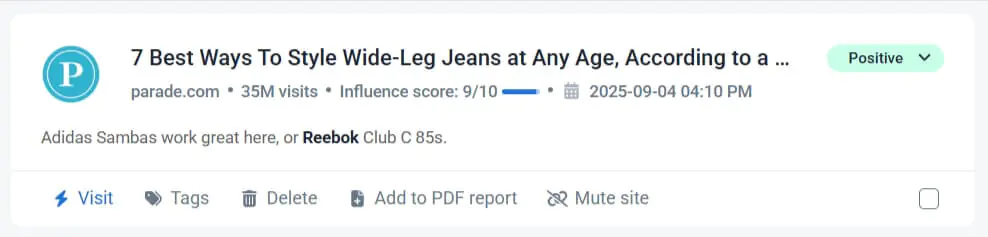
Data collection: Real-time gathering of mentions from traditional and digital media sources Sentiment analysis : Evaluating whether mentions are positive, negative, or neutral Advanced filtering : Sorting mentions by importance, sentiment, reach, source, intent, language, geolocation, and influencer score Analysis & insights : Turning raw data into actionable insights Reporting : Generate advanced reports to share with your team or clients Alerts : Instant notification when something new is published
We monitor our competitors’ activities and what their customers are saying about them. This helps us adjust our business offerings and marketing strategies. Media monitoring gives us the data to ensure our efforts are impactful. 

What is AI-powered media monitoring?
Traditional monitoring = find everything. AI media monitoring = find what matters.
Emotion-grade sentiment analysis (beyond positive/negative/neutral, into admiration, anger, disgust, fear, joy, sadness). Built-in AI chat over your monitoring project (ChatGPT-style), so you can ask “what changed last week?” instead of building Boolean queries. Topic clustering (automatic grouping of mentions into conversation themes). Noise reduction (filtering out spam, bots, and unrelated keyword overlap). Real-time anomaly spotting (automatic detection of unusual volume or sentiment swings, with an explanation). Smart insights (generated summaries of what happened, what’s trending, and what to do next).

Media monitoring and analysis
Media monitoring = collecting and tracking Media analysis = interpreting and explaining
|
|
|
|
|
|
|
|
|
|
|
|
Monitoring told me: “Cracker Barrel pulled 3,403 mentions across 10 channel categories in 30 days. News led on volume – 31%. TikTok led on reach.” Analysis told me what to do: “Negative sentiment nearly doubled from 14% to 23.8%, and the asymmetry between the count and reach columns means I need reach-weighted alerts, not just volume-weighted ones. A single TikTok video on May 11 outreached every other channel combined for the prior week.”
Media monitoring is about collecting information, such as “Brand was mentioned 1,200 times on X and Reddit today” Media analysis is about making sense of that information, such as “80% of mentions are positive, mostly about new campaign “
How to start media monitoring?
Step 1: Pick a goal that survives contact with reality
Reputation management: Protect brand perception, track sentiment, find advocates and detractors. PR & communications: Measure campaign reach, share of voice, and earned media impact. Competitive intelligence: Track competitors’ mentions, campaigns, hashtags, and weak points. Customer & community: Catch complaints, requests, and questions before they hit support. Business impact: Tie media exposure to traffic, leads, and revenue.
Step 2: Select the keywords to monitor
Brand & products: Company and product names, slogans, misspellings, executives. Competitors: Rival brands, products, and related hashtags. Industry terms: Trends, buzzwords, and common problems. Campaigns & events: Campaign names, hashtags, conferences. Issues & risks: Crisis terms, complaints, and negative phrases.
Step 3: Pick a monitoring tool
-
1
the number of monitored sources -
2
features -
3
cost-effectiveness
1. Monitoring sources
Traditional media : newspapers, TV, radio (sometimes via third-party providers) Online media : news websites, blogs, forums, Reddit, Quora, Medium Social media : Facebook, X (Twitter), LinkedIn, Instagram, TikTok, Telegram, Bluesky, etc Review sites : TripAdvisor, Booking, Yelp, App Store, Google Play, Trustpilot, app stores Podcasts and video platforms: YouTube, Twitch, Spotify, Soundcloud Internal sources : customer support tickets, community groups Newsletters Multilingual and regional sources
2. Features
|
|
|
|
|
|
|
|
|
|
|
|
|
|
|
|
|
|
|
|
|
3. Cost-effectiveness
The price varies based on the number of monitored keywords and the features you want to use. Some all-in-one social media management tools offer monitoring as an extra paid add-on. To calculate the total cost, you need to sum the subscription fee (monthly/annual) + add-ons (extra mentions, extra users, advanced AI features, or historical data).
Step 4: Gather and analyze results
|
|
|
|
|
|
|
|
|
|
|
|
|
|
|
|
|
|
|
|
|
Step 5: Turn data into insights
-
1
Start with a clear objective: Define what you are analyzing (brand health, campaign impact, crisis risk, competitors, etc.). -
2
Clean the data: Remove duplicates and irrelevant mentions to ensure accuracy. -
3
Segment the data: Break it down by channel, geography, campaign, product, time period, or competitor to uncover patterns. -
4
Analyze trends: Look at changes over time, spikes, sentiment shifts, and topic frequency. -
5
Connect metrics together: Combine volume, sentiment, reach, and engagement to understand real impact. -
6
Benchmark results: Compare against past performance, campaigns, or competitors. -
7
Identify key themes: Understand how your brand is being described and what topics drive conversation. -
8
Link to business impact: Connect media activity to traffic, leads, sales, or reputation outcomes. -
9
End with recommendations: Every insight should lead to a clear action or strategic decision.
|
|
3,403 |
|
|
|
|
|
|
|
|
|
|
|
|
|
|
|
|
|
|
|
|
|
|
|
|
|
|
|
|
|
|
|
|
|
Importance of media monitoring in 2026
1. Massive volume of information
Detect relevant mentions across social media posts, news, blogs, podcasts, and forums Avoid missing meaningful conversations about your brand or competitors Get real-time alerts that something important is going on
2. Brand reputation management
Respond timely to any negative review that could damage your brand’s reputation Improve products and services based on public feedback from the target audience Prepare for crises by understanding public perceptions and industry trends before situations escalate
3. Real-time crisis management
Quickly detect the spike in negative mentions and find the cause of the problem Listen to consumer complaints during a crisis to plan effective communication and conflict resolution Monitor the sentiment trends to judge whether the addressed resolution works
4. Competitor monitoring & analysis
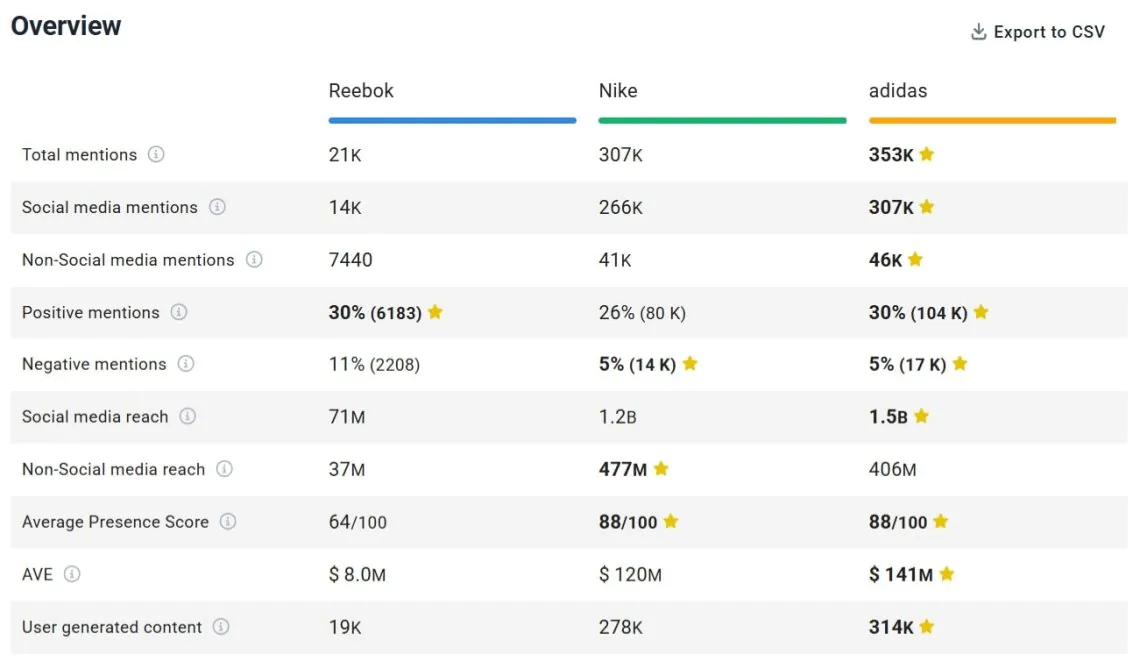
Monitor competitors’ media coverage, share of voice, hashtags, products, campaigns, and audience sentiment Study their successes and failures to avoid their PR or product mistakes, and adopt tactics from high-performing campaigns Fill the gaps by monitoring what their audience is asking for but not getting
5. Industry trend identification
Get early alerts on trending hashtags, keywords, or topics Identify new consumer interests and behaviors Launch timely content or products that ride the trend
FAQ
What’s the difference between media monitoring and social media monitoring?
Media monitoring is the broader category. It tracks mentions everywhere (news, podcasts, TV, blogs, forums, AND social). Social media monitoring is social-platform-only. Social listening adds an interpretation layer on top (“what does this mean , and what should we do?”).
How much does media monitoring cost in 2026?
Which media monitoring software is easiest to use?
How do I ensure monitoring coverage for podcasts, TikTok-native content, and AI search citations?
Podcasts: only specialized tools cover the medium natively – TVEyes, Meltwater, and Brand24 with podcast monitoring enabled. TikTok-native content (audio, video, captions): verify in the sales conversation that the tool ingests the post body and audio, not just the caption, many tools miss the audio layer where cultural conversations actually happen. AI search citations (AI Overviews, ChatGPT, Perplexity, Gemini): this is an emerging category. Brand24 has AI mentions tracking built in.
Does media monitoring help with SEO and AI search visibility?
Listen, learn, act
First of all, you need to set clear goals and select relevant keywords to track. Not every tool monitors traditional and print media such as TV, radio, newspapers, and outdoor. Some social media management tools offer monitoring as an extra paid add-on. Look for solutions that offer AI features that detect trends, filter noise, and generate actionable insights. Mentions monitoring is just the first step. The most important thing is to find valuable insights from data and take action.

Article Reviewed by