Table of contents
2M Marketers

SEO is a direct tool that helps people find your brand. That’s why an SEO strategy is essential for brand recognition.
In this guide, I’ll explain how SEO influences brand visibility, and what actions you can take not only for Google but also in the context of LLMs and new AI-driven systems.
How SEO impact brand awareness?
We define brand awareness as the level of recognition and familiarity your audience has with your brand. And SEO directly influences it by increasing brand visibility in search engine results pages (SERP).
The more often people see your brand in search results, the more they start to remember and trust it.
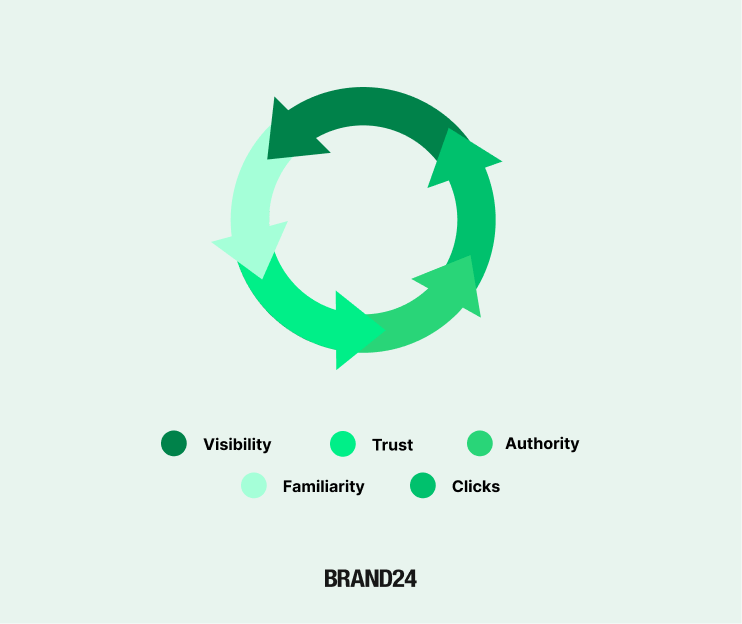
Let’s visualize this process:
Visibility → Familiarity → Trust → Clicks → Authority → Visibility (again)
For example, imagine people searching for “running shoes” or, in today’s LLM or voice search environment, asking, “What are the best running shoes?” If your brand appears in those results, even if it’s their first encounter with you, that’s a win.
Why?
Because they’ve discovered your brand, and that builds familiarity.
Going further, appearing in results also signals trust and credibility (“If it’s in the results, it must be worth checking out”), making users more likely to visit your website.
That visit can lead to organic traffic, which boosts your site’s authority. And the stronger your authority, the higher your visibility.
So I would rather think of it not as a linear process, as I outlined earlier, but as a cycle. Which, if it works well, runs itself. Driving better visibility, reaching new potential customers, and expanding the brand’s reach.
How to build brand awareness through SEO strategy
Wondering how to get your brand noticed in 2025?
Here are 6 strategic tactics to boost brand awareness through SEO in 2025:
- Topic clusters build authority: Organize relevant keywords into topic hubs to lead search engines and AI models to understand your brand’s expertise across connected themes.
- Content optimization: Verify content structure, metadata, and readability to deliver value to both users and search engines.
- Quality content: Share practical insights, data, and authentic perspectives to stand out. Blend branded and non-branded keywords naturally while maintaining consistent tone, visuals, and storytelling.
- Off-site optimization: Take care of mentions, citations, and community discussions (even unlinked ones) to search engines that your brand is relevant and credible — reinforcing both your organic traffic growth and online authority.
- Monitor your brand in real time: Use tools like Brand24 to track sentiment, visibility spikes, and unlinked mentions. Turn these insights into actionable brand awareness tactics.
But let’s dive deeper into what that really means!
01 Create a topic cluster strategy
Before diving into content creation, start by researching keywords closely related to your niche and industry.
The goal is to organize these keywords into topic clusters (a group of interlinked content pieces centered around one broad pillar topic).
This will help you avoid unrelated content on your blog and “specialize” in specific areas that search engines and AI will associate you with.
But there are more benefits. It’ll also help you in link building strategy and make it easier for your audience to find related content – and thus spend more time on your site. 😉
How to do topic clusters?
- A pillar keyword – the core topic that defines the main article in the cluster.
Example: “brand awareness.” - Multiple supporting articles – each focuses on a specific subtopic or long-tail keyword related to the pillar. Example: “SEO and brand awareness,” “how to increase brand awareness online,” “brand awareness metrics.”
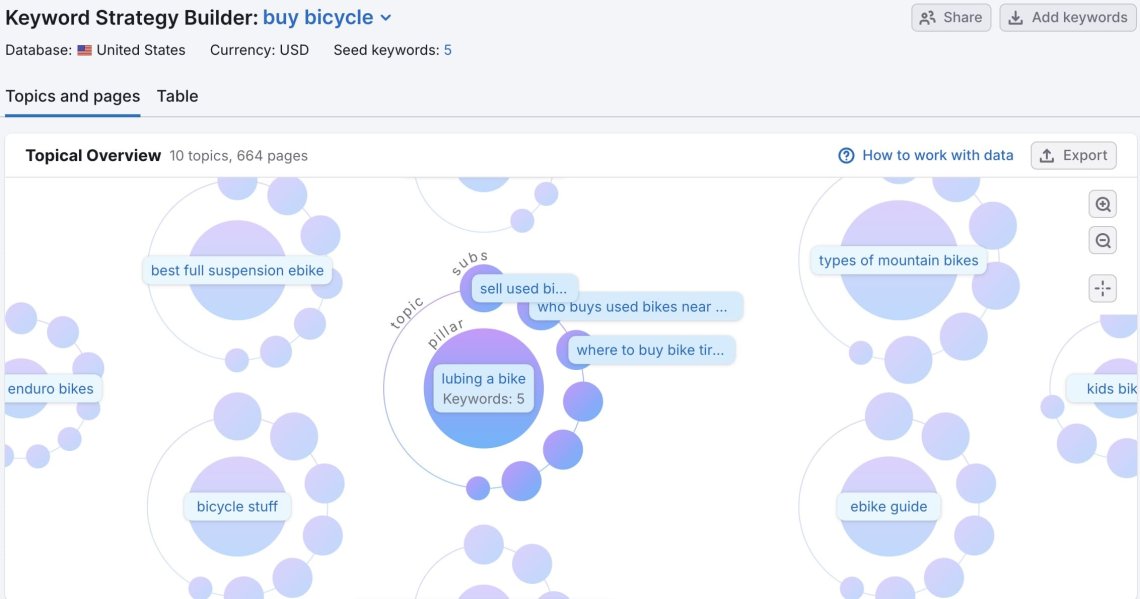
For this, you can use dedicated tools, such as Semrush or Ahrefs, to plan your clusters. Alternatively, you can simply map them out manually in Excel or Google Sheets for complete control and flexibility.
02 Optimalise your content
From an SEO perspective, your content should be optimized for two audiences: people and search engines.
The difference? People see your content, as you can see now, for instance, in this article (the layout, storytelling, and visuals).
In contrast, search engines analyze the code and structure to understand the context, authority, and how it aligns with your brand identity.
But don’t worry, that doesn’t mean you need to become a developer.
You just need to focus on a few key technical areas.
What to check to optimize content for SEO:
- Title tags – Craft keyword-rich titles that balance branded and non-branded SEO terms.
- Meta descriptions – Write clear, action-driven descriptions (150–160 characters) that highlight your unique value and improve click-through rates.
- Header tags (H1–H6) – Structure your content with logical, scannable headings that include both target keywords and natural phrases users might search for.
- Image alt text – Describe your visuals accurately. Optimized alt text supports accessibility and helps search engines surface your images in relevant branded queries.
- Schema markup (Schema.org) – Use structured data (e.g., Organization, FAQ, Product) to improve how your brand appears in search and AI results.
- Open Graph metadata – Ensure your content previews (title, image, and description) are consistent across social platforms; this reinforces your brand presence.
- Core Web Vitals – Optimize loading speed, interactivity, and visual stability. A smooth experience reduces bounce rates, increases engagement, and indirectly strengthens your branded SEO performance.
03 Create high-quality content
Golden rule: it’s not quantity, but quality!
The quality of your content determines how effectively your brand connects with your audience and how visible it becomes in search results.
To deliver quality content, check it out:
- Covers topics that matter to your audience (ideally supported by your own experience or expertise)
- Includes keywords people actually use when searching for your brand or solution
- Brings something new to the table: unique insights, data, or perspectives
- It is well-written, easy to follow, and free from grammar or spelling issues
- Reflects current trends, data, and regulations (outdated content won’t rank)
- Uses visuals like images, charts, or short videos to boost engagement and keep readers on the page
- Outperforms what’s currently ranking in the SERP by being more helpful, detailed, and actionable
The content that wins in Google’s AI Overviews and other LLM-powered results all have one thing in common: They give clear, precise answers and add something unique that makes your brand stick.

When I’m working on content, I like using media monitoring tools to gather real-time ai insights about my topic.
They help me spot ongoing conversations, sentiment shifts, and emerging themes people are actually discussing. It’s a simple way to stay relevant and write based on real signals rather than assumptions.
Learn more about collecting and applying insights here:
04 Strengthen off-page brand signals
Off-page SEO signals are one of the most effective ways to build brand awareness and enhance your online presence across search engines and social platforms.
They help show both users and algorithms that your brand is credible, trusted, and worth paying attention to.
Off-page signals include:
- High-quality backlinks from authoritative websites
- Unlinked mentions (brand references without direct links)
- Media coverage and PR-driven visibility
- Community conversations and influencer mentions
| Signal Type | Definition | SEO Impact | Example |
| Backlinks | Links pointing to your site from authoritative domains | Boost domain authority, referral traffic, and organic rankings | “Brand24 mentioned in Forbes, linking to homepage” |
| Brand Mentions | References to your brand without a hyperlink | Enhance brand awareness, entity authority, and AI visibility | “Brand24 cited in a LinkedIn post without a link” |
Start boosting your brand’s visibility: follow this tutorial on how to find and turn unlinked mentions into real SEO value.
And here it’s the thing! In 2025, brand mentions have become one of the strongest signals for both SEO and overall brand visibility.
Why?
Because AI systems aren’t just looking at your website or backlinks anymore. They evaluate the full picture of your brand across the entire web.
Every time your brand appears (whether it’s in an article, a podcast, a Reddit thread, or a LinkedIn post), it sends a clear signal to search engines about who you are, what you do, and how people perceive you.
Additionally, these mentions help establish semantic relevance, support your E-E-A-T (Experience, Expertise, Authoritativeness, Trustworthiness), and directly enhance your visibility in AI-powered search results.
How to strengthen off-page signals:
- Monitor both linked and unlinked mentions, along with sentiment trends, to understand how your brand is talked about online
- Find and fix broken links to regain lost authority
- Build a network with journalists, creators, and industry experts to earn natural citations
- Turn existing brand mentions into high-quality backlinks through polite, value-focused outreach
- Encourage user-generated content (UGC) and reviews (they act as organic, off-page proof of trust)
- Check your Core Web Vitals to make sure your technical performance supports your overall credibility
If you want a deeper dive into how brand mentions affect AI-driven visibility and fit into a broader link-building strategy, explore the full guide: Brand Mentions for SEO: How to Increase AI Visibility
05. Monitor brand mentions in real-time
As you already know, brand mentions are now one of the key elements of modern SEO. That’s why tracking them with the right tool is essential nowadays.
And I’m sure you might have stumbled upon Google Alerts when searching for a tool. It’s free, but here’s the catch: it only shows a small slice of the picture.
It overlooks entire areas, including social media, podcasts, forums, newsletters, and even AI-generated mentions.
For more detailed results, I prefer to use a media monitoring tool with social listening features.
With Brand24, you can track conversations about your brand across multiple platforms, helping you react quickly, uncover link-building opportunities, and monitor sentiment before it starts affecting your brand reputation.
How to use media monitoring to boost brand awareness:
- Boost local SEO with reviews: By monitoring customer reviews on Google Maps or niche directories, you can respond more quickly and enhance your local search presence.
- Manage your reputation proactively: Real-time alerts allow you to address negative feedback or trending topics before they escalate, helping you protect trust and brand perception.
- Turn mentions into backlinks: Unlinked mentions often hide valuable SEO potential. Real-time monitoring helps you find them and turn them into backlinks through simple, polite outreach.

Chilli Fruit uncovered 1,500 unlinked mentions and converted around 10% into backlinks — significantly improving their authority and visibility.
Read all the case studies on how to uncover hidden mentions through media monitoring.
06. Track AI visibility
Think of AI systems like ChatGPT, Claude, Gemini, and Perplexity as a new digital environment, like how search engines or social media once felt when they first emerged.
These platforms have quickly become powerful discovery engines. They recommend brands, quote experts, and summarize opinions, shaping how people learn about you long before they land on your website.
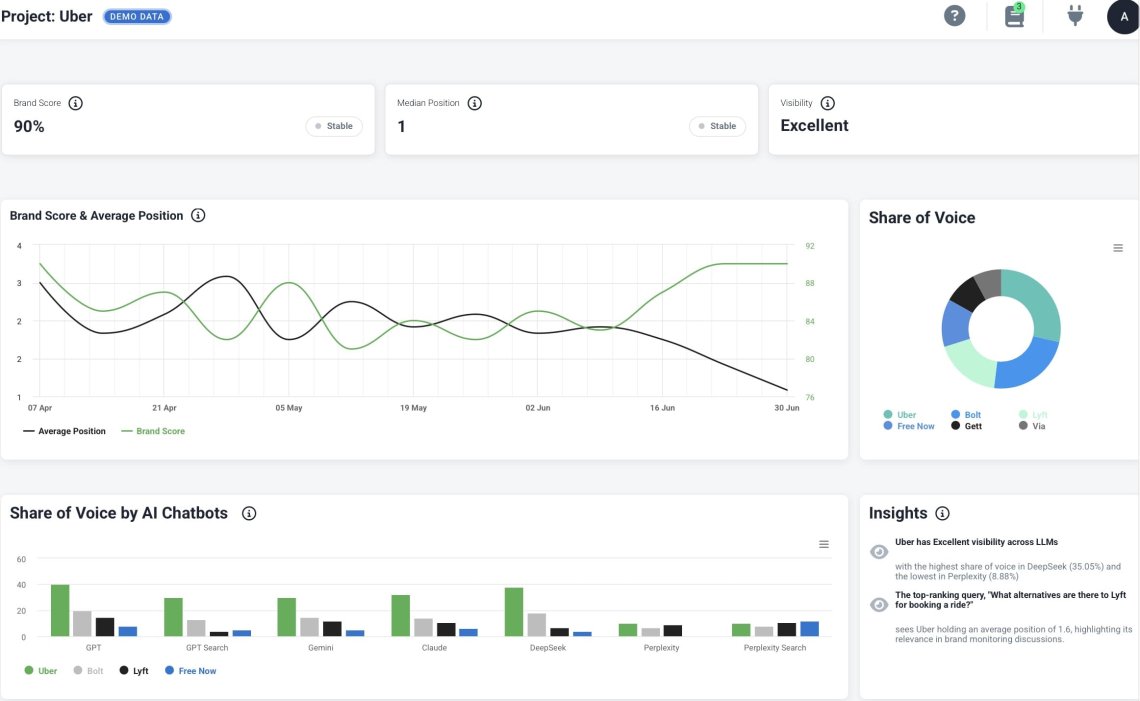
Modern media monitoring tools enable tracking of how your brand (and your competitors) appear within these AI-generated spaces.
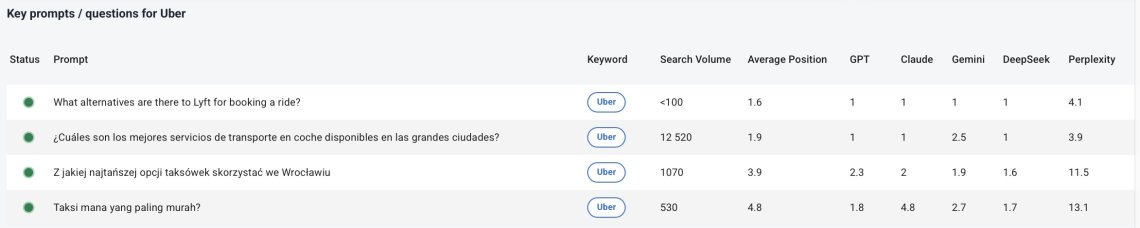
With Brand24 LLMs listening tab, you can track:
- Where your brand appears in AI-generated results (Google’s AI Overviews, ChatGPT, Perplexity, and others)
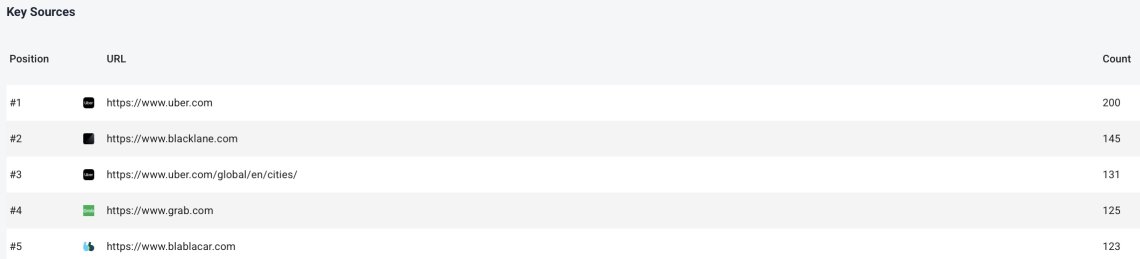
Discover how to monitor and improve brand mentions in ChatGPT with our full guide.
- Prompt trends: what people ask that triggers your brand to show up (e.g., “best analytics tools,” “top fintech startups”)
- Sentiment and keyword associations: the language AI uses to describe your brand
- Blind spots: places where your competitors are mentioned in AI answers, but you’re not
FAQ
1. How do you increase brand awareness with SEO?
Every ranking page, link, and mention exposes more people to your brand and compounds over time.
2. How does SEO impact brand awareness?
3. What are the 4 levels of brand awareness?
I use this ladder to set realistic SEO goals: ranking for category and informational queries moves a brand from unawareness to recognition, while consistent visibility and growing branded search push it toward recall and top-of-mind.
4. How do you measure brand awareness for SEO?
5. What metrics should you track for brand awareness and SEO?
Unlinked mentions are my favorite quick win — they’re easy to turn into backlinks with a short outreach email.


