Table of contents
2M Marketers

It’s no secret that social media contains much helpful marketing information.
As a marketer, you can use social media intelligence (SMI or SOCMINT) to improve your sales and marketing campaigns.
In this article, I researched and gathered the best tips on how to do this right.
What is social media intelligence? Definition
Social media intelligence is the process of gathering and analyzing data from social media platforms to derive insights and make informed decisions.
This involves collecting data from various social media platforms such as Facebook, Twitter, Instagram, LinkedIn, and others, and using this data to monitor trends, identify patterns, and gain insights into customer behavior, brand reputation, and overall market sentiment.
Social media intelligence is essential for businesses and organizations that want to stay ahead of the curve and remain competitive in today’s fast-paced digital environment.
It helps them:
- understand their customers’ needs and preferences,
- track the effectiveness of their marketing campaigns,
- respond quickly to any negative feedback or criticisms.
Social media intelligence involves using advanced analytical tools and techniques, such as natural language processing and machine learning, to process large volumes of social media data and extract valuable insights. These insights can inform strategic decision-making, improve customer engagement, and drive business growth.
Today, I’ll tell you how to use social media intelligence in marketing strategy and business decisions.
Let’s see what’s ahead of us!
Social media as a source of insights
It comes as no surprise that social media bears tons of valuable information. Some people wouldn’t even believe how much Facebook or other platforms know about them.
Fortunately for user privacy, most personal data is hidden and inaccessible to third parties. But at the same time, social media sites use this data to improve the advertising experience for both users and marketers.
What does it mean?
If you own social media accounts, you can use insight and analysis tools to discover who the people are that follow your brand. You can check the basic metrics, such as demographics, interests, and what OS they use.
Social media intelligence vs. social media monitoring vs. social listening
Social media intelligence, social media monitoring, social listening – all those terms sound similar, but there are some differences.
Social media monitoring
Social monitoring is the first step to social media intelligence. Monitoring social media websites involves using various tools to gather data from posts and conversations on social networks.
Monitoring social media means tracking, analyzing, and responding to conversations in real time.
Social media monitoring tools scan websites for brand-related discussions or other relevant keywords.
The simplest tools collect media mentions from different sources in a single dashboard, while the more advanced ones offer additional analytical features.
📚 Read more: Social Media Monitoring: A Complete Guide for 2026
Social listening
While social listening and media monitoring are similar concepts, there are some differences you need to be aware of.
Social listening involves a broader scope of monitoring and analysis. It includes tracking not only brand-related conversations but also industry trends, competitor activity, and more general topics of interest to the target audience. The primary goal of social listening is to gain insights into customer sentiment analysis, preferences, and behaviors to inform overall marketing and business strategies.
In other words:
- social media monitoring focuses more on immediate customer feedback and response.
- In contrast, social listening focuses more on understanding the broader context and trends of social media conversations.
- The two processes overlap but also have distinguishing features.
Social media intelligence
Now, let’s talk about the main topic – social media intelligence.
Social intelligence can (and should) be based on social listening and monitoring, but it involves much more data points and analysis.
Social media intelligence involves gathering, analyzing, and applying insights from social data to inform decision-making. This includes studying data from various social media platforms to monitor trends, identify patterns, and gain insights into customer behavior, brand reputation, and overall market sentiment.
Social media intelligence relies on advanced analytical tools and techniques, such as natural language processing and machine learning, to process large volumes of social media data and gain knowledge.
But it’s not just the big names like Twitter, LinkedIn, and Facebook where you can gather these insights. SOCMINT is also useful for gathering data from forums like Reddit, visual discovery engines like Pinterest, gaming platforms like Steam or PlayStation Network, as well as niche boards and forums.
What is social media intelligence used for?
You might be wondering, “Okay, I get what social media intelligence is, but how is it actually used in the real world?” Great question!
Social media intelligence is more than just a trendy term. It has practical applications that extend beyond business to include safety and governance.
In this section, we’ll explore the diverse ways this tool is put to use and why it matters.
Business applications
- Market Research: Marketing companies analyze social media trends to understand consumer preferences and emerging markets.
- Customer Service: Brands use social media to quickly address customer complaints, enhancing their reputation.
- Competitive Analysis: Businesses monitor competitors’ social media to gain insights into their strategies.
Security and law enforcement
- Threat Assessment: Agencies and security services scan social media to identify potential security threats or extremist groups.
- Criminal Investigations: Law enforcement uses social media to gather evidence and track criminal behavior.
- Public Safety: Social media helps in real-time monitoring during events, aiding in crowd control and emergency response.
Public policy and governance
- Public Sentiment: Governments analyze social media to gauge public opinion on new policies or political campaigns.
- Disaster Response: Social media data helps in real-time assessment during natural disasters for effective relief operations.
- Health Monitoring: Social media trends can offer early warnings about disease outbreaks or public health crises.
Ethical and legal considerations
- Privacy Concerns: The ethical dilemma of balancing data collection with respect for individual privacy.
- Data Accuracy: The challenge of ensuring that the social media data collected is both reliable and accurate.
- Legal Constraints: The laws and regulations that govern the collection and use of social media data.
Challenges and limitations
- Data Overload: The sheer volume of social media data can be overwhelming, requiring advanced tools for analysis.
- Ethical Dilemmas: The responsibility of using social media data in an ethical and unbiased manner.
- Platform Limitations: Each social media platform has its own set of limitations on what data can be accessed and how it can be used.
Why does social media intelligence make such a difference?
Let’s see why all of this matters.
The answer is simple:
The social networking sites are rich with information that can transform your marketing strategies.
Before social media became popular, gathering consumer insights was a laborious process.
Now, advanced analytic tools make it easier to understand your target audience’s behavior, giving you a competitive edge in data-driven marketing.
Below I listed top benefits leading brands claim from social media intelligence activities:
Real-time insights
Social media intelligence will allow you to gain real-time insights into customer behavior, preferences, and opinions. This means you can quickly respond to customer needs and adapt to changing market trends, giving you a competitive advantage in your future campaigns.
Improved customer engagement
By performing social media analysis, your company can understand the customers’ needs and preferences and tailor your products and services to meet those needs. These actions will significantly improve customer engagement and loyalty.
Better decision-making processes
Valuable insights provided by social media intelligence can inform strategic decision-making.
By understanding market trends, customer sentiment, and competitor activity, your brand can make more informed decisions about product development, marketing strategies, and overall business operations.
Crisis management
With social media intelligence tools, you can monitor and respond to any negative feedback or criticisms in real time. This way, you can mitigate potential crises and protect the brand’s reputation.
Competitive advantage
Needless to say, social media intelligence will give you a competitive advantage. The collected data used in the right way will help you to stay on top of market trends, identify growth opportunities, and adapt quickly to changing customer needs and preferences.
Best social media intelligence tools
The benefit of modern digital marketing is that there are dozens of free and paid tools that will help you do your work better, easier, and quicker. Here are some of the best social media intelligence apps you should try.
Brand24
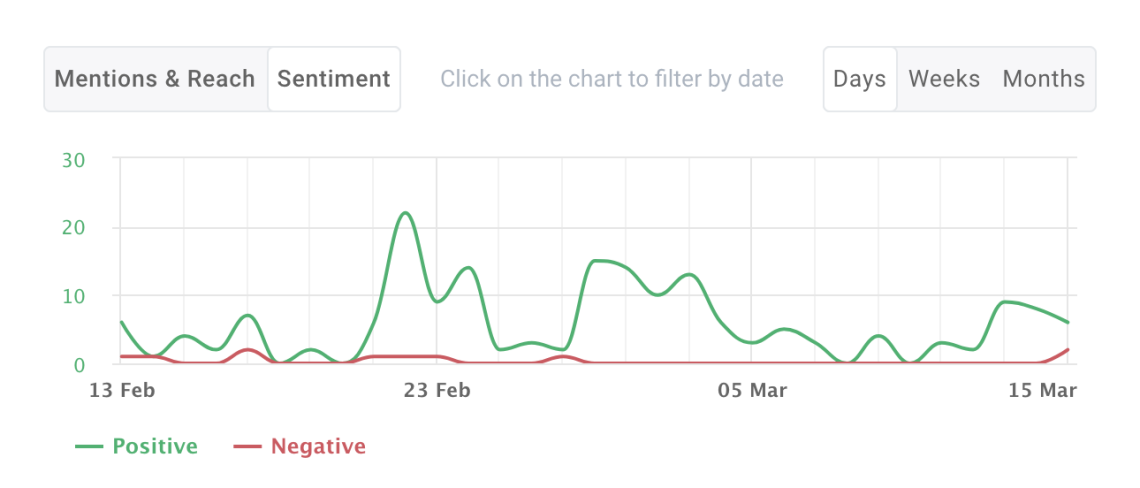
Brand24 is a social listening and media monitoring tool that can easily work as a social media intelligence-gathering app. It collects all publicly available brand mentions (or mentions of a selected keyword, it doesn’t have to be brand-related) and prepares a basic analysis with the obtained data points.
The success of Brand24 lies behind its advanced analytic features. You can use it for sentiment analysis and monitoring the context of the discussion. What’s more, Brand24 provides the social and overall media reach and calculates the AVE (Advertising Value Equivalency).
We offer a 14-day free trial (no card required). Why don’t you try the social listening tool and tell us your thoughts? Use the button below to register.
Hootsuite Insights
Hootsuite Insights is a social media listening and monitoring tool that helps businesses track brand mentions, analyze sentiment, and identify industry trends. It allows users to monitor multiple social media channels in real-time and gather insights from customer conversations.
Hootsuite is also a social media management tool, so you might want to try it if you are seriously into social media marketing. One of the great benefits of using Hootsuite is that it seamlessly integrates with other popular social media solutions, such as HubSpot, Mailchimp, and Canva.
You can try a 30-day free trial or buy a paid plan starting at $99 per month.
Brandwatch
Brandwatch is another popular social media intelligence tool that relies on social listening data collection.
You can use it to track reputation, analyze customer sentiment, and monitor competitor activity. It provides users with real-time insights from social media data, enabling them to make informed decisions about marketing and business strategies.
While Brandwatch is certainly a good tool that provides valuable customer insights, it is pricey and recommended mostly for enterprises with large budgets.
The price is discussed individually based on your preferences and needs.
NetBase Quid
NetBase Quid is a social media analytics tool that gives businesses insights into customer behavior, market trends, and competitor activity. It uses advanced natural language processing and machine learning techniques to analyze social media data and provide users with actionable insights.
The consumer and market intelligence tool is definitely useful in your marketing stack, but once again, the price is quoted individually, which means it’s aimed at enterprises rather than small private companies.
Swydo
Last but not least, you can also try Swydo – a digital marketing reporting and analysis platform. With Swydo, businesses and marketing agencies can measure and report on the effectiveness of their digital marketing campaigns. Swydo integrates with multiple marketing platforms, including Google Analytics, Google Ads, Facebook Ads, and more, enabling you to gather data and insights from multiple sources and present them in a clear, easy-to-understand format.
Swydo paid plans start at $39/month (10 data sources included).
FAQ
What is an example of social media intelligence?
For example, law enforcement agencies might use social media intelligence to identify potential threats or illegal activities by tracking public posts or discussions among social media users. This data can provide valuable insights, aiding in proactive responses and policy-making.
Is SOCMINT part of OSINT?
Accessing SOCMINT data is not straightforward and involves key considerations, such as which platforms to target.
What is a social media intelligence analyst?
This information is then used to guide strategies, inform decision-making, and predict future trends in social media usage and engagement.
Read also about How to Use Media Intelligence or Business Intelligence.
