Table of contents
5 Inspiring Sentiment Analysis Examples for 2026
Inspire yourself with five real-world examples showing how brands used sentiment analysis insights to make impactful business decisions.
-
Five sentiment analysis examples include:
- McDonald’s using social media monitoring insights to capitalize on a viral trend
- Delta Airlines improving its reputation and service by listening to customers’ negative feedback
- Spotify updating its product based on suggestions from users in the UK and Ireland
- XTB outperforming its market rival by identifying a competitor’s misstep and launching a targeted marketing campaign
- Unilever’s Vaseline turning an organic brand-related trend into a reputation booster
Examples of sentiment analysis
Sentiment analysis is a technique that uses natural language processing (NLP) and machine learning to analyze text and determine whether people express positive, negative, or neutral opinions about a brand, product, person, or topic.
In practice, these insights help brands improve marketing campaigns, communication, products, services, brand awareness, customer experience, and competitive positioning.
I have chosen five real-world sentiment analysis examples showing how well-known brands use sentiment insights across different areas of their business:
- Social media monitoring
- Customer feedback analysis
- Performing competitive analysis
- Product insights
- Brand reputation
Let’s take a closer look!
01 Social media sentiment analysis example: McDonald’s
Social media sentiment analysis involves analyzing posts, comments, reviews, captions, and other social media content to understand the emotions associated with a brand, product, person, or topic.
It shows how a brand is talked about in the moment, while opinions are still forming.
Social media platforms are fueled by emotions that can escalate quickly and spread at scale.
Importantly, these emotions are shaped not only by direct experiences but also by trends, campaigns, and influencer-driven narratives.
As a result, social media sentiment analysis is especially valuable for understanding brand perception, not just customer satisfaction. It helps brands detect emerging crises early, before they spiral out of control.
At the same time, it allows companies to identify viral potential and amplify it strategically – as demonstrated by McDonald’s Grimace shake campaign.
🍟 How did McDonald’s use social media sentiment analysis?
On June 12, 2023, McDonald’s released a limited-time purple milkshake for the 52nd birthday of one of its iconic mascots – Grimace.
What started as a simple product launch quickly turned into a viral. Users on TikTok and X (Twitter) began posting videos featuring the Grimace Shake, generating massive engagement and emotions.
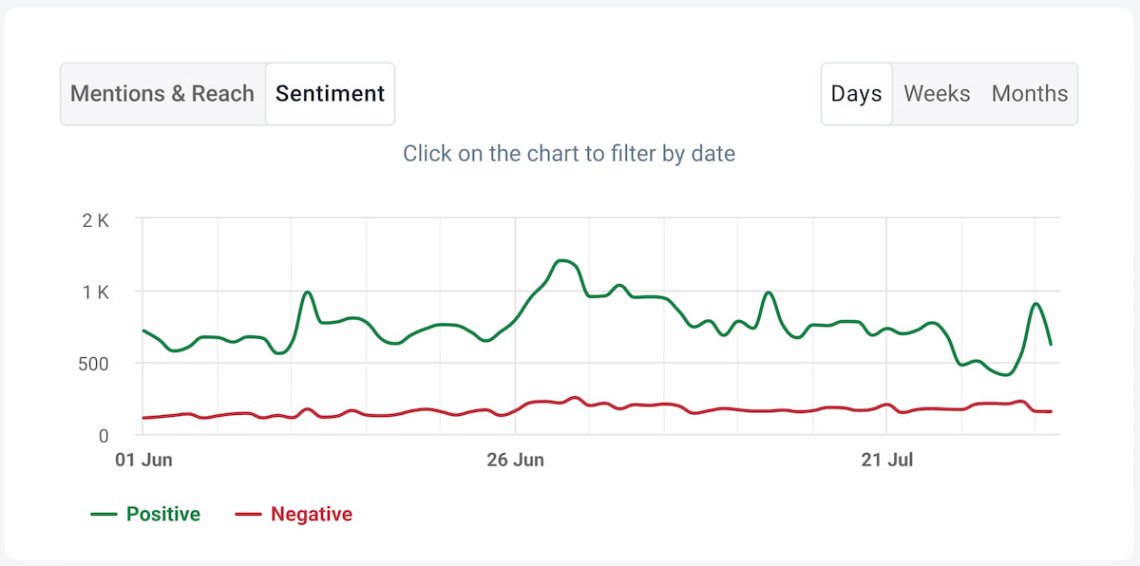
While the content was controversial – the trend was about horror-style “dying” after drinking a shake – the overall sentiment was playful & positive, translating into high excitement for the brand.
Obviously, McDonald’s tracked this unexpected spike in interest and positive sentiment. The brand entered conversations, started to engage with social media users, and amplified the trend further.
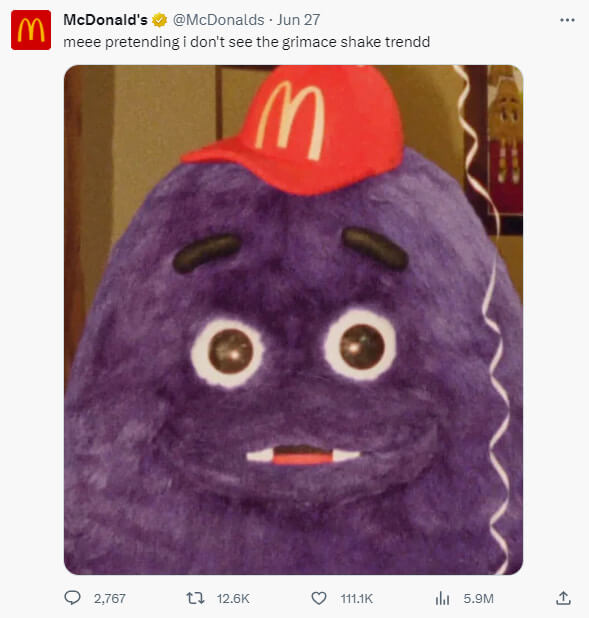
The results were very concrete: the positive online sentiment translated into increased sales results. And the Grimace trend significantly contributed to a 11.7% increase in U.S. McDonald’s sales in Q2 2023.
This example shows how monitoring social media sentiment helped McDonald’s turn a viral moment into increased brand engagement and sales.
Further read: Guide for social media sentiment analysis
02 Customer sentiment analysis example: Delta Airlines
Customer sentiment analysis focuses on analyzing feedback from people who have directly interacted with a brand, product, or service.
Therefore, it reflects opinions based on first-hand experience rather than public narratives or trends. Customer sentiment can be expressed:
- Directly, through ratings, reviews, surveys, support tickets, emails, and support chat conversations
- Indirectly, through online mentions, frequent complaints, repeated questions, sudden drop-offs in the customer journey, etc.
This type of sentiment analysis helps brands understand how customers feel at specific touchpoints. It often reveals recurring pain points, unmet expectations, or moments that drive satisfaction and loyalty.
Because the feedback is tied to real interactions, customer sentiment is especially useful for improving products, services, and customer support.
It also helps identify elements that may lead to churn or declining satisfaction over time.
✈️ How did Delta Airlines use social media sentiment analysis?
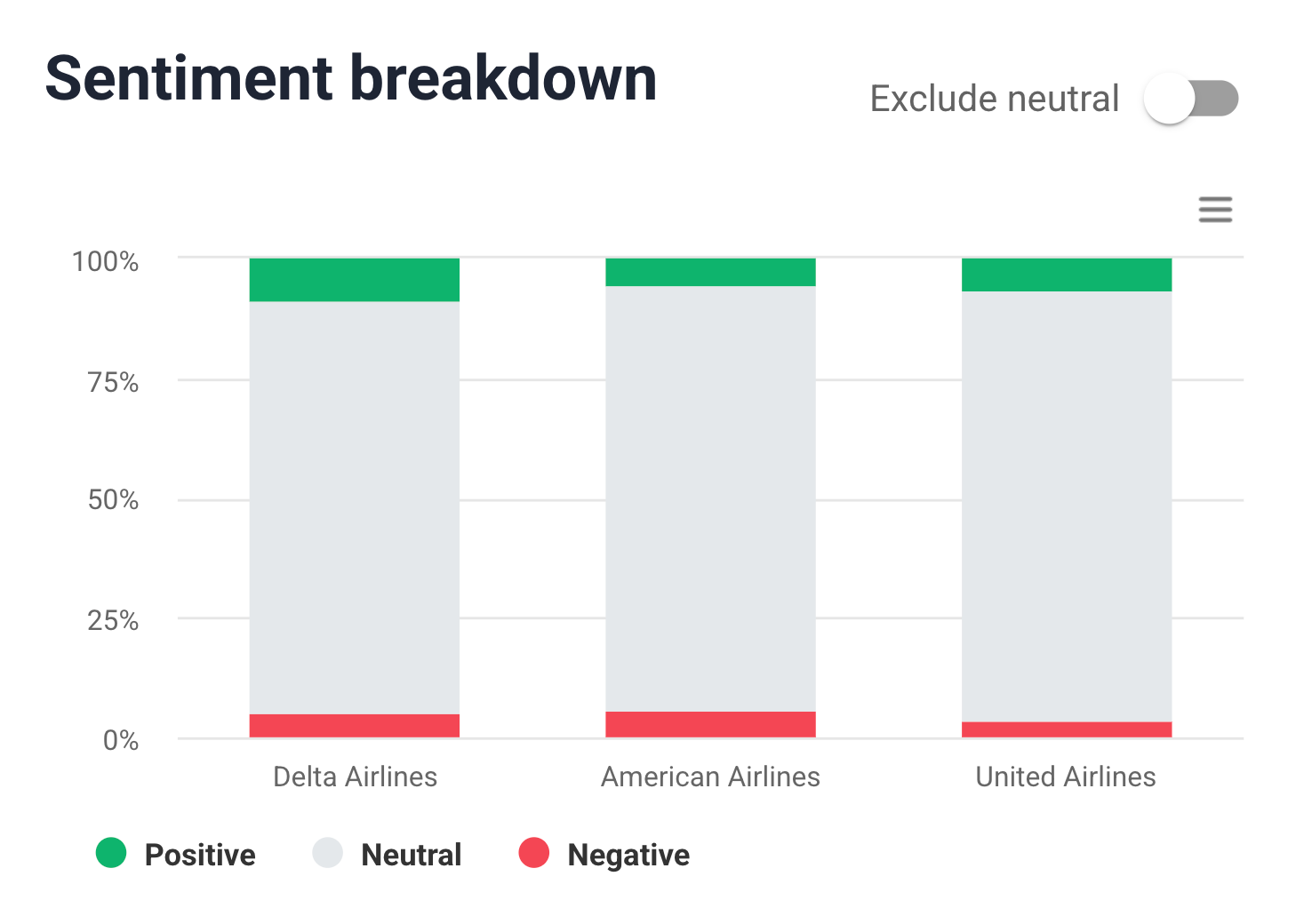
In 2022, Delta Airlines detected a significant spike in negative sentiment driven by a high number of flight delays.
Although the disruption was totally beyond the airline’s control (the delays were caused by difficult weather conditions), Delta decided to react proactively.
The company quickly adjusted its communication strategy and even updated its compensation policies for affected travelers. As a result, the airline reduced negative sentiment by 40% within 24 hours.
This quick turnaround shows how real-time customer sentiment tracking helped prevent a service issue from escalating into a full-blown PR crisis
By relying on feedback data rather than gut feeling, Delta protected its reputation and demonstrated that it was listening to its customers.
Further read: How to do customer sentiment analysis?
03 Product sentiment analysis example: Spotify
Product sentiment analysis focuses on analyzing how people discuss a specific product or its elements.
It examines feelings expressed in reviews, ratings, forums, social media posts, and support conversations related to product performance, usability, pricing, or updates.
Unlike broader customer sentiment, product sentiment is related to concrete products, features, and functionality. It helps brands understand which elements of a product users appreciate and which cause frustration.
Product sentiment analysis often reveals recurring issues, feature gaps, or usability problems that may not be visible in quantitative data alone.
Because the feedback is highly specific, this type of sentiment analysis is especially useful for product development, prioritizing improvements, and evaluating the impact of product changes over time.
🎧 How did Spotify use product sentiment analysis?
In 2023, Spotify released its new AI DJ feature in the US and Canada. The update boosted excitement and positive sentiment – but not everywhere.
Users from the UK and Ireland began expressing frustration online. They were disappointed that the feature was unavailable in their region, and negative mentions started to dominate the discussions
Spotify tracked this growing frustration and recognized it as a clear product sentiment signal. The demand was already there – users simply wanted access.
In response, Spotify rolled out the AI DJ feature to the UK and Ireland. The launch was met with positive reactions, and the brand openly acknowledged user feedback when announcing the update.
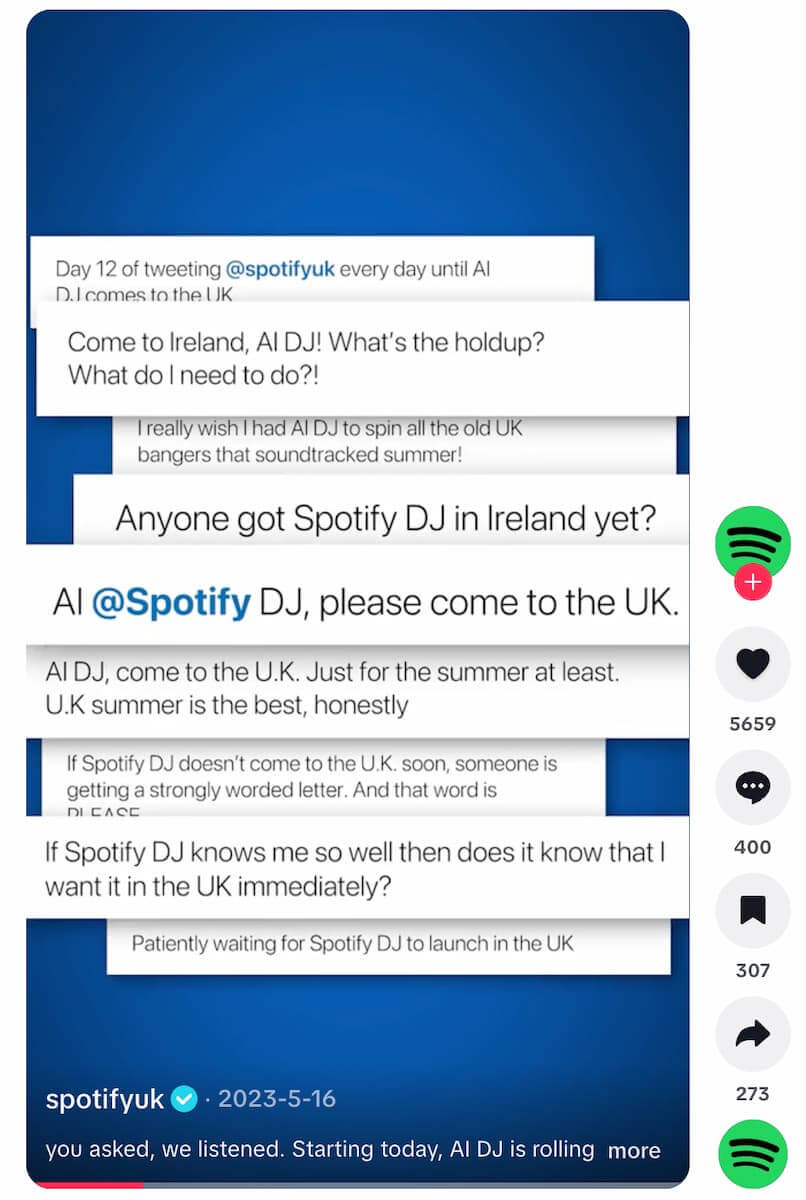
This example shows how product sentiment analysis can help brands detect feature demand and adjust product update decisions accordingly.
Further read: How to do product sentiment analysis?
04 Competitor sentiment analysis example: XTB
Competitor sentiment analysis is about analyzing how people discuss competing brands, products, or services across various online channels.
So, instead of monitoring opinions about your own brand, it tracks emotions related to your competitors to understand how they are perceived in the market.
This type of analysis helps identify strengths and weaknesses in competitors’ offerings, messaging, or customer experience.
In practice, competitor sentiment analysis can reveal recurring complaints & unmet needs, benchmark your own brand performance, and spot gaps or opportunities for differentiation.
Competitor sentiment analysis is especially useful for brand positioning, upgrading your messaging, and identifying moments to win attention when competitors struggle.
💹 How did XTB use competitor sentiment analysis?
XTB is a trading platform for stocks, commodities, cryptocurrencies, and forex. The brand uses competitor sentiment analysis to monitor how customers talk about other trading platforms online.
A few years ago, XTB noticed a spike in negative sentiment around one of its competitors. The competitor had changed its stock investment offering – and customers were unhappy with this decision.
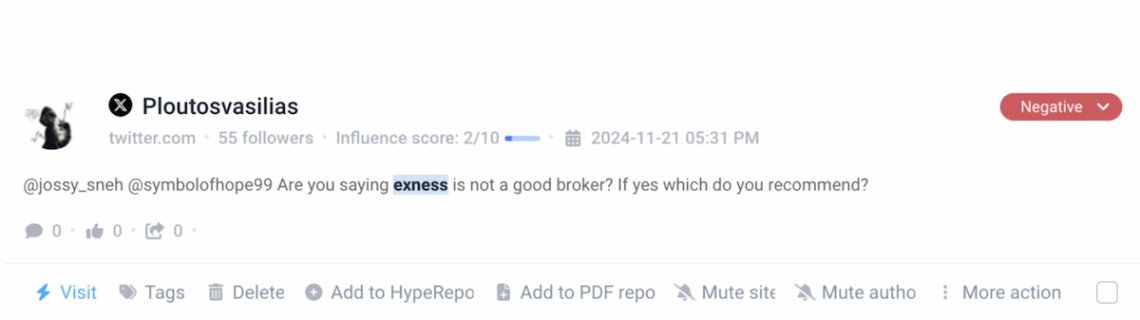
The rising trend of negative mentions was a clear signal of growing frustration among users. For XTB, this was a moment of opportunity. Compared to the competitor, its own stock investment offer suddenly became much more attractive.
As a result, XTB launched a dedicated marketing campaign. The brand highlighted that it still offered one of the best stock investment solutions on the market and won new customers.
This example shows how competitor sentiment analysis can help brands spot weaknesses in rivals’ strategies and quickly turn them into a competitive advantage.
05 Brand sentiment analysis example: Vaseline by Unilever
Brand sentiment analysis focuses on analyzing how people talk about a brand as a whole, rather than specific products, features, or customer interactions.
It monitors emotions and opinions expressed in online discussions to understand overall brand perception over time.
Unlike product or customer sentiment, brand sentiment reflects broader narratives shaped by culture, trends, and public discourse.
In other words, it shows how a brand is perceived beyond individual experiences.
Brand sentiment analysis helps companies to measure their reputation, spot shifts in public opinion, and discover how campaigns, partnerships, or public actions impact perception.
In practice, it allows brands to identify positive momentum or early signs of reputational risk and decide when to respond, adjust messaging, or react to emerging crises.
This type of sentiment analysis is especially useful for managing brand reputation, building long-term brand strategy, and maintaining relevance in real-time conversations.
🧴 How did Unilever’s Vaseline use brand sentiment analysis?
In 2023, Vaseline-related content became a popular trend on TikTok. Users started sharing videos showing creative life hacks with the product, resulting in a huge increase in positive brand sentiment.
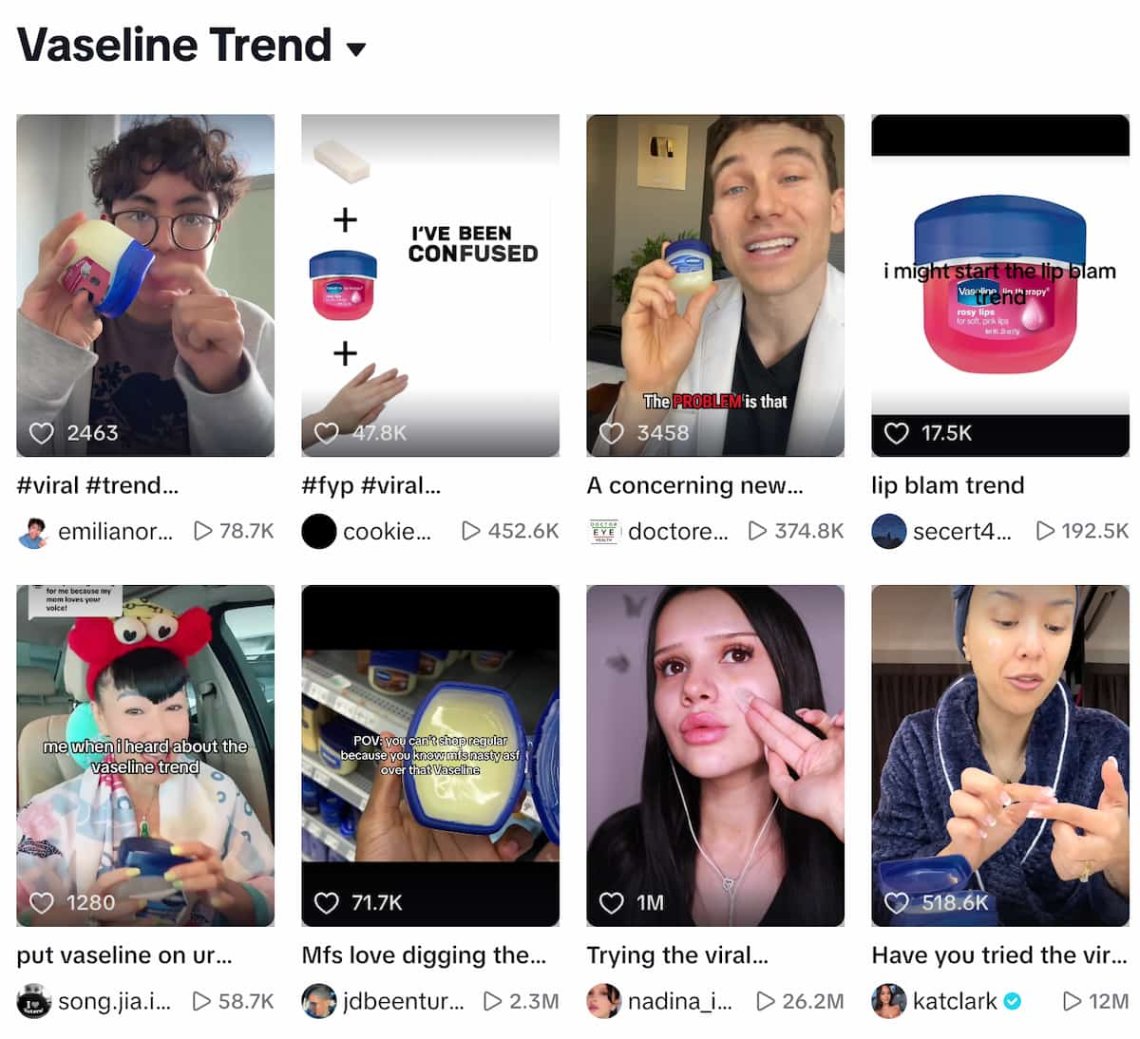
Unilever noticed this momentum and monitored how exactly people talked about Vaseline online.
Sentiment analysis revealed that the trend was driven by genuine excitement and curiosity, rather than irony or criticism.
Instead of ignoring the trend or trying to shut it down, the brand decided to engage.
Vaseline’s team tested the most popular hacks and responded directly to creators, joining the conversation in a creative and transparent way.
As a result, Vaseline strengthened its brand image and directed part of its marketing strategy toward creator-driven content.
This example shows how brand sentiment analysis can help companies recognize positive perception shifts and turn them into long-term brand momentum.
Conclusion
Sentiment analysis goes far beyond measuring positive or negative mentions.
It helps brands understand emotions, spot opportunities early, and make better decisions across marketing, product, customer experience, and brand strategy.
When used consistently, sentiment analysis becomes a practical tool for turning online conversations into real business impact.
If you’re not sure which aspect of sentiment analysis best fits your needs, it helps to think in terms of the questions you want to answer:
- Product sentiment analysis → Should we build / change / release this feature?
- Customer sentiment analysis → How do users feel after interacting with our brand?
- Social media sentiment analysis → What emotions are dominating right now?
- Competitor sentiment analysis → Where are our rivals failing or winning?
- Brand sentiment analysis → How is our brand perceived over time?
I hope these real-life sentiment analysis examples will inspire you and guide you in using sentiment insights more effectively in your own work.

Article Reviewed by