Table of contents
2M Marketers

“Most media monitoring tools track everything. So you see nothing.”
Real quote. Real problem. I’ve spent four years at a media monitoring company watching brands run into exactly this – missing conversations that matter, drowning in ones that don’t, finding out about crises too late.
This guide is how I’d use media monitoring to get the most out of it.
Let’s learn!
Key takeaways
-
What is media monitoring? Definition
Media monitoring is the continuous process of tracking and analyzing mentions of your brand, competitors, or topics across social, news, blogs, forums, podcasts, video, and review sites.
-
The job isn't to find everything.
It's to find what matters. AI-powered monitoring filters noise so you respond to the 2% of mentions that move the needle.
-
Media monitoring vs. media analysis
Monitoring = collecting and tracking in real time. Analysis = interpreting why and deciding what to do.
-
Untagged mentions are where the real money is.
Most brand conversations happen without anyone tagging you – that's also where most reach lives.
-
Core 2026 setup includes:
real-time multi-source collection, sentiment + emotion analysis, topic clustering, anomaly detection, advanced filtering, AI summaries, and crisis alerts with reach/sentiment thresholds.
-
Response speed is a hard threshold, not an aspiration.
73% of consumers expect a response within 24 hours or sooner, and 73% say they'll buy from a competitor if they don't get one. (Source: Sprout Social Index 2025)
Market forecast predictions:
- The media monitoring tools market is projected to grow from $6.3B in 2025 to $30B by 2035, a 16.9% CAGR. (Source: Research Nester / Media Monitoring Tools Market Report)
- The social media listening market is forecast at $9.61B in 2025, reaching $18.43B by 2030 at 13.9% CAGR. (Source: Mordor Intelligence — Social Media Listening Market)
- 80% of consumers say they trust brands “to do what is right”, higher than government (54%), media (55%), and NGOs (60%). (Source: 2025 Edelman Trust Barometer — Brand Trust)
How I researched this guide?
I wrote this guide based on what actual PR pros, marketers, and founders are publicly talking about media monitoring right now.
To figure that out, I ran a Brand24 monitoring project tracking the keyword “media monitoring” over the last 90 days. Using AI, I clustered the conversations. Here’s what turns out to be the dominant frustrations(ranked by mention volume):
| Rank | Frustration | Quote |
|---|---|---|
|
1
|
Coverage gaps (podcasts, AI/LLM responses, dark social, platform-native content)
|
“If you’re not monitoring podcasts, your media monitoring is incomplete. Podcasts drive ~40% of spoken-word listening. You’re missing the story.” (source: TVEyesInc on X, Apr 2026) |
|
2
|
Information overload (alerts so noisy teams desensitize to real signals)
|
“Most media monitoring tools track everything. So you see nothing.” (source: Briefwebapp on X, May 2026)
|
|
3
|
Backward-looking & reactive (by the time the info hits the dashboard, the narrative has already formed)
|
“Most media monitoring setups are built around a simple, backward-looking logic: something happens in the news, it gets clipped, it gets reported.” (source: nemiinsights.in, May 2026)
|
|
4
|
Tool fragmentation (no single platform handles the full PR workflow)
|
“None of these tools addresses the full coordination chain from media monitoring through internal briefing through client approval through coverage tracking.” (source: wishpulses.com, Apr 2026)
|
|
5
|
ROI & cost justification (pipeline attribution is still manual)
|
“Founders who fail to build these relationships internally waste thousands of dollars on ‘media monitoring’ and ‘pipeline tracking’ that provide zero actual conversion value.” (source: u/bruhagan, r/startups)
|
|
6
|
Sentiment analysis inaccuracy (sarcasm, irony, and culturally-coded language still trip up most tools)
|
“Implementing AI-powered sentiment analysis tools can increase the accuracy of media monitoring by up to 25%.” (implying a 75% baseline). (source: pressvisibility.com)
|
🤝 Why can you trust this guide?
Media monitoring is what Brand24 has been doing every single day since 2011. I get the core definitions and tactics right from the best specialists and product architects, from monitoring projects I run myself, and from 4+ years of watching how marketers, PR teams, and founders actually use this data to improve their business.
What is media monitoring? Definition
In simple words: Media monitoring means watching what people say about you or your brand online and in the news.
What it does for you:
- Tells you who is talking about your brand, where, and how often.
- Surfaces untagged mentions (the majority of brand conversations.
- Classifies sentiment (positive, neutral, negative) and emotion (joy, anger, fear, etc.).
- Catches spikes early, before they become PR fires.
- Feeds insights back into product, marketing, and customer experience.
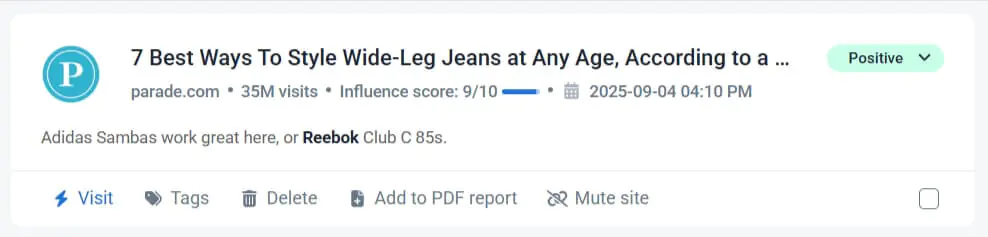
Key elements of media monitoring in 2026:
- Data collection: Real-time gathering of mentions from traditional and digital media sources
- Sentiment analysis: Evaluating whether mentions are positive, negative, or neutral
- Advanced filtering: Sorting mentions by importance, sentiment, reach, source, intent, language, geolocation, and influencer score
- Analysis & insights: Turning raw data into actionable insights
- Reporting: Generate advanced reports to share with your team or clients
- Alerts: Instant notification when something new is published
We monitor our competitors’ activities and what their customers are saying about them. This helps us adjust our business offerings and marketing strategies. Media monitoring gives us the data to ensure our efforts are impactful.

What is AI-powered media monitoring?
AI-powered media monitoring means software doesn’t just collect mentions, but understands them, filters them, prioritizes them, and summarizes what changed.
In one line:
- Traditional monitoring = find everything.
- AI media monitoring = find what matters.
In 2026, here’s what I expect any serious media monitoring software to do:
- Emotion-grade sentiment analysis (beyond positive/negative/neutral, into admiration, anger, disgust, fear, joy, sadness).
- Built-in AI chat over your monitoring project (ChatGPT-style), so you can ask “what changed last week?” instead of building Boolean queries.
- Topic clustering (automatic grouping of mentions into conversation themes).
- Noise reduction (filtering out spam, bots, and unrelated keyword overlap).
- Real-time anomaly spotting (automatic detection of unusual volume or sentiment swings, with an explanation).
- Smart insights (generated summaries of what happened, what’s trending, and what to do next).
Why this matters in 2026?
Media mentions now feed AI Overviews, ChatGPT, Perplexity, Gemini, and AI Mode results. The more high-quality, untagged AI mentions your brand earns, the more often you appear in AI-generated answers, which is fast becoming the new SEO.

Chat-based interfaces will replace traditional filter UIs because they’re faster and more forgiving. The brands that win will be the ones who treat monitoring as conversations, not query syntax.
Media monitoring and analysis
Media monitoring answers the question: “What is being said and where?”
Media analysis answers: “What does it mean for us?”
In short:
- Media monitoring = collecting and tracking
- Media analysis = interpreting and explaining
| Media monitoring | Media analysis |
|---|---|
|
Finds mentions across news, social, blogs, etc.
|
Understand the meaning behind the mentions
|
|
Focus on what is being said and where
|
Focus on why it’s being said and what to do about it. |
|
Gathers data from various media channels (social, news, blogs, reviews, podcasts, etc.)
|
Interprets the data to find trends, sentiment, impact, and opportunities
|
|
Act as the first step – real-time or ongoing tracking
|
Act as a second step – deeper analysis after collecting enough data
|
Here’s how I think about it, using the Cracker Barrel project I set up for this guide (full case study in Step 5):
- Monitoring told me: “Cracker Barrel pulled 3,403 mentions across 10 channel categories in 30 days. News led on volume – 31%. TikTok led on reach.”
- Analysis told me what to do: “Negative sentiment nearly doubled from 14% to 23.8%, and the asymmetry between the count and reach columns means I need reach-weighted alerts, not just volume-weighted ones. A single TikTok video on May 11 outreached every other channel combined for the prior week.”
How do they work together?
- Media monitoring is about collecting information, such as “Brand was mentioned 1,200 times on X and Reddit today”
- Media analysis is about making sense of that information, such as “80% of mentions are positive, mostly about new campaign“
How to start media monitoring?
Okay, you know what media monitoring is, now it’s time to learn how it works.
Let’s dive in!
Step 1: Pick a goal that survives contact with reality
Media monitoring serves many purposes. Pick the one your team will actually act on this quarter, not all five at once.
Common goals:
- Reputation management: Protect brand perception, track sentiment, find advocates and detractors.
- PR & communications: Measure campaign reach, share of voice, and earned media impact.
- Competitive intelligence: Track competitors’ mentions, campaigns, hashtags, and weak points.
- Customer & community: Catch complaints, requests, and questions before they hit support.
- Business impact: Tie media exposure to traffic, leads, and revenue.
My honest advice: pick one primary goal and one secondary goal. Anything more dilutes attention and your team will stop checking the dashboard within six weeks.
Of course, those goals might (or even should) evolve in the future.
But it’s essential to start with clear aims. Open your notebook and list your key objectives. 😉
Step 2: Select the keywords to monitor
Alright, now it’s time to select monitoring keywords that match your needs.
Those could be:
- Brand & products: Company and product names, slogans, misspellings, executives.
- Competitors: Rival brands, products, and related hashtags.
- Industry terms: Trends, buzzwords, and common problems.
- Campaigns & events: Campaign names, hashtags, conferences.
- Issues & risks: Crisis terms, complaints, and negative phrases.
Important: Most of the media monitoring tools base their pricing on the number of monitored keywords. That means the more keywords you want to track, the more you need to pay. So choose wisely!
Step 3: Pick a monitoring tool
When I evaluate media monitoring tools (which I do constantly, check my full 20-tool tested list), three things matter the most:
- 1 the number of monitored sources
- 2 features
- 3 cost-effectiveness
Let’s take a closer look at them.
1. Monitoring sources
The number of monitoring sources matters. The more the better news coverage. Here’s what you can track:
- Traditional media: newspapers, TV, radio (sometimes via third-party providers)
- Online media: news websites, blogs, forums, Reddit, Quora, Medium
- Social media: Facebook, X (Twitter), LinkedIn, Instagram, TikTok, Telegram, Bluesky, etc
- Review sites: TripAdvisor, Booking, Yelp, App Store, Google Play, Trustpilot, app stores
- Podcasts and video platforms: YouTube, Twitch, Spotify, Soundcloud
- Internal sources: customer support tickets, community groups
- Newsletters
- Multilingual and regional sources
Of the 20 media monitoring tools I tested, only Meltwater and Cision include broadcast monitoring (TV, radio) natively, the others require third-party integrations or manual clipping services.
“If you’re not monitoring podcasts, your media monitoring is incomplete. Podcasts drive ~40% of spoken-word listening.” source: TVEyesInc on X, Apr 2026
This is the #1 coverage-gap complaint in the analysis I did.
So, make sure to verify podcast and AI-LLM coverage explicitly before signing a contract.
2. Features
Features are the crème de la crème of software.
A solid tool should continually improve the quality of monitoring and sentiment analysis, raise the number of monitoring sources, and incorporate AI features.
Here’s a list of features you can find in media monitoring solutions in 2026:
| Feature | What it includes |
|---|---|
|
Wide media coverage
|
News, social, blogs, forums, podcasts, TV, radio, video, and even images
|
|
Real-time alerts and reports
|
Instant notifications on spikes, crises, or sentiment changes
|
|
AI features
|
Sentiment/emotion analysis, automatic summaries, topic clustering, trend & intent detection
|
|
Advanced search & filtering
|
Boolean queries, language/region filters, noise reduction
|
|
Analytics
|
Reach & engagement metrics, geo & demographic insights, influencer finding
|
|
Competitive intelligence
|
Share of voice, benchmarking with rivals
|
|
Integrations
|
APIs, CRM, Slack/Teams, PR tools
|
Most of the tools monitor only online sources. For broadcast monitoring, consider Meltwater or Cision.
3. Cost-effectiveness
Currently, you can find tools on the market ranging in price from $99 to several thousand dollars per month.
What is the reason for this?
- The price varies based on the number of monitored keywords and the features you want to use.
- Some all-in-one social media management tools offer monitoring as an extra paid add-on.
- To calculate the total cost, you need to sum the subscription fee (monthly/annual) + add-ons (extra mentions, extra users, advanced AI features, or historical data).
Many providers are flexible, allowing you to adjust the subscription plan to your actual needs.
So do not hesitate to contact the sales team. They don’t bite 😉
Step 4: Gather and analyze results
The analysis is a crucial aspect of media monitoring. Take a look at key media monitoring metrics you should track:
| Feature | Why I care |
|---|---|
|
AI sentiment + emotion analysis
|
Sentiment alone misses tone. Emotion catches “angry” before “negative” trends. |
|
Real-time alerts with thresholds
|
I want alerts on changes, not every mention. Set by reach, sentiment, or volume. |
|
Topic clustering
|
One glance tells me what people are talking about, no need for 4,000 mentions to read. |
|
AI analysis
|
Ask AI to get a summary. Saves hours weekly. |
|
Share of voice & competitor benchmarking
|
The single most useful metric for proving marketing ROI to a CFO. |
|
Influencer & top-source identification
|
Tells me who shapes the conversation, not just what was said. |
|
Slack/Teams + API integration
|
If alerts don’t land where the team works, no one acts on them. |
Step 5: Turn data into insights
Raw media monitoring data (mentions, reach, sentiment, engagement, AVE, etc.) reveal what’s happening.
The goal is to explain what those numbers indicate about brand perception, reputation, competitive positioning, and business impact.
How to do that?
- 1 Start with a clear objective: Define what you are analyzing (brand health, campaign impact, crisis risk, competitors, etc.).
- 2 Clean the data: Remove duplicates and irrelevant mentions to ensure accuracy.
- 3 Segment the data: Break it down by channel, geography, campaign, product, time period, or competitor to uncover patterns.
- 4 Analyze trends: Look at changes over time, spikes, sentiment shifts, and topic frequency.
- 5 Connect metrics together: Combine volume, sentiment, reach, and engagement to understand real impact.
- 6 Benchmark results: Compare against past performance, campaigns, or competitors.
- 7 Identify key themes: Understand how your brand is being described and what topics drive conversation.
- 8 Link to business impact: Connect media activity to traffic, leads, sales, or reputation outcomes.
- 9 End with recommendations: Every insight should lead to a clear action or strategic decision.
This is where most guides go generic. Let me show you what data actually looks like in a real project.
I ran a 30-day monitoring project on Cracker Barrel in Brand24, capturing their recent controversy. Here’s what the dashboard captured:
| Metric | Cracker Barrel [Apr 25–May 25, 2026] |
|---|---|
|
Total mentions
|
3,403 |
|
Total estimated reach
|
31.2M |
|
Total social interactions
|
1.04M |
|
Channels with activity
|
10 (News, X, Blogs, Facebook, Reddit, Bluesky, TikTok, YouTube, Podcasts, Forums) |
|
Top volume channel
|
News — 31% of mentions |
|
Top reach channel
|
TikTok — 7% of mentions, dominant on reach |
|
Sentiment start of period
|
19.9% positive / 14.0% negative / 66.1% neutral |
|
Sentiment end of period
|
23.1% positive / 23.8% negative / 53.1% neutral |
|
Negative-sentiment shift
|
+9.8 percentage points in 30 days (nearly doubled) |
|
Peak negative day
|
May 24 — 48 negative mentions, 26.7% of the day’s total |
|
Single highest-reach mention
|
6,425,492 impressions — TikTok video, May 11 |
|
Lead time: social vs. news
|
~3–4 weeks (political/cultural narratives live on X + Bluesky from Apr 26–27, mainstream news consolidated through May) |
Turning raw mentions into real insight is the step that can take a lot of time.
That’s exactly why we created our free “Prompts to Analyze Media Mentions Better” list.
It will walk you from “I have the data” to “I have an answer”.
Download it and see how easy media monitoring can be.

Importance of media monitoring in 2026
In 2026, media tracking is more critical than ever because online conversations move faster than ever before, and the media environment has become more complex and AI-driven.
Conversations about brands can spread globally in minutes across TikTok, X (Twitter), Reddit, blogs, podcasts, and news.
Having this in mind, it’s good to know what’s being said about your business online: by your happy and unhappy customers, by industry media, or by competitors.
So, why is media monitoring important?
1. Massive volume of information
In 2026, the internet is more saturated than ever. From social media to podcasts, news sites, forums, and TikTok, brands are mentioned everywhere, but not all mentions matter.
AI-powered tools can filter the noise, allowing brands to focus only on relevant, high-impact conversations.
How can you take advantage:
- Detect relevant mentions across social media posts, news, blogs, podcasts, and forums
- Avoid missing meaningful conversations about your brand or competitors
- Get real-time alerts that something important is going on
2. Brand reputation management
Consumers in 2026 buy from brands they trust. Studies show that companies with a strong, positive reputation see higher customer retention, easier hiring, and stronger stock performance.
Furthermore, analyzing customer sentiment helps businesses adjust their marketing strategies effectively.
How can you take advantage:
- Respond timely to any negative review that could damage your brand’s reputation
- Improve products and services based on public feedback from the target audience
- Prepare for crises by understanding public perceptions and industry trends before situations escalate
3. Real-time crisis management
Crises don’t wait for business hours. Monitoring tools act as your early warning system, giving PR teams time to react before the damage is done.
Monitoring customer feedback and complaints on social media channels and review sites helps PR professionals address issues quickly and improve customer service.
How can you take advantage:
- Quickly detect the spike in negative mentions and find the cause of the problem
- Listen to consumer complaints during a crisis to plan effective communication and conflict resolution
- Monitor the sentiment trends to judge whether the addressed resolution works
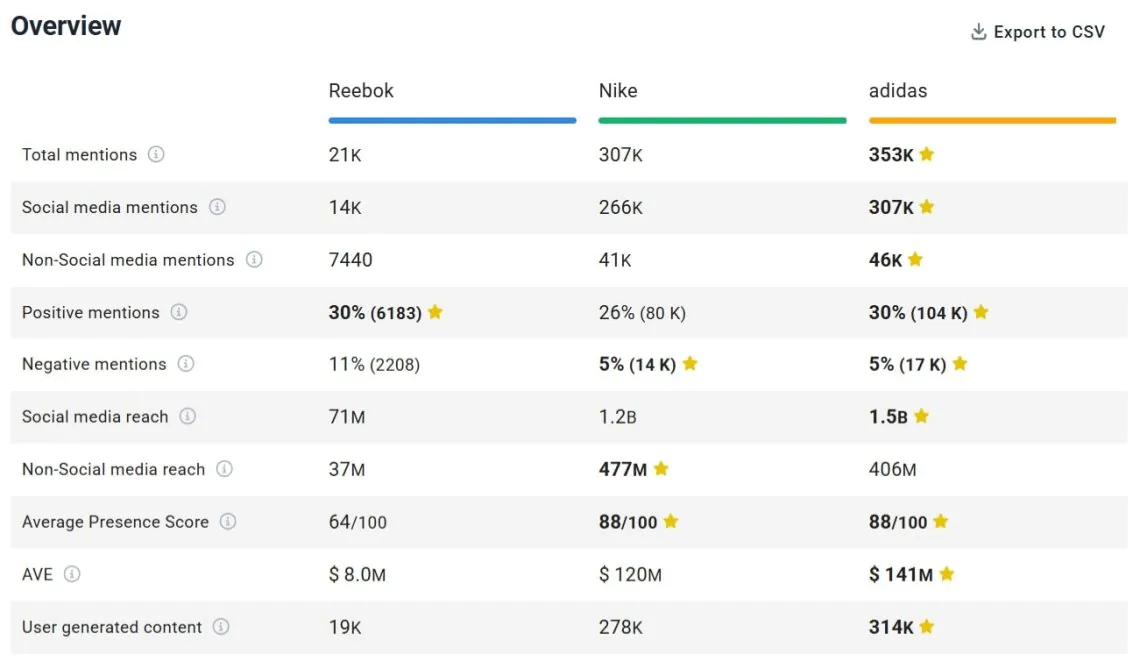
4. Competitor monitoring & analysis
In 2026, using a media monitoring solution for competitor analysis is one of the smartest ways to stay ahead of the curve.
Understanding competitors’ strengths through media mentions can inform your product development or marketing strategies.
How can you take advantage:
- Monitor competitors’ media coverage, share of voice, hashtags, products, campaigns, and audience sentiment
- Study their successes and failures to avoid their PR or product mistakes, and adopt tactics from high-performing campaigns
- Fill the gaps by monitoring what their audience is asking for but not getting
5. Industry trend identification
Trend identification and analysis in 2026 is a game-changing strategy. It empowers you to spot what’s gaining traction before your competitors do.
Media monitoring lets you identify new keywords, hashtags, or conversation themes before they go mainstream.
How can you take advantage:
- Get early alerts on trending hashtags, keywords, or topics
- Identify new consumer interests and behaviors
- Launch timely content or products that ride the trend
FAQ
What’s the difference between media monitoring and social media monitoring?
- Media monitoring is the broader category. It tracks mentions everywhere (news, podcasts, TV, blogs, forums, AND social).
- Social media monitoring is social-platform-only.
- Social listening adds an interpretation layer on top (“what does this mean, and what should we do?”).
Most modern tools, Brand24, Meltwater, and Brandwatch, do all three under one platform, so the distinction matters less for buyers and more for categorization. If your audience lives mostly on X, TikTok, and Reddit, social monitoring is enough. If they also live in news, podcasts, and blogs, you need full media monitoring.
How much does media monitoring cost in 2026?
There are free tools (Google Alerts, F5Bot, Reddit Pro) that cover basic brand-name alerts but miss sentiment, untagged mentions, and non-news sources. Other paid tools range from $99–$800/month and more. Full pricing breakdown in our media monitoring tools roundup.
Which media monitoring software is easiest to use?
The platforms users most often describe as “easy to start with” are Brand24, BrandMentions, and Sprout Social. They share three things: a clean dashboard that surfaces sentiment and reach without configuration, AI-powered topic clustering that removes the Boolean-search learning curve, and Slack/Teams integrations.
How do I ensure monitoring coverage for podcasts, TikTok-native content, and AI search citations?
- Podcasts: only specialized tools cover the medium natively – TVEyes, Meltwater, and Brand24 with podcast monitoring enabled.
- TikTok-native content (audio, video, captions): verify in the sales conversation that the tool ingests the post body and audio, not just the caption, many tools miss the audio layer where cultural conversations actually happen.
- AI search citations (AI Overviews, ChatGPT, Perplexity, Gemini): this is an emerging category. Brand24 has AI mentions tracking built in.
Does media monitoring help with SEO and AI search visibility?
Yes, and the relationship is getting stronger. Untagged brand mentions across the open web feed into Google’s E-E-A-T signals and into the training data that powers AI Overviews, ChatGPT, Perplexity, and Gemini. Brands with higher mention volume and more positive sentiment show up more often in AI-generated answers.
Listen, learn, act
To sum up, media monitoring helps you understand what people are saying, where they’re saying it, and how they feel about it.
Key takeaways:
- First of all, you need to set clear goals and select relevant keywords to track.
- Not every tool monitors traditional and print media such as TV, radio, newspapers, and outdoor.
- Some social media management tools offer monitoring as an extra paid add-on.
- Look for solutions that offer AI features that detect trends, filter noise, and generate actionable insights.
- Mentions monitoring is just the first step. The most important thing is to find valuable insights from data and take action.
I hope that now you know more about what media monitoring and analysis are and why it is worth your attention.