Table of contents
2M Marketers

I tested the most popular YouTube analytics tools to see which ones are worth your time in 2026. The results are in. Below, you’ll find the top tools to help you track watch time, audience retention, subscriber growth, and more.
Best YouTube analytics tools shortlist
Here’s my shortlisted choice of the 5 best YouTube analytics tools out of the 10 I tested and reviewed:
1. Brand24: best for brand monitoring and catching spoken mentions
2. YouTube Analytics: best for first-party channel performance tracking
3. Sprout Social: best for multi-channel analytics and team workflows
4. TubeBuddy: best for YouTube SEO and workflow optimization
5. Tubular Intelligence: best for enterprise video intelligence and trend forecasting
In the full comparison below, I’ll go through all 10 tools one by one, looking at what each does best, where it falls short, and which use cases it suits.
By the end, you’ll know which YouTube analytics tool is right for your brand, without having to sign up for a dozen free trials to find out… Like I did!
Why can you trust my recommendations?
I tested the tools hands-on using the same YouTube channel (Brand24’s own account) so I could compare their features on the same data.
I cross-referenced my observations with reviews from G2, Capterra, and Reddit threads.
Where hands-on testing wasn’t possible, I relied on demo walkthroughs and verified user feedback.
This way, the ranking reflects both my own experience and what active users say about each tool.
Best YouTube analytics tools 2026
| Tool | Top strengths | Trial info | Pricing |
|---|---|---|---|
|
1
|
Real-time mention tracking, sentiment analysis, AI insights
|
14 days free trial
|
From $199 per month
|
|
First-party data, retention reports, traffic sources
|
Freemium
|
Freemium
|
|
|
Cross-platform analytics, team workflows, advanced reporting
|
30-day free trial
|
From $99 per user/month
|
|
|
Keyword research, A/B testing, bulk editing tools
|
Free demo
|
From $4.99 per user/month
|
|
|
Cross-platform insights, trend forecasting, creator benchmarking
|
Free demo
|
Custom pricing on request
|
|
|
Demographic insights, engagement tracking, clean dashboards
|
14-day free trial
|
From $9 per month
|
|
|
Creator tracking, payout automation, campaign analytics
|
Free demo
|
Custom pricing on request
|
|
|
Trending video detection, cross-platform benchmarking
|
7-day free trial
|
From $29 per month
|
|
|
Custom dashboards, competitor comparisons, flexible metrics
|
Free demo
|
Custom pricing on request
|
|
|
10
|
SEO scoring, keyword research, competitor insights
|
Free demo
|
From $19 per month
|


What are the best YouTube analytics tools?
Below, you’ll find my reviews of the YouTube channel analytics tools that made it onto my top 10. For each of them, I cover:
- official G2 and Capterra ratings,
- free trial or demo availability,
- pricing bottom lines,
- what the tool does best,
- pros & cons, and
- best use cases to help you find the right fit.
01 Brand24
4.6/5 – G2 (356 reviews)
4.7/5 – Capterra (255 reviews)
14-day free trial available
From $199/month
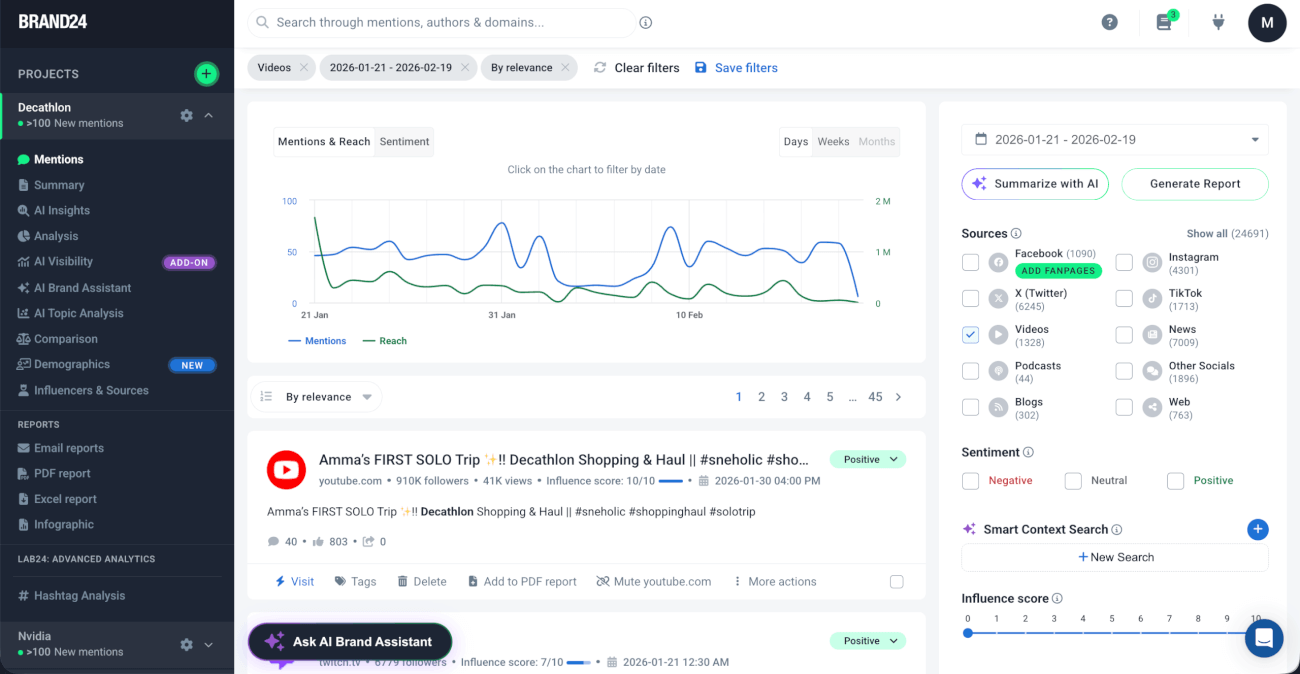
Brand24 helps track how your brand or YouTube channel is being talked about, including mentions that might not show up in your native YouTube analytics.
You can monitor your channel name, brand name, competitors, or any other keyword and see how those mentions perform over time.
Why did I pick Brand24?
First up, I work at Brand24. Which, sure, makes me a little biased. But more importantly, it means I know the tool inside out, so I can tell you exactly how to use it to your advantage.
For YouTube specifically, these features stand out:
- Transcript analysis: Brand24 can catch spoken mentions inside YouTube videos, even when your brand never appears in the title, description, or comments.
- AI Brand Assistant: the built-in assistant lets you ask questions about your YouTube data in plain language, so you can pull useful insights without digging through raw data. For example: How did [brand] perform on YouTube over the last 30 days? or Which channels should I consider for [brand]’s influencer marketing campaign?
- Real-time monitoring: Brand24 tracks new YouTube mentions as they appear and alerts you when there’s a sudden spike, so you can quickly check what’s driving the conversation or catch a PR crisis ahead of time.
✅ Pros:
- Catches spoken mentions of your brand inside YouTube videos
- AI-powered sentiment analysis and insights
- Real-time monitoring and spike alerts
- Generates personalized reports about your performance within seconds
- Identifies relevant influencers for potential YouTube collabs
- Tracks brand visibility over time with Presence Score
❌ Cons:
- Limited access to historical data (only up to 30 days)
- Doesn’t replace YouTube Analytics for first-party metrics like watch time and audience retention
To sum up: Brand24 is a good fit if you want to track how your brand is being talked about on YouTube, especially beyond your own channel.
It works best alongside YouTube Analytics rather than as a replacement for it. Use YouTube Analytics for first-party channel metrics, and Brand24 for the wider conversation around your brand.
02 YouTube Analytics (YouTube Studio)
Freemium
Freemium
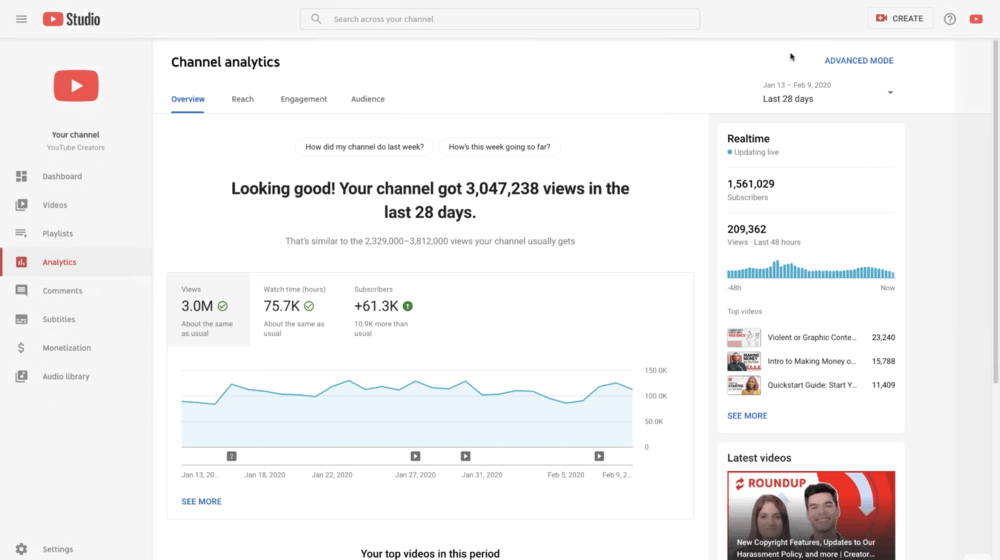
YouTube Analytics is the free reporting dashboard inside YouTube Studio. It allows you to track your channel and individual video performance using native YouTube data.
It offers insights into key metrics like:
- Views and watch time
- Audience demographics and retention
- Subscriber growth
- Traffic sources and CTR
- Performance at channel/or individual video level
- Revenue (for monetized channels)
Because it’s built directly into YouTube, it offers the most accurate first-party data, but remember that it only covers activity within your own channel.
Why did I pick YouTube Analytics?
Simple: if you manage a YouTube channel, this is where your analysis should start.
The key features include:
- Audience retention: see where viewers stay, skip ahead, or drop off.
- Traffic source analysis: check whether views come through YouTube Search, Suggested Videos, Browse Features, external websites, or other sources.
- Audience insights: track new, casual, and returning viewers, subscriber activity, demographics, and when your audience is active on YouTube.
- Trends tab: see what your audience is searching for, explore breakout videos, and spot content gaps that can feed your next video ideas.
✅ Pros:
- Completely free and available to every YouTube creator
- In-depth real-time YouTube performance metrics
- Detailed audience insights (demographics, activity, returning vs. new viewers)
- Advanced filtering and export options via Advanced Mode
- Revenue analytics for channels in the YouTube Partner Program
❌ Cons:
- Only covers activity on your own channel
- No full competitor tracking or industry benchmarking
- No sentiment analysis for mentions of your brand
My overall verdict: YouTube Studio works best as the foundation for performance analysis, paired with another tool for competitor data or broader social insights.
For Zuza, our Brand Ambassador and video expert, YouTube Analytics serves as proof that viewers always get the final cut.
That’s why she spends most of her time in the Engagement tab, using audience retention to see whether a video actually holds attention and where interest starts to drop.

The good news is that getting to this data is pretty straightforward. And if you’re not sure where to look, Ask Studio can help you dig into your stats or even brainstorm video ideas and outlines.
03 Sprout Social
4.4/5 – G2 (6,871 reviews)
4.4/5 – Capterra (608 reviews)
30-day free trial available
From ~$99/month per user
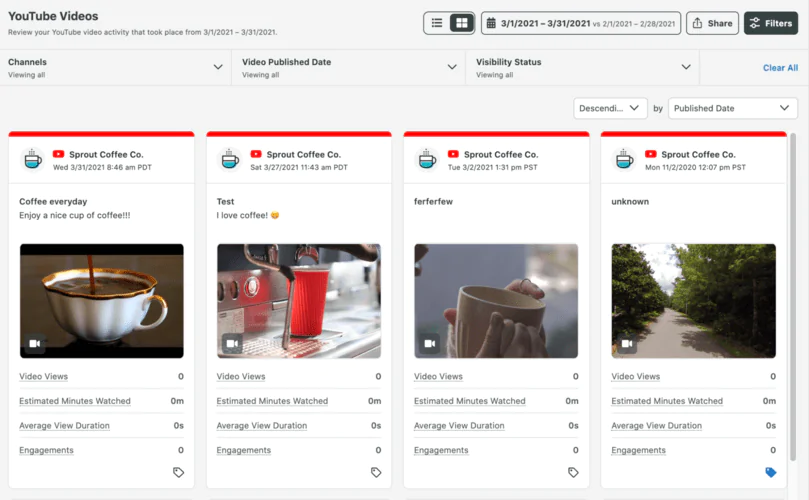
Sprout Social is a social media management platform that includes dedicated YouTube analytics through its YouTube Videos Report.
It provides a detailed breakdown of how each of your videos is performing, including key metrics such as views, estimated watch time, average view duration, and engagement.
Why did I pick Sprout Social?
Sprout Social does a good job of turning YouTube data into something easy to scan and compare. The features I’d highlight here are:
- Visual grid view: shows video thumbnails right next to key performance metrics, so you can quickly identify your top-performing and underperforming content.
- YouTube Videos Report: tracks views, estimated watch time, average view duration, and engagement for individual videos.
- Advanced filtering: filters results by date range, tags, and visibility status. As of May 2026, Sprout Social has also added a YouTube Shorts filter, allowing you to separate Shorts from standard videos for clearer analysis.
✅ Pros:
- Dedicated report with video and channel-level metrics
- User-friendly visual grid view for comparing thumbnails
- Advanced filtering by date range, tags, and visibility status
- Cross-channel reporting across multiple social platforms
❌ Cons:
- Limited depth for YouTube competitor analysis
- Higher price point, especially for teams with multiple users
- YouTube data may have a 36–48 hour reporting delay
Overall, I find Sprout Social is a solid choice for brands and agencies managing multiple social channels and looking to include YouTube analytics into a broader reporting and publishing workflow.
That’s also what users are saying online – the G2 and Capterra reviewers appreciate having YouTube analytics in the same place as the rest of their social reporting, and the clean dashboard gets plenty of praise.
The catch? The price can climb fast once you need more advanced options or seats for your team.
04 TubeBuddy
4.6/5 – G2 (44 reviews)
4.4/5 – Capterra (113 reviews)
Free limited version available
From $3.99/month per user
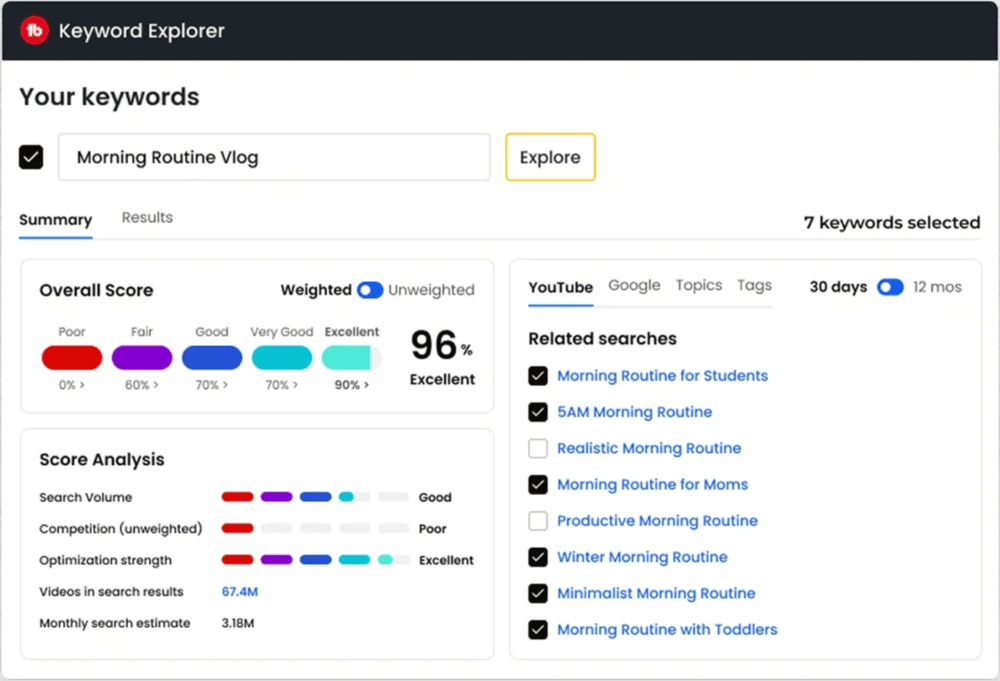
TubeBuddy is a YouTube optimization tool that integrates directly with the platform and focuses heavily on SEO and discoverability.
It helps you research keywords, optimize metadata, test different versions of your videos, and keep an eye on competing channels.
Why did I pick TubeBuddy?
TubeBuddy’s SEO tools are the main draw, but I also like that it brings testing and competitor benchmarking into the same workflow.
The key features are:
- SEO Studio & Keyword Explorer: analyzes search volume, competition, and tag performance to improve YouTube rankings.
- A/B Testing: lets you test and compare different thumbnails, titles, and metadata to improve CTR.
- Channelytics: provides channel-level analytics and competitor benchmarks.
✅ Pros:
- Strong YouTube SEO and keyword research tools
- Built-in A/B testing for performance optimization
- Useful competitor benchmarking features
- Direct integration inside YouTube
❌ Cons:
- Focused on optimization, not in-depth analytics for audience metrics or sentiment tracking
- The interface can feel a bit overwhelming
TubeBuddy should be your go-to tool if you want to focus on YouTube SEO. It shows you which keywords to target, reveals what’s working for your competitors, and makes your videos more discoverable in search results.
The main gripes are a bit of a learning curve and having to upgrade to unlock some of the more useful features.
05 Tubular Intelligence
4.3/5 – G2 (22 reviews)
4.0/5 – Capterra (1 review)
Demo available
Custom pricing on request
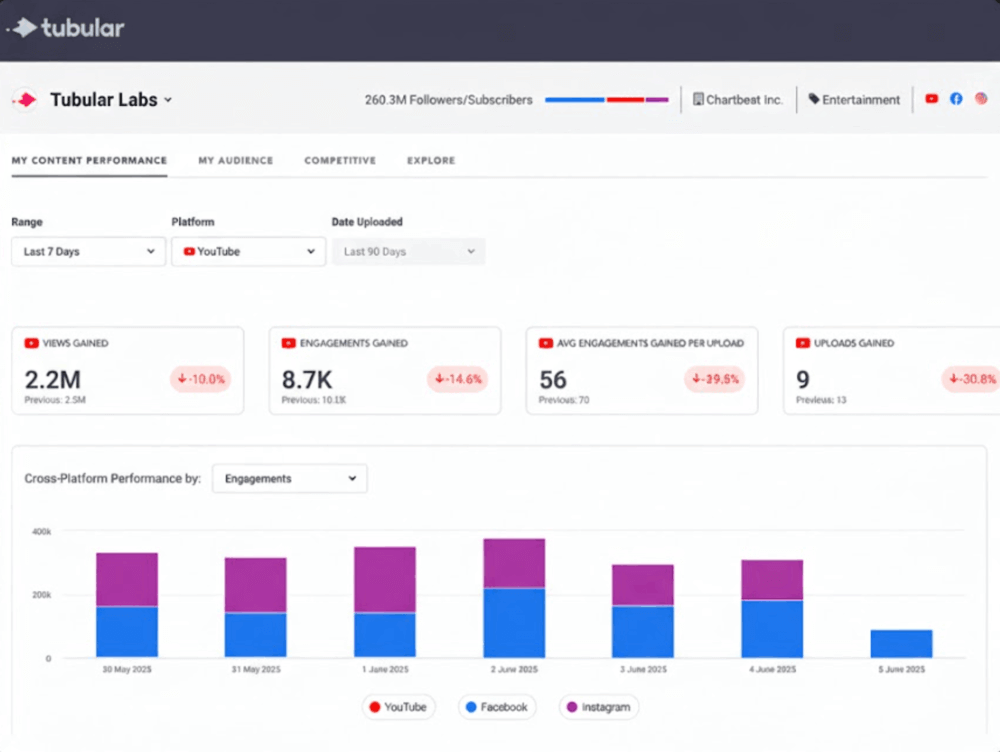
Tubular Intelligence by Tubular Labs is a video analytics platform built for brands, media companies, and larger marketing teams that need a broader view of their content performance.
It’s designed to help you maximize your content’s performance and social media engagement across various platforms.
Why did I pick Tubular Intelligence?
I chose Tubular Intelligence for the depth of its benchmarking and audience data. It’s especially useful when you want to understand how your content performs in the wider market, not just inside your own YouTube account.
The features I’d pay most attention to:
- Cross-platform video intelligence: analyze and compare video performance across social platforms.
- Video Ratings: a 1,2,3,7, and 30-day metric for comparing videos.
- Creator intelligence: compare influencers by engagement, audience demographics, or growth.
✅ Pros:
- Detailed audience insights beyond your own channel
- Customizable reports with metrics fit to your specific needs
- Strong competitor benchmarking
- Trend tracking, including suggested trending hashtags for video content
❌ Cons:
- Not designed for day-to-day creator optimization
- Higher pricing geared toward enterprise clients
- Can be too complex for smaller teams
All in all, Tubular Intelligence is a good fit for larger brands, agencies, and media companies that need deep video intelligence and competitor benchmarking.
It’s less suited to creators looking for simple YouTube SEO or everyday channel optimization, but much stronger when the goal is market-level analysis.
06 Unbox Social
4.5/5 – G2 (1 review)
Free 14-day trial available
From $9/month
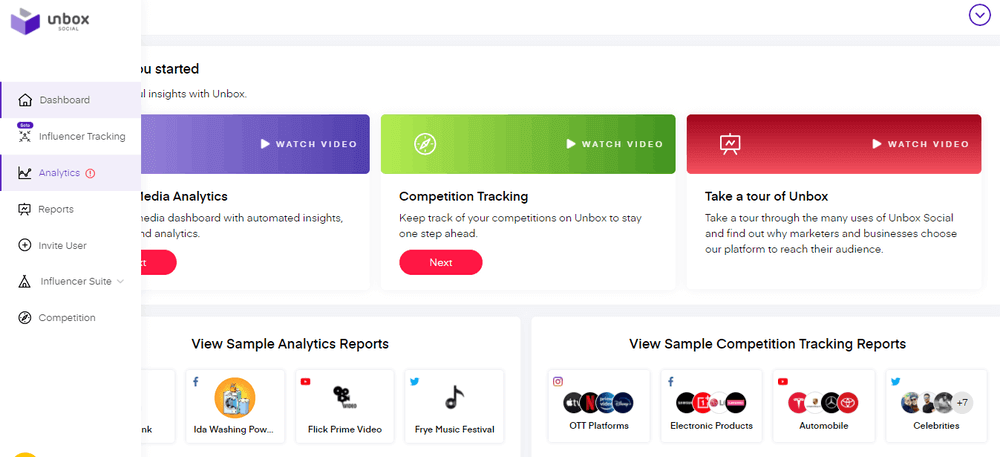
Unbox Social is an AI-powered social media analytics tool that provides detailed analytics for YouTube, alongside Instagram, Facebook, and X (Twitter).
It covers channel and video performance with metrics such as views, watch time, average view duration, engagement rate, audience retention, and subscriber growth.
Why did I pick Unbox Social?
- Video-level insights: views, likes/dislikes, comments, shares.
- Subscriber dynamics: subscribers gained/lost (including per-video signals).
- Audience demographics: age, gender, and location breakdowns.
- Optimization insights: “best time to post” and performance patterns.
✅ Pros:
- Channel- and video-level YouTube metrics
- Audience demographics and subscriber dynamics
- Multi-platform support in one dashboard
- Competitor tracking
❌ Cons:
- Limited advanced YouTube SEO optimization tools
- Less granular competitor benchmarking than enterprise platforms
- May feel lighter compared to specialized YouTube-only tools
I find that Unbox Social focuses more on streamlined reporting and cross-platform analysis than detailed content optimization, so it’s especially useful if you’re juggling multiple accounts and need to keep things simple and consistent.
It won’t give you the depth of a dedicated YouTube SEO tool or an enterprise intelligence platform, but it covers the core metrics without unnecessarily complicating the workflow.
07 ChannelMeter
Free demo available
Custom pricing on request
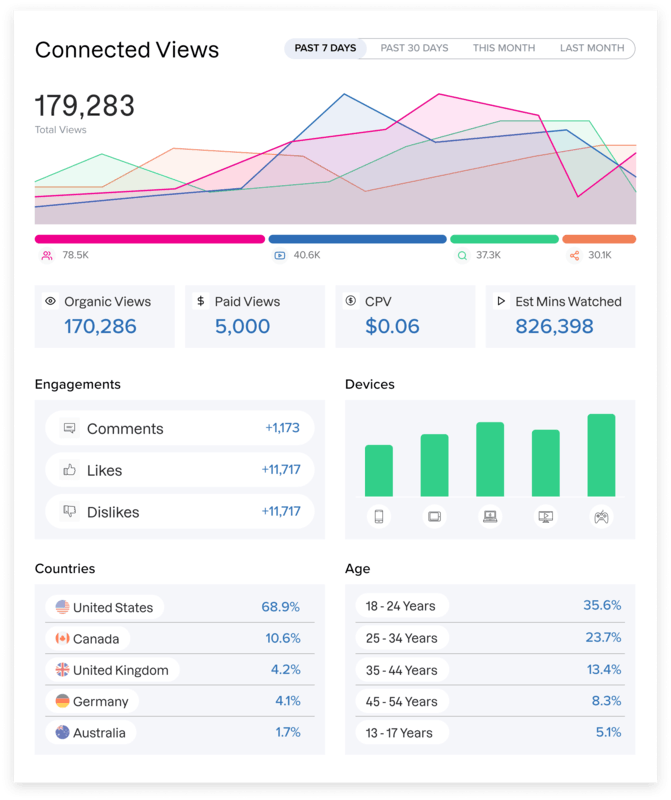
ChannelMeter is a creator management platform with built-in YouTube analytics made for brands, agencies, and multi-channel networks (MCNs).
Alongside channel performance, ChannelMeter helps monitor campaign performance, track subscriber growth, and manage payouts from a centralized dashboard.
Why did I pick ChannelMeter?
- YouTube channel analytics: useful for keeping an eye on several creator channels without jumping between separate YouTube Studio accounts.
- Competitor tracking: gives you extra context when comparing creators or checking how similar channels are performing.
- Payout automation: probably the most practical feature for agencies managing lots of creator partnerships, especially once spreadsheets start getting messy.
✅ Pros:
- All creator collaborations in one centralized dashboard
- Real-time campaign performance tracking
- Built-in payout automation
- Video views statistics
❌ Cons:
- Limited YouTube SEO and video content optimization tools
- Not ideal for solo creators focused on organic growth
- Less advanced cross-platform competitive analysis
To sum up: ChannelMeter is a good fit for brands, agencies, and MCNs running creator campaigns at scale.
It makes the most sense when analytics, campaign tracking, and payouts need to be integrated into the same workflow. If your main goal is everyday channel optimization or monitoring what people say about your brand, there are better-suited tools on this list.
08 ViralStat
Free 7-day trial available
From $29/month
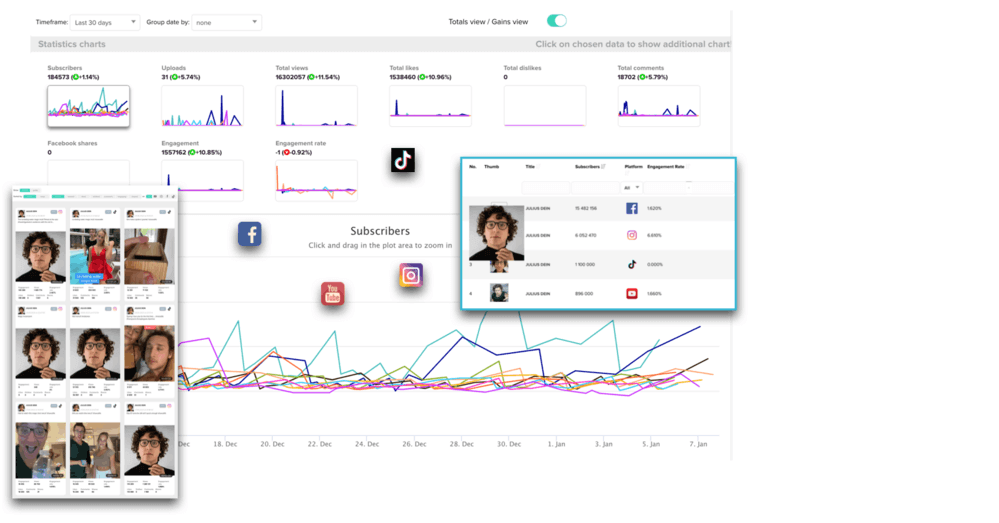
ViralStat is a video intelligence and social media analytics tool that helps you track, analyze, and compare YouTube channels and videos, along with TikTok, Instagram, and other platforms.
Unlike creator-focused optimization tools, ViralStat is built more for competitive intelligence, influencer research, and trend discovery.
Why did I pick ViralStat?
- Content intelligence: Analyze engagement metrics (views, likes, comments, shares, subscriber growth) at scale.
- Smart collections: Organize competitors, influencers, or brands into automatically updating folders.
- Competitor tracking: Monitor any public YouTube channel or entire video to analyze growth, engagement rates, and top-performing content.
✅ Pros:
- Cross-platform insights across YouTube, TikTok, and Instagram
- Great for competitor benchmarking
- Helpful for finding influencers and researching campaigns
- Data is updated automatically
❌ Cons:
- Deeper analytics for your own channels are pretty limited (things like retention graphs, traffic sources, or advanced audience insights)
- Minimal SEO optimization tools
- Not built for thumbnail/title A/B testing or content-level optimization
In my opinion, ViralStat is a great fit for brands and agencies that want to keep an eye on competitors, spot industry trends, and research influencers across multiple platforms.
I’d pair it with YouTube Studio for first-party performance data, and use ViralStat to understand what’s happening around your channel.
09 Facelift Data Studio (formerly Quintly)
4.7/5 – G2 (68 reviews)
4.6/5 – Capterra (8 reviews)
Free 7-day trial available
Custom pricing on request
Facelift Data Studio is a powerful social media analytics tool that works across YouTube, TikTok, Instagram, Facebook, and more.
It’s definitely one of the more advanced tools on this list. If you love dashboards, custom reports, and digging deep into performance data, this one offers plenty to work with.
Unlike SEO-focused tools, Facelift Data Studio is built for data-heavy analysis, KPI tracking, and scalable reporting across multiple channels.
Why did I pick Facelift Data Studio?
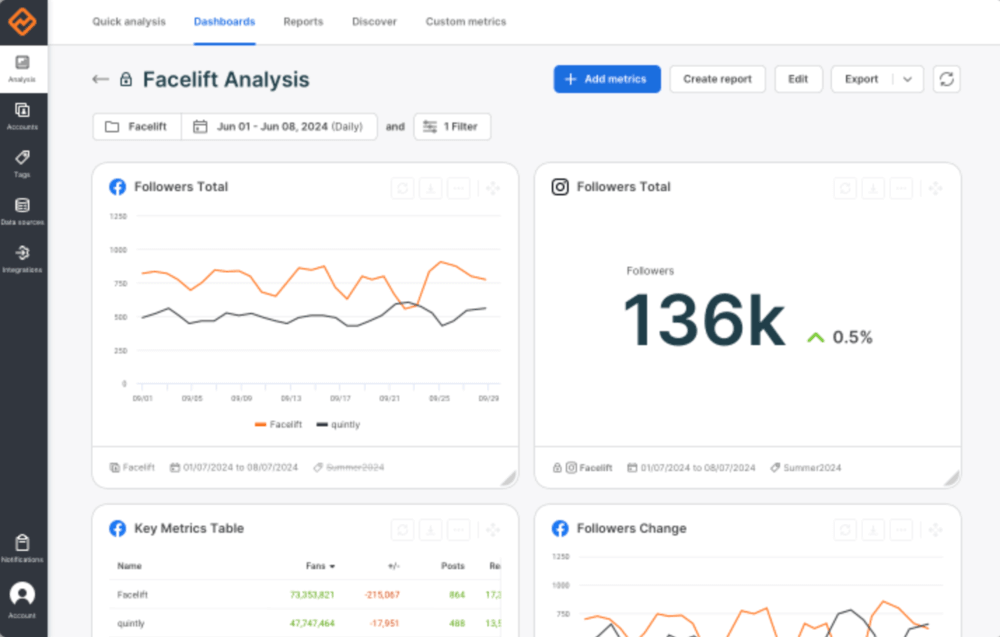
- Advanced channel & video analytics: Analyze views, watch time, engagement rates, subscriber growth, and video-level performance.
- Customizable dashboards: Build fully tailored dashboards with 700+ available metrics.
- Competitive benchmarking: Compare your YouTube channel against competitors or industry benchmarks using public and private data.
- Quintly Query Language (QQL): Create custom metrics and datasets for advanced analysis.
✅ Pros:
- Super customizable dashboards and reports
- Strong channel and competitor comparison
- Works across multiple platforms
- Great for data-driven strategy
❌ Cons:
- Steep learning curve for beginners
- No built-in YouTube SEO tools (keywords, tags, thumbnail testing)
- Overpowered for solo creators or small channels
Facelift Data Studio is great for teams that want full control over their data.
The main drawback for me, and one that reviewers also point out, is the learning curve – once you start building custom KPIs and working with larger datasets, things can get pretty complex.
10 VidIQ
4.5/5 – G2 (34 reviews)
4.3/5 – Capterra (61 reviews)
Free limited version available
From $19/month
VidIQ is one of the most popular YouTube analytics and SEO tools designed to help creators grow their channels faster.
It primarily works as a Chrome extension that overlays data directly on YouTube, so you can view performance metrics, keyword scores, and competitor insights without leaving the platform.
VidIQ also has its own creators’ community that you can join after creating an account (20M+ creators).
Why did I pick VidIQ?
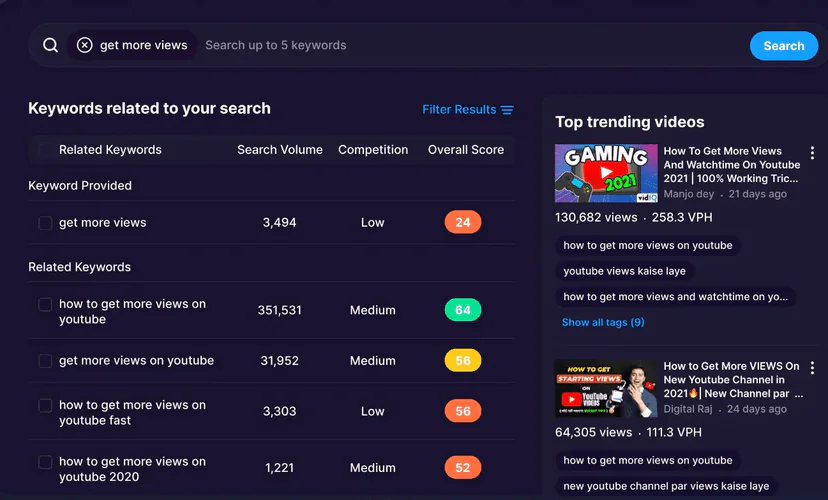
- YouTube analytics overlay: Works as a Chrome extension that displays real-time performance metrics directly inside YouTube.
- Keyword research & SEO scores: Shows keyword volume, competition, and optimization scores for titles, tags, and descriptions.
- Channel & video audits: Automatically reviews your content and highlights areas for improvement.
✅ Pros:
- Strong YouTube SEO tools (keywords, tags, optimization score)
- Real-time performance tracking
- Helpful competitor comparison features
- Shorts analytics support
❌ Cons:
- Focused almost entirely on YouTube (no deep cross-platform analytics)
- More growth-oriented than brand-level reporting
- Advanced features require a paid plan
VidIQ is a good choice if you want YouTube analytics plus built-in SEO and growth suggestions. It’s beginner-friendly yet powerful enough for more advanced creators who want competitor benchmarking and real-time tracking.
I’d especially consider it if you spend a lot of time researching what to publish next. For cross-platform analytics or tracking conversations around your brand, you’ll need something else alongside it.
How to choose the best YouTube analytics tool for your business?
Before you pay for another tool, check what YouTube Studio already covers. YouTube’s built-in analytics dashboard can be enough to get you started, especially if you mainly want to track your own channel performance.
Need something more? Start by identifying the gaps in your current setup.
If you’re missing competitor data, SEO research, brand monitoring, sentiment, creator insights, or cross-platform reporting, that’s where a third-party tool starts to make sense.
The table below will help you narrow down which of those extras to prioritize.
| Use case | What I’d prioritize | Best matches |
|---|---|---|
|
Solo creators
|
YouTube SEO, audience retention, topic research, easy-to-use dashboards
|
YouTube Analytics, TubeBuddy, VidIQ
|
|
Brands
|
Brand monitoring, competitor analysis, social listening, cross-platform reporting, real-time alerts
|
Brand24, Sprout Social, ViralStat
|
|
Agencies
|
Cross-platform analytics, custom reporting, competitor benchmarking, real-time alerts
|
Brand24, Sprout Social, Facelift Data Studio
|
|
MCNs and creator networks
|
Creator and channel analytics, campaign tracking, real-time reporting, payout automation
|
ChannelMeter, Tubular Intelligence, Facelift Data Studio, Unbox Social
|
Still not sure, or don’t quite fit any of the cases above?
No worries – most of the tools on this list offer a free trial or free version, so pick two or three that match your needs and test them with your own YouTube data.
Also, don’t rule out using two tools together. YouTube Studio plus one specialist platform is often a more useful setup than paying for a bigger tool full of features you won’t touch.
YouTube analytics tools: My evaluation criteria
To keep the ranking structured, transparent, and as neutral as possible, I used the following evaluation framework:
- Core YouTube analytics features (channel and video performance, engagement, audience insights, competitor tracking), 25%
- Additional features (SEO tools, brand monitoring, sentiment analysis, AI tools, creator tracking), 20%
- Data coverage (your own channel, public channels, mentions beyond your account, cross-platform data), 20%
- Usability (setup, dashboard clarity, time to get useful insights), 15%
- Value for money (price compared with feature depth, free trials, and plan limits), 10%
- Customer reviews (G2 and Capterra ratings, review volume, and recurring feedback), 10%
Conclusion
There’s no single YouTube analytics tool that covers every use case equally well.
YouTube Analytics is the obvious starting point for first-party channel data, TubeBuddy and VidIQ are stronger for SEO and growth, while Brand24 helps you track mentions and conversations beyond your own channel.
For bigger reporting setups, Sprout Social and Facelift Data Studio make more sense. And if creator campaigns are your main focus, ChannelMeter is worth a closer look.
Final takeaways:
- Start with the data you’re missing, not with the longest feature list.
- Check whether you need channel analytics, SEO, competitor research, brand monitoring, or cross-platform reporting.
- Most tools offer a free trial or free version, so test a couple with your own YouTube data before committing.
- Using two tools together is perfectly reasonable. One can cover your core analytics, while the other does the specialist job.
FAQ
YouTube analytics tools help you track, understand, and boost your channel’s performance beyond what you get in YouTube Studio.
They give you a clearer view of:
- video performance
- audience behavior
- subscriber growth
- engagement and reach rates
- SEO/GEO/AI visibility
- competitor performance
- trending content
A lot of these tools also share optimization tips to help you reach more people and increase watch time.
The main purpose of YouTube analytics tools is to help you grow your channel strategically.
They allow you to:
- Identify which videos drive the most watch time and engagement
- Understand who your target audience is and when they’re active
- Optimize titles, descriptions, and tags for better search and video visibility
- Benchmark your performance against competitors
- Spot trends and virals before they peak
The best YouTube analytics tools in 2026 include Brand24, YouTube Analytics, Sprout Social, TubeBuddy, Tubular Intelligence, and VidIQ.
Each stands out for a different use case: YouTube Analytics for first-party performance data, TubeBuddy and VidIQ for SEO and channel growth, Brand24 for brand mentions and sentiment, Tubular Intelligence for competitive video intelligence, and Sprout Social for cross-channel reporting and team workflows.
The best YouTube Shorts analytics tools are YouTube Analytics, VidIQ, and TubeBuddy.
YouTube Analytics covers core Shorts metrics like views, audience retention, engagement, feed exposure, and swipe behavior.
VidIQ adds views per hour, engagement rate, and Outlier Score to help spot unusually strong content, while TubeBuddy focuses more on optimization and repurposing long-form videos into Shorts.
The most important YouTube metrics to track include:
- Channel performance: views, watch time, subscriber growth
- Audience: returning viewers, demographics, audience retention
- Discovery: impressions, CTR, traffic sources
- Engagement: likes, comments, shares, average view duration
- Business impact: revenue, competitor benchmarks, brand mentions, and sentiment
If you’re focused on channel growth, prioritize retention, CTR, and watch time, as they have the biggest impact on YouTube’s algorithm.
YouTube Analytics, vidIQ, and Brand24 provide real-time or near-real-time YouTube data, but they focus on different things.
YouTube Analytics shows recent views, watch time, traffic sources, and performance for your latest videos, while vidIQ adds growth and competitor context to help you spot videos and topics gaining traction.
Brand24 covers a different angle: real-time YouTube mentions monitoring. It tracks conversations around your brand and sends spike alerts when mention volume suddenly increases, so you can react while the topic is still active.
YouTube Studio provides first-party performance data for your own channel.
Third-party YouTube analytics tools go further by offering:
- Competitor tracking
- Keyword research, SEO scores
- AI visibility metrics
- Cross-platform analytics
- Automated reporting
- Brand and mention monitoring
If you want deeper insights or competitive benchmarking, external tools provide more flexibility than native analytics alone.


