Table of contents
YouTube Social Listening: Strategy, Tips & Best Tools for 2026
In the AI age, YouTube mentions are becoming more and more important. Check how to create your YouTube social listening strategy from scratch, which tools to use, and how to extract meaningful insights.
Key takeaways
-
YouTube social listening helps you understand how your brand is really perceived
It analyzes videos, captions, and comments to reveal sentiment, key topics, trends, and competitor performance – so you can see not just what is being said, but why it really matters.
-
The foundation is choosing the right tool and tracking the right data
Focus on public videos, comments, engagement metrics, and sentiment analysis. Then – use filters, alerts, and share of voice to turn raw mentions into actionable insights.
-
Advanced techniques make your analysis sharper and more strategic
Use Boolean search, context filtering, anomaly detection, and competitor demographic insights to uncover hidden patterns and react faster to opportunities or risks.
What is YouTube social listening?
YouTube social listening is a process of monitoring and analyzing YouTube videos, captions, and comments to discover audience sentiment, understand brand perception, forecast trends, identify popular discussion topics, and benchmark with competitors.
In a nutshell: YouTube social listening is about tracking and analyzing videos and comments to understand what people think, feel, and say about a brand or topic.
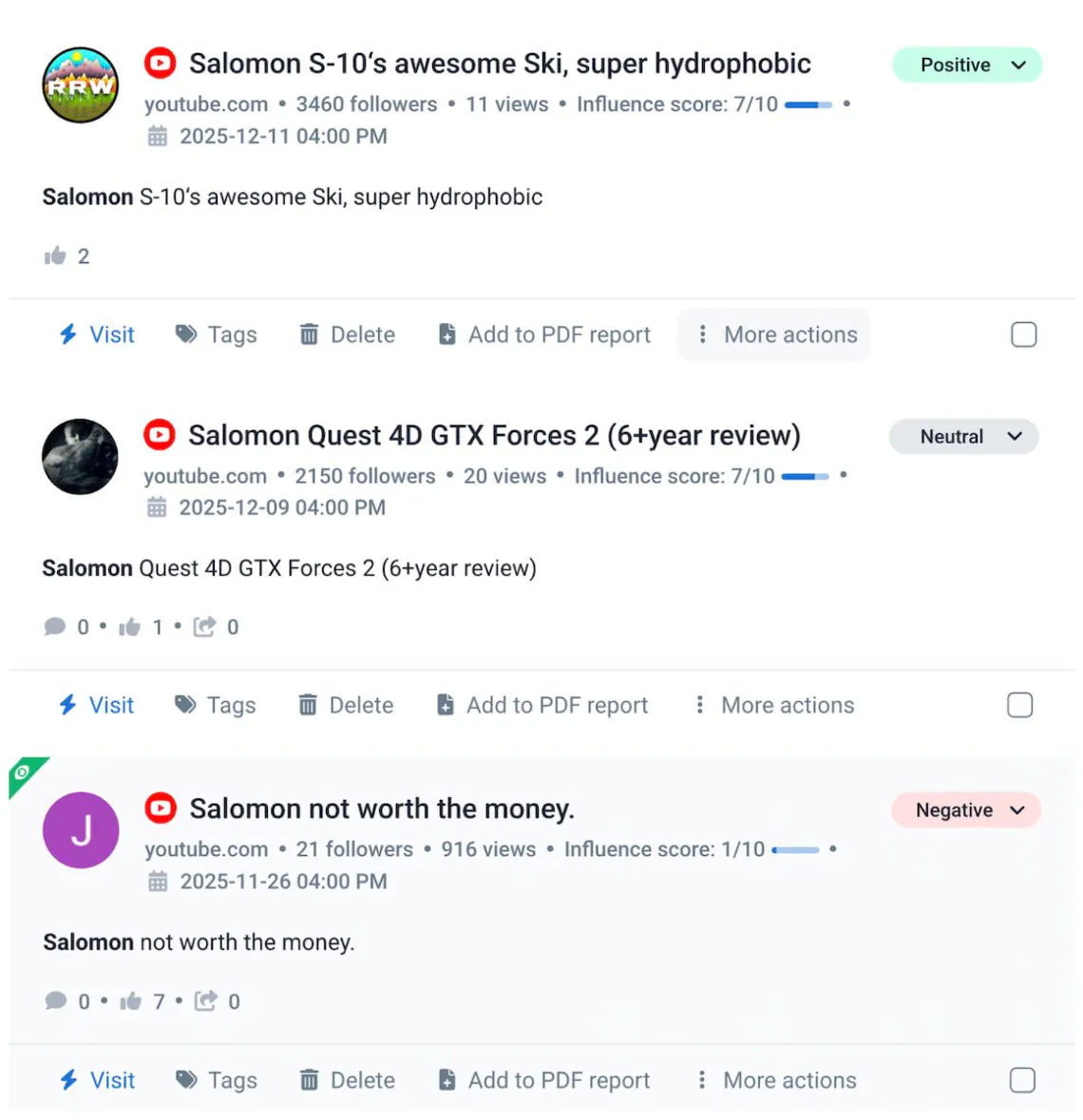
YouTube social listening strategy
Step 1: Ensure what you can monitor on YouTube
YouTube doesn’t allow tracking of all user activity. There are limits to what any tool can access.
Here’s what you can monitor on YouTube:
- Video titles
- Video descriptions
- YouTube channel name and video author
- YouTube engagement metrics (views, likes, comment count, publish date, video category)
- Public comments content
- Replies and comment threads
Social listening tools can’t access private data, closed communities, or individual viewing behavior – and these limitations apply to every platform and tool.
Step 2: Choose the right YouTube social listening tool
Let’s make it clear: manual social listening is a nightmare. The only reasonable way to perform your YouTube social listening is to use a dedicated tool.
In short, social listening tools automatically track and analyze brand mentions & discussions around a given topic to draw conclusions and provide insights.
YouTube social listening tools can be used by:
- YouTube creators – to monitor their and their competitors’ YouTube performance
- Brands – to monitor how their products or services are discussed in YouTube videos and comments, track sentiment, and identify recurring topics or emerging issues.
Of course, there are dozens of social listening tools that allow you to monitor your YouTube presence and performance.
Below, you can see the comparison of three powerful ones.
| Tool | YouTube integration | Key features | Best for |
|---|---|---|---|
|
1
 |
Monitors public YouTube mentions and comments, analyzes volume, reach sentiment, influencers, and likes count |
YouTube mention tracking, sentiment analysis, topic and keyword detection, alerts, detecting anomalies, reporting |
Large teams, agencies, enterprises |
|
2
 |
Monitors public YouTube mentions and comments via listening queries, tracks mention volume and sentiment |
YouTube monitoring and comment management, social listening, sentiment analysis, reporting and dashboards |
Marketing teams managing multiple social channels |
|
3
 |
Monitors public YouTube videos and comments based on keywords, tracks mention volume and sentiment |
Social listening, query building, YouTube sentiment analysis, topic clustering, competitive analysis |
Enterprises and agencies |
No matter which tool you pick, the process of creating the new YouTube social listening project looks similar:
- Choose the relevant keywords to monitor – your brand name, YouTube channel name, competitors’ names, industry keywords, hashtags, etc.
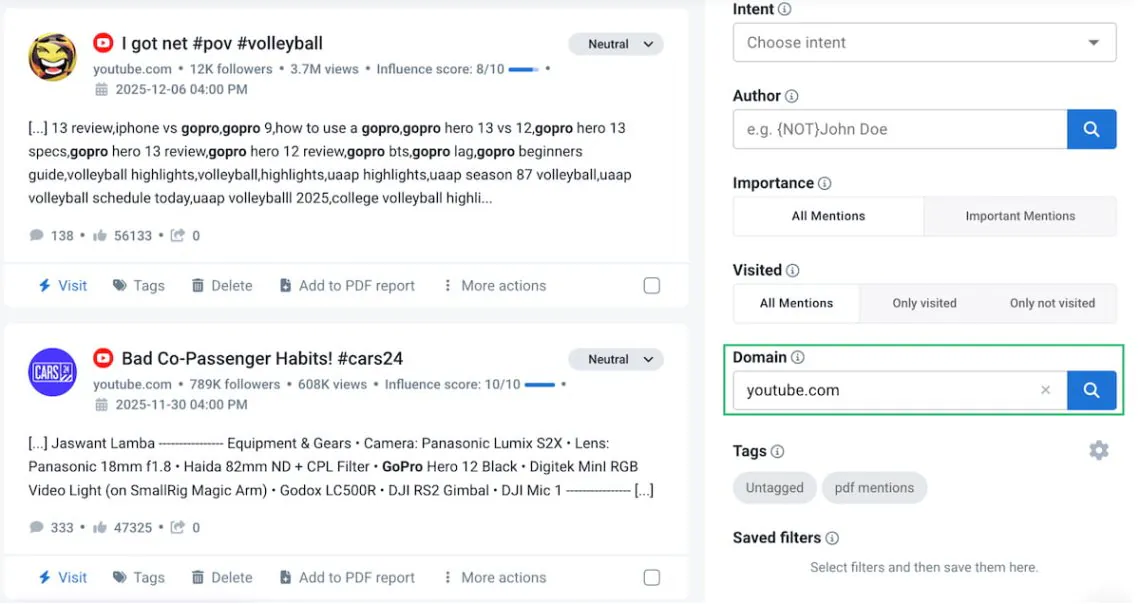
- Apply source filter – to see only YouTube mentions and data. Sometimes you can choose it directly, sometimes you need to use the domain filter and input “youtube.com”
- Adjust the view – filter YouTube mentions by relevance or popularity to see the most important ones first
- Set up alerts – implement the rules that will trigger warnings and storm alerts to react quickly to potential brand crises.
Step 3: Analyze the data
Regardless of which social listening tool you choose, the next step is to analyze your YouTube performance data.
First, I suggest you prompt the built-in AI assistant to summarize your social listening efforts.
You can simply type: “Generate a quick analysis of my brand’s YouTube social listening performance”.

After that, dive deeper into insights. Check:
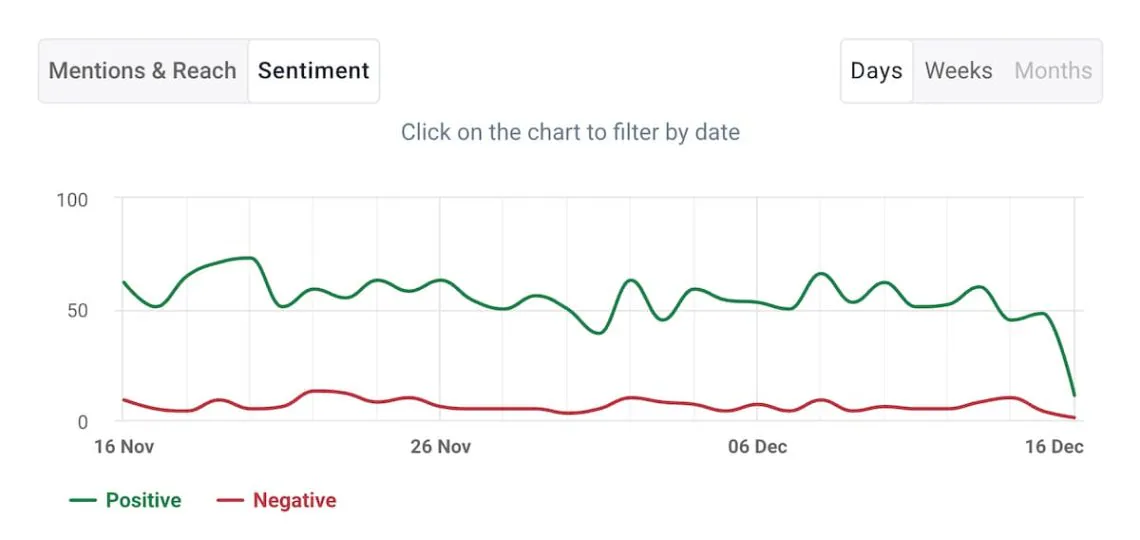
- Sentiment analysis
YouTube mentions always carry an emotional tone – positive, negative, or neutral.
Discover the general trend and look for sudden spikes in negative sentiment (as they often signal emerging issues or viral criticism).
- YouTube reach
Whether you monitor your own YouTube channel or just your brand mentions, YouTube reach is a priceless source of insights into your content strategy.
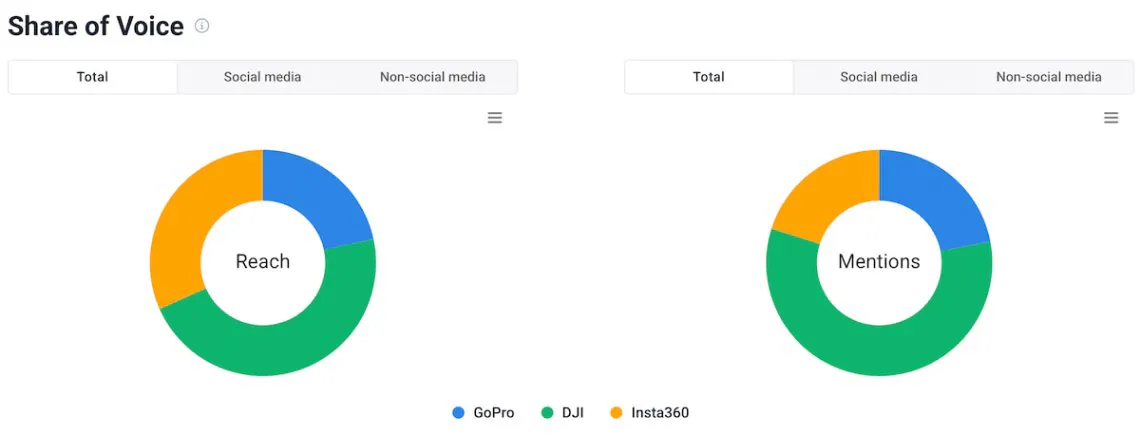
Simply put, it lets you discover which types of videos resonate most with your target audience. - Share of voice
If you monitor your competitors’ YouTube performance, you can get quick insights into your share of voice.
- Topic analysis
Topic analysis helps you identify recurring themes and questions people associate with your brand on YouTube.
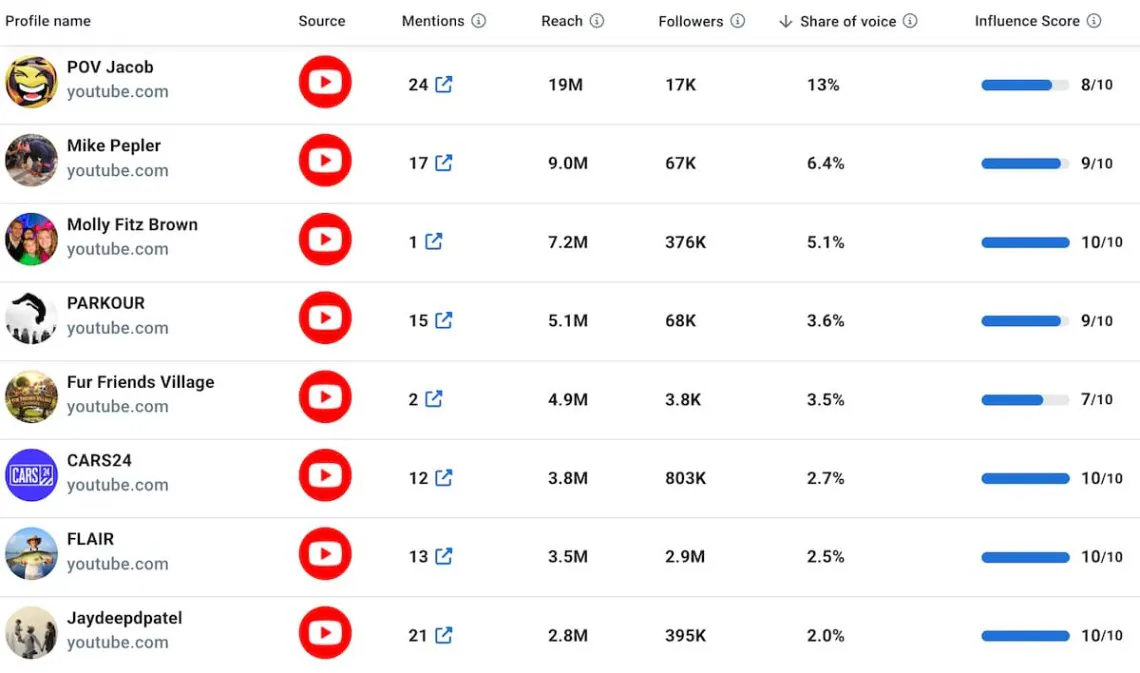
Use it to understand what truly drives discussions and which topics generate engagement, controversy, or sympathy. - Influencer analysis
Influencer analysis shows which YouTube creators mention your brand and how much impact they generate.
It helps you identify potential partners, brand advocates, or sources of criticism worth monitoring more closely.
Explore the topic: Key YouTube metrics you should track
Advanced YouTube social listening tips and techniques:
Tip 1: Boolean search
Boolean search is a method that uses logical operators (AND, OR, NOT) to combine keywords. It allows for the precise narrowing or broadening of search results to make them more relevant.
Most social listening tools allow using Boolean search within projects. In practice, you can use them to group YouTube video analytics to get more tailored insights
For example, in the case of GoPro, you can apply the “review {AND} hero 12” filter to narrow down your YouTube analysis to GoPro Hero 12 model reviews.

Tip 2: Context filtering
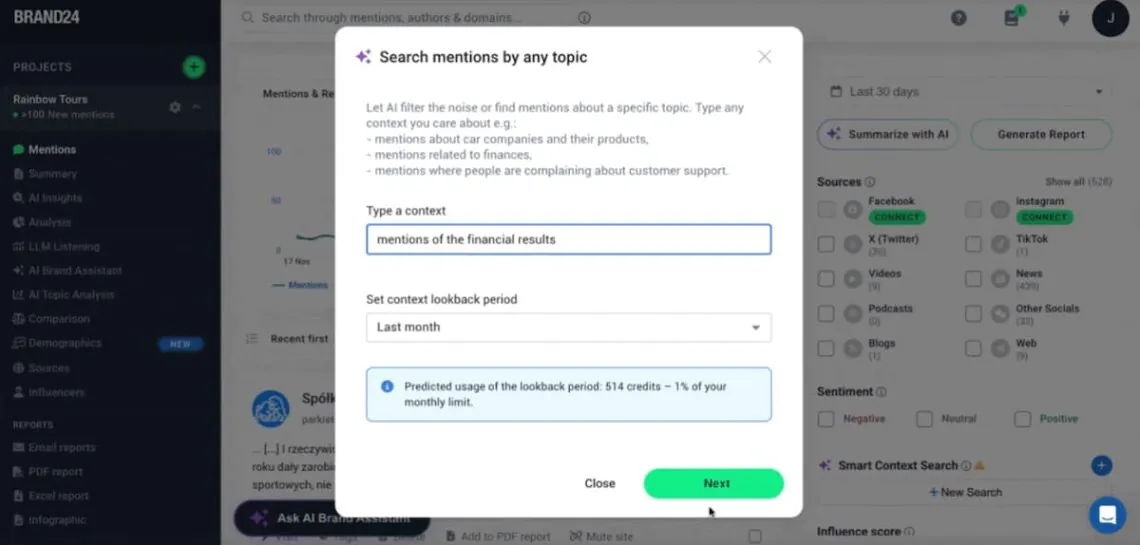
Context filtering is a data analysis technique that applies filters that create a specific context, like including or excluding specific authors, languages, geolocation, sentiment, intent, etc.
Similar to Boolean search, context filtering limits results to YouTube mentions that match clearly defined criteria, making the analysis more focused and easier to interpret
Some tools, like Brand24, offer an AI-powered Smart Context Search that allows nearly unlimited scope for context filtering.
Tip 3: Competitors demographic insights
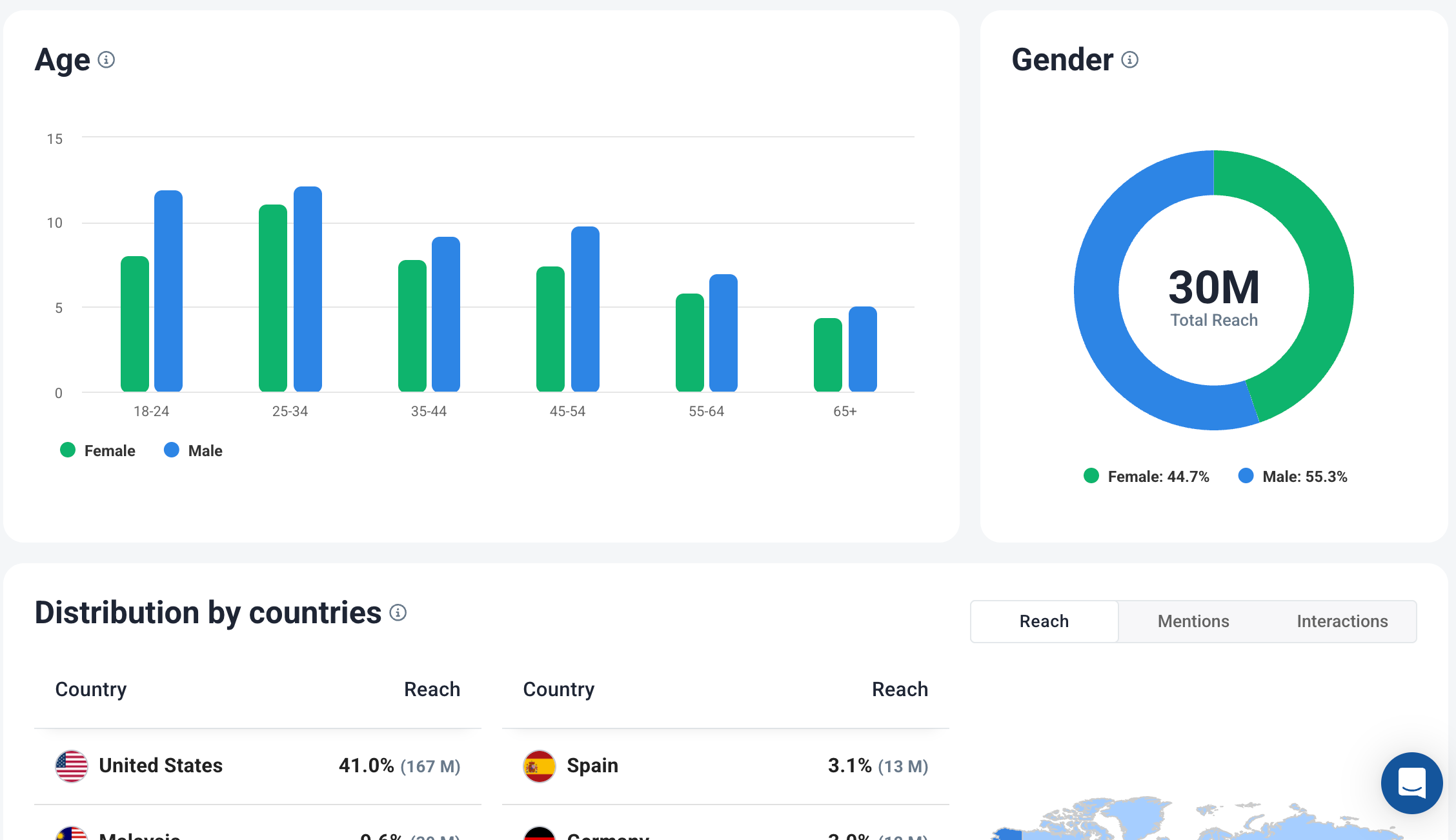
While YouTube Studio includes insights into your audience demographics, it says nothing about your competitors.
Some social listening tools provide demographic data for audiences engaging with competitors’ YouTube mentions, helping you understand who drives discussions and how their audience differs from yours.
Tip 4: Detecting anomalies
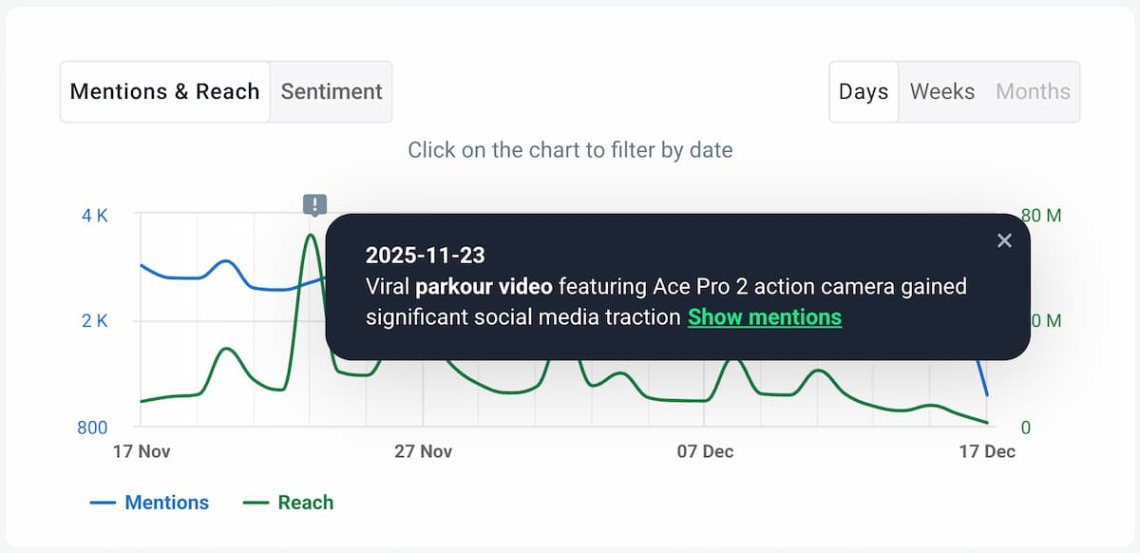
Sudden spikes or drops in mention volume, reach, or sentiment often signal unusual activity. Detecting anomalies helps identify viral content, emerging issues, or shifts in audience perception early.
FAQ
Why are YouTube mentions important?
YouTube mentions are important because they:
- Expand your brand’s reach
YouTube is the second-largest search engine in the world. Mentions in videos expose your brands to audiences who may never discover them through Google search alone.
It helps you reach users at the discovery stage – crucial for building brand awareness. - Strongly boost your AI brand visibility
According to Ahrefs’ research, YouTube mentions are the number one factor impacting AI brand visibility. They outperform every other element across AI Overviews, AI Mode, and ChatGPT.
It means that brands frequently mentioned on YouTube are more likely to display in AI-driven search and recommendations. - Build authority through creator trust
Mentions by YouTube creators act as signals of trust.
Search engines and AI tools highly appreciate expertise, experience, and real-world usage, all of which are naturally embedded in video content. - Generate long-term visibility
A YouTube video can show up in search results, recommendations, and AI answers months or even years after publication.
Each mention continues to strengthen brand recognition over time, unlike many short-lived paid or social media campaigns.
Explore the topic: What are YouTube mentions, and how to track them
YouTube monitoring vs. YouTube social listening
YouTube monitoring and YouTube social listening are often mistreated as synonyms.
In fact, YouTube monitoring is more reactive.
It focuses on tracking when and where a brand is mentioned, enabling a quick response to individual videos, comments, or potential issues.
YouTube social listening, on the other hand, is strategic.
It goes beyond single mentions to analyze patterns, sentiment, and recurring topics, explaining why people discuss a brand in a particular way and how these conversations shape perception over time.
| YouTube monitoring | YouTube social listening |
| Tracks brand mentions across videos and comments | Analyzes conversations, context, sentiment, and patterns |
| Shows what is being said and where it appears | Explains why it’s being said and how it shapes brand perception |
| Focuses on individual mentions and short-term signals | Connects multiple signals and transforms them into broader narratives |
| Supports fast reactions (responses, alerts) | Guides long-term communication and positioning strategy |
| Measures visibility | Helps build authority |
Explore the topic: Everything you need to know about YouTube monitoring
Conclusion
YouTube social listening helps brands understand how they are discussed and perceived on this most popular video platform worldwide.
It’s essential, especially since YouTube mentions are increasingly influential for AI search visibility.
Social listening on YouTube relies on public data such as video metadata, comments, and engagement signals, all within YouTube’s platform limits.
Dedicated social listening tools organize this data and turn mentions into structured insights. Analyzing sentiment, reach, topics, and creators reveals what drives visibility and audience reactions.
Applied consistently, YouTube social listening supports smarter content decisions and long-term brand authority.
Final thoughts:
- Strategic listening is more valuable than reacting to single mentions.
- YouTube competitor analysis often explains changes in your own performance.
- Clean data filtering makes insights more reliable.
- If you’re beyond 101 level, try more advanced techniques for YouTube social listening, such as Boolean search, context filtering, competitor demography monitoring, and detecting anomalies.

Article Reviewed by

Related articles




Top Reads
X (Twitter) Analytics Tools: The 12 Best to Try in 2026
How to See How Many Times a Hashtag Was Used on X (Twitter)
Brand Monitoring: Tools & Guide for 2026
Brand Awareness Strategy [The Ultimate Guide for 2026]
The Best AI Hashtag Tracker and Other Hashtag Tracking Tools [2026]
Social Media Reach: How to Measure & Improve It in 2026?
Sentiment Analysis: What is it & Why do You Need it in 2026?
Share of Voice: Definition, Calculation, Tools [2026 Guide]
Brand Reputation Management: 6 Expert Tips for 2026
Social Media Analysis: Complete Guide for 2026
Start Social Listening!
Get the Brand24 trial and start social listening like a PRO.