Table of contents
2M Marketers

According to the Edelman Trust Barometer, 4 out of 5 consumers won’t buy from a brand they don’t trust. It means that trust isn’t a nice-to-have. It’s what keeps your brand running. A regular brand audit ensures everything under the hood is working as it should.
Key takeaways
-
Start with a plan before you touch any data
Decide upfront what you want to audit, internal factors (values, culture, communication) or external ones (website, SEO, social media). Write your goals and key questions down in one document so you don't lose focus along the way.
-
Customers know things your dashboards don't
Surveys, interviews, and usability tests give you answers you can't get from numbers alone — like why people churn or why they picked you over a competitor. Even a quick 5-question survey can surface insights worth acting on.
-
Social listening shows how people actually talk about you
Monitoring brand mentions and sentiment online gives you unfiltered feedback about your brand perception. It also helps you spot influencers and track what customers say about your competitors.
-
AI visibility is the new SEO frontier
AI tools like ChatGPT, Perplexity, and Google's AI Overviews increasingly answer users' questions directly — without clicking through to websites. A brand audit should now include a check of how (and whether) your brand appears in AI-generated responses.
What is a brand audit?
A brand audit is a comprehensive review of how your brand performs in the market. It spotlights what’s working, what’s not, and how closely your brand’s image aligns with your business goals and customer expectations.
In a nutshell, a brand audit shows you where your brand stands and what to fix first.
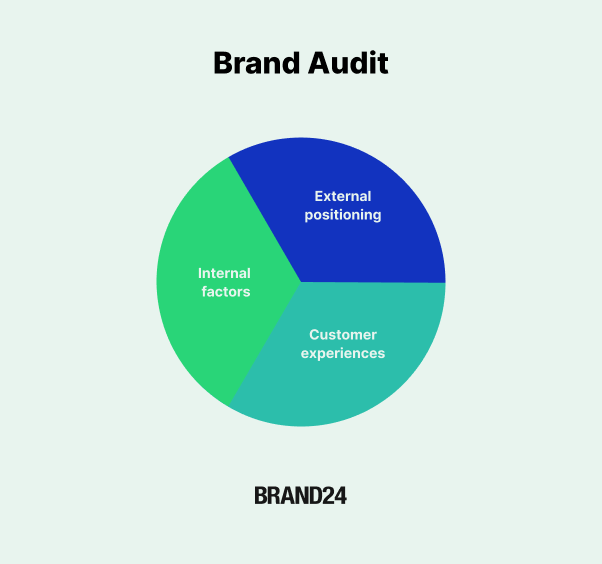
A comprehensive brand audit examines three key areas:
- Internal branding – evaluates company culture, brand values, mission, and how well employees understand & embody the brand.
It focuses on what’s inside the organization and whether your team understands and consistently communicates the brand’s essence. - External branding – analyzes how your brand appears across all touchpoints, encompassing visual identity, messaging, advertising, social media, PR, website content, and more.
It focuses on how your brand is perceived from the outside and whether that image aligns with your intended positioning and values. - Customer experience – assesses how people interact with and perceive your brand at every stage of the customer journey, including service quality, communication, product delivery, and post-sale services.
It focuses on how customers feel about your brand when they interact with it directly.
Why conduct a brand audit?
Guessing is expensive. Especially in business.
A brand audit gives you a data-backed picture of how your brand really performs, so you stop making decisions on gut feeling.
It allows you to measure brand equity, check whether your brand strategy still overlaps with reality, and identify the gap between how you want to be seen and how customers actually see you.
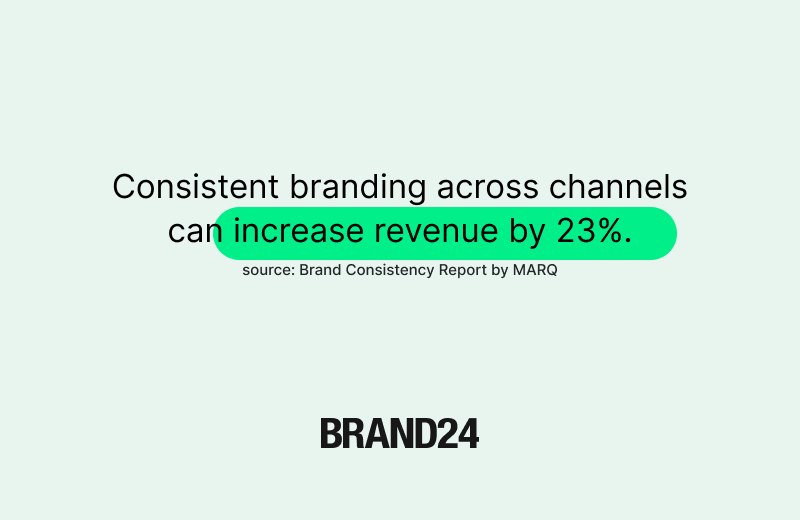
The strategic payoff is real. A strong, consistent brand:
- Protects your market position and makes you harder to copy and overthrow
- Builds customer trust – a crucial element of the path from awareness to purchase
- Improves marketing ROI – because consistent messaging is easier and faster to replicate
- Speeds up crisis recovery – the trust works like a buffer because consumers are more keen on forgive brands they trust when they commit a reputational mistake
In practice, a brand audit turns “I think our brand is fine” into “here’s exactly what’s working, what isn’t, and what we should fix first.”
That’s the difference between a brand strategy built on data and one built on hope.
When should you conduct a brand audit?
Here are situations when a full branding is needed:
- A planned rebrand or visual identity refresh
- A merger or acquisition that requires two brand identities to become one
- A noticeable decline in your market position
- Expansion into a new market or region
- Recovery from a PR crisis to assess the true impact on your brand
- It’s simply been a year – an annual brand audit helps prevent small issues from escalating
Signs your brand needs an audit
Sometimes the need for a brand audit is a bit more subtle. Consider conducting a brand audit when you realize that:
- Your brand messaging sounds different on every channel
- Sales are steady, but brand awareness is decreasing
- Customers describe you in ways that don’t match how you describe yourself
- New employees can’t clearly explain what the brand stands for
- Your brand guidelines are outdated, or don’t exist at all
If two or more of these sound familiar, don’t wait for the annual review. Audit now.
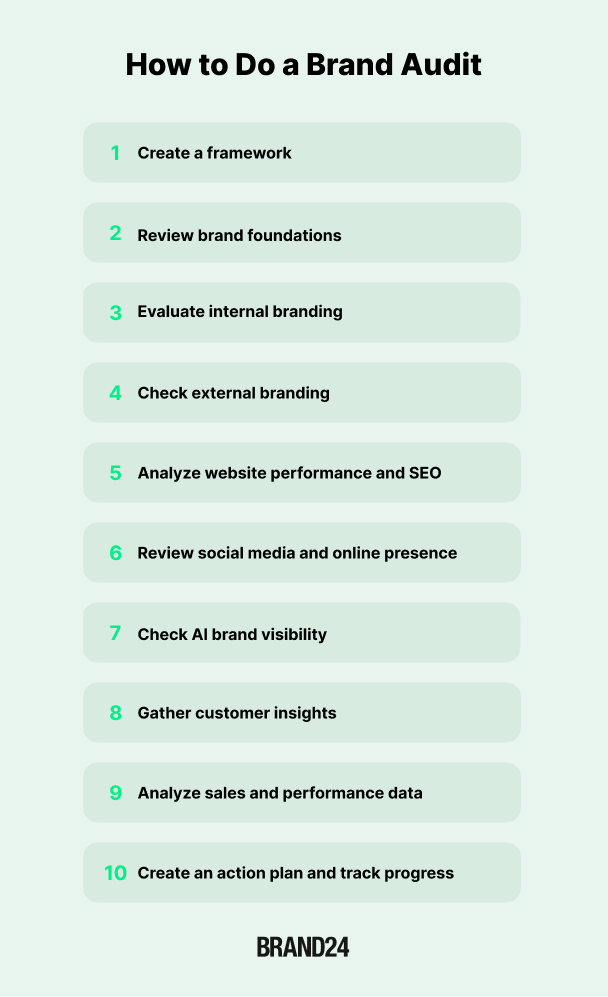
How to conduct a brand audit? 10 steps
Step 1: Define your framework
At the beginning, define the purpose and scope of your audit.
In other words, you must identify which aspects of your brand you want to focus on – such as brand awareness, perception, consistency, or performance.
Regardless of your choice, establish a baseline. Clearly define where your brand currently stands using measurable goals, KPIs, and metrics.
For example:
- When auditing brand awareness, your baseline could be the volume of monthly mentions or social media reach goals, KPIs, and metrics
- When auditing brand perception, your baseline could include sentiment analysis, customer satisfaction score (CSAT), or review ratings.
Step 2: Review your brand foundations
Before diving into data and design, take a closer look at the core elements defining your brand identity.
This step is about confirming if your foundational brand elements still reflect who you are, what’s important to you, and how you want to be perceived.
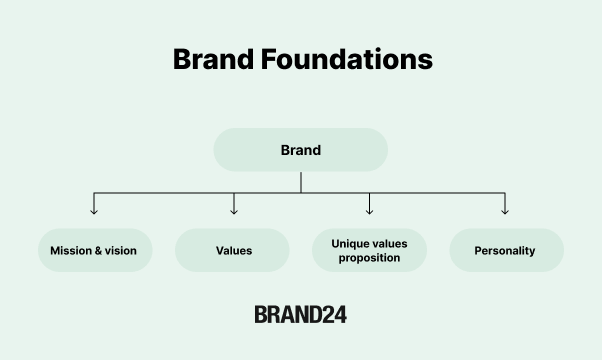
In practice, review your:
- Mission and vision statements. Do they still reflect your company’s purpose and long-term direction?
- Brand values. Are they clearly defined, consistent, well-communicated, and truly visible in your company culture?
- Unique value proposition (UVP). Does it clearly differentiate you from competitors and resonate with your audience?
- Brand personality. Is it aligned with your current positioning and customer expectations?
If you discover a gap between how you envision your brand and how others truly perceive it, it may be time to update your brand foundations.
Step 3: Evaluate internal branding
Your brand starts from within.
A strong internal branding ties your employees to the company’s values and mission, fostering a culture of trust, motivation, and productivity.
Evaluating internal branding involves communicating the brand’s story, creating initiatives that embody the brand in people’s lives, and ensuring that your team feels connected to the brand’s mission, values, and messaging.
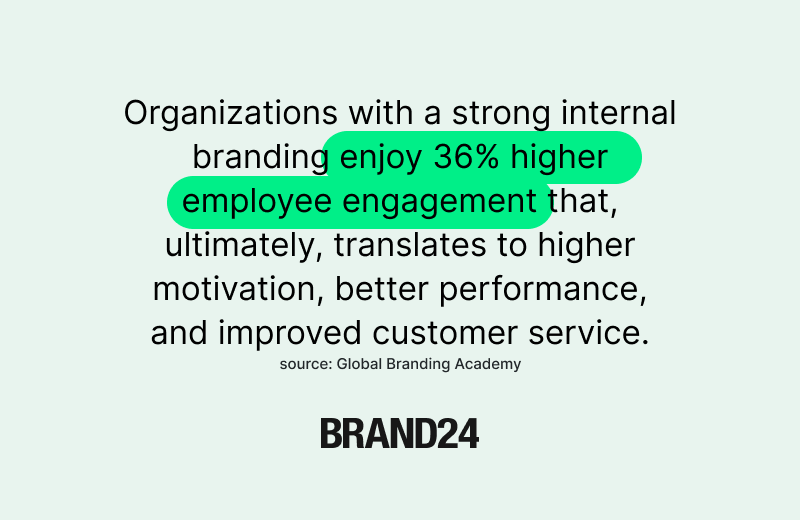
In practice, you can discover your internal branding through:
- Employee satisfaction surveys
- Internal communication audit
- Culture assessment
When done well, a strong internal branding strategy turns employees into powerful brand ambassadors, improves workflow, and boosts the brand’s reputation.
Step 4: Check your external branding
Now, turn your attention to the outside.
External branding means how a company presents itself to the public. It encompasses all the visible elements that are customer touchpoints – from your logo color palette to paid ads and public relations.
This step helps you determine whether your external image aligns with your intended positioning and how consistently your brand is presented across all channels.
Review:
- Visual identity. Is your logo, color palette, and typography used consistently across platforms?
- Messaging and tone. Does your communication sound like your brand across social media, your website, emails, and ads?
- Marketing materials. Are your visuals and messages consistent, recognizable, and up to date?
- Public relations and media presence. How is your brand presented in external articles, interviews, and partnerships?
If you discover inconsistencies or outdated elements, create a list of what needs to be refreshed or unified.
Step 5: Analyze website performance and SEO
Your website is often the first touchpoint between your brand and potential customers. Therefore, it plays a significant role in shaping how your brand is perceived.
A well-performing website not only reflects professionalism but also strengthens brand visibility, user trust, and conversions.
Analyze:
- Technical performance. Check site speed, mobile responsiveness, and loading times using tools like Google PageSpeed Insights or GTmetrix. Slow or unresponsive pages can harm both SEO and user experience.
- User experience (UX). Is your website intuitive, easy to navigate, and visually aligned with your brand identity? Are visitors finding the information they need quickly? You can use tools like Hotjar or Clarity.
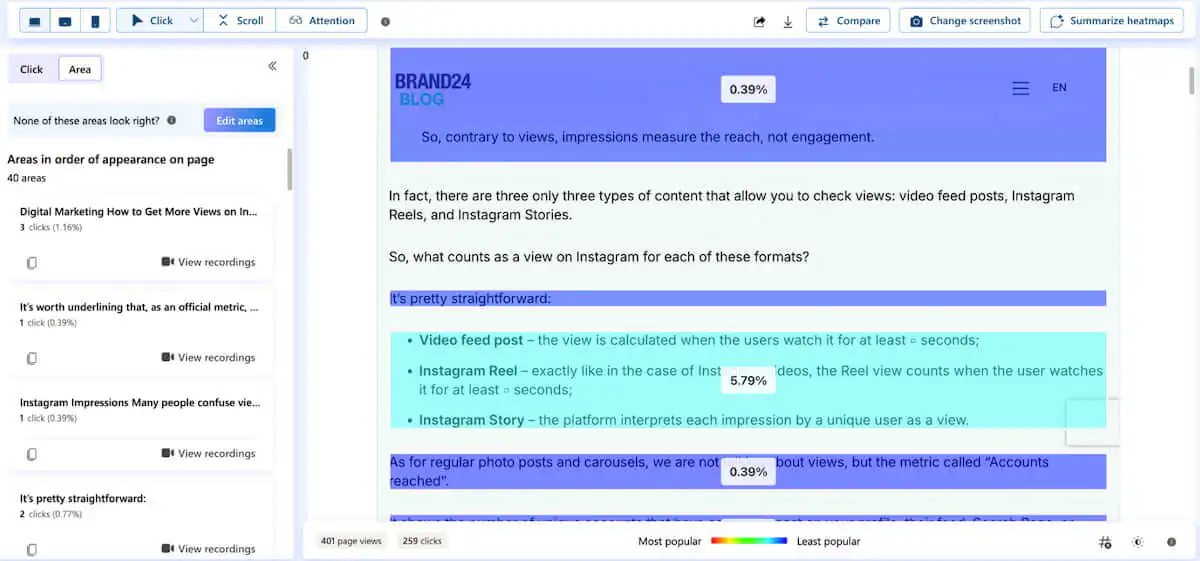
- Content quality. Review whether your website copy is clear, engaging, and consistent in tone. Does it reflect your brand’s voice and values?
- SEO performance. Use tools like Google Analytics or Semrush to check organic traffic, keyword rankings, and backlink quality. Identify which pages drive the most traffic and which need optimization.
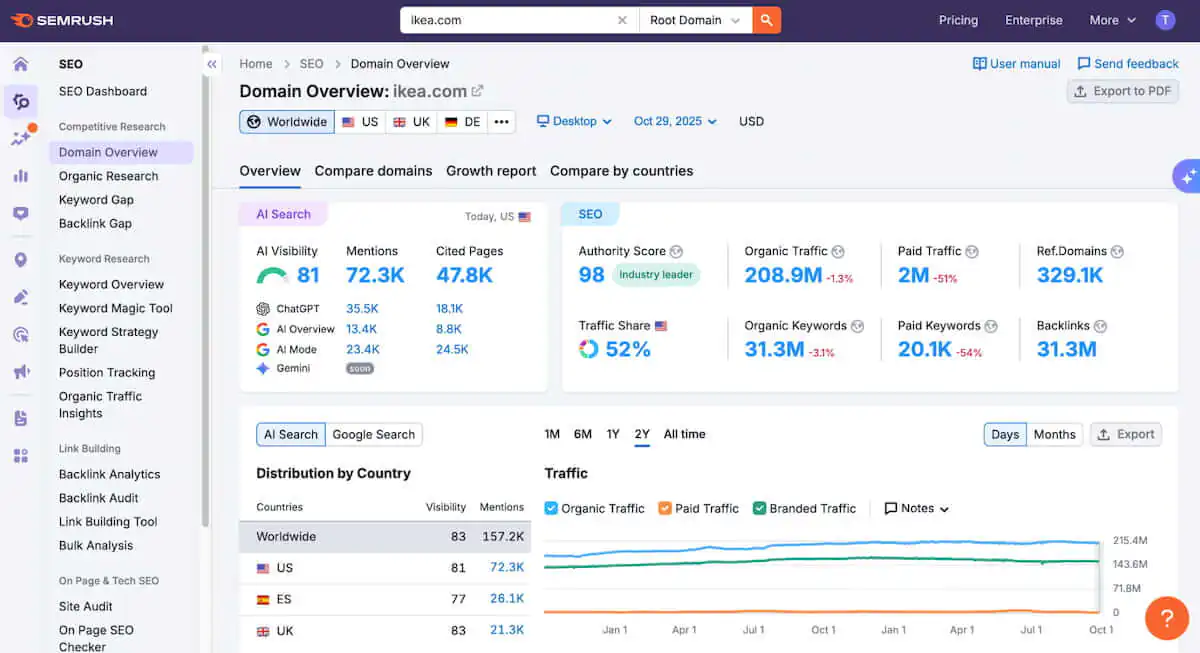
By identifying technical issues, UX bottlenecks, and SEO gaps, you can strengthen your online presence and ensure that your website truly supports your brand goals.
Step 6: Review social media and online presence
Social media channels are where your brand’s personality is most visible. They’re also places that shape customers’ opinions fast.
Therefore, no brand audit would be complete without assessing whether your online presence accurately and effectively reflects your brand.
Analyze:
- Your performance on various social platforms. Not every social media platform gives you the same visibility and hype. Check which of them you should focus on. And which should you abandon.
- Content performance. Review engagement metrics, including likes, comments, shares, and click-through rates. Identify which content formats resonate with your audience.
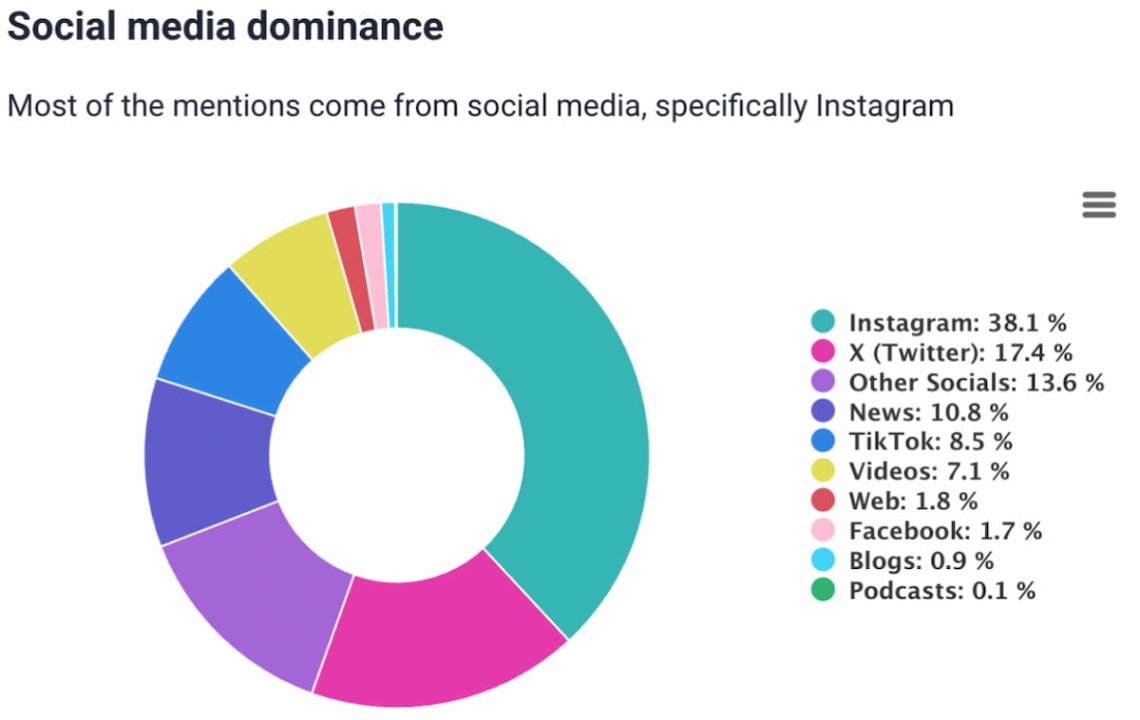
- Consistency. Check if your brand voice, tone, and visual identity are the same across all platforms you use (LinkedIn, Instagram, Facebook, X, TikTok, etc.)
- Target audience. Are you reaching the right people, so those who match your target audience? Review follower demographics and behavior.
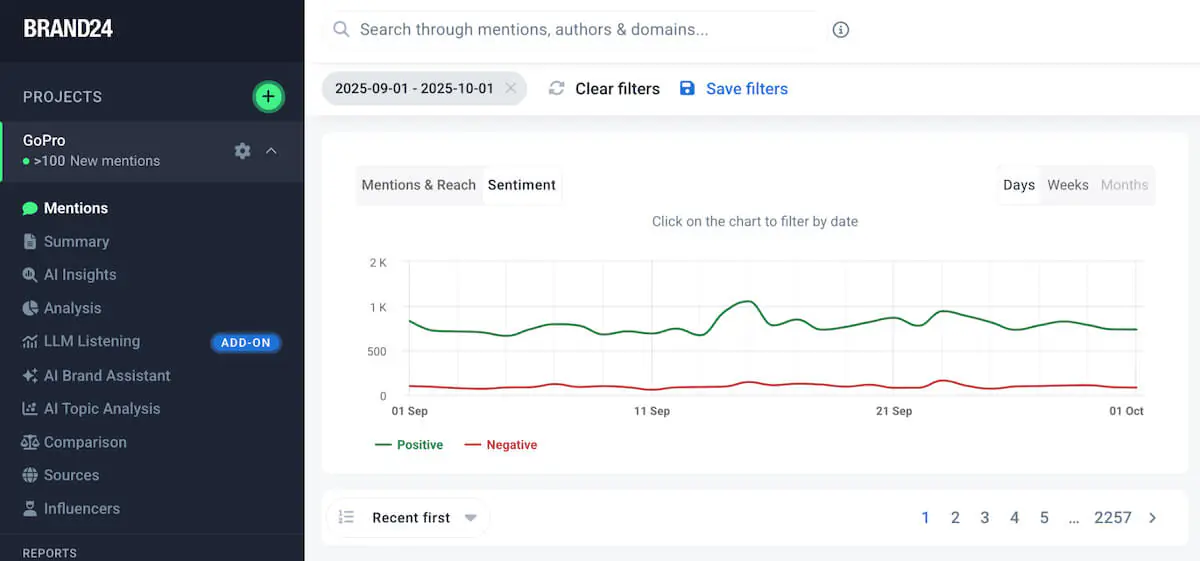
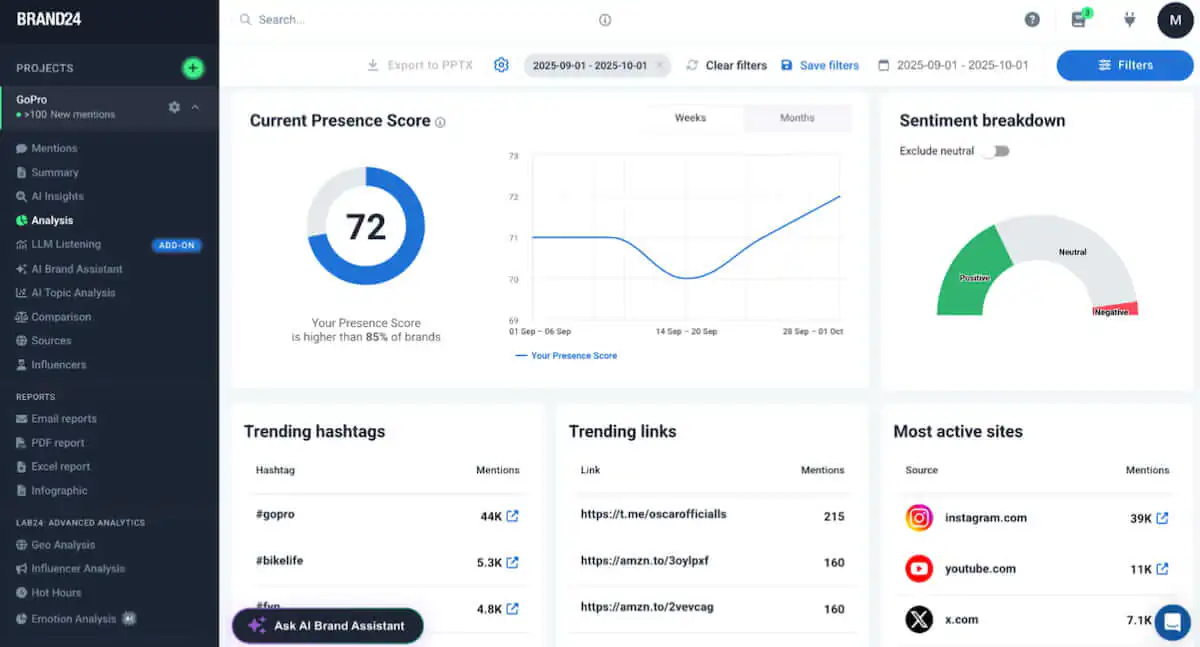
- Reputation and sentiment. Use social listening tools (like Brand24) to monitor mentions, hashtag performance, and sentiment around your brand. Look for recurring topics, trends, and influencers.
Benchmark against your competitors
Your brand doesn’t exist in a vacuum, so your audit shouldn’t either. Set up a side-by-side comparison with two or three direct competitors and benchmark:
- Share of voice. Who owns the conversation in your category, and by how much?
- Positioning and messaging. How do they describe what they do – and where’s the gap you can own?
- Visual identity and UX. How do their website, content, and social presence stack up against yours?
- Sentiment. Are their customers happier than yours? With Brand24 you can run a separate project for each competitor and compare sentiment side by side.
The goal isn’t to copy anyone. It’s to find the differentiation gap – the space in the market that’s yours to take.
Step 7: Check AI brand visibility
To audit your brand visibility on LLMs, test a set of prompts your customers actually use across ChatGPT, Gemini, Perplexity, and Google’s AI Overviews, then track how often your brand appears, how accurately it’s described, and which sources shape those answers.
With the rise of generative AI tools, your brand visibility goes beyond traditional search engines and social media.
ChatGPT, Perplexity, Gemini, DeepSeek, and AI Overview – all these tools are becoming increasingly important for brand discovery and reputation.
Therefore, monitoring your AI brand visibility is a crucial part of a modern brand audit.
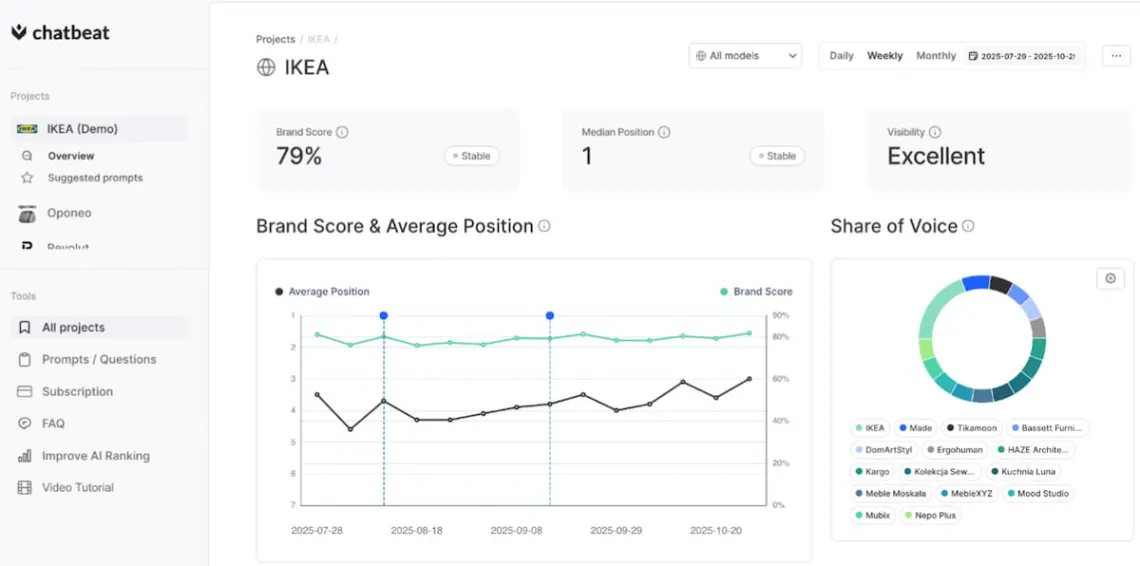
You can do it manually, but to have stronger control over the whole process, I recommend using a dedicated AI visibility monitoring tool, such as Chatbeat.
Chatbeat allows you:
- Define prompts that the tool will automatically run to assess your brand’s performance in major LLMs
- Identify which sources (your website, Wikipedia, industry media, etc.) are influencing how AI models describe your brand, and if they do it correctly
- Understand how your brand appears in AI-driven responses
- Benchmark your brand with competitors regarding AI visibility performance
How to audit your brand visibility in LLMs?
Regardless of the method you’ll choose (manual vs. dedicated AI visibility tool), here’s a quick guideline on how to perform an audit of your brand visibility in LLMs:
- List the prompts that matter. Start with the questions real customers ask: “best [your category] tool,” “alternatives to [competitor],” “is [your brand] better than [competitor]?”
- Run them across multiple AI tools. Check ChatGPT, Gemini, Perplexity, and DeepSeek. Answers vary a lot between them.
- Score what you find. Track whether you’re mentioned, how accurately, and the sentiment. Tools like Chatbeat let you monitor your own defined set of prompts over time, instead of checking each one by hand.
- Trace the sources. See which pages – your site, G2, Reddit, industry media – AI models rely on when they describe you.
- Fix and re-check. Correct wrong information at the source, strengthen the pages AI cites, then re-run the same prompts to see if visibility improves.
Learn more: How to measure and maximize AI brand visibility?
Step 8: Gather customer insights
Your customers are the ultimate judges of your brand.
They completed the entire purchase process – from initial awareness to post-purchase experience – and can give you the most authentic feedback about your brand’s strengths and weaknesses.
In practice, gathering customer insights helps you understand how people perceive your brand, what they value most, and where there are areas for improvement.
Explore:
- Customer surveys and interviews. Ask questions about satisfaction and expectations.
- Online reviews and testimonials. Analyze what customers write on review platforms like Google, G2, TrustPilot, etc.
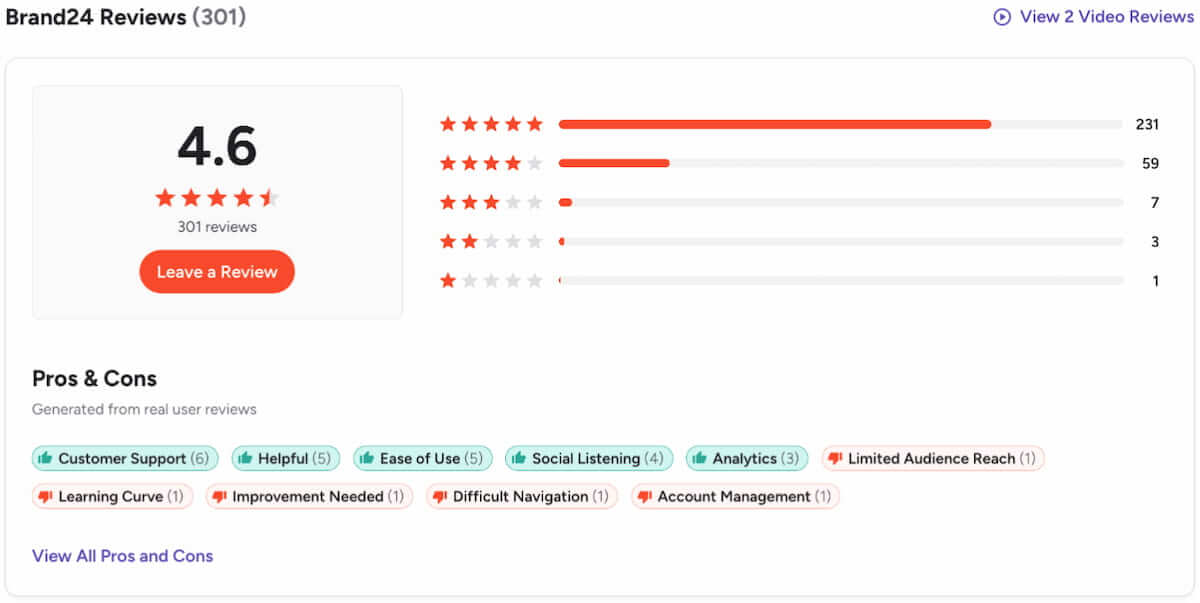
- Social listening. Use brand monitoring tools like Brand24 to monitor conversations and sentiment about your brand across multiple online platforms
- Customer service data. Review complaints, support tickets, and inquiries to identify pain points in the customer journey.
Customer feedback analysis is an invaluable source of data that can help you refine your brand experience, improve communication, and strengthen your brand reputation.
Learn more: Guide on customer feedback analysis
Step 9: Analyze sales and performance data
At the end of the day, your brand’s strength is reflected not only in awareness and perception but also in business results and performance metrics.
Analyzing your sales and marketing data helps you understand how effectively your brand converts attention into real, measurable outcomes.
In practice, focus on:
- Sales trends. Compare results over time to identify growth patterns and seasonal changes.
- Customer acquisition cost (CAC). Calculate how much you spend to attract a single customer. Rising acquisition costs may indicate a need for improvement.
- Conversion rates. Analyze how many leads turn into customers across different channels (website, ads, email, social media).
- Marketing ROI. Check which campaigns, channels, and activities bring the highest return on investment. This will help you identify where your spending pays off, and where resources are being wasted.
Further read: Most important brand metrics you should track
Step 10: Create an action plan and track progress
After gathering insights from all previous steps, it’s time to turn analysis into action!
A brand audit is valuable only if it leads to measurable improvements. And that’s where your action plan comes in.
Here’s what you should include in it:
- Key findings. Identify which issues and areas have the greatest impact on your brand’s performance and perception. Prioritize areas that influence customer trust, visibility, and revenue.
- SMART goals. Make sure each goal in your action plan is Specific, Measurable, Achievable, Relevant, and Time-bound. For example: “Increase positive sentiment share to 30% within 6 months”.
- Assign ownership. Decide who will be responsible for each task. Clear accountability builds action.
- Set a timeline. Establish milestones and deadlines to track progress.
- Define KPIs. Use measurable indicators and metrics to evaluate progress.
FAQ
An LLM brand visibility audit checks whether AI assistants like ChatGPT, Gemini, or Perplexity mention your brand when answering questions your customers actually ask. To run one, test a set of relevant prompts across multiple platforms and track key metrics: Brand Score, Average AI Visibility, Share of AI Voice, and sentiment. Pay attention to which sources shape AI responses – your website, review platforms like G2, industry blogs, and community sites like Reddit all play a role. Run the audit regularly, since LLM training data changes and your competitive position can shift without warning.
A complete brand audit covers internal branding (values, culture, communication), external branding (visual identity, messaging, PR, website), customer experience, social media and AI visibility, and hard business data like sales and marketing ROI. The output is a prioritized action plan, not just a report.
A brand audit gives you a clear, data-driven picture of where your brand stands — helping you measure awareness, sharpen messaging, fine-tune positioning, and identify what needs refreshing before small issues turn into bigger problems. Done regularly, it’s one of the most effective ways to grow company value and stay ahead of the competition.