Table of contents
2M Marketers

Brand reputation accounts for 30–40% of a company’s total enterprise value in 2026.
A single negative review can cost a business 22% of its potential customers — and three or more push that number to 59%.
That vividly shows the importance of media monitoring.
Key takeaways
-
The importance of media monitoring has never been greater.
With brand reputation accounting for 30–40% of a company's total enterprise value in 2026, tracking what's being said about you is no longer optional — it's a core business strategy.
-
Brand reputation is a measurable business asset.
In 2026, it accounts for 30–40% of a company's total enterprise value — making media monitoring a business-critical activity, not a marketing nice-to-have.
-
Knowing your competitors is just as important as knowing your customers.
By tracking what people say about your rivals, you can learn from their mistakes, spot market gaps, and sharpen your own strategy, without costly trial and error.
-
Staying ahead means staying informed.
Marketing’s evolving faster than ever: new platforms, AI-generated content, and changing consumer expectations. Media monitoring helps you catch industry shifts early so you can adjust your strategy before your competitors do.
What is media monitoring? Definition
Media monitoring is the systematic process of tracking, collecting, and analyzing mentions, references, and conversations across multiple media channels — including social media, forums, blogs, review sites, and offline sources — to gain actionable insights into brand perception, industry trends, and audience sentiment.
Media monitoring helps you manage how your brand, product, or service is perceived in the media.
Thanks to media monitoring tools, you can gather information about your campaigns, marketing initiatives, competitors, and industry.
This information can give you valuable insights into how your business, competitors, and industry are covered in the media, helping you manage your brand’s reputation, boost brand awareness, gain PR insights, improve the customer experience, and more.
Why is media monitoring important?
Key fact: Understanding what is happening around you is essential to your brand’s success.
As mentioned in the previous paragraph, media monitoring helps you stay up to date with the latest trends and mentions using just one app.
Media monitoring can make a big difference for your business, so I’ve put together eight key reasons to take a closer look.
Let’s go through them now!
PR and Reputation Management
Today, your customers — current and potential — talk about you everywhere: on social media, news sites, review platforms (TripAdvisor, Yelp, Google Reviews), blogs, and forums. Every tweet, unboxing video, or comment shapes how people perceive your brand.
Key fact: According to BrightLocal research, 91% of 18-34-year-olds trust online reviews as much as personal recommendations. Moreover, customers read an average of 10 online reviews before feeling able to trust a business.
This is exactly where the importance of media monitoring becomes clear.
Tracking what’s being said about you directly impacts customer trust, purchasing decisions, and ultimately — your bottom line.
In simple terms: a good reputation means your business is more credible than its competitors.
Market research
Let me ask you something: do you really know where your potential customers are doing their research—and what’s shaping their buying decisions?
Quick answer: Market research provides answers to all these questions.
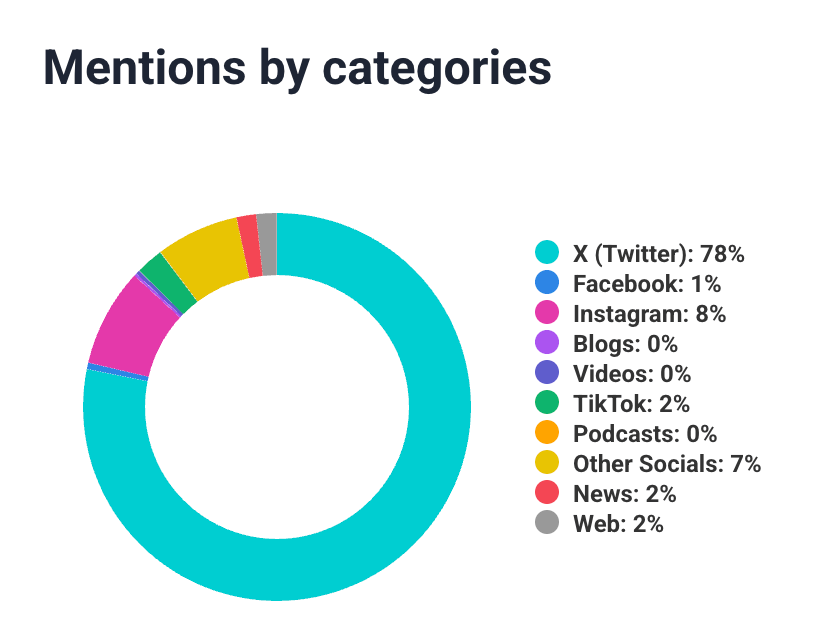
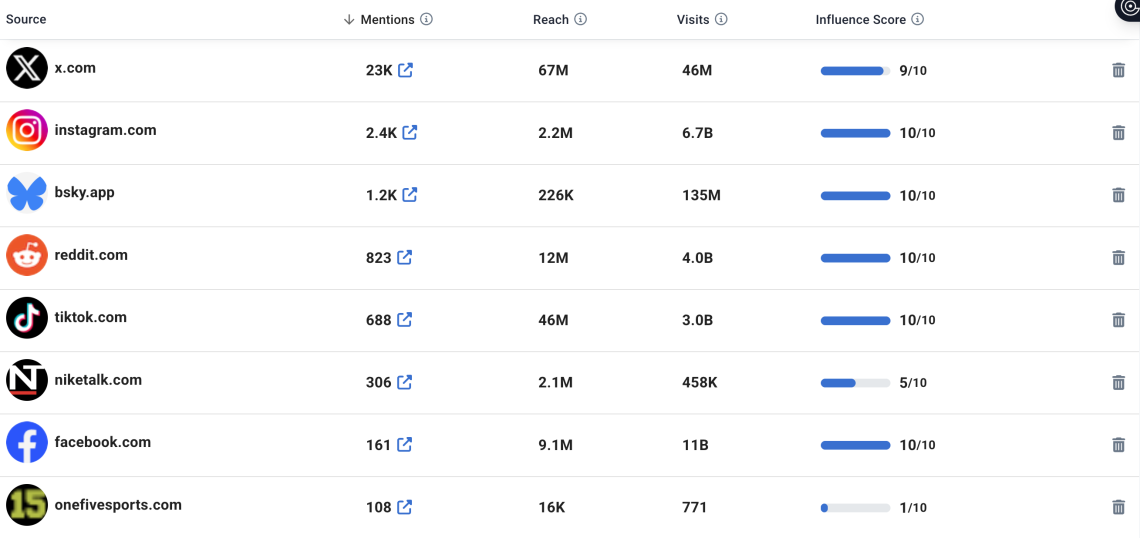
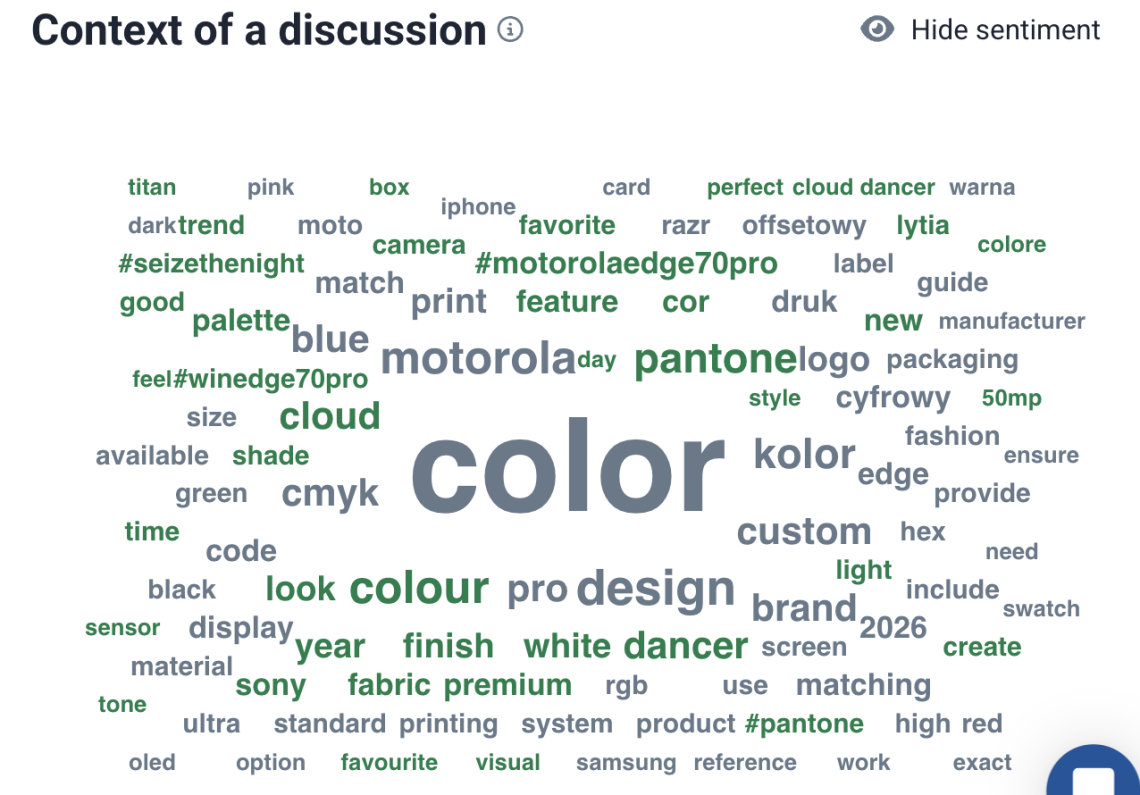
Thanks to media monitoring tools, you can see:
- On which media platforms are people talking about your business
- List of the most active sites with mentions containing your keywords
- Context of a discussion about your brand
Investing our time and effort in market research can yield many benefits.
Here is the list with a few examples of such benefits:
- Strengthening market position
When entering a new market segment or refreshing your positioning, run keyword-based monitoring in Brand24 weekly, filtering by industry terms and competitor names — because the gap between how you describe your value and how your audience talks about their problem is where repositioning opportunities hide. - Finding where customers search
When planning a content or paid distribution strategy, pull a Sources Report in Brand24 monthly to map which platforms (Reddit threads, niche forums, LinkedIn groups, YouTube comment sections) generate the most brand-adjacent conversations — because advertising where people aren’t already discussing your category wastes budget that a 30-minute data pull could redirect. - Understanding customer needs
When preparing a product roadmap or quarterly marketing plan, export mention data filtered by question-type phrasing (“how do I,” “why does,” “what’s the best”), then cluster themes manually or via AI tagging — because feature requests buried in forum threads are cheaper to act on than those discovered through formal surveys six months later. - Identifying threats and opportunities
When you see a sudden jump in mentions in your Brand24 dashboard, check it against Google Trends and your news alerts that same day. An unexpected spike usually means one of two things: a PR issue starting to brew or a chance to ride a wave of attention, and you’ll handle those two situations in totally different ways. - Facilitating strategic planning
When building a quarterly strategy deck, pull a sentiment-over-time report for your category keywords from the previous 90 days and annotate it against your campaign calendar — because a strategy built on what your audience actually said last quarter outperforms a strategy built on what analysts predicted they would say.
Competitor analysis
“Keep your friends close and your enemies closer.”
I think that everybody knows the legendary quote from The Godfather II.
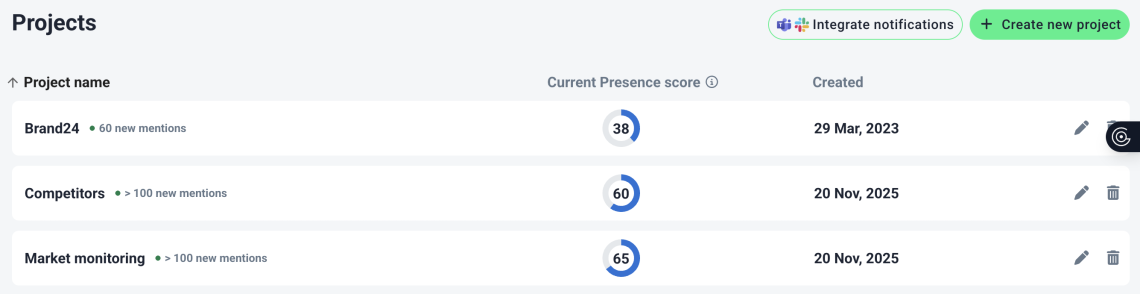
Competitor analysis helps you gather data and analyze your competitors.
I monitor it weekly, and here’s the proof:
It’s an essential tactic for understanding what your competitors are doing, their strengths and weaknesses, and what can be extremely helpful in protecting and managing your marketing activities.
Key fact: Competitive analysis is an investment, thanks to which, by investing a relatively small amount of money, you can gain a remarkable insight into the market around you.
By analyzing your competition, you can not only learn from their best practices but also avoid their mistakes.
Competitor monitoring can give you a list of interesting business insights; let’s go through them now:
- Understanding competitor perception
When a competitor launches a new product or campaign, set up a dedicated Brand24 project for their brand name and track it for the first 30 days post-launch, filtering for negative sentiment — because their unhappy customers are describing, in plain language, exactly the gap your next positioning message should fill. This is the method Nick Baklanov at HypeAuditor uses: when a competitor earns media coverage, he contacts that outlet directly and offers a counter-perspective, converting their PR moment into his. - Discovering hidden competitors
If you see your traffic or share of voice dropping and can’t pinpoint why, set up a broad industry keyword monitor in Brand24 (skip branded terms, use category phrases like “best CRM for startups”). Then sort the results by domain frequency. The competitor pulling you down is often someone you haven’t officially benchmarked yet. - Tracking competitor pricing
When a competitor announces a pricing change (detectable through monitoring terms like “[Brand] pricing,” “[Brand] too expensive,” “[Brand] price increase” on Reddit and G2), document it in a shared competitive log updated bi-weekly — because customer reactions to competitor pricing tell you both where the market ceiling sits and which segments are ready to switch. - Learning from competitor product failures
When a competitor’s product receives a cluster of negative reviews on G2, Capterra, or Trustpilot — flagged automatically through a review-monitoring alert — map those complaints directly against your own product’s feature set and update your sales battlecard within the week — because a documented competitor weakness is only a competitive advantage if your sales team knows about it before the next call. - Improving campaign targeting
When planning a paid or organic campaign, pull the audience demographic and engagement data from a competitor’s top-performing content using tools like Similarweb or SparkToro, then cross-reference it with the subreddits and LinkedIn groups your monitoring tool flags as high-activity, because targeting the audience your competitor already educated is faster than building awareness from zero.
Real-life example:
Nick Baklanov, PR & Research Manager at HypeAuditor, uses Brand24 daily to track where competitors are mentioned and what journalists write about them.
When he spots a media outlet or podcast covering a rival, he reaches out to offer additional insights — turning competitor coverage into new PR opportunities for HypeAuditor.

Full case study: Monitoring PR and Finding New Media Opportunities with Brand24
Customer insights
Consumer insight is an interpretation of what your audience thinks, feels, and needs — and why.
This is where the importance of media monitoring truly shines: by tracking real conversations about your brand, you gain a direct window into what drives your customers’ trust and purchasing decisions.
Key fact: And in 2026, that window matters more than ever. 94% of marketers report that personalization directly increases sales — but personalization is only possible when you truly understand your audience.
At the same time, 60% of consumers now question the authenticity of online content more than before, meaning brands that listen and respond to real customer voices stand out from those that don’t.
Companies need to build a 360-degree view of their consumers that enables proactive decision-making.
Media monitoring is exactly how you build that view, allowing you to fine-tune both your communication and product development based on what customers are actually saying, not just what you assume they want.
Customer feedback
Top-performing companies don’t just wait for feedback — they actively seek it across social media, review sites, forums, and blogs. In the era of social media, listening to what people say about you, whether positive or negative, prompted or unprompted, is non-negotiable.
Key fact: Tools like Brand24 give you access to all public brand mentions, making it easy to spot and respond to customer feedback in real time.
Here’s why that feedback matters:
- Improves your products and services. Real customer opinions reveal what works, what doesn’t, and what needs fixing — helping you build something precisely tailored to their needs.
- Measures customer satisfaction. In a hyper-competitive market, reading and reacting to customer opinions shows you care about more than just revenue — and that builds loyalty.
- Improves customer retention. When an unhappy customer speaks up, media monitoring tools let you respond quickly, resolve the issue, and often turn a frustrated client into a loyal one. You may not always be at fault, but solving the problem is always your responsibility — and your opportunity.
Remember, you are 100% responsible for your products or services. And it’s your job to solve your customers’ problems.
This is the best moment to win back the client and even increase his loyalty to our business.
By doing this, you’ll show that you care about your every single client, no matter if there are 30 or 30 000 of them.
Learn more: Improve your knowledge about crisis management.
Sentiment analysis
Sentiment analysis is the automated process of examining online content to determine its emotional tone — categorizing mentions as positive, negative, or neutral based on the language used.
This is where the importance of media monitoring becomes especially tangible.
Tools like Brand24 automatically assign sentiment to every mention, giving you a real-time emotional pulse of how your audience perceives your brand.
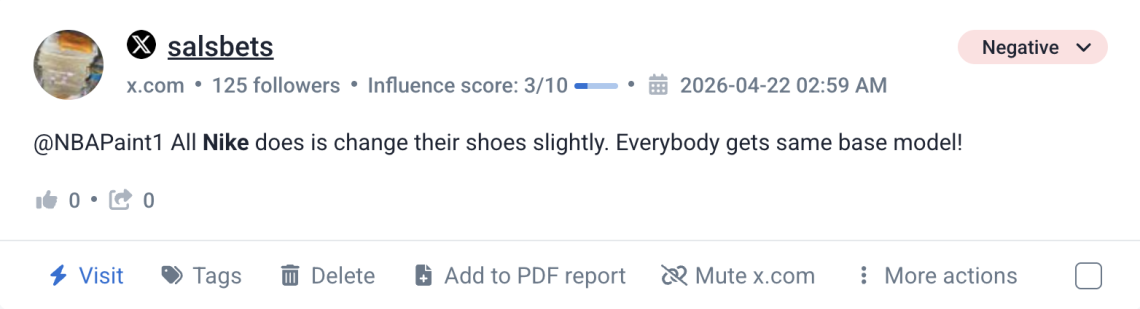
Negative sentiment can flag a PR issue before it escalates, while positive mentions are an opportunity to engage and reinforce customer loyalty — sometimes a simple “Thank you” is all it takes to strengthen that relationship.
Sentiment analysis is particularly powerful in two areas: reputation management and customer feedback — both of which depend on understanding not just what people are saying, but how they feel when they say it.
Now, take a short break from reading and check out what our content manager, Chia, has to say about what sentiment analysis reveals:
Learn more: Find out more about sentiment analysis, how to use it, and how big brands like UBER benefit from it by reading this post.
Review sites
Review platforms like TripAdvisor, Yelp, Google Reviews, Booking.com, and G2 aren’t just “nice to have” anymore!
They’re a key part of how people size up brands before they spend a dime.
Key fact: Between 93% and 97% of consumers read online reviews before making a purchase, and consumers now use an average of six review sites before choosing a business — up from previous years. Yet only about 5% of businesses respond to their reviews, despite 89% of consumers expecting a response.
That gap is your opportunity.
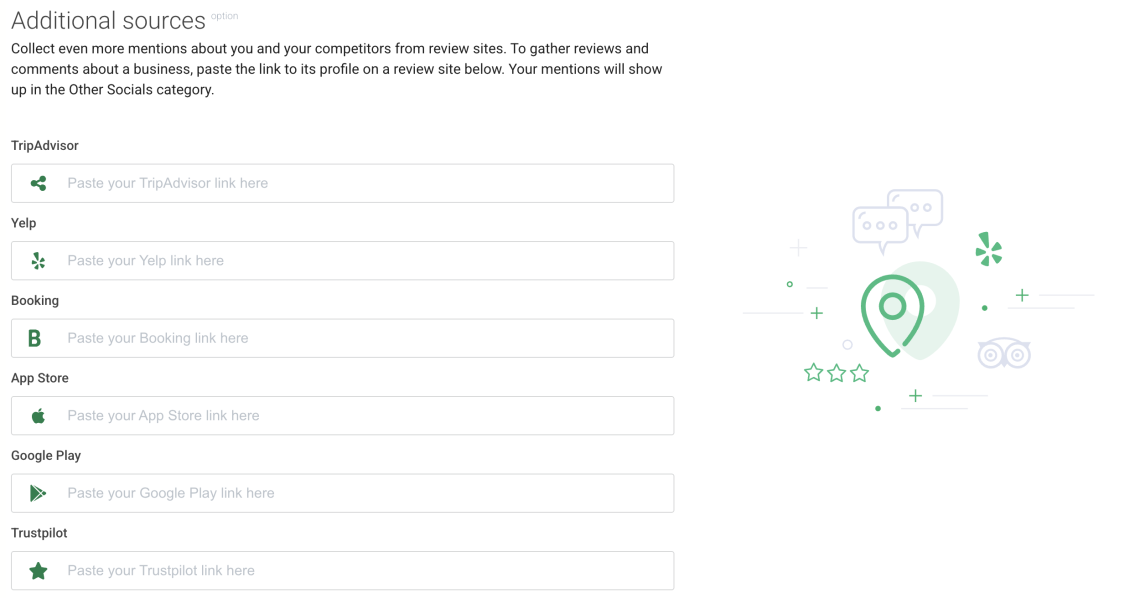
Media monitoring tools gather all reviews and mentions from these platforms in one place, so you can respond quickly, protect your reputation, and never miss a critical opinion.
Trend monitoring
In 2026, new platforms, technologies, and consumer habits pop up all the time, and brands that don’t keep up usually struggle to catch up later.
Marketing is experiencing its biggest disruption in 20 years, with AI fundamentally changing how businesses find and engage customers.
Key fact: 56% of marketers say the internet is now flooded with AI-generated content, and 65% report that consumers are getting better at recognizing it — meaning the bar for standing out keeps rising.
Trends are moving faster and fragmenting by geographic and cultural niches, so generic, one-size-fits-all strategies no longer work.
Media monitoring keeps you informed on industry shifts in real time, so you can adapt your strategy — and your messaging — before your competitors even notice the change.
Real-life example:
That’s exactly how Neon Panda, a Mexican beverage company, operates. When “natural hydration” began trending in consumer conversations, their team logged it as an area of opportunity, brought it into team meetings and internal reports, and used it to shape future messaging and product exploration — all before it became mainstream noise.
By tracking language trends, sentiment, and where conversations were taking place across platforms, they were able to identify cultural shifts early and act with intention rather than scrambling to react.
Full case study: 2 Smart Ways Neon Panda Stays Ahead of Trends With Brand24
How to do media monitoring?
If you want to start monitoring media and know what people are talking about, you need to take a few steps:
- 1 Step 1: Choose your goal. Decide what you want to achieve — reputation management, PR tracking, competitor intelligence, customer feedback, or measuring business impact. Start with clear objectives before anything else.
- 2 Step 2: Select your keywords. Think about brand names, competitor names, industry terms, campaign hashtags, and potential crisis terms. Choose wisely — most tools charge based on the number of keywords you track.
- 3 Step 3: Pick the right tool. Look at three things: the number of sources monitored, the features offered (real-time alerts, sentiment analysis, AI summaries), and cost-effectiveness. Prices range from $99 to several thousand dollars per month depending on your needs.
- 4 Step 4: Gather and analyze results. Track key metrics like mention volume, reach, sentiment breakdown, share of voice, and channel breakdown. These tell you where conversations are happening and how your brand is perceived.
- 5 Step 5: Turn data into insights. Raw data is just numbers. Clean it, segment it, spot trends, and connect it to business outcomes — traffic, leads, sales, or reputation shifts. Every insight should lead to a clear action.
Learn more: Find out more details about how to do media monitoring.
Conclusions
Media monitoring gives you a 360° view of your brand’s presence — online and beyond. To summarize, it helps you:
| Reason | Key Benefit |
|---|---|
|
PR & Reputation Management |
Track what’s being said about your brand across all platforms to protect credibility and customer trust |
|
Market Research
|
Understand where customers talk, what influences their decisions, and tailor marketing accordingly |
|
Competitor Analysis |
Learn from competitors’ strengths and mistakes, discover unknown rivals, stay competitive
|
|
Customer Insights |
Build a 360° view of audience needs to enable personalization and proactive decision-making
|
|
Customer Feedback |
Spot and respond to opinions in real time — improve products, retention, and loyalty |
|
Sentiment Analysis |
Measure emotional tone of mentions to catch PR issues early and reinforce positive relationships |
|
Review Sites |
Monitor ratings across platforms, respond quickly, and close the gap most businesses ignore |
|
Trend Monitoring |
Detect industry shifts in real time and adapt strategy before competitors notice |
FAQ
What are the skills in media monitoring?
1. Critical thinking is important for interpreting media coverage and its potential implications for your brand.
2. Analytical skills are required to make sense of large volumes of data and identify trends or patterns.
3. Familiarity with media monitoring platforms and tools is also necessary to efficiently track and evaluate your brand mentions across different channels.
4. Additionally, strong communication skills can help report insights clearly and impactfully.
What is media monitoring vs listening?
Media listening, often used interchangeably with social listening, goes a step further by analyzing the gathered data to extract insights, understand sentiment, identify trends, and make informed decisions.
In simple words: media monitoring = collecting data, media listening = making sense of it.
What is an example of media monitoring?
They could set up alerts for certain keywords related to their brand and industry.
This way, they can promptly respond to customer queries and complaints, gauge public sentiment, monitor the competition, and stay updated on industry trends.
What is social media monitoring?
It allows businesses to stay on top of what people are saying about them in real time — whether it’s a customer complaint, a viral post, or a competitor’s campaign.
By analyzing this data, companies can manage their reputations, respond to feedback quickly, and uncover valuable insights into their audiences. In short, it’s your brand’s early warning system and market research tool rolled into one.


Top Reads
X (Twitter) Analytics Tools: The 15 Best for 2026
Brand Awareness Strategy [Ultimate Guide for 2026]
Sentiment Analysis in 2026: Definition, AI Methods & Original Research
Brand Monitoring: Tools & Guide for 2026
Brand Reputation Management: Expert Guide + Original Research [2026]
How to See How Many Times a Hashtag Was Used on X (Twitter)
9 Hashtag Tracking Tools Tested in 2026
Social Media Reach: How to Measure & Improve It in 2026?
Share of Voice: Definition, Formula, Tools [2026 Guide]
Social Media Analysis: Complete Guide for 2026
Start Social Listening!
Get the Brand24 trial and start social listening like a PRO.