Table of contents
2M Marketers

Corporate reputation management is the process of tracking and influencing what people say about your company across reviews, social media, and online discussions.
In practice, that means catching a negative Reddit thread before it ranks in Google, or spotting a spike in complaints before it turns into a PR issue.
This guide explains what corporate reputation management is and how to implement a successful strategy, presents online tools for reputation management, and more!
Key takeaways:
-
Reputation is one of your most valuable business assets and one of the easiest to lose
It affects your market value, your ability to attract talent, and how quickly you bounce back from a crisis. Companies with a strong reputation recover faster. Those without one really struggle.
-
Corporate reputation management is about what you consistently do
Patagonia didn't build its reputation with a press release. It took decades of actually living its values. Reputation is the sum of thousands of small actions, not a campaign you run once.
-
When something goes wrong, how you respond matters more than the incident itself
The brands that come out worse are usually the ones that stayed quiet too long, got defensive, or tried to spin the story. Own it fast, be transparent, and focus on fixing it — not managing perception.
-
You can't manage your reputation if you don't know what people are saying
Monitoring brand mentions, sentiment, and online conversations isn't optional anymore. It's how you catch problems before they spiral — and spot opportunities you'd otherwise miss entirely.
-
Bad reputation examples almost always share the same root cause
Slow response, lack of accountability, prioritizing optics over action. It's rarely the original mistake that kills a brand's reputation: it's everything that comes after it.
What is corporate reputation management?
Corporate reputation management is the ongoing process of monitoring, analyzing, and influencing how a company is discussed in customer reviews, social media platforms, news coverage, and other online conversations. It combines real-time tracking of brand mentions with actions like responding to feedback, managing crises, and boosting positive sentiment.
In practice, your company reputation comes down to a few things working together:
- Monitoring – keeping an eye on brand mentions across different channels
- Understanding – spotting patterns, sentiment, and context
- Responding – reacting to feedback, complaints, or praise
- Reinforcing – making sure positive voices don’t go unnoticed
Corporate reputation management elements
Corporate reputation comes from more than one source. It builds from how your company operates and how that shows up in public.
Here are the core elements that shape it:
01 Executive leadership
A leadership statement, interview, or even a single Linkedin post from your CEO can quickly get picked up by the media or shared across the industry. When leaders communicate clearly and consistently, it builds trust, but a single misstep can spark criticism that spreads fast and often ends up outside your control.
02 Workplace culture
Employees are one of the most credible sources about your company.
Your employees are some of the most credible voices about your company.
What they share on platforms like Glassdoor or Linkedin can shape how candidates and potential partners see you. And if negative reviews start piling up, it’s tough to deescalate that with brand messaging only.
03 Corporate social responsibility (CSR)
CSR affects how people evaluate your company beyond the product.
Sustainability claims, social initiatives, or ethical positioning are often discussed publicly, especially when there’s a gap between messaging and actual behavior. That gap is what usually leads to negative press coverage or online backlash.
04 Online presence
Your reputation is often formed before direct contact.
Search results, review platforms, and media coverage create a first impression that’s hard to change later. If negative or outdated content ranks high, it influences trust immediately, even if the issue is no longer relevant.
05 Customer feedback
If you genuinely care about your corporate reputation management strategy, poor customer service just isn’t an option.
It’s not only about being responsive and helpful with your helpdesk tickets: you also need to be proactive and use social media monitoring to show up in the conversations your target audience is already having.
06 Crisis response
How you respond to product issues that customers bring up can shape your company’s reputation.
A delayed reply, lack of transparency, or inconsistent messaging can escalate a situation quickly. On the other hand, when you communicate quickly and clearly, you can keep the situation under control, even when lots of people are watching your actions.
07 Other factors
Other factors include ethical behavior, service quality, crisis management, media coverage, and all other business practices that show your company in a good light.
How to protect your company’s reputation?
TrustPilot’s research shows that 90% of online shoppers have chosen not to buy from a company because of its bad reputation. Being proactive is the best way to protect your company’s reputation. Too many businesses don’t think about their brand image until it’s already in trouble.
Here’s what that looks like in practice:
01 Monitor what’s being said about your brand: Social media monitoring tools can help you spot frequent complaints or sudden spikes in negative sentiment
02 Respond early to negative feedback: Make sure you clarify any client-brand misunderstandings or issues before they spread too wide
03 Amplify positive signals: If customers share positive experiences, make them visible by reusing testimonials in your content plan or engaging with positive mentions
04 Define a crisis management plan in advance: Your team needs to know who responds, how quickly, and on which channels
05 Control where and how your brand appears: Your brand can show up in places you don’t directly manage, like programmatic ads next to harmful content or mentions in unrelated or misleading context
📚 Further read: Brand Safety in Ads and Social Media [2025 Guide]
Best corporate reputation management tools
In 2026, you can automate a lot of the manual work behind reputation management with online reputation management tools. Here are some recommended tools to help you level up your reputation management strategy:
01 Brand24
Brand24 is an AI-powered social listening tool that makes it easier to level up your corporate reputation management strategy. With it, you can track brand mentions and online reviews, set up keyword alerts, run sentiment analysis, and much more.
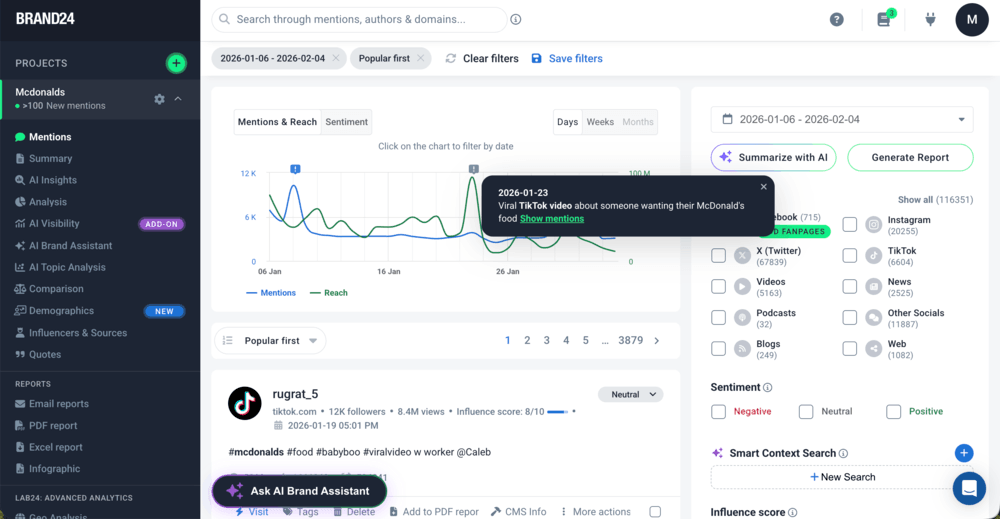
Use it to:
- monitor mentions across social media, news, blogs, and forums
- detect sudden spikes in negative sentiment before they escalate
- analyze sentiment and identify what drives positive or negative perception
- track reputation metrics like share of voice and overall presence
- identify key voices (influencers or critics) shaping the conversation
It’s especially useful when you need to understand how different groups (customers, non-users, media) perceive your brand.
02 Brandwatch
Brandwatch is a powerful social media intelligence platform for managing corporate reputation. Built with enterprises in mind, it offers a wide range of features to help you monitor, protect, and strengthen your brand’s reputation.
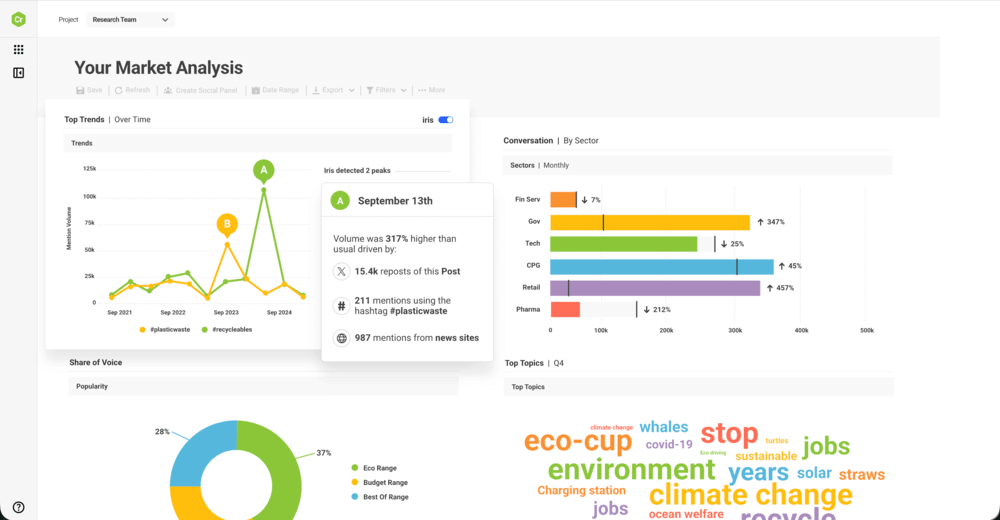
Use it to:
- monitor conversations across millions of sources, including social media and traditional media
- detect potential reputation risks using AI (e.g. sudden sentiment shifts, risk scoring)
- track long-term brand health (e.g. share of voice, brand awareness)
- benchmark your reputation against competitors and past performance
It works best when you need to analyze large datasets, compare many markets, and track changes in reputation over time.
📚 Further read: Brandwatch Alternatives Compared: What to Use Instead in 2026
03 Semrush
Even though Semrush is mainly an SEO suite, you can also use it for corporate reputation management. It helps you keep track of how your brand shows up in search results.
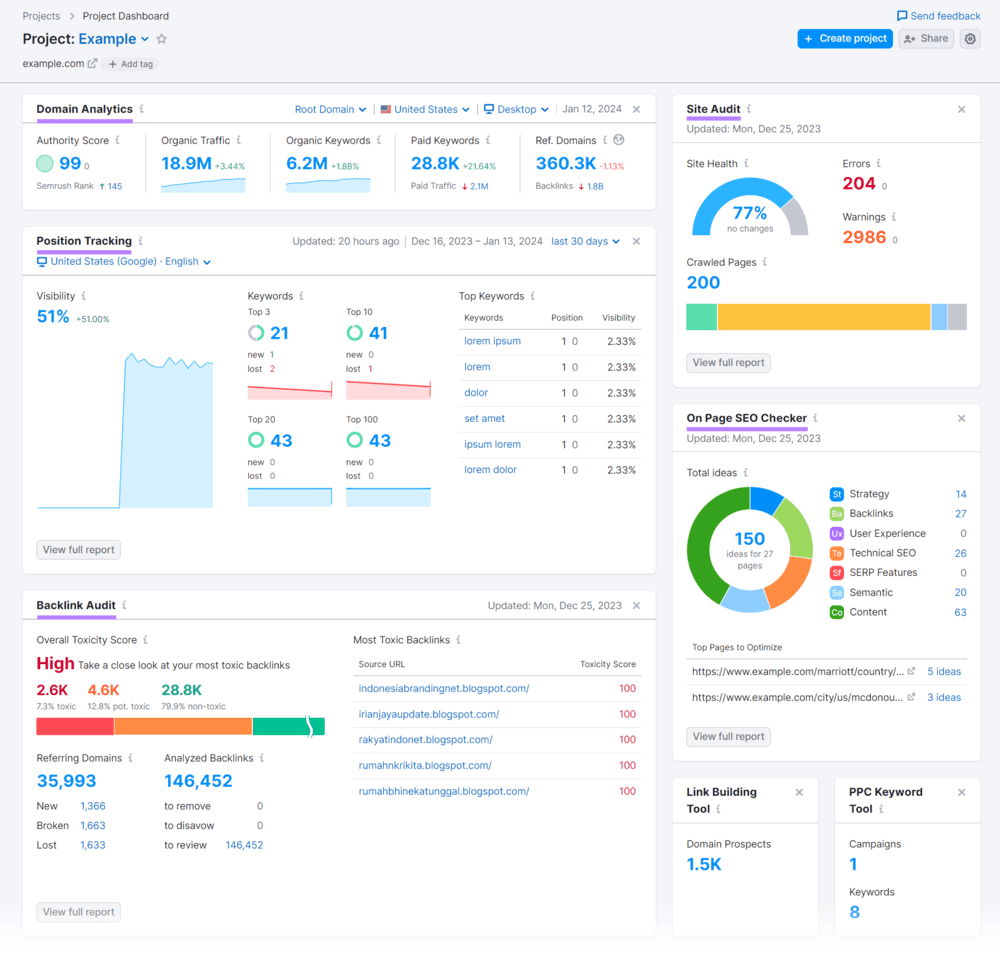
Use it to:
- track what shows up when people search for your brand (articles, reviews, forum threads)
- identify negative or misleading content ranking in Google
- push down negative results by promoting positive, owned content
- monitor reviews and listings across platforms (Google, Facebook, Yelp)
- protect your site from harmful backlinks that can affect trust and visibility
- analyze how your brand appears in AI-generated results and search summaries
It works best when you need to control your search presence and influence what people see before they click.
04 Talkwater
Talkwater is another social listening tool on our list. It’s a great social media monitoring and analysis app that provides actionable insights based on your brand mentions.
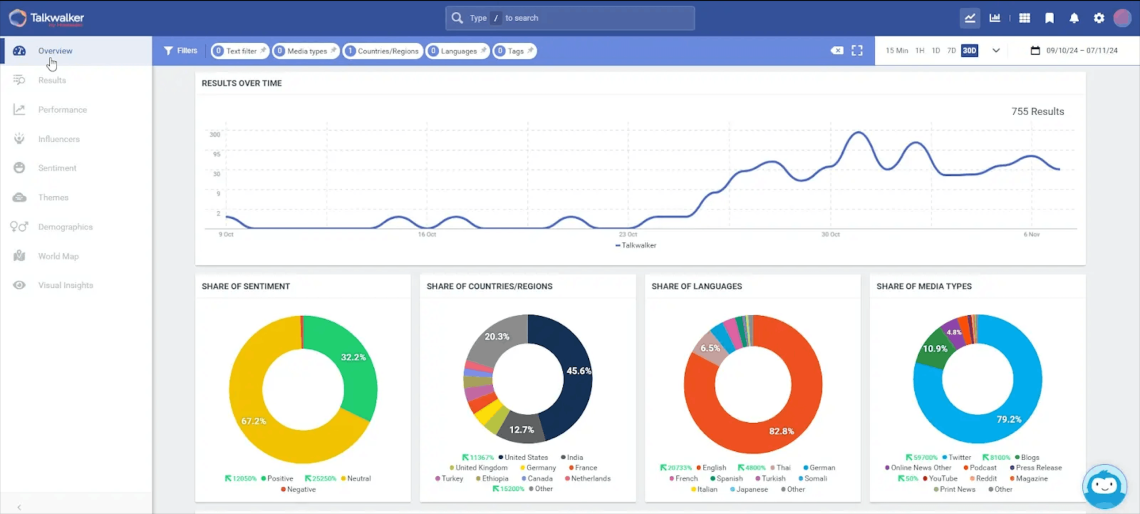
Use it to:
- monitor conversations across a wide range of sources and languages
- detect early signs of reputation risks using anomaly and trend detection
- analyze not just sentiment, but emotions to understand intensity of reactions
- track brand mentions in images and videos (e.g. logos in memes or visual content)
- predict potential reputation spikes and emerging trends
This media monitoring tool works well when you need global coverage, visual monitoring, and early signals of emerging reputation risks.
05 Awario
Awario is a social listening tool focused on real-time monitoring and quick engagement at a lower cost.
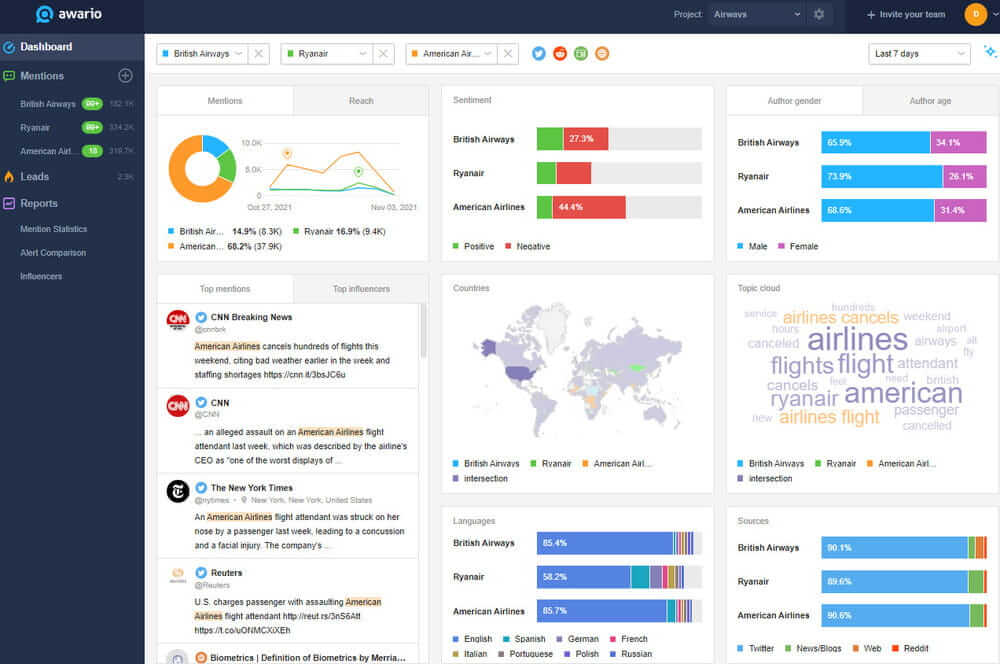
Use it to:
- track brand mentions across social media, blogs, forums, and news
- respond to mentions directly from the tool (reply, like, share)
- monitor sentiment and see how perception changes over time
- identify people discussing your brand or competitors and join the conversation
It’s a good fit for monitoring your online reputation when you don’t need a complex setup.
📚 Further read: 5 Best Awario Alternatives: A Detailed Comparison for 2026
06 Trustpilot
Even though Trustpilot is mainly for gathering customer reviews, you can also use it to connect with customers and reply to their feedback.
If your business depends heavily on public reviews, your reputation management strategy should include actively managing those online reviews too.
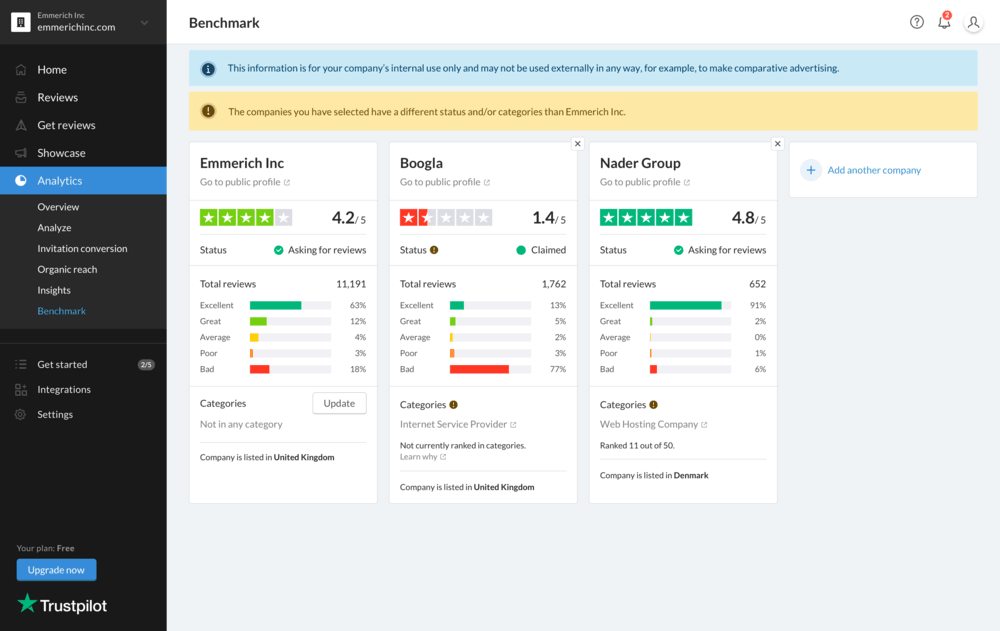
Use it to:
- collect and showcase verified customer reviews
- read and respond to customers’ feedback and show how you handle issues
- track overall trust levels (e.g. TrustScore) and customer sentiment
- identify recurring problems from review patterns
- improve how your brand appears in search (e.g. star ratings in Google results)
- detect and remove fake or misleading reviews
It’s most useful when you need to manage reputation where customers actively validate your brand before making a decision.
How to monitor your reputation
Corporate reputations can be monitored and analyzed.
You can use tools like Brand24 or any other media monitoring tool to monitor how your brand is perceived online.
Below, see an example of managing your reputation using Brand24:
01 Create a new project
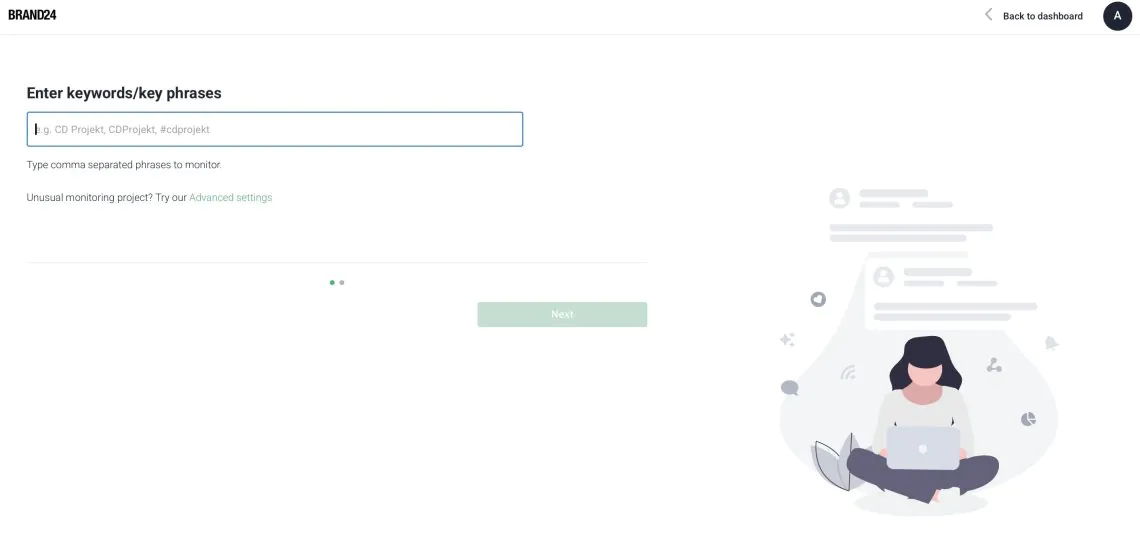
Enter keywords like your brand or product names to kick off a new project.
The tool will then start gathering all publicly available online mentions of your company across social media and other online sources.
02 Filter the mentions view
In the project view, you can filter mentions by positive, negative, or neutral sentiment.
To help protect your brand’s reputation, make a habit of checking negative feedback and improving the customer experience by addressing any issues that come up.
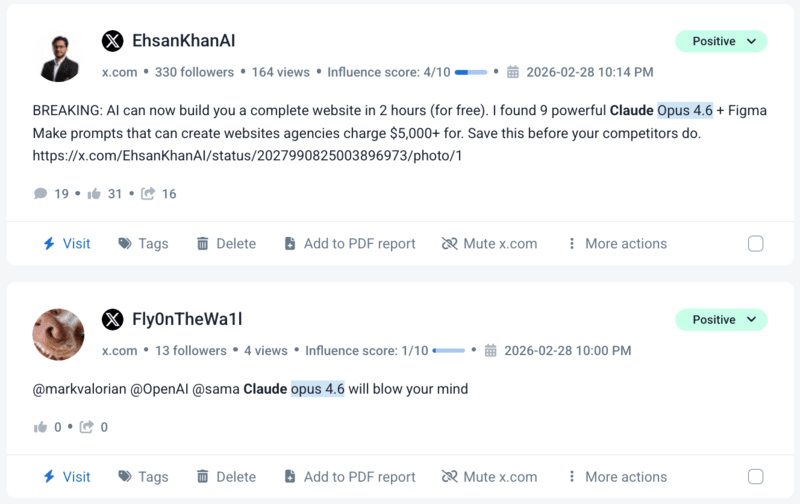
03 Monitor brand conversations
To help reduce the risk of a negative reputation, keep an eye on what people are saying online and encourage more positive user-generated content.
Strong reviews can really boost how others see your brand, so share them on your social channels to keep the good momentum going.
📚 Further read: Brand Reputation Management: 6 Expert Tips for 2026
Advantages of a good reputation
01 Trust and credibility
When you manage your reputation well, it builds trust with customers. People are more likely to support businesses they see as reliable and honest.
02 Increased profitability
Effective corporate reputation management often translates into financial performance and increased sales. Consumers prefer doing business with companies that have positive reviews and reputations.
03 Better talent acquisition
A strong reputation can help a company attract top talent. Great candidates tend to gravitate toward businesses that are well-respected in their industry.
04 Competitive advantage
Companies with good reputations stand out in the marketplace. A strong reputation can be a unique selling point that sets a business apart from its competitors.
05 Stakeholder confidence
Shareholders and investors feel more secure investing in companies with solid reputations, which often indicates stability and strong management.
06 Crisis mitigation
A strong reputation can act as a buffer during times of crisis. Companies with a history of good reputation can recover more quickly from negative publicity or mistakes.
07 Improved online presence
Good reputation management, especially online, helps you keep your brand image positive and under control, so potential customers get a great first impression.
08 Long-term success
A strong, well-maintained reputation helps support sustainability. It also builds lasting relationships with stakeholders—customers, suppliers, and investors alike.
09 Higher market value
Corporate reputation can significantly influence a company’s market value. Firms with strong reputations often see a positive correlation with their stock prices.
Examples of good corporate reputation management
Plenty of companies do a great job protecting their corporate reputation. You can take notes from what they’re doing and apply those best practices in your own workplace.
01 Patagonia’s environmental advocacy
Patagonia has built a strong reputation for environmental activism and sustainable business practices. The brand has donated millions to environmental causes, and its clear messaging—backed by consistent action—has helped reinforce what it stands for.
Patagonia, Inc. was founded in 1973 by American rock climber Yvon Chouinard, who set out to make durable clothing for athletes, hikers, and travelers.
Those philanthropic, planet-first values were woven into the company early on and have stayed a top priority ever since.
It’s also a big reason customers feel connected to the brand, and why Patagonia has long attracted people who care about sustainability.
02 Microsoft’s commitment to accessibility
Microsoft has led the way in making tech more accessible for people with disabilities. From products like the Xbox Adaptive Controller to built-in accessibility tools across its software, the company has consistently shown a real commitment to inclusion.
It’s also a strong example of a positive corporate reputation, especially as accessibility becomes more of a baseline expectation.
Companies that overlook accessibility risk falling behind, and may even see financial impact if they ignore the needs of customers with disabilities.
03 Airbnb’s COVID-19 Response
Recognizing the challenges hosts and guests faced during the pandemic, Airbnb created a $250 million fund to help compensate hosts for canceled bookings.
They also rolled out enhanced cleaning protocols for listings, reinforcing their focus on safety and support across the community.
Overall, it was a thoughtful step that helped Airbnb users dealing with financial strain in an uncertain time.
Examples of bad reputation management
To contradict good examples of corporate reputation management, some brands faced backslash and a tarnished reputation because of their actions. This usually includes threatening unsatisfied clients, not accepting their feedback, or blatantly lying to your customers.
01 Oil giant’s deepwater oil spill
A British oil and gas company drew criticism for responding slowly and seeming to minimize how serious the Gulf of Mexico oil spill was.
Things got worse when the CEO said he wanted his “life back,” which many people saw as tone-deaf and it hurt the brand’s reputation even more.
Overall, this clashes with basic corporate social responsibility expectations, especially when the insensitive comments are coming from leadership.
02 A popular airline passenger removal
A passenger was forcibly dragged off an overbooked flight, and the video quickly went viral. The company’s first response came off as blaming the passenger and didn’t show much empathy, which only fueled a major PR crisis.
Most people are aware that some airlines overbook flights. Typically, they try to make it right with compensation, sometimes even a free hotel.
But physically removing a passenger crossed a serious line for a lot of viewers, raising human rights concerns and doing real damage to the airline’s reputation.
03 Social media platform data leak
A major social media platform came under fire for not doing enough to protect user data after an analytics firm gained access to it improperly.
The company also seemed slow to own the issue and gave vague answers at first.
The fallout hurt the brand’s credibility and shook user trust. Many people worried it could happen again and felt increasingly uneasy about privacy.
FAQ
What is corporate reputation management?
It’s the ongoing process of monitoring, shaping, and protecting how your company is perceived by the public. It covers everything from customer experience and media coverage to social media sentiment and executive behavior.
Why does corporate reputation matter?
A strong brand reputation builds customer trust, attracts better talent, and increases market value. It also acts as a buffer in a crisis — companies with a good reputation recover faster and face less long-term damage.
What are the main components of reputation management?
It typically includes media monitoring, social listening, crisis communication, review management, and PR. The goal is to stay ahead of how your brand is perceived rather than react after the fact.
How do you measure corporate reputation?
You can track brand sentiment, share of voice, media coverage tone, review scores, and employee ratings on platforms like Glassdoor. Social media listening and media monitoring tools like Brand24 give you a real-time view of how your brand is being talked about online.
What’s the difference between reputation management and PR?
PR is mostly about proactively pushing your message out. Reputation management is broader — it includes listening, responding, and fixing underlying issues, not just crafting the right narrative.
How long does it take to rebuild a damaged reputation?
There’s no fixed timeline: it depends on how serious the damage was and how quickly the company responded. Brands that act fast, take accountability, and follow through consistently tend to recover in months rather than years.


