Table of contents
2M Marketers

TikTok hashtag analytics help you understand which tags drive reach, engagement, and real visibility… not just views. By tracking hashtag data, you can spot trends early, optimize your content strategy, and boost your growth!
Key takeaways
-
TikTok hashtag analytics help you measure the performance of your campaigns.
By tracking mentions, reach, engagement, sentiment, and trends, you can see how people interact with your hashtags and make better content decisions.
-
Mention volume and reach aren't the same thing.
A hashtag can reach millions of people through just a few viral videos. High reach means exposure, and growing mention volume indicates that more people are actively using your hashtag.
-
Hashtag analysis can reveal your next content opportunity.
The videos people share, the topics they discuss, and the creators they engage with can all help you spot trends and plan marketing campaigns your audience actually wants to participate in.
-
You can start analyzing hashtags for free.
TikTok Studio helps you evaluate your own content, while TikTok Creative Center lets you explore trending and related hashtags. For sentiment, competitor comparisons, and broader monitoring, consider third-party analytics tools.
How to start TikTok hashtag analytics?
Hashtags on TikTok serve to categorize content, enhance discoverability, and tap into trending topics. Analyzing them means less guesswork and more informed content decisions. It enables understanding:
- Latest trends
- Audience interests
- Engagement patterns
- Industry benchmarks
To put it simply: Hashtags show how users discover and interact with content on TikTok.
By analyzing the metrics above, you can identify popular topics, measure campaign effectiveness, and tailor content to resonate more with your target audience.
And the good news? You can get started for free!
The native TikTok Studio gives you insights into your own videos’ performance, including views and engagement.
And for a broader look at what’s happening on the platform, TikTok Creative Center lets you explore trending hashtags and see which topics are gaining popularity.
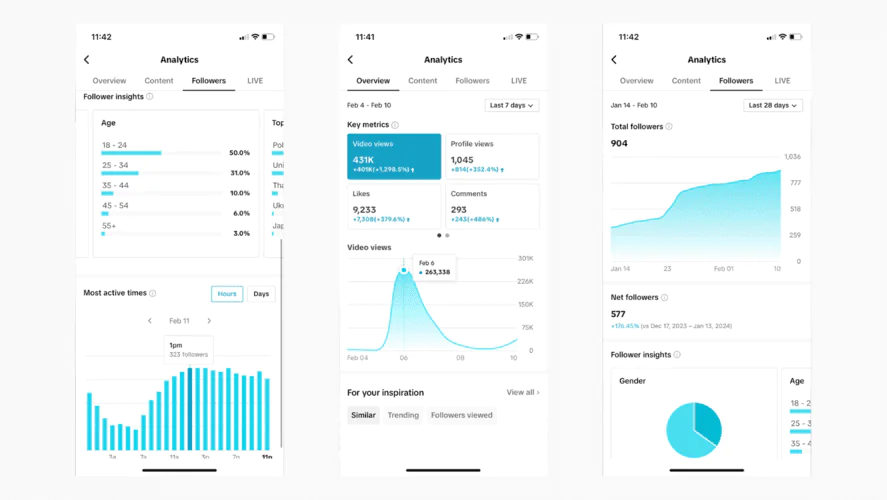
If you are looking for some free TikTok analytics tools and don’t need advanced features, the internal TikTok analytics tool should be your first stop.
However, TikTok’s analytics might not be the best for deeper insights such as demographic breakdowns, long-term trends, and detailed engagement analysis.
For a more comprehensive understanding of hashtag performance, especially for strategic marketing and content planning, it’s beneficial to complement TikTok’s insights with external TikTok analytics tools.
How to analyze hashtags on TikTok? 9 steps
01 Check the volume of mentions
The number of mentions tells you how often people use your hashtag. But what counts as a good result?
Start by comparing your hashtag’s mention volume over time. Look at the last 30 days versus the previous 30, and check whether usage is growing, dropping, or staying steady.
Next, benchmark your branded hashtag against 2–3 direct competitors over the same 30-day window.
If you’re getting less than a third of their TikTok mentions, the problem is usually participation, not visibility: people see your hashtag but have no reason to use it.
And if that’s the case, give them a reason to join in! Try a hashtag challenge, encourage user-generated content, or partner with creators who can introduce your hashtag to a broader audience.
Then, check the results again after 2–4 weeks to see whether your changes made a difference.
Let’s take a look at Nike’s hashtag “#NikeRunning.” In the last 30 days, it has been mentioned almost 500 times on TikTok:

Now, 500 mentions might sound impressive, but we can’t tell whether that’s good or bad without a benchmark.
For a fuller picture, compare it with Nike’s previous results and similar hashtags from competing sportswear brands.
But there’s another thing worth checking: whether the hashtag is gaining traction beyond TikTok. After all, conversations don’t happen on just one platform!
How to go about it?
Media monitoring tools, such as Brand24, collect data about your hashtags from many social media platforms and also track non-social data. So, they give you a holistic picture of how widely your hashtag is being used.
Brand24’s data sources include:
- Social media platforms
- Review sites
- Blogs
- Video platforms
- Podcasts
- Forums
- Online news sources
- Other publicly available sources
So, how is Nike doing beyond TikTok?
The #NikeRunning hashtag received over 10k mentions across all data sources. Crazy! And yet, TikTok accounted for less than 5% of those mentions.
To me, this suggests that most conversations around #NikeRunning are happening elsewhere.
For Nike, that’s a good reason to investigate which platforms are generating the most buzz and whether there’s an opportunity to encourage more participation on TikTok.

02 Measure social media reach
Reach is a key metric that represents the total number of unique users who have seen content associated with a specific hashtag.
While mention volume tells you how often your hashtag is used, social media reach indicates how many people it can potentially, well, reach. And the two can tell very different stories!
For example, a hashtag with 100 mentions and a reach of 1 million might be getting most of its exposure from just a handful of popular videos.
Meanwhile, another hashtag with 1,000 mentions could have a much smaller reach but a more active community of creators.
That’s why I recommend looking at both metrics together. Here’s what you can learn:
- High reach, few mentions? Your hashtag is getting exposure, but not many people are using it themselves. Try encouraging participation through challenges, collaborations, or UGC campaigns.
- Lots of mentions, relatively low reach? You’ve got people talking! Now focus on reaching new audiences. Check which creators and videos generate the most views, and use those insights to guide your next collaborations.
- Both metrics growing? Great! Identify the content driving that growth and see what you can replicate in your next campaign.
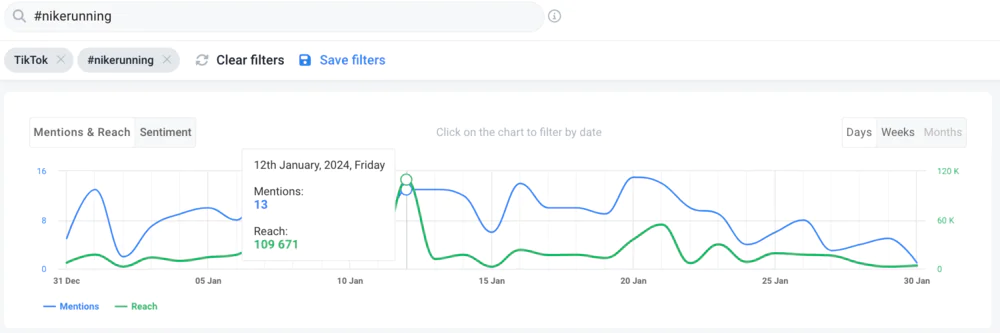
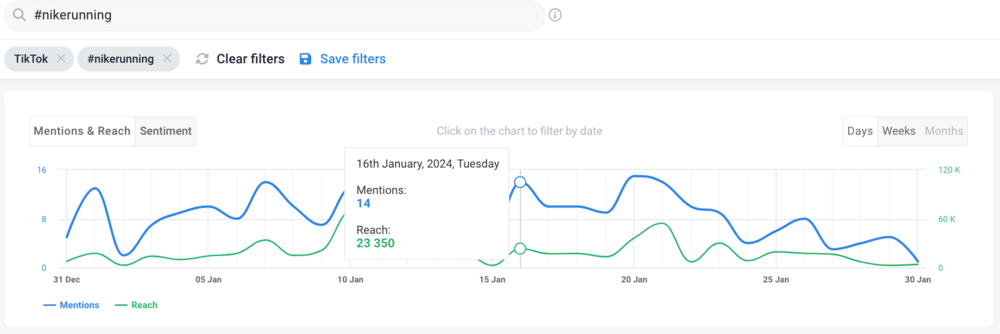
I think it’s especially important on TikTok, as the platform’s algorithm makes it possible to achieve super high reach with few mentions. All thanks to the possibility for your content to “go viral.”
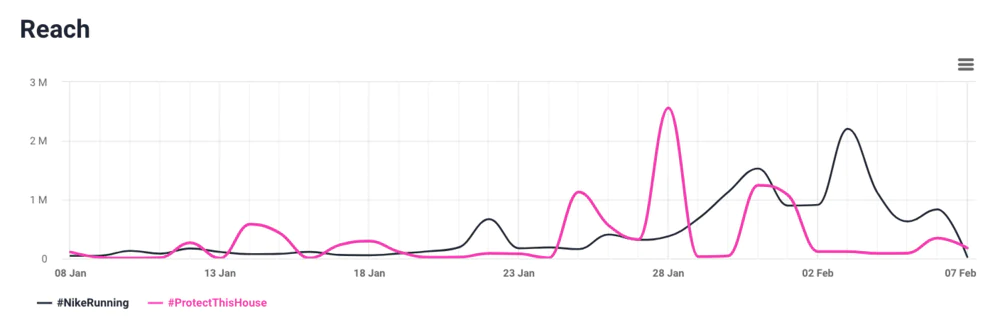
As you can see below, the number of mentions doesn’t always go hand in hand with reach.
03 Detect the hashtag popularity
On TikTok, where trends and hashtags can make or break a campaign, understanding a hashtag’s Presence Score is key.
This metric measures a hashtag’s online popularity on a scale of 0 to 100, helping you track how its visibility and place within TikTok’s dynamics change over time.
By tracking the Presence Score, you get valuable insights to fine-tune your strategies.
And you can ensure your hashtag resonates with TikTok’s diverse audience, and your content stands out in the crowd.
As you can see, the #NikeRunning Presence Score is 30, which might not sound like much at first. But it’s actually higher than 62% of brands, and the score is solid (it doesn’t change much over time).
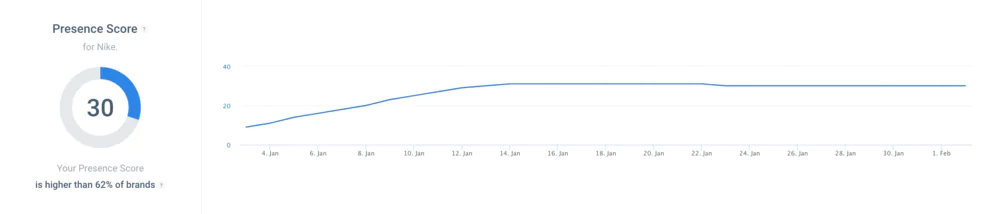
Still, for a brand as big as Nike, there’s definitely room for improvement! So what could Nike learn from this?
I’d say a flat Presence Score suggests the hashtag has a loyal community but isn’t attracting many new users.
When your score stays flat for 4+ weeks, test one growth tactic at a time: partner with 2–3 mid-tier creators from your most active users list, or pair the hashtag with a trending sound.
Then, watch whether the score starts climbing within 2 weeks. If it jumps after a creator post, double down on creator collaborations. If it doesn’t, your hashtag might be too narrow to attract a wider audience.
04 Conduct sentiment analysis
Monitoring hashtag sentiment is crucial for understanding public perception of your brand or campaign on social media. It goes far beyond just counting likes or shares.
Sentiment analysis offers data on how people feel about your content.
Are they responding positively, negatively, or neutrally? This knowledge enables you to tailor your messaging, address concerns, and capitalize on positive trends.
Essentially, it’s a powerful social media tool for aligning your TikTok marketing strategy with audience needs.
Do you want to ensure your content resonates effectively with your target audience?
Here’s how I check it in the Brand24 panel. You can easily switch the sentiment of displayed mentions and analyze their content:


And here’s a quick overview of the general sentiment of the #NikeRunning. It is very positive overall. People enjoy sharing their running stories and have a sense of belonging when using the hashtag.
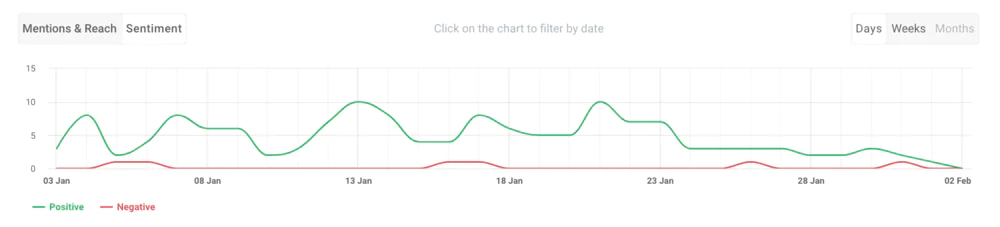
The number of negative mentions is low (6 over 30 days) and isn’t changing much. When it comes to positive mentions, the count occasionally rises and falls, reaching 145 in 30 days.
That’s roughly 24 positive mentions for every negative one. A pretty encouraging result!
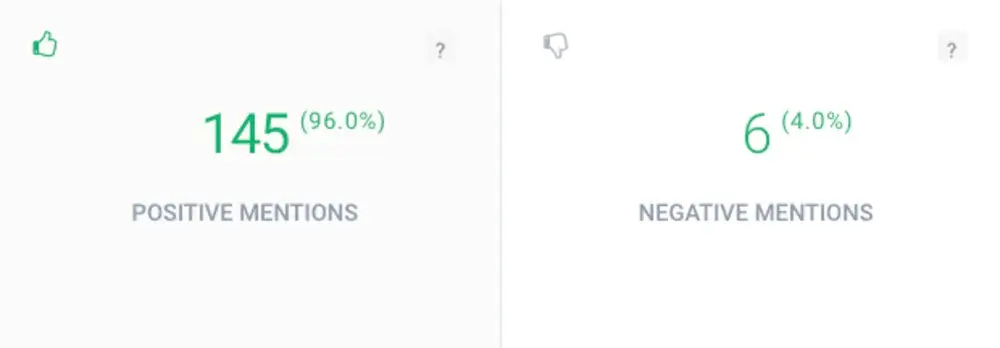
In Nike’s case, I’d dig into those positive mentions to identify which stories and experiences drive the most engagement.
That would give them a solid starting point for their next campaign: build on the topics people already care about, feature standout community stories, and collaborate with creators who spark the most positive conversations.
05 Track engagement
Measuring hashtag engagement is important for understanding how users interact with your content on TikTok.
The TikTok metrics you should track include likes, comments, shares, and video views.
Why?
Because each metric tells you something different about how your content performs.
Likes show appreciation, comments reveal what gets people talking, and shares tell you which videos people find worth passing along.
The TikTok below got over 270 shares – it means one thing. This content is what Nike’s audience loves.
My next move in this scenario would be to identify what made people share it, whether that’s a relatable message, a useful running tip, or a particularly engaging format.
Then test that element in a few more videos and see if the results hold up.

06 Detect influencers using the hashtag
Let’s talk a bit about influencers – the trendsetters and crowd-pullers.
On TikTok, they’re more than just people with a bunch of followers and viral videos. They’re the heartbeat of a platform where creator-driven content reigns supreme.
Partnering with the right creators can bring your hashtag to life, adding their unique personality to your campaign and (fingers crossed) winning over their audience, too.
People love authentic content they can relate to, and TikTok influencers can help you reach new audiences while lending credibility to your campaign.
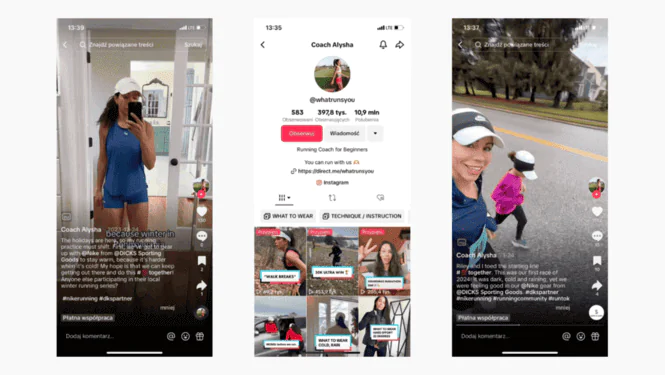
And the good news is, the best influencers for your hashtag might already be using it. You just need to find them!
Start by looking for creators who regularly mention your hashtag, especially those who do so organically. They’re already interested in the topic, which makes them promising candidates for a collaboration.
But don’t let follower counts make the decision for you. Here’s how I’d narrow down the list:
- Check consistency: Review engagement across their last 10 videos rather than judging them by one viral post.
- Look for relevance: Prioritize creators who have published at least 2 videos related to your product category in the last 30 days.
- Check audience fit: Make sure their content, audience location, and overall style align with your target market.
For a hashtag like #NikeRunning, I’d keep an eye out for running coaches, local run-club creators, and fitness enthusiasts who already share training content.
A smaller creator with an active running community could be a much better fit than a celebrity with millions of followers.
Now, how do you actually find these people?
Monitoring tools can provide you with lists of influencers who engage with specific hashtags.
Plus, TikTok analytics tools like Brand24 can provide you with an overall “most active” account list. It can be super helpful when looking for the best people for your brand.
Before, I used to conduct Influencer analysis by checking each profile manually, which wasted a lot of time. With analytics tools, I get a ready-to-use list with just a few clicks.
Of course, I double-check these people’s content ideas to make sure they match my brand’s vibe… but it’s so much easier and more effective.
Here’s the list of potential influencers generated by Brand24:
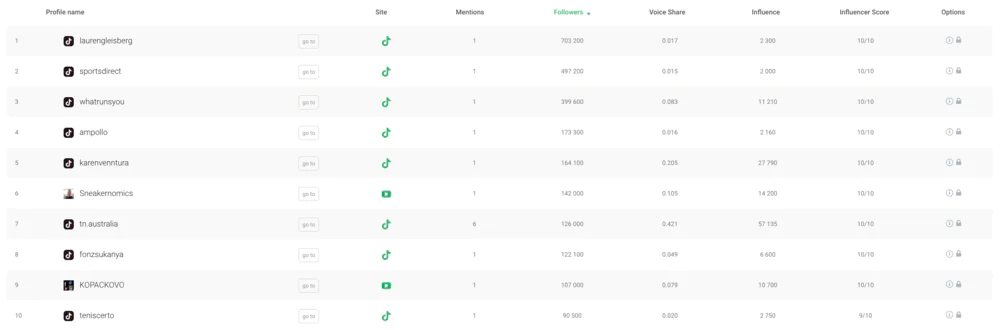
As you can see, the tool also offers an “Influencer Score”, which is an estimated insight into which source or author has the greatest impact on TikTok for your brand.
So, are you ready to take your brand TikTok account to a whole new level?
Head to the Most Active list to find creators already participating in the conversation, then use the Influencer Score to prioritize your research.
Shortlist 3–5 promising accounts and compare their content, engagement, and audience fit before reaching out.
07 Check related hashtags
Exploring related hashtags is great for expanding your content’s reach and relevance. But how to find them?
Start with TikTok itself! Its Creative Center is a great (and free!) place to explore popular hashtags.
Just head to Trends → Hashtags and look up a topic relevant to your brand.
You can check which hashtags are gaining popularity, explore related ones, and see what kind of videos people are creating with them.
Want to dig a little deeper?
Monitoring tools like Brand24 list related hashtags and can help you understand the broader conversation around a topic.
Thanks to that, you can identify new engagement opportunities and boost your TikTok content’s reach.
If you want to know about upcoming trends earlier – this feature is your friend!

My tip is to prioritize hashtags that are gaining momentum, rather than those that have already peaked.
Check their recent activity and browse the top videos to see whether your content would fit naturally into the conversation.
Found a promising one?
Test it in 2–3 relevant videos and compare their reach and engagement with your usual posts. Pay attention to views from non-followers and engagement rate.
If the results are consistently better, you’ve found a hashtag worth keeping in your rotation.
08 Compare to the competitive hashtag
Comparing your hashtag with competitors can provide critical TikTok insights and improve your content’s performance. It helps understand your position in the market and identify areas for improvement.
Are you using enough TikTok hashtags? Perhaps your strategy needs some adjustments?
Focus on three things: social media mentions, reach, and user-generated content. Together, they’ll tell you whether competitors are getting more people to use their hashtags and reaching larger audiences.
And here’s the interesting part: competitor analysis isn’t just about spotting gaps. It can also show you where your strategy is paying off!
As you can see below, Nike’s #NikeRunning is doing way better than Under Armour’s #ProtectThisHouse.
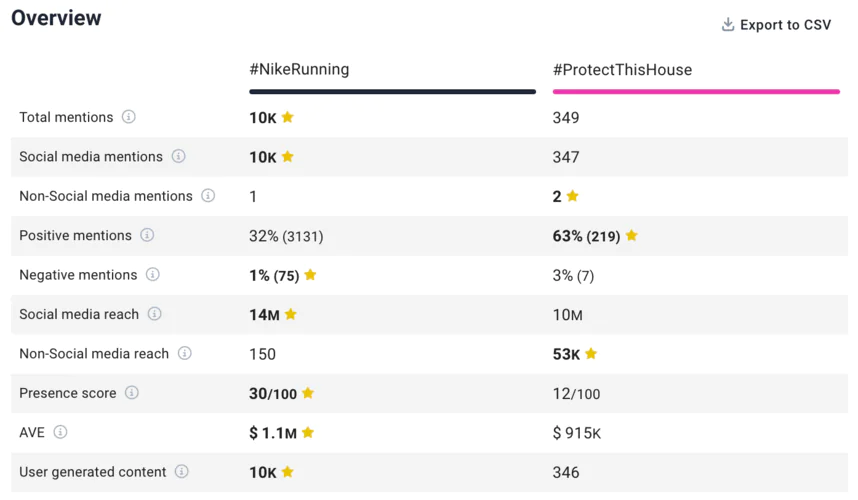
Nike generated around 14M in estimated social media reach, compared to Under Armour’s 10M. Not a massive gap.
But look at the mentions: Nike received 10K, while Under Armour had just 349. That’s almost 29 times less!
And almost all of Nike’s mentions were classified as user-generated content. That suggests #NikeRunning has a much more active community contributing to the conversation.
The takeaway here is simple: don’t judge hashtag performance by reach alone. A competitor might be reaching nearly as many people as you, but getting far fewer of them to actively use their hashtag.
09 Track the performance over time
One successful week doesn’t necessarily mean your hashtag strategy is working. What matters is whether you can maintain that momentum!
Check your performance weekly and run a more detailed TikTok hashtag analysis every 30 days.
Here’s what I pay attention to:
- Short-lived spikes: A viral video can boost your numbers overnight, but the real test is what happens afterward. Check whether mentions settle above their previous baseline. That’s a better sign of lasting growth than the spike itself.
- Growing mentions, declining engagement: Your hashtag is spreading, but the content isn’t keeping up. Track engagement rates over time to see whether new posts are attracting the same level of interest.
- A steady decline: Compare your hashtag’s trend with competitors. If they’re declining too, interest in the topic may be fading. If they’re growing while you’re losing ground, it’s time to rethink your approach.
And remember, not every hashtag needs to grow forever!
We all know campaign hashtags naturally lose momentum once the campaign ends. Judge their long-term performance against their purpose, not just whether the numbers keep climbing.
TikTok analytics can reveal patterns and trends, informing strategic decisions for future campaigns and content on TikTok. It’s about adapting and evolving with the platform’s ever-changing landscape.
Conclusion
Analyzing TikTok hashtags effectively can be a game-changer for your TikTok marketing strategy.
It’s crucial for understanding what’s driving the visibility of your TikTok posts, how your audience engages with your content, and where there’s room for improvement.
But collecting the data is only half the job. The interesting part starts when you figure out what those numbers are actually telling you.
Look for patterns, question unexpected results, and don’t be afraid to experiment. Sometimes, your most valuable insight will come from a hashtag that didn’t perform as well as expected.
My advice? Keep an eye on trends, learn firsthand from what works (and what doesn’t!), and use those insights to fine-tune your next campaign.
The more you learn about your audience, the less you’ll have to rely on guesswork. And that’s a pretty good place to be!
FAQ
You can use TikTok’s native analytics (available on Business and Creator accounts) to track views, engagement, and video performance.
For deeper hashtag insights like sentiment, competitor tracking, and cross-platform reach, you’ll need external analytics tools.
TikTok’s native analytics provide a good starting point, but they often fall short in delivering in-depth insights.
Social media monitoring tools are a great help in this process, as they offer comprehensive monitoring and analysis of hashtag campaigns. Without these tools, accurately monitoring a hashtag’s performance is challenging.
Yes! TikTok Studio lets you analyze your own videos, including views and engagement, while TikTok Creative Center helps you explore trending hashtags, related tags, and popularity trends. Both are free to use, although access to some features may vary.
For more advanced hashtag analytics, such as sentiment analysis, historical mention tracking, and cross-platform comparisons, you’ll generally need a third-party tool.
You can:
- Check TikTok’s Discover page
- Explore trending and related hashtags in TikTok Creative Center
- Monitor trending sounds
- Analyze competitors
- Use social listening tools to detect rising hashtag spikes
The most important metrics include:
- Reach
- Engagement (likes, comments, shares)
- Mention volume
- Sentiment
- Influencer activity
- Growth over time
Together, they help understand not only how visible your hashtag is, but also whether people are actively participating in the conversation.
Compare its mention volume, reach, and engagement against previous periods and relevant competitors. Look for consistent participation, positive sentiment, and new creators using the hashtag. A short-lived viral spike is great, but sustained activity is a stronger sign of long-term success.
There’s no magic number! Focus on 3–5 relevant hashtags that describe your content and match your audience’s interests. Avoid stuffing captions with popular but unrelated tags, and experiment to see what works best for your account.
Yes! Search for competitor hashtags directly on TikTok or use social listening tools to compare their mention volume, reach, engagement, and popularity over time. This helps you benchmark your performance and discover content formats or campaign ideas worth testing.
Track metrics like mention volume, reach, engagement rate, and sentiment week over week or month over month. Long-term trend tracking helps you identify seasonality, campaign impact, and rising or declining hashtag momentum.